PhotoGeo Trip Down East: Part 5 – Cape Breton Highlands
2,283 words, 12-minute read time.
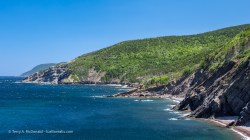
Wow! I’d forgotten how beautiful the Cape Breton Highlands are: steep-sided, glaciated flat-topped hills with deep valleys, green with mixed forests plunging down into an ocean so clear and blue. Geologically it’s a smorgasbord of pieces of Earth’s crust jammed together over the last billion years: ancient Canadian Shield in the northwest from the formation of the Laurentians; part of a volcanic belt formed off South America in the centre; and a section of a volcanic belt from what is now North Africa in the southeast; along with a smattering of granitic plutons from 500mya.
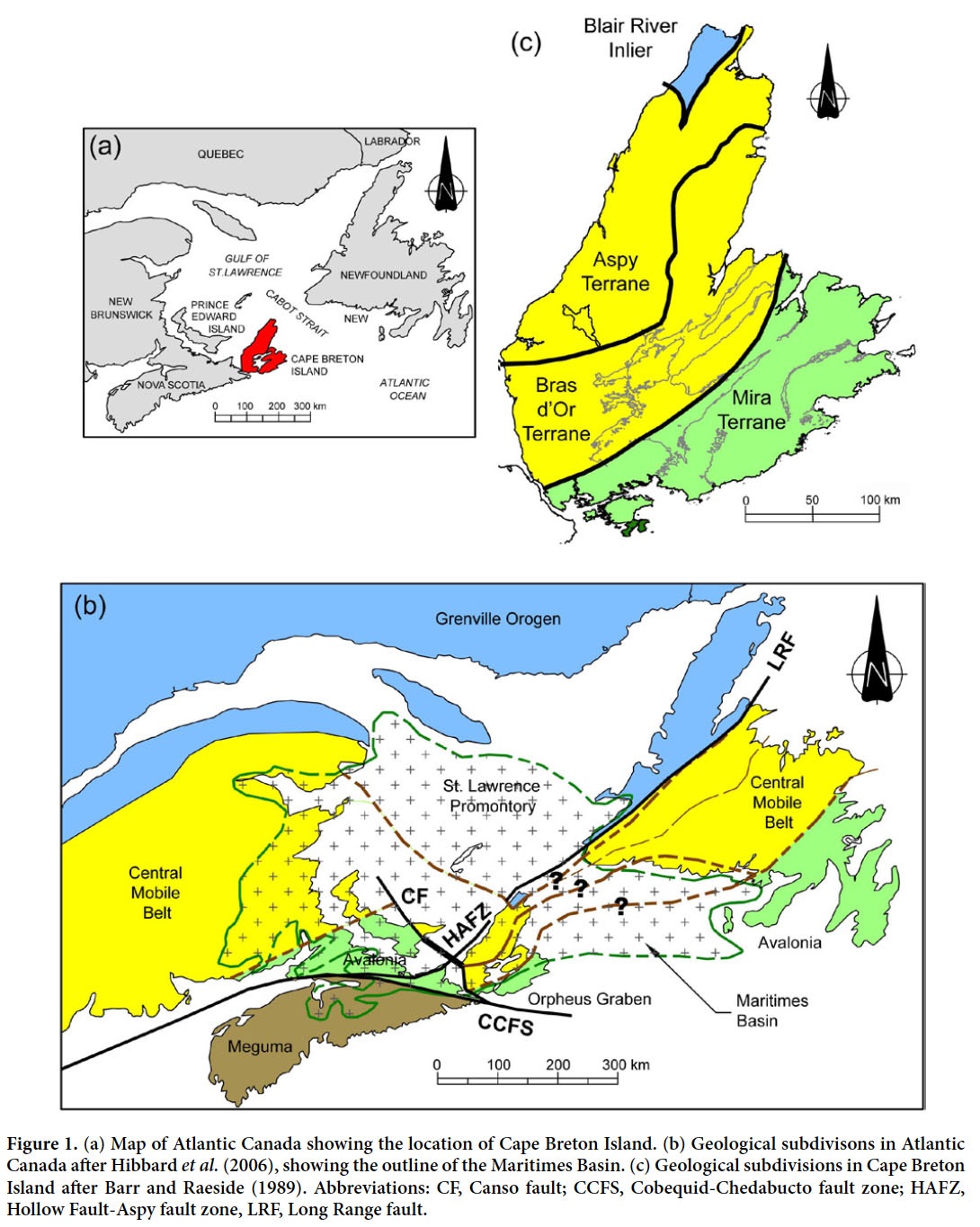
an overview
As Captain Kirk would say, ‘Fascinating, Jim.’
Okay, I know, TMI. But you must admit that it’s cool to be at the epicentre of where the North American plate and the Eurasian Plate and the African Plate repeatedly smashed together to form first the supercontinent of Rodinia, then the supercontinent of Pangaea and the Appalachian Mountains, with all these bits of continents and volcanic arcs thrown in for good measure, followed by the subsequent rifting, about 200mya that produced what is now the Atlantic Ocean. Yes, truly fascinating. A billion years worth of continental drift in one sentence! FMI, see Parks Canada’s excellent web page describing these processes. Or, try it yourself at this website—simply enter ‘Sydney, Nova Scotia’ and use your cursor keys to navigate through time.
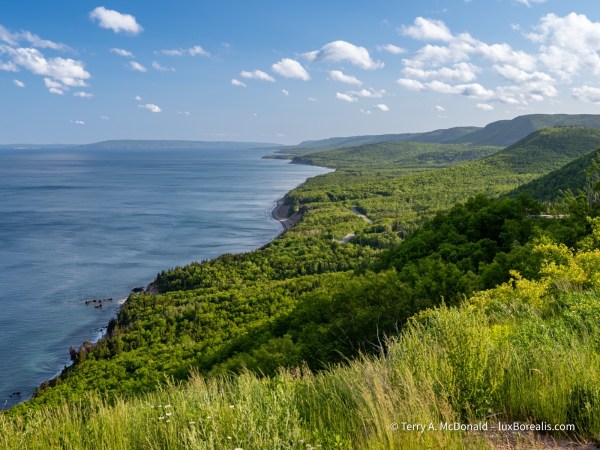
OM-1 | 20mm+POL | ƒ5.6 @ 1/200 | ISO 200 | HHHR | Raw | Lightroom
After all the crashing around of plates, this scene is simply bucolic.
But what does this have to do with photography?
I’m making landscape and nature photographs. I simply can’t divorce the geography and geology from what I’m seeing and what I’m making of what I see. Both the landscapes and the photographs somehow feel more real when I can connect the natural processes going on around me with the images I’m making—and vice versa.
Of course, the objective viewer couldn’t care less (other than Geo-Geeks like me, my wife Laura, and my friend Dan with whom I started this journey a few weeks ago). In other words, in the minds of the viewing public, the processes that formed the landscapes are irrelevant. Yet, being informed and interested about how these places came to be may just be the little extra that helps me to ‘see’ the photographs I’m working to create.
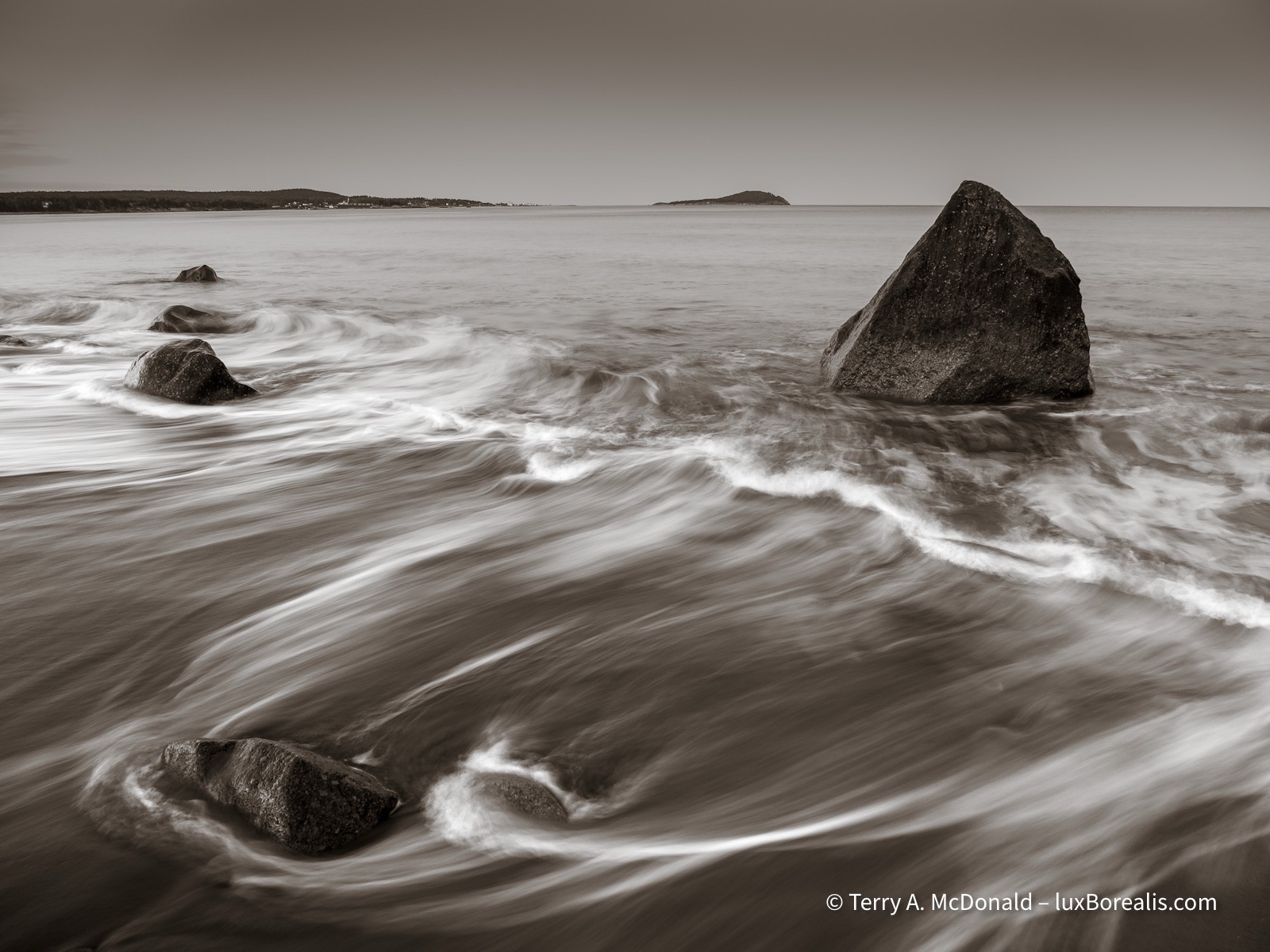
Made after sunset using LiveND
OM-1 | 12mm | ƒ4 @ 0.8sec | ISO 800 | Raw | Lightroom
Change is still happening as the landscape is further weathered and eroded, day-in, day-out, year-in, year-out.
I’m making portraits of Earth. The first rule of making intimate portraits is to know your subject. Celebrated Canadian portrait photographer Yousef Karsh knew this well. ‘Yousef Karsh?’ you ask. Whether you’re shooting landscapes, nature or portraits, his work, his methods and his career are all well worth studying. Not only that, but as an addendum to my previous post, Africville, Karsh was a refugee from the Armenian genocide, arriving in Halifax in 1923 at the age of 15 and went on to become a portrait photographer sought by the well heeled the world over. Fascinating!
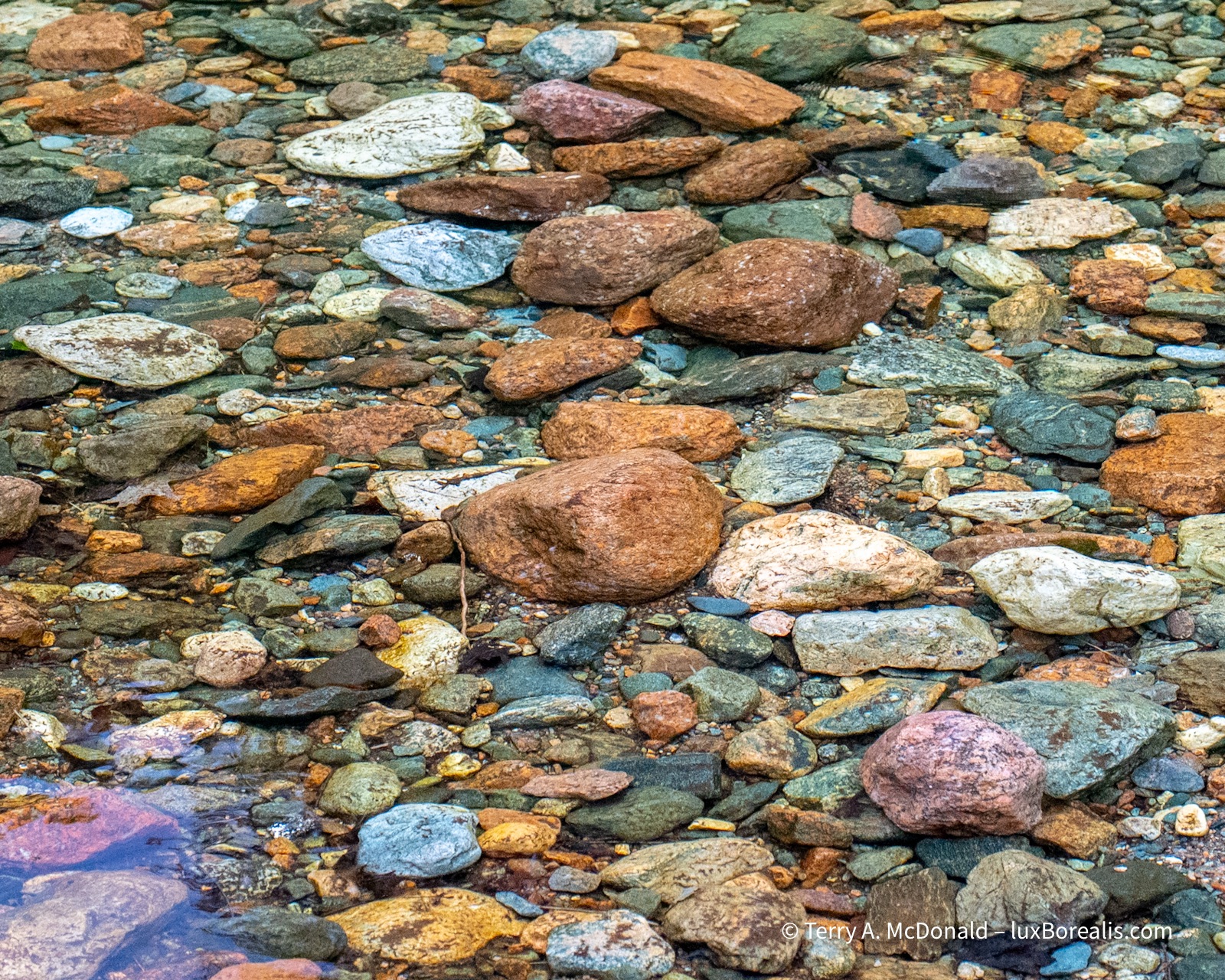
The kaleidoscope of colours reflects the very long and tumultuous journey these rocks have made over the last 500 million years.
OM-1 | 47mm+POL | ƒ5.6 @ 1/250 | ISO 3200 | Raw | Lightroom
Perhaps it’s my Scottish blood that causes this place to resonate with me, as it did with the earliest Scottish settlers. Tossed off their land by the English during the Highland Clearances, they ended up here in Cape Breton and to them it not only felt like home , but it looked like home too. Funny thing is, that was before anyone realized that, in fact, much of Cape Breton Island is made of the same stuff as the Scottish Highlands before the formation of the Atlantic. Yes, truly fascinating!
Astrophotography
On our first night in Cape Breton, I (finally) had an opportunity to work on some astrophotography. At 1:30am I headed down to the beach with my tripod, my folding chair and equipment—OM-1 with the Leica DG Summilux 9mm/1.7 on, and an extra battery. I didn’t bother to attach the HLD-10 Battery Grip. Given the chill temperature, the core and sensor wouldn’t heat up too much from battery drain.
Having scouted the location earlier in the evening (see Wave Wash I above), I had a few ideas of where to set up. Upon reaching the beach, I was greeted with a very obvious Milky Way arcing up from the south. Wow! With crystal clear skies, and the temperature a chilly 6°C—the conditions were perfect for a million billion stars.
The trouble, as always, was with lights. Along the coast, they are unavoidable except in the most remote places, and at 1:30 in the morning, I didn’t feel like more driving after a day of it. Oh well, ‘Do the best with what you’ve got.’
From my earlier practice session, I knew ƒ2 @ 15sec would work very well, as the shutter speed was below the ‘400 Rule’ limit (400 ÷ focal length in 35mm terms; for me 400 ÷ 18 = 22 sec.) Note: in the same blog post, I list all the settings I use for Astrophotography.
After my first exposure, I was thinking ‘Wow!’, again. Except for a few adjustments (like remembering to not just set Starry Sky AF, but to activate it as well!—duh!), the photo was bang on, using ISO 3200. I was confident that any noise at that ISO would be beautifully cleaned up in Lightroom. Note: if you haven’t recently used Lightroom’s Enhanced NR, you’re in for a treat as now it’s built right in to the raw processing workflow so a separate DNG file is no longer produced. Wonderful!
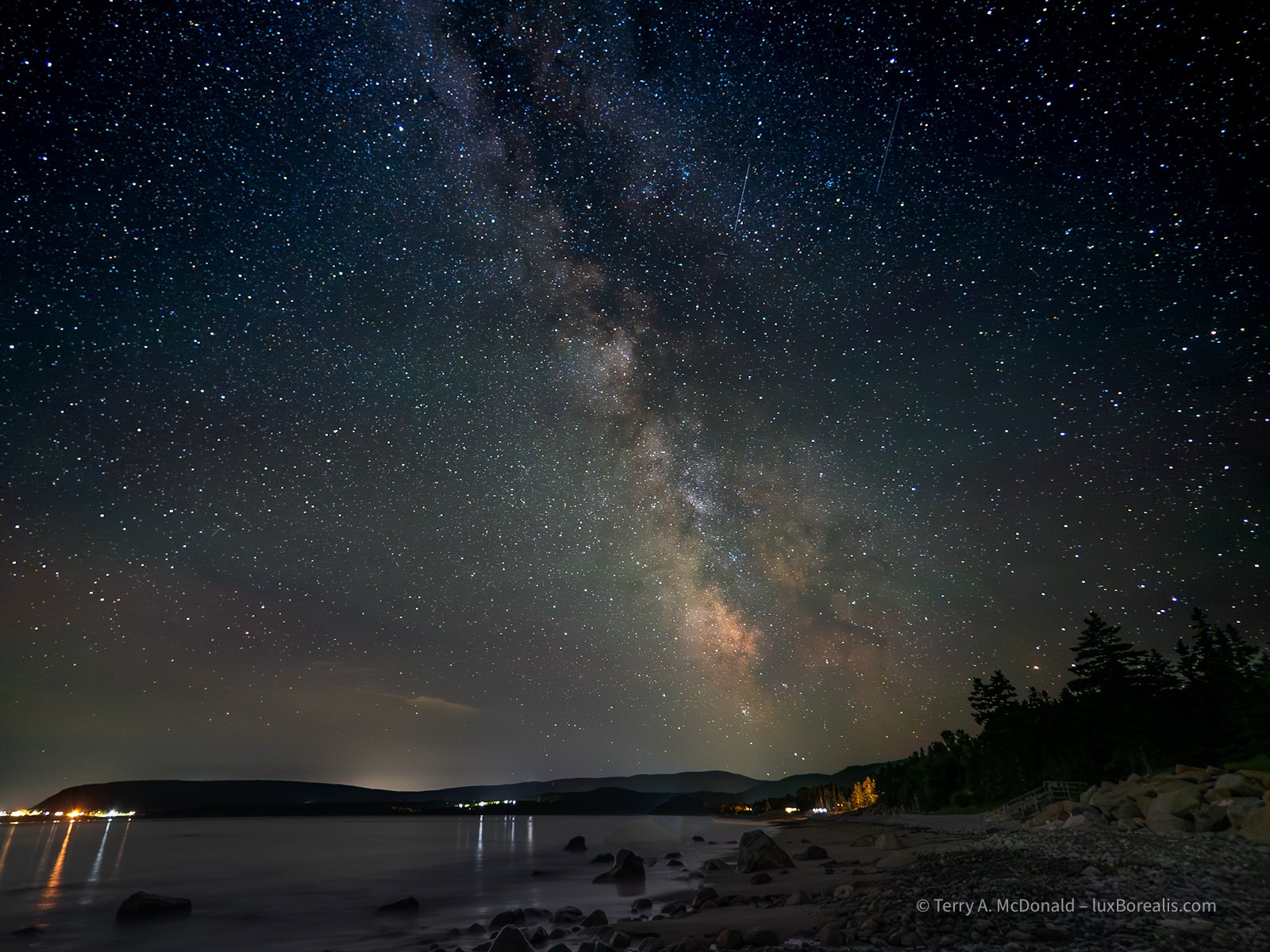
OM-1 | 9mm | ƒ2 @ 15sec | ISO 3200 | Raw | Lightroom
My preferred image, though, is a vertical:
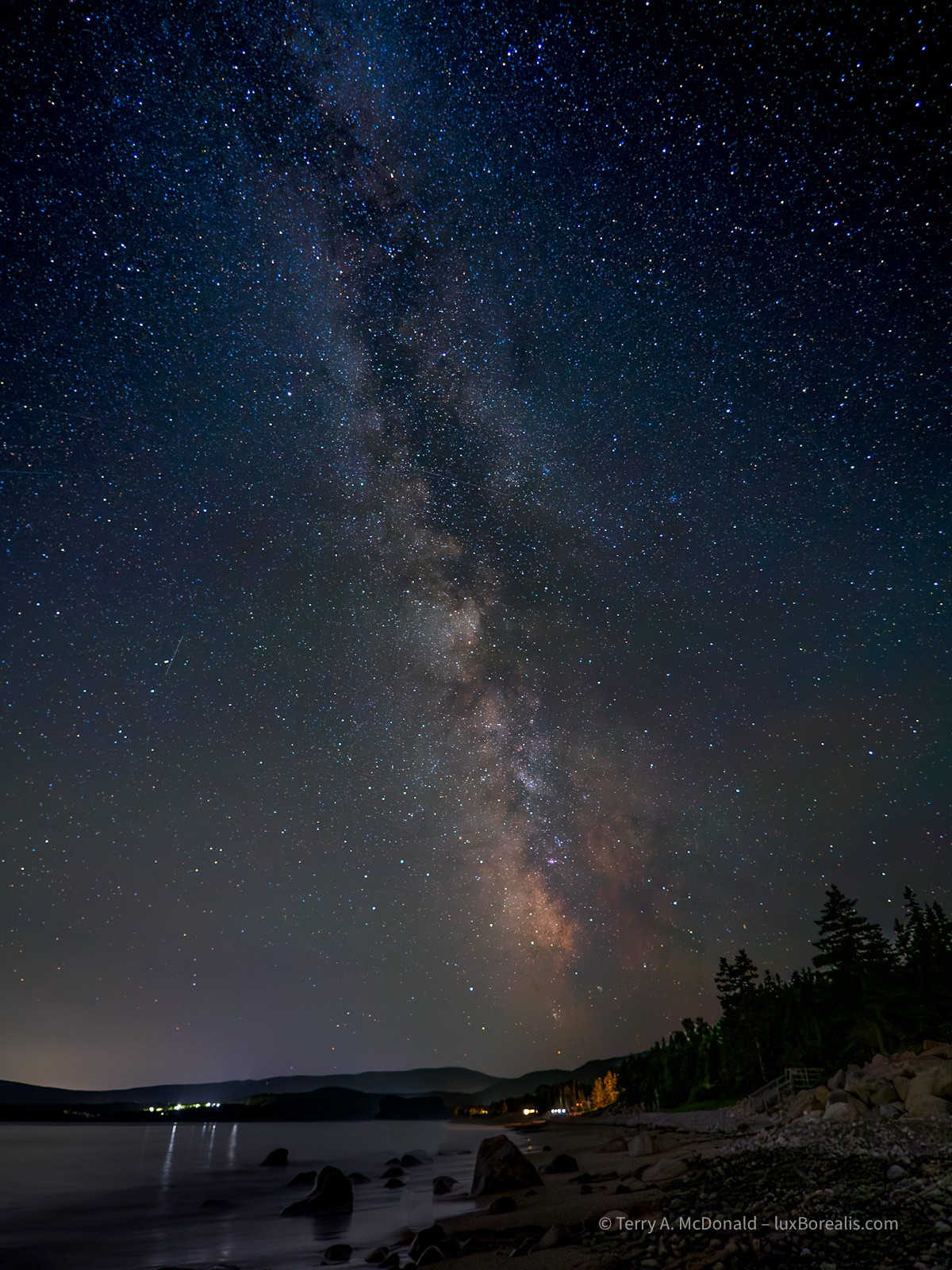
OM-1 | 9mm | ƒ2 @ 15sec | ISO 3200 | Raw | Lightroom
One thing I didn’t do, was to make multiple images that could later be combined into a single image. This improves image quality and allows for a separate image of the foreground to provide better balance with the star exposure. However, that said, astrophotography is a work in progress with me and I am very pleased with the results.
My next undertaking was to weather the cold and make a LiveComposite image. Again lights plagued the view. As I looked over my shoulder I noticed the striking orange crescent of the waxing moon rising just above the horizon. It is this brightening glow that is captured along the eastern (right) horizon of the next photograph. Some of the glow is also from the pre-dawn glow of sunrise, which is at 5:09am (!!), less than 2 hours from when the photo was made.
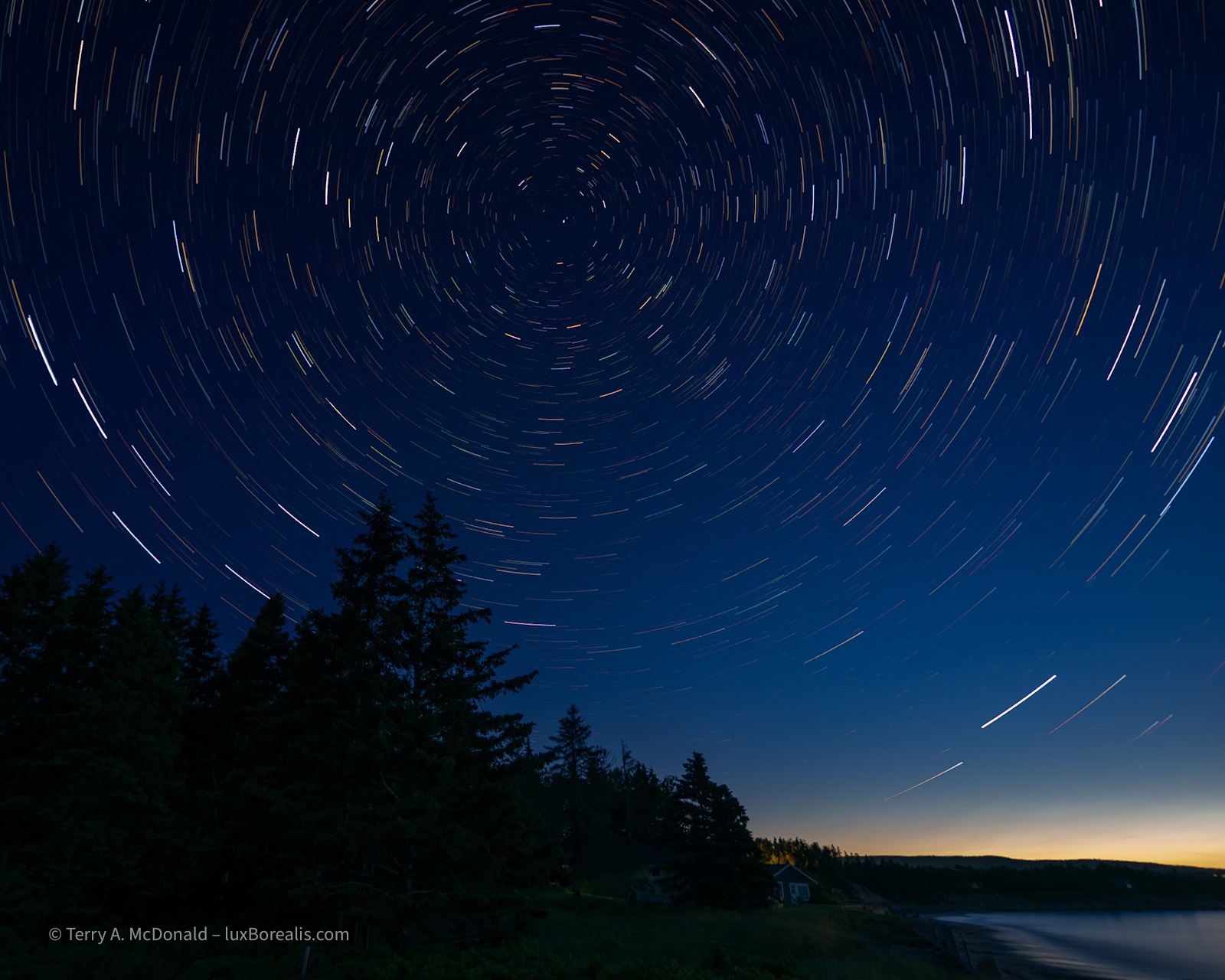
OM-1 | 9mm | ƒ2 @ 30x60sec | LiveComposite | ISO 3200 | Raw | Lightroom
The novel I was reading while waiting (iPhone in dark mode!) helped to take my mind off the cold, but after 30 minutes the star trails looked good, and I was shivering. I’m not at the point of leaving my gear and going back to warmth then coming back an hour or so later. Perhaps that will happen once I’m in a place without anyone else around. I know, ‘Who’s up at 3am?’. Still . . .
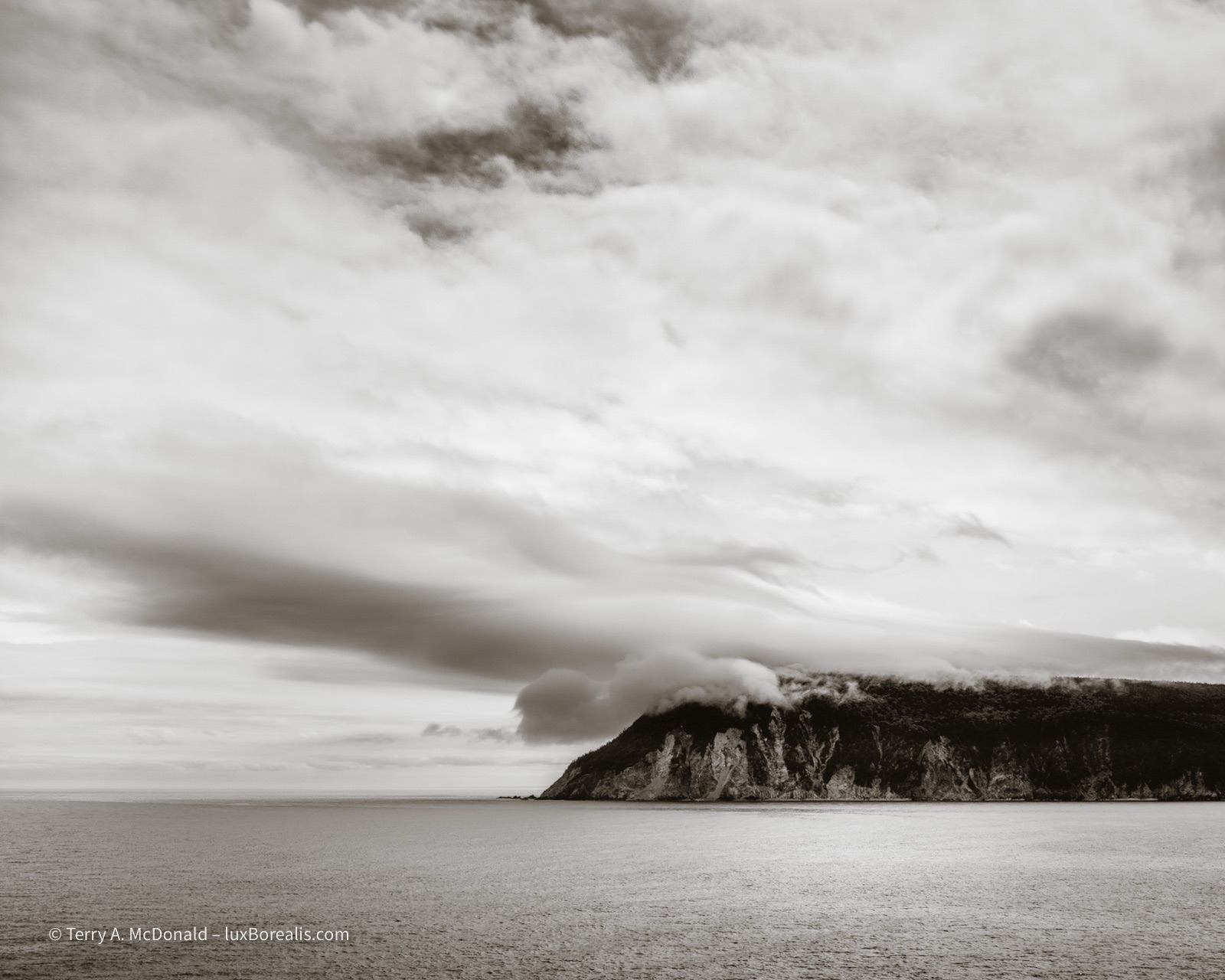
OM-1 | 20mm+POL | ƒ8 @ 1/500 | ISO 200 | HHHR | Raw | Lightroom
Almost
Is it possible to have conditions too perfect for photography? For the last couple of days, I’ve felt this pull to make some significant photographs in this place that has such an amazing geography and geology, but I’m failing.
The days have been beautiful summer days. Sunny for the most part, and I mean brilliant sunshine from dawn to dusk—great for those ‘on vacation’, but not ideal for landscapes. Blank skies just don’t cut it and, no, I don’t ’swap skies’, the latest rage in AI photography.
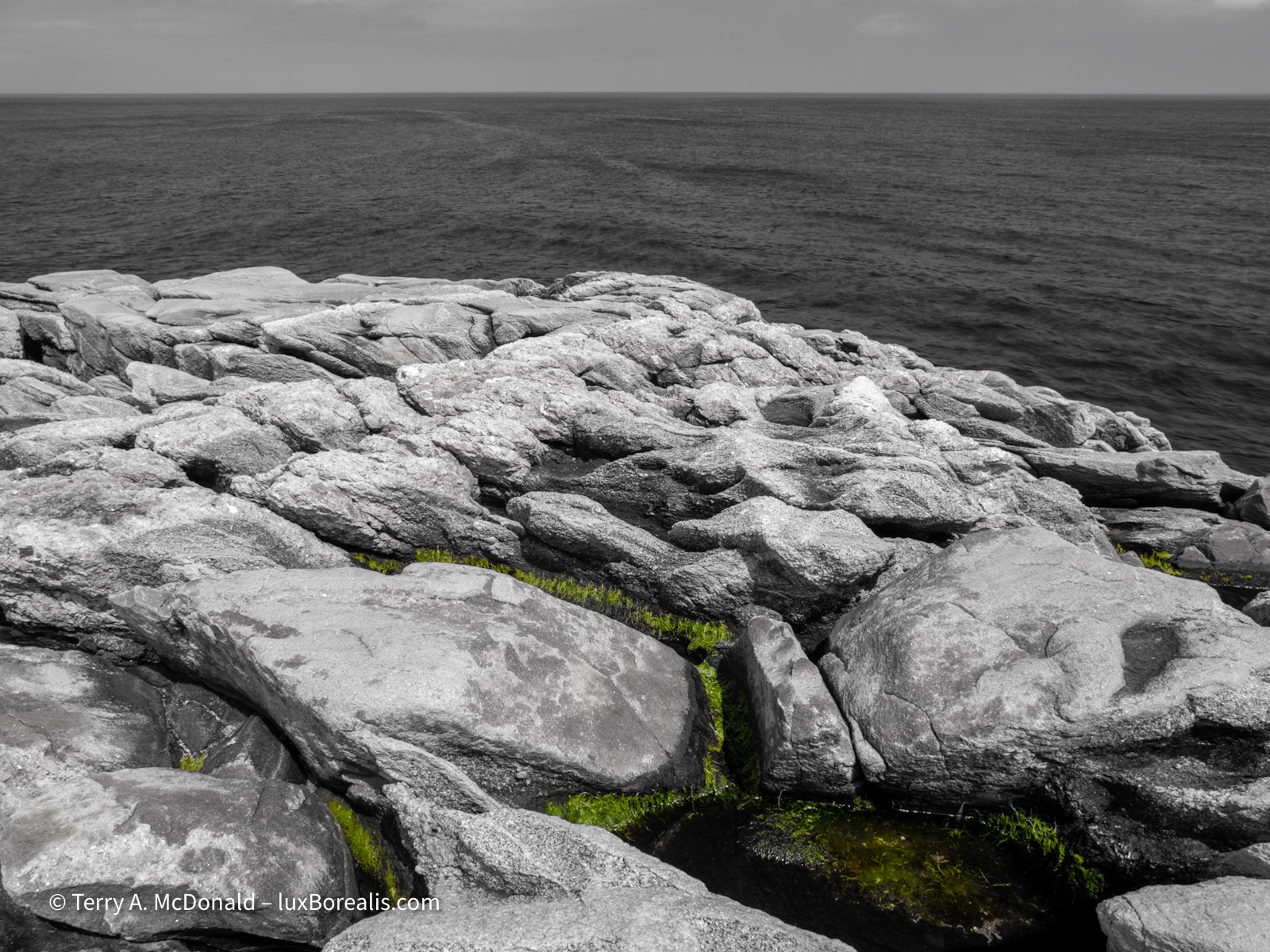
OM-1 | 12mm+POL | ƒ8 @ 1/250 | ISO 200 | HHHR | Raw | Lightroom
So, for the last few days, I’ve feel like I’ve been making a series of ‘almosts’. The light is almost right. The waves are too tame. My compositions are almost there. I’m almost close enough.
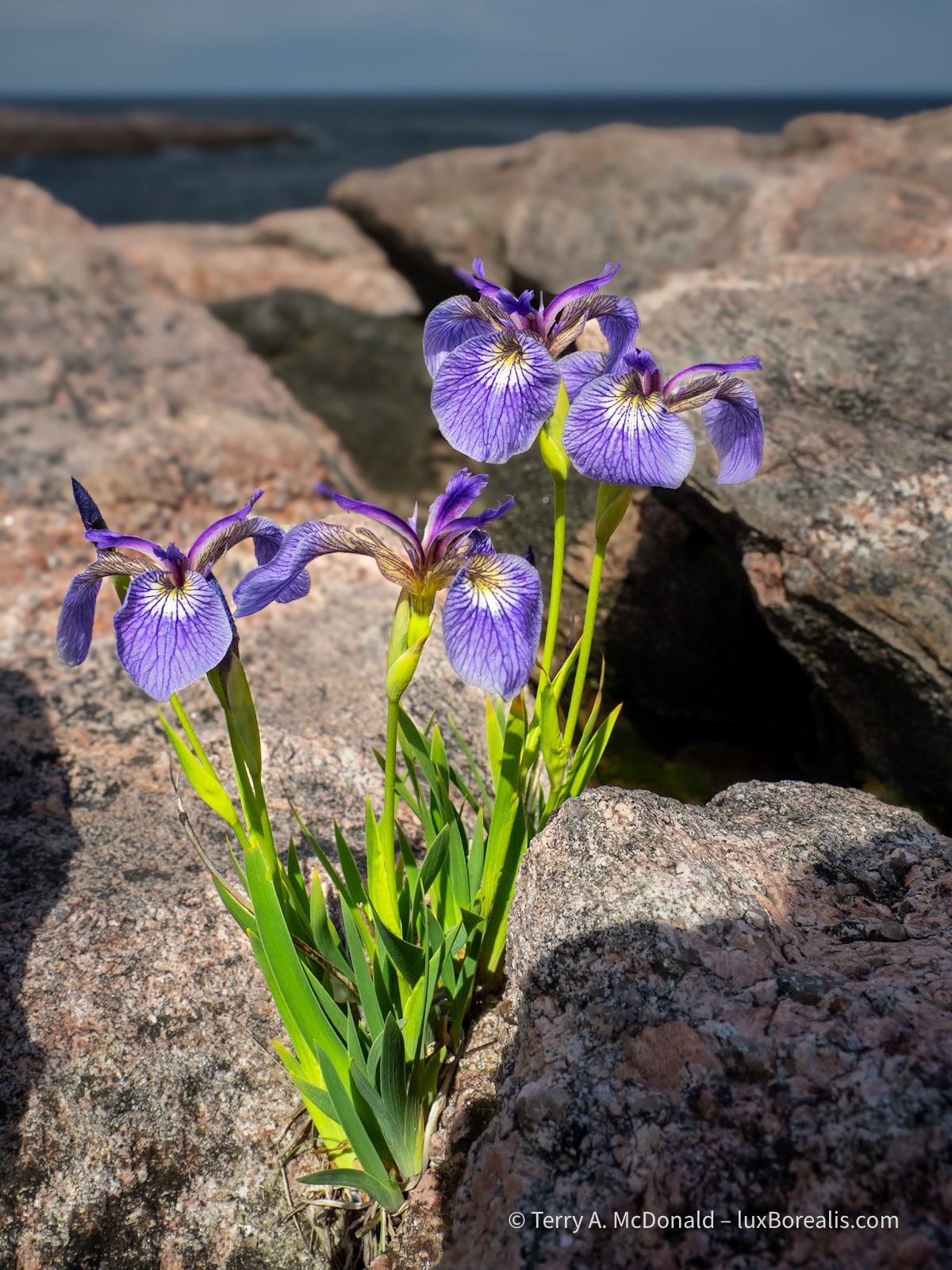
OM-1 | 14mm+POL | ƒ8 @ 1/800 | ISO 800 | Raw | Lightroom
Also, I’m kicking myself for not paying closer attention to the limitations of HHHR with moving water. I knew faster shutter speeds were a problem as they show a ‘chattering’ pattern with moving highlights. I have a dramatic low-key photo of a rock fall along the coast, shot at 1/50, which produced chattering wave wash. Chalk it up to experience, I guess. I should have used LiveND or, when using HHHR, thrown on an ND filter.
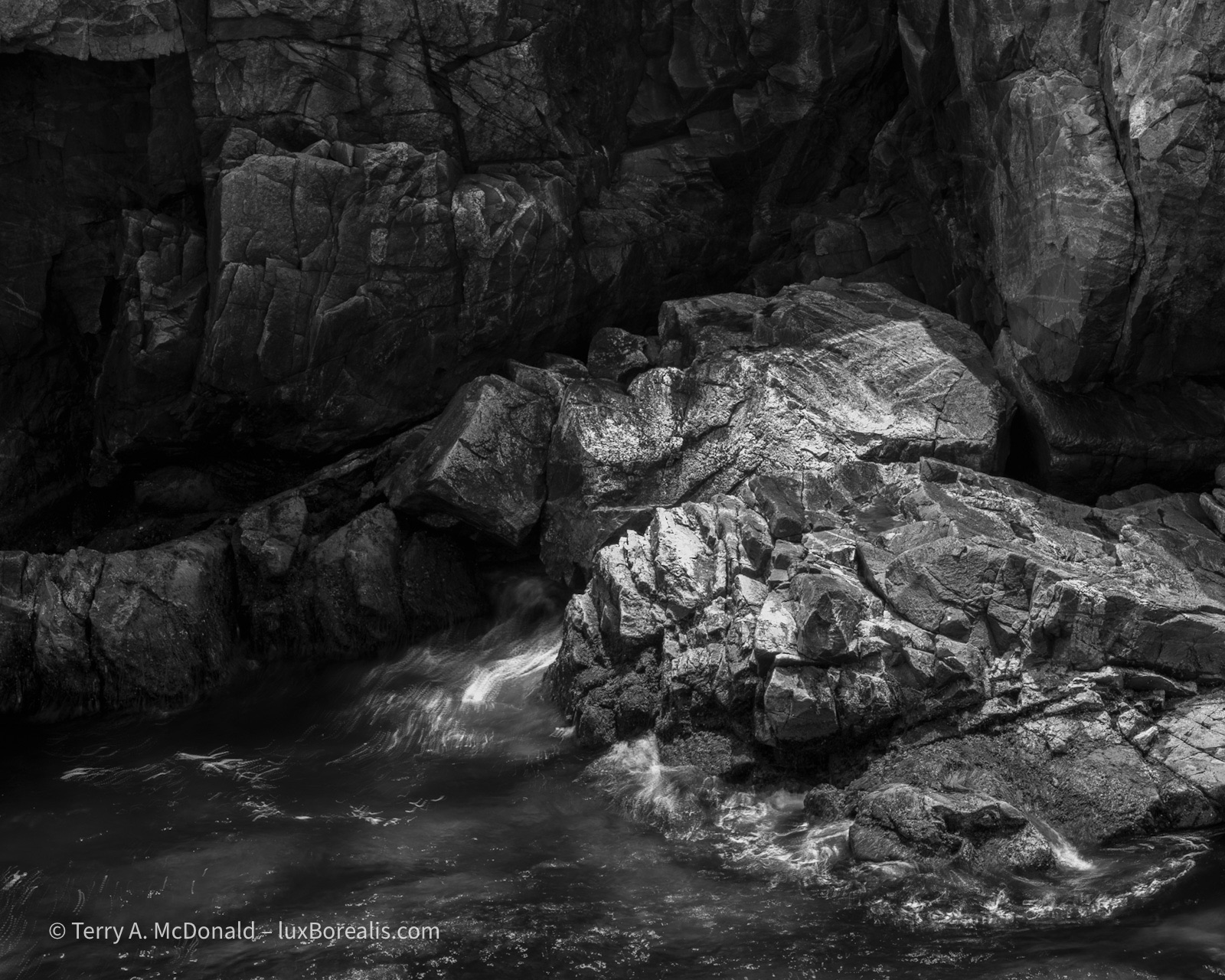
OM-1 | 57mm+POL | ƒ8 @ 1/50 | ISO 100 |HHHR | Raw | Lightroom
A slow shutter speed should blur the water when used with HHHR, but the shutter speed is not slow enough, leaving a ‘chatter’ pattern in some of the highlights.
But there were many places and views to celebrate. With my daughter’s get up and go, we hiked up Broad Cove Mountain early one gorgeous morning—a 20-minute constant uphill for which we were awarded not only this great view, but the continuous and melodic call of a Hermit Thrush.
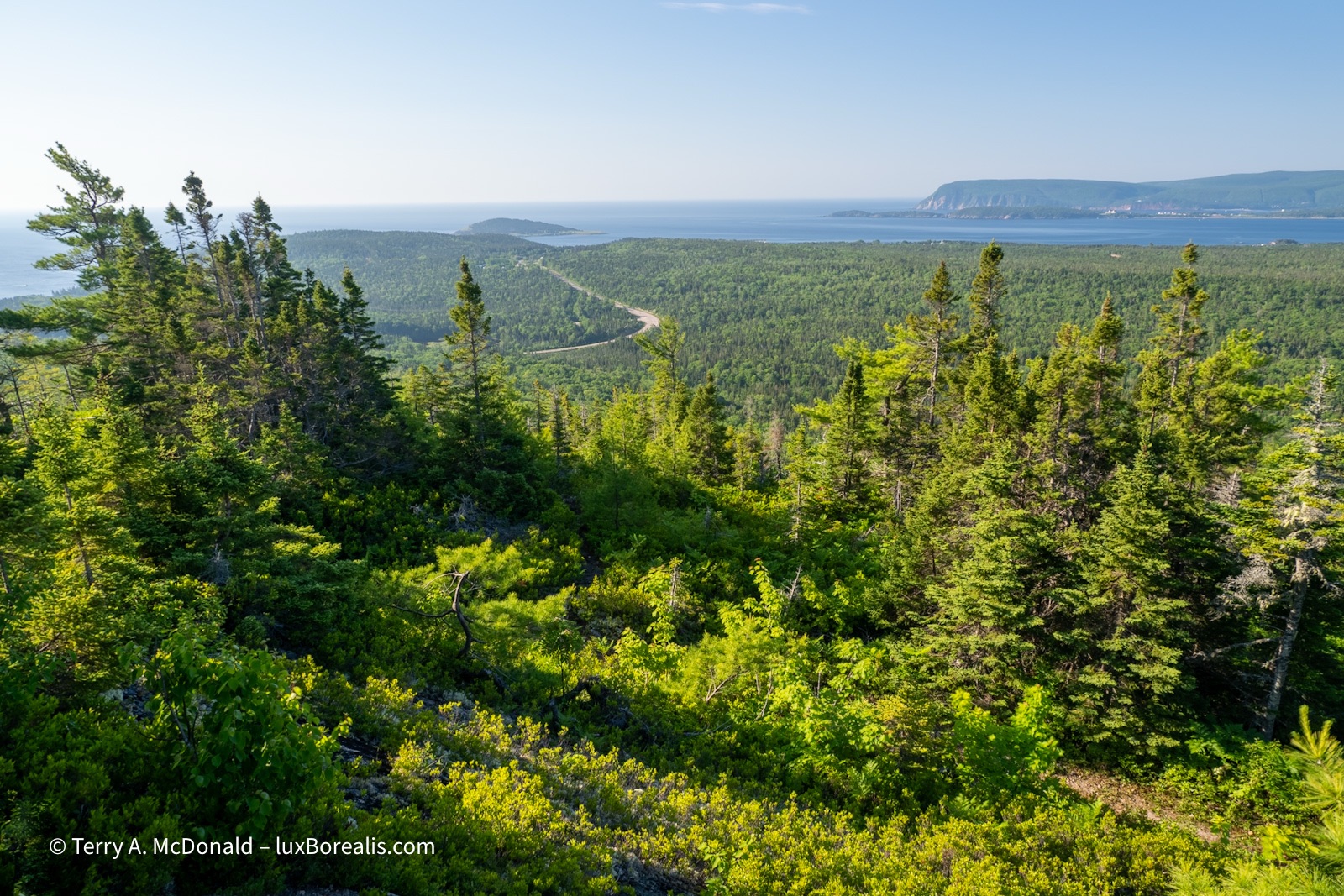
OM-1 | 12mm+POL | ƒ5.6 @ 1/500 | HHHR | ISO 800 | Raw | Lightroom
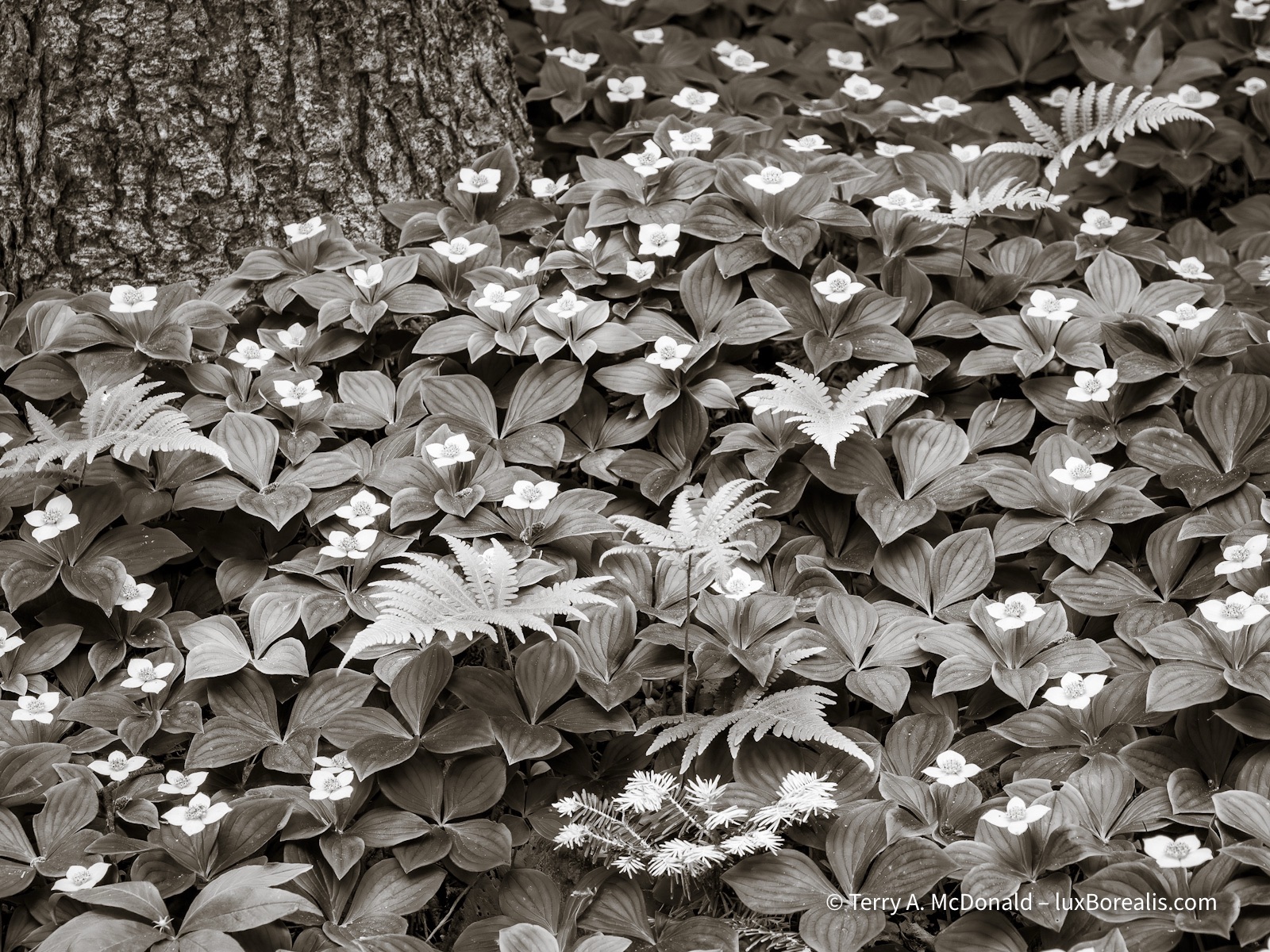
OM-1 | 60mm+POL | ƒ8 @ 1/320 | ISO 800 | Lightroom
Bunchberry (Cornus canadensis) and various ferns carpeted the wooded slopes of Middle Head.
We made trips up to the north end of Cape Breton, to Bay Saint Lawrence and Meat Cove and around to the even more dramatic western coast. But even with the direct wind across the Gulf of St. Lawrence, the rollers coming ashore at Meat Cove, were not the dramatic crashing waves that would have added to this photo.
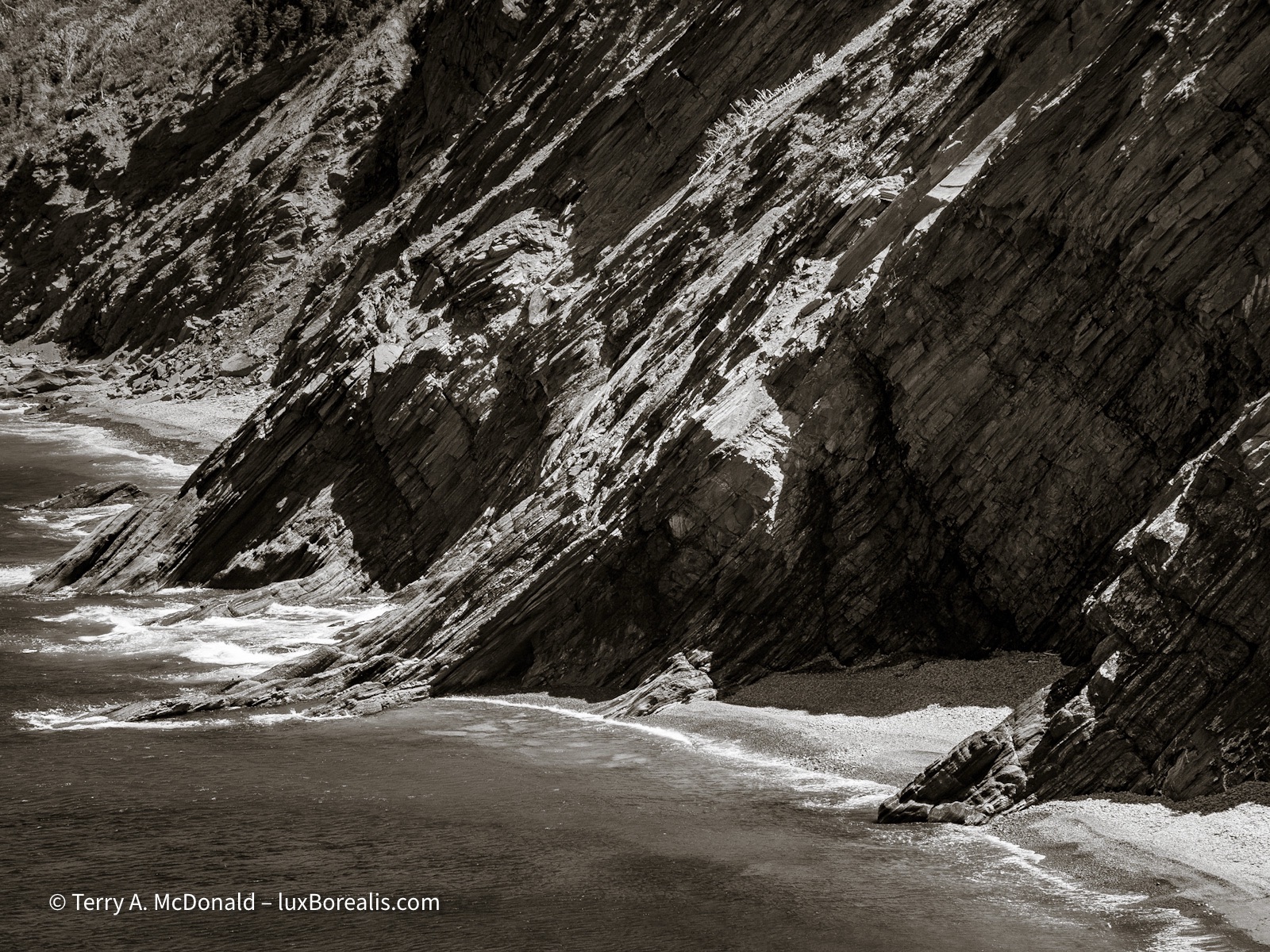
OM-1 | 75mm+POL | ƒ5.6 @ 1/250 | HHHR | ISO 200 | Raw | Lightroom
French Mountain Bog
Always a highlight is a visit to a bog; in this case a bog-like sloped fen. The Bog Trail at Cape Breton Highlands National Park is exceptional, not just for its extensive boardwalk, but also for its wonderful diversity. Besides all the usual pitcher plants, tamarack, sphagnum moss, etc., there were a few new species of orchids plus a completely new discovery for us: a fungus that invades a plant and turns the green leaves to a soft coral pink.
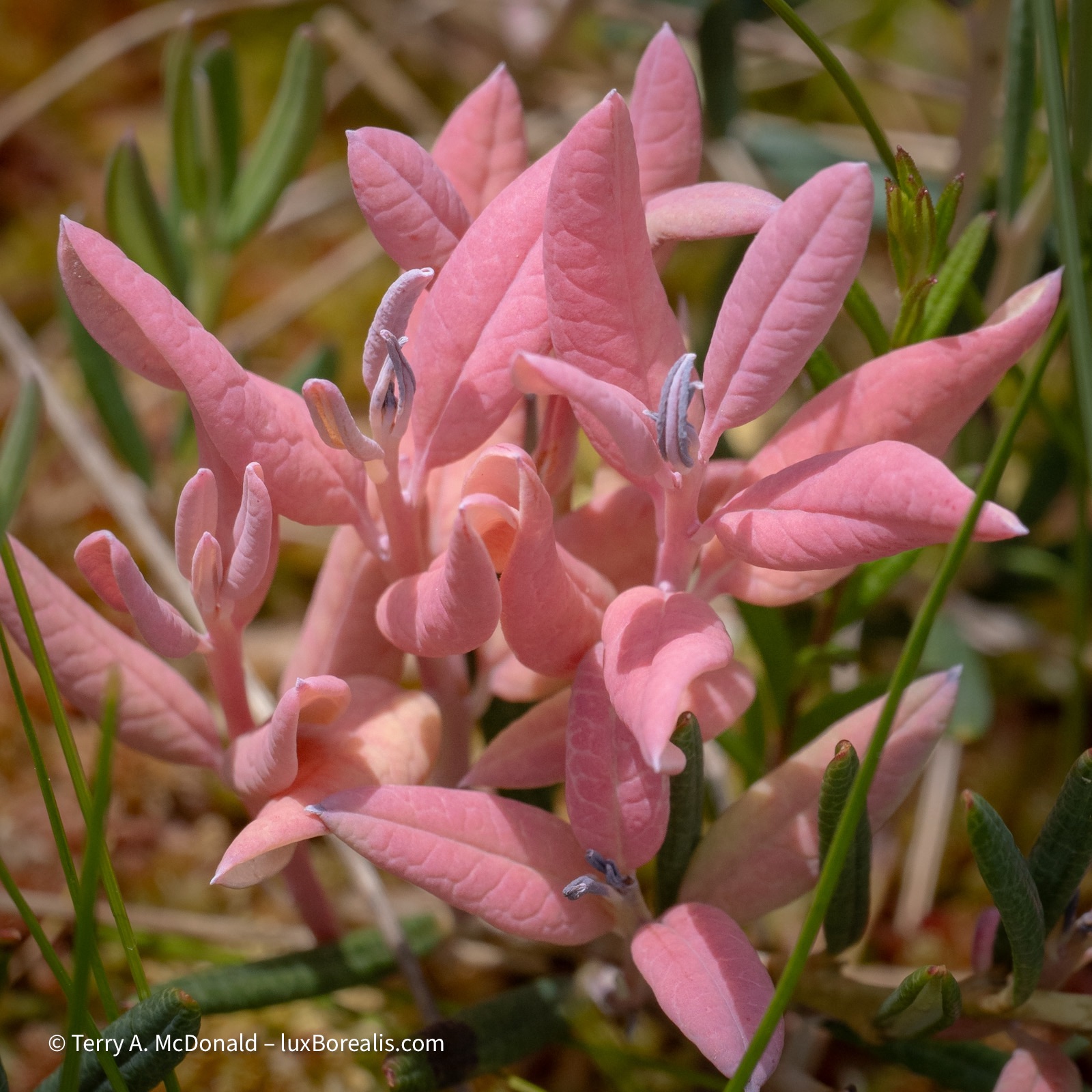
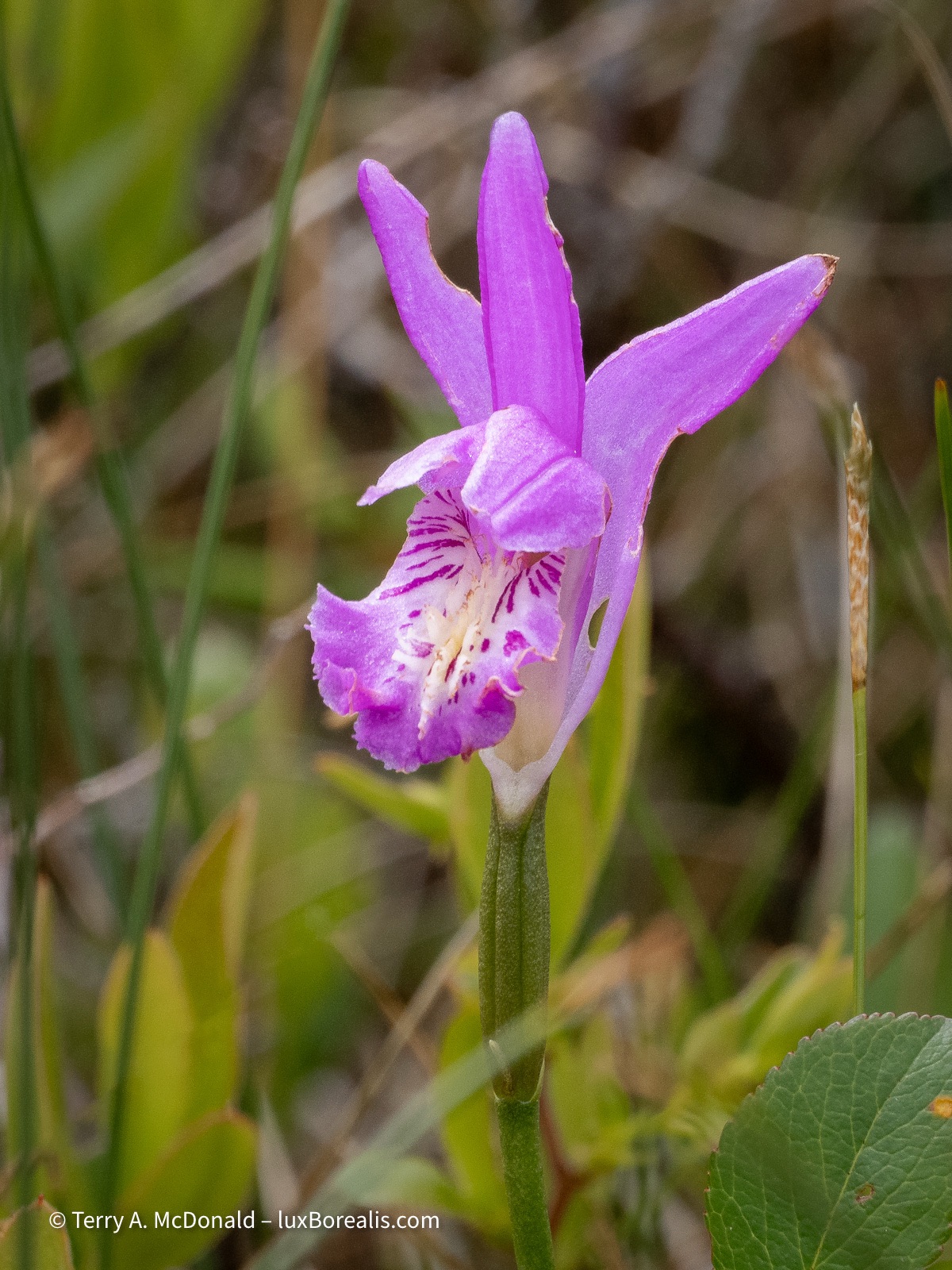
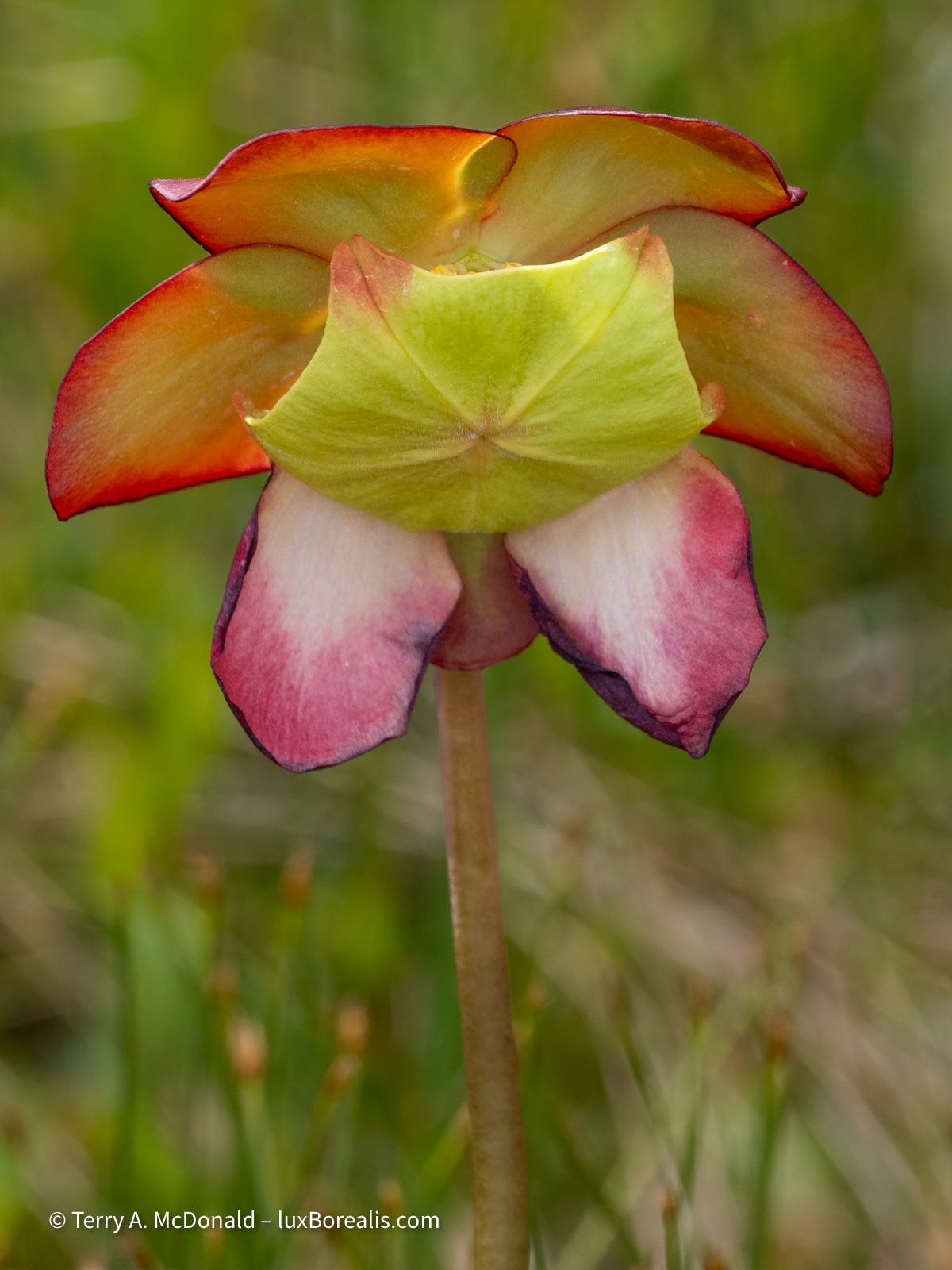
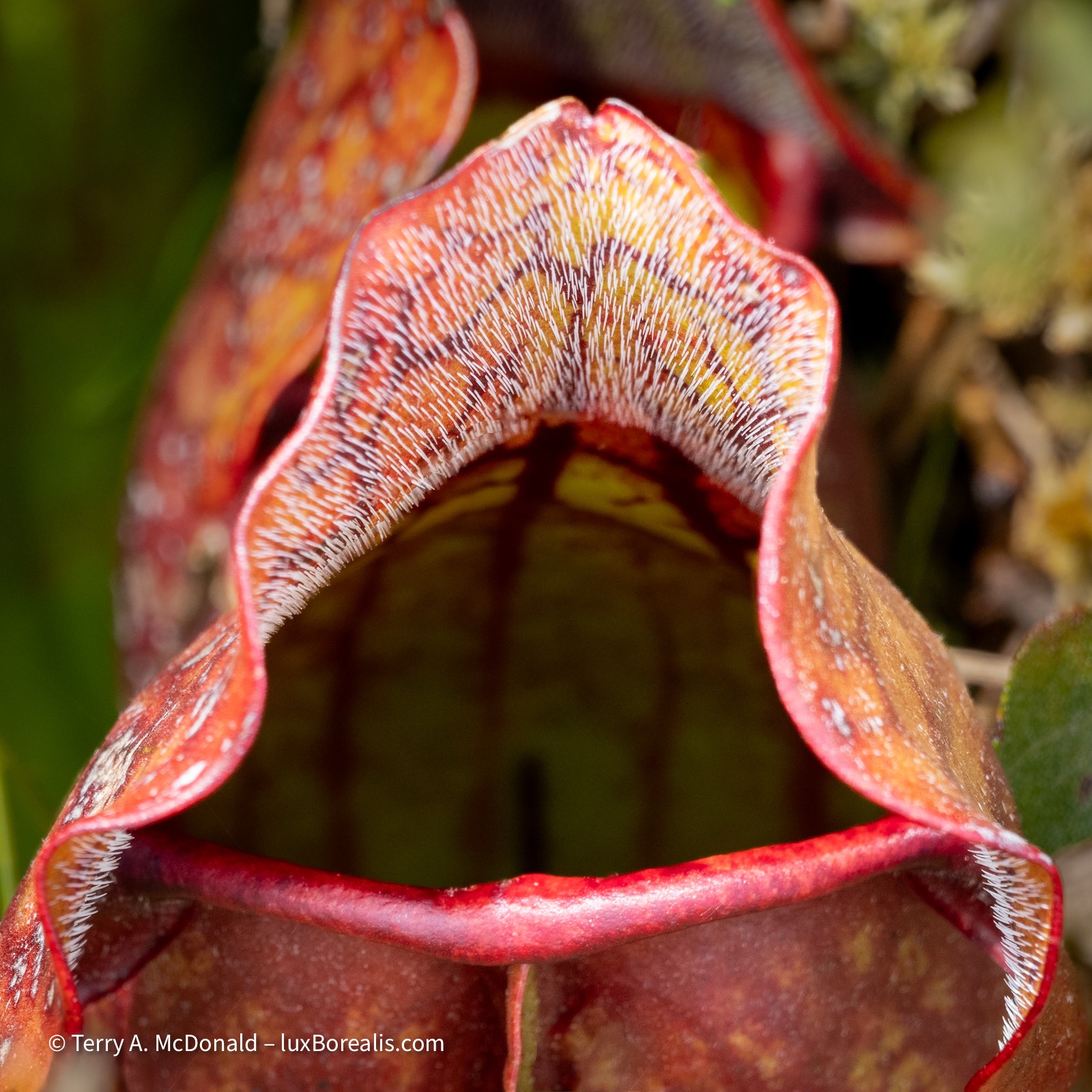
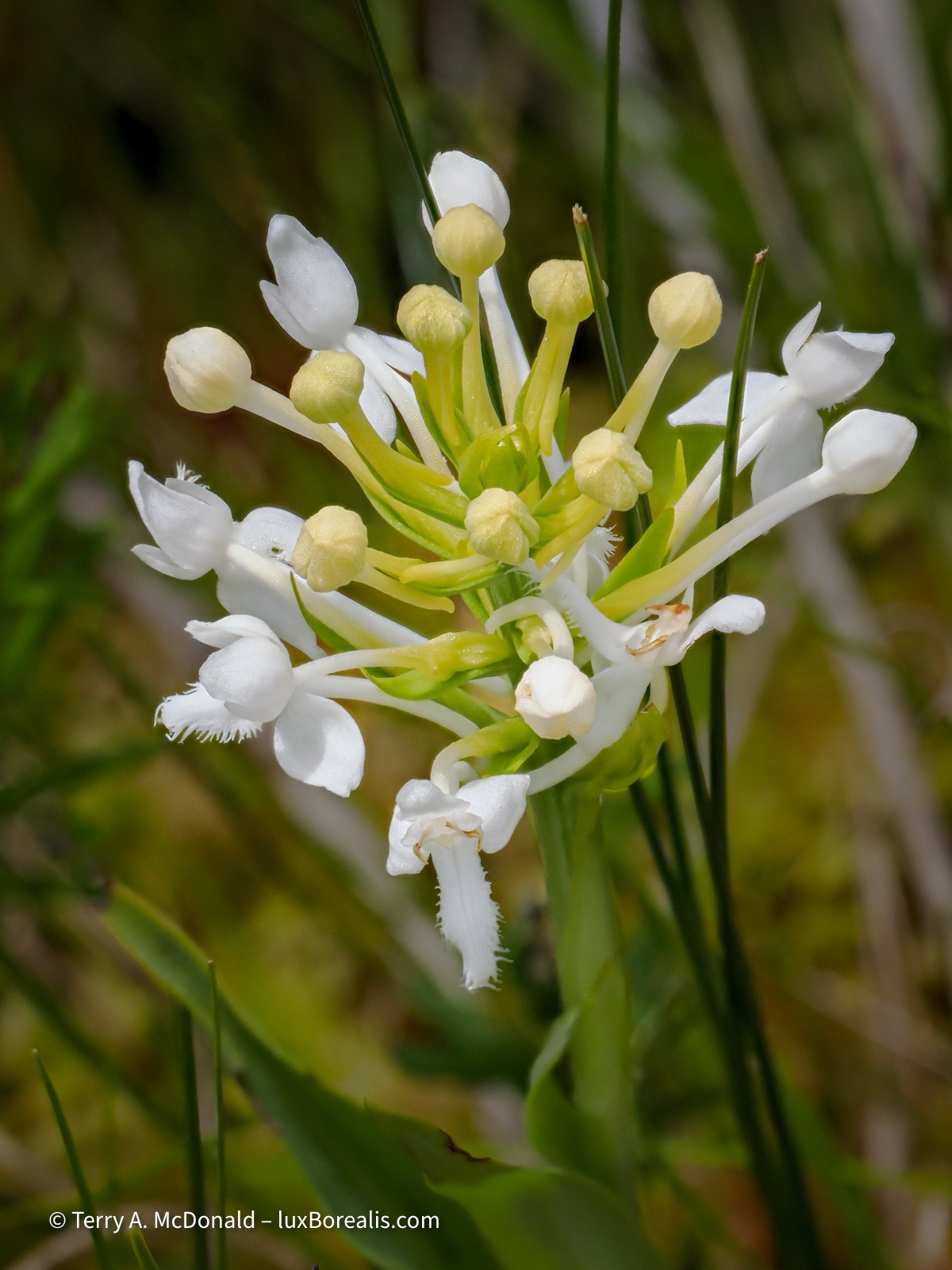
Focus Stack of 10 images
All photos were made with the 100-400mm. While it may seem overkill to use an 800mm equivalent focal length lens for close-ups (why not the 60mm Macro?), working from a boardwalk is restrictive, soi welcomed the extra reach. As well, the close focussing distance of 1.3m at 400mm offers exceptional closeness.
The challenge was the wind. Being at the top of a flat-topped hill over 400m in elevation right next to the sea means all that wind at sea level gets squeezed as it’s forced up and over the hills. So, yes, wind was a challenge. Thank goodness for high ISOs and fast shutter speeds. There was one lull in the wind that allowed me to make a Focus Stack of the White Fringed Orchid. But, the wind can also provide a creative advantage.
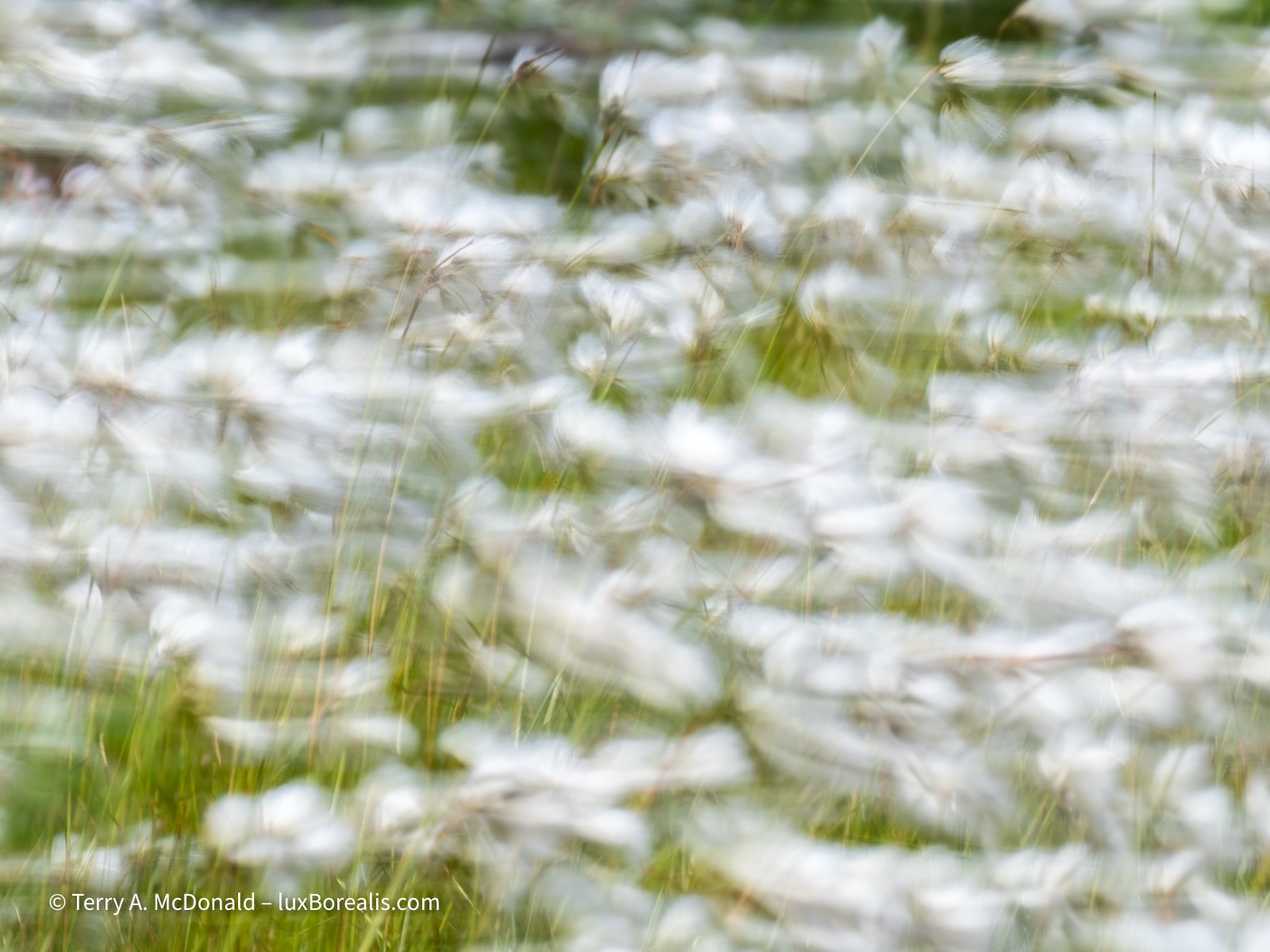
OM-1 | 300mm | ƒ13 @ ⅛ | ISO 80 |LiveND16 | Raw | Lightroom
This was not a ‘one-off’ but the result of a number of trial exposures at different shutter speeds and wind speeds.
Flash back
One of the highlights for Laura and I was re-photographing a photograph I made 37 years ago on our honeymoon. The west coast of Cape Breton is particularly dramatic with the Cabot Trail winding its way up and down and around each headland. There are a number of pull offs with panoramic views but one of our favourites is this one near La Bloc Beach. The Cabot Trail is truly one of the most spectacular drives in North America.
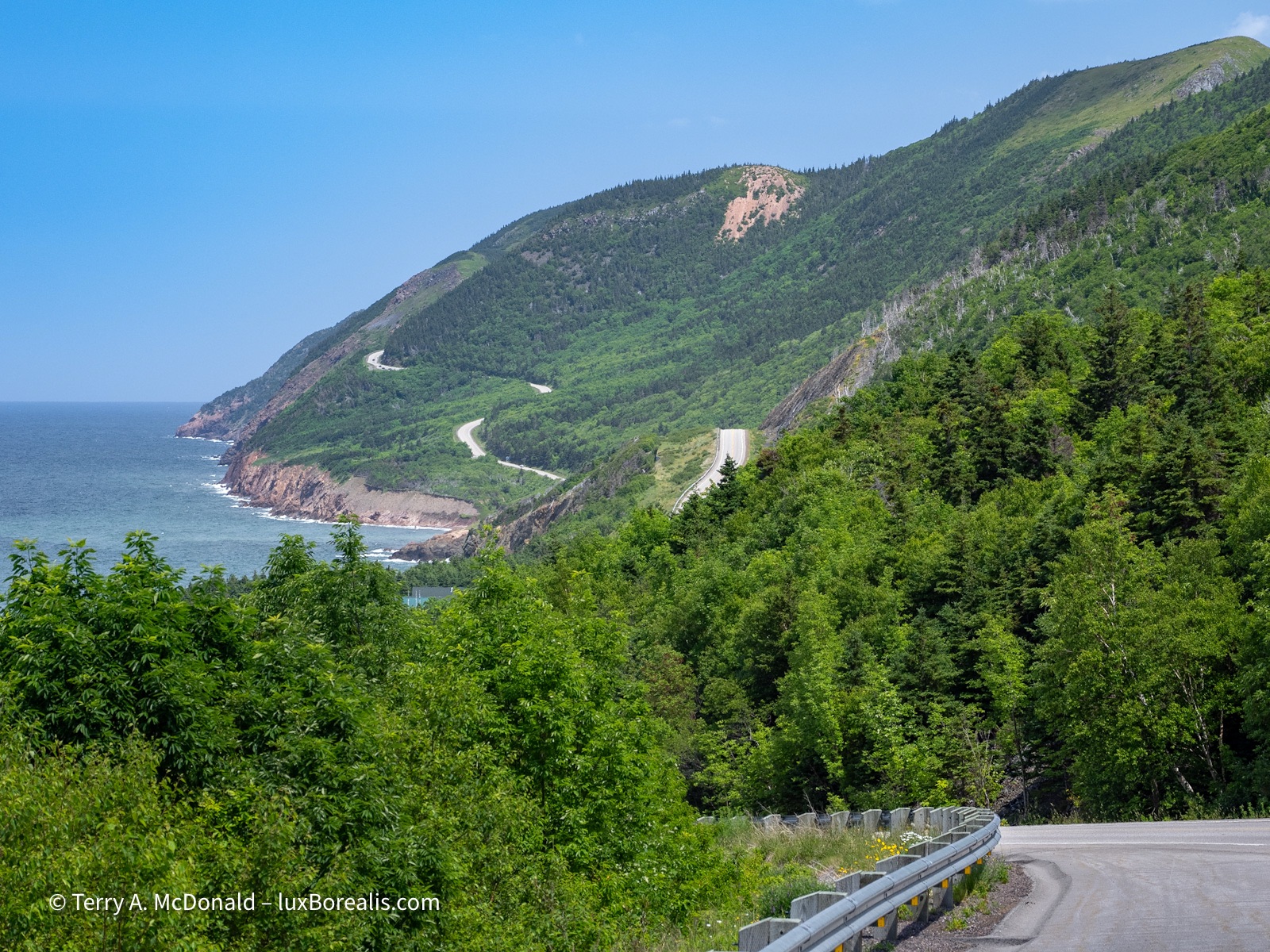
OM-1 | 12-100mm/4+POL | ƒ5.6 @ 1/320 | ISO 200 | HHHR | Raw | Lightroom
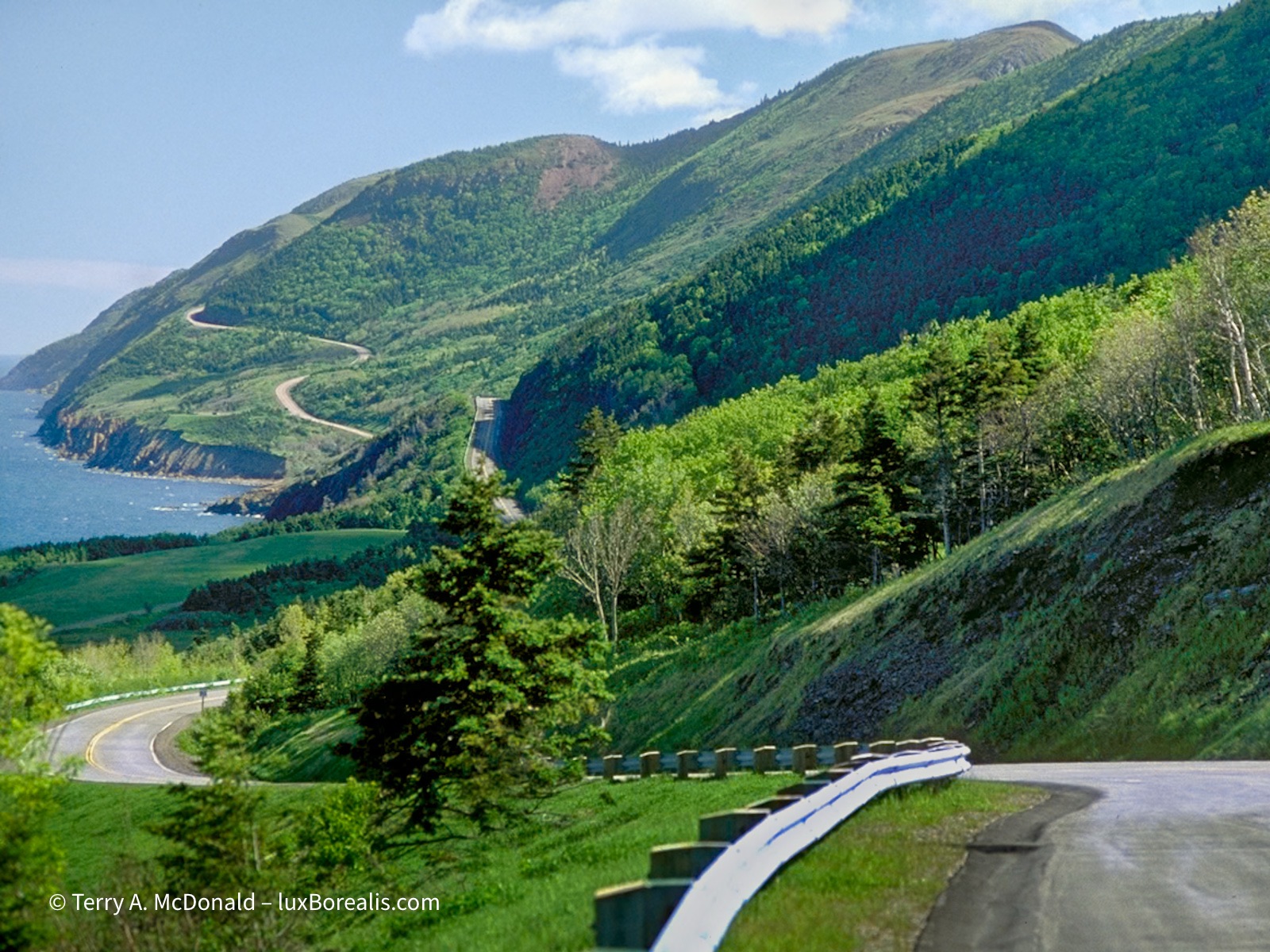
OM-1 | Zuiko 100mm/2.8 +POL| Digital scan from Fujichrome Velvia 50
The trees have sure grown, making the scene appear more natural.
One final photo is a view we passed a few times, commenting each time on how beautiful and pristine this creek and valley look, and hoping a moose might poke its nose out of the bush. Sadly, we didn’t see any moose during our whole trip, but the view is still worth enjoying and one I could stare at forever.
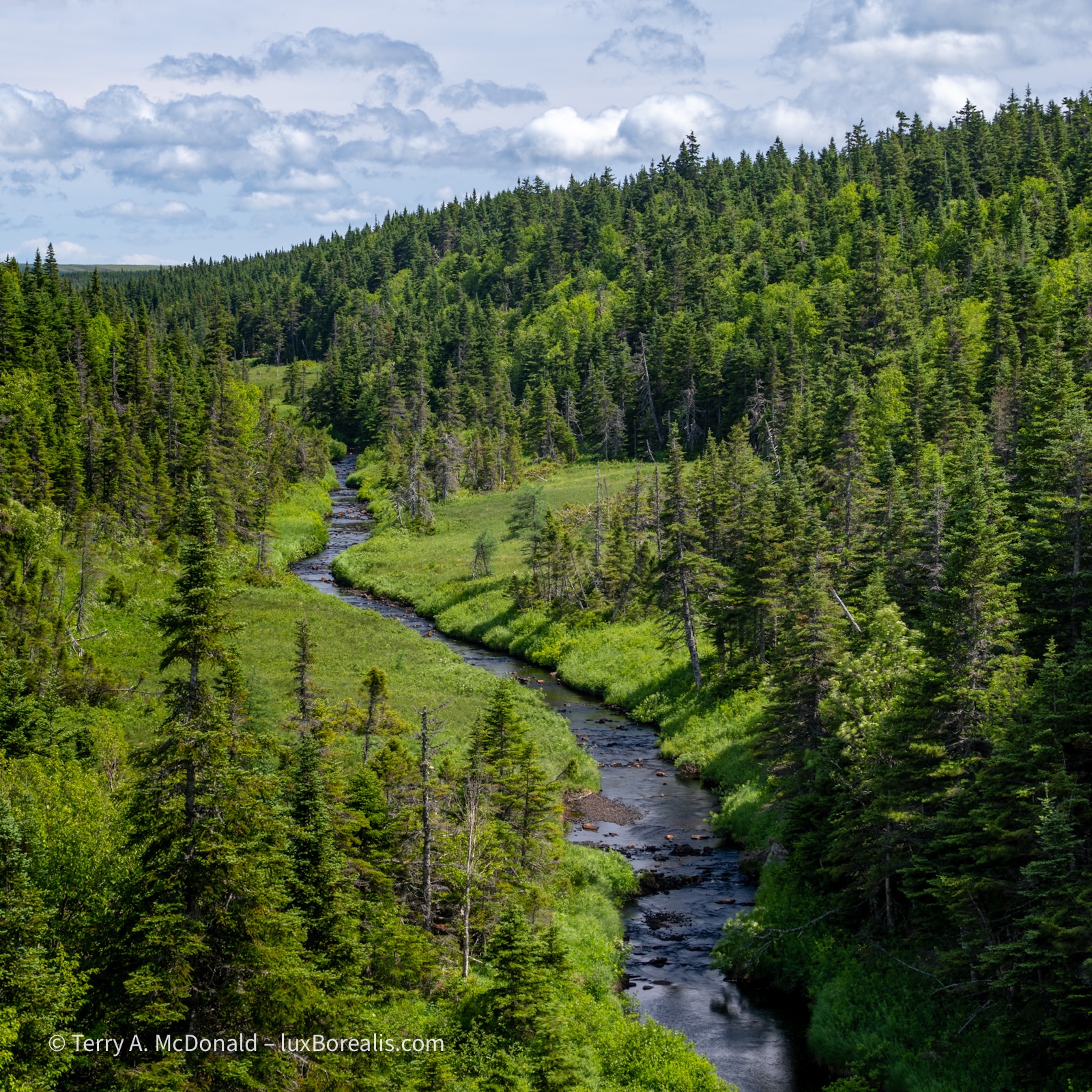
OM-1 | 38mm+POL | ƒ5.6 @ 1/160 | ISO 200 | HHHR | Raw | Lightroom
This brings to an end the Cape Breton portion of my trip Down East. After the family wedding we’ll be attending, I’ll be driving back to southern Ontario will add a post about my stops at Sackville, Hopewell Rocks, and Fundy National Park.
Thanks for reading! Please add to the discussion with a COMMENT, photo or travel questions or observations. Be sure to SHARE with other photographers, travellers, nature-nuts, geo-geeks and with your camera or nature club.
Discover more from luxBorealis Blog
Subscribe to get the latest posts sent to your email.
 luxBorealis Blog
As per usual … stunning photographs!! And I do appreciate the geologic / geographic explanation of how CBI got where it was and how it happened. Quite fascinating. Very enjoyable read.