Finally, a winter photography day
I just came back from 5 great days up at the family cottage – great days for family and down time, absolutely lousy for photography. Dull grey skies, bitter cold followed by rain but with no snow to “clean” things up. So today I went out to try and make up for it. I figured that after the cold night we’ve had, there might be some interesting ice up around the small limestone gorge around through which the

Eramosa River, Everton, Ontario
Eramosa River passes at Everton. There wasn’t, but here’s what I came up with over a period of 70 minutes or so.
The first photograph is of the general area I was working in. Dull green cedars, dull rock, dull sky, but dynamic water. So I de-emphasized the sky and composed and shot knowing I would be turning everything into black and white. What I found, as the afternoon progressed, was that my journey started with the obvious and gradually morphed into the abstract. The more time I spent looking, the more I began to see.
So here is the obvious – a small waterfall, but a wonderful dynamic created by the rushing river below the waterfall. I wanted to keep the birch on the right side as it provided a sense of depth so I knew I would need at least ƒ8, probably ƒ11. Also, due to the brightness of the “white” water, I would also need to increase my exposure to +1 stop above “normal” (using exposure compensation).

Eramosa River, Everton, Ontario
However, with these settings at ISO 100 my shutter speed was only 1/15th – too fast to really capture the swirling movement of the water. Adding an NDx8 and my polarizer slowed the shutter speed to 1 second at ƒ11 and, at ƒ16, 2 seconds. As it turned out, ƒ/11 was enough depth-of-field. The concern with ƒ16 and small sensors is that diffraction will reduce sharpness, so ƒ11 was used for most shots. However, a 2-second exposure produced the best water patterns, so I used ƒ16 knowing that stinger capture sharpening would be needed . One thing I’ve learned about moving water shots is that the patterns in the water are different with each exposure. I ended up exposing 8 frames before I had one with a pattern I was satisfied with. I photographed the same scene to produce a square composition – one that I am equally pleased with.
In Lightroom, I converted the raw file to B&W then used the basic controls to bring out the contrast between white water, dark water, white snow and dark rock. I ended up toning down the snow in the bottom right using a graduated mask and increased the brightness of the birch using a adjustment brush. Lastly, I worked with an adjustment brush at 50% flow to build up some of the exposure and contrast in the water flowing downstream.
This is a very pleasing image for me, given the dull day. Using increased contrast, I was able to extract from the flat lighting a three-dimensional dynamic image portraying the beauty hidden by the initial dullness.
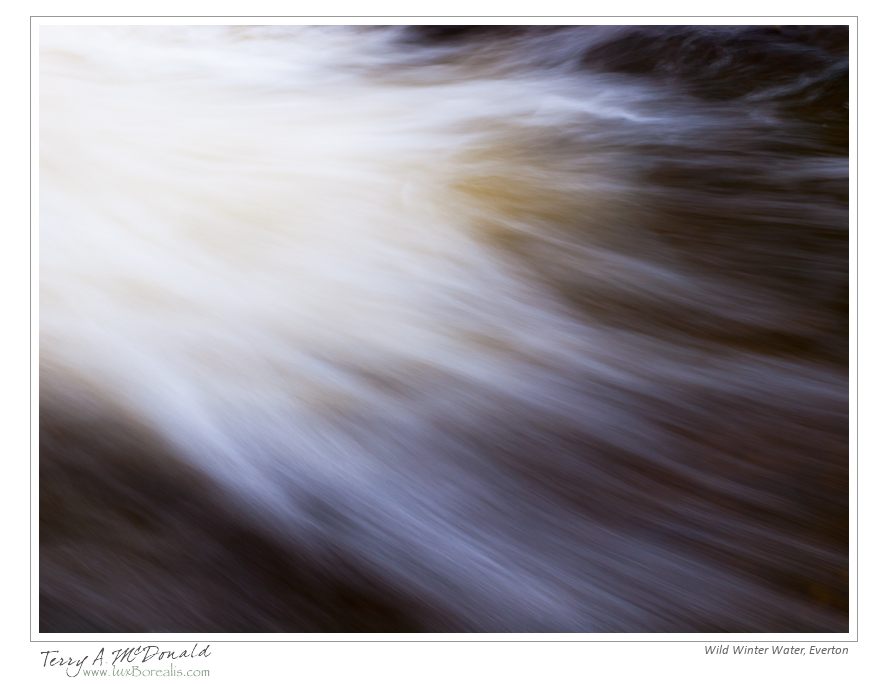
Eramosa River, Everton, Ontario
With the “grand scene” finished, I began looking at some of the details. I worked on capturing that great flow of water. In this case, I kept the photo in colour and, in fact, increased the saturation significantly (100% – a first time for everything!). I found the increase in saturation gives the water and the flowing streams of white greater depth – a three dimensionality below the water that added to the three dimensionality across the water and from upstream to downstream. After a few ‘sketches”, I determined that a 2-second exposure gave the most dynamic water pattern, so set the aperture to ƒ14 accordingly. This is in combination with ISO 100, a polarizing filter, an NDx8 filter and +2 exposure compensation.

Eramosa River, Everton, Ontario
For about half the time I spent there, I worked on another small waterfall downstream of the original. In this case, I was looking down on it from above, and became intrigued with the interplay of water and ice, foreground and background. The water seemed to disappear into a nothingness. I had a terrible time with some cedars that kept creeping into the bottom of the frame and some snow that was on the rock in the upper right. This made composition critical. I could have cropped them out, but I would rather make full use of the sensor and spend a few extra minutes nailing down precise composition. Originally, I composed this a horizontal photograph due to the right left movement of the water. While it “works”, when I changed to vertical, everything seemed to fall together more precisely due to the natural shapes and lines in the image.
Again, a 2-second exposure gave the most dynamic water pattern, so I adjusted the aperture to ƒ8 along with the polarizer, NDx8 and an exposure compensation of +1.3 stops. In Lightroom, the raw file was converted to B&W and additional contrast was added to the water and the ice. Exposure was carefully controlled so as not to lose detail in the bright lower left. Finally, I added a split tone preset I created called “Subtle Sepia” which I find adds depth and life to the otherwise quite grey-looking scene.
Everton is a place I will return to throughout the winter. I must thank Alan Norsworthy’s Flickr page for introducing me to this photographic gem. There are many more wonderful images here awaiting just the right snow, ice and light.
For more on Winter Photography, sign up for one of my Winter Nature Workshops in Guelph on January 21st and in Dundas (near Hamilton) on January 28th. To learn more about Lightroom, attend the Introductory Lightroom workshop on February 18th followed by Advanced Lightroom on the 25th – both in Guelph. More information can be found on the Workshop page of my website: luxborealis.com
Winter Workshops
Check out my Winter Workshops page – top right of this page.
I am offering two winter outdoor workshops – one in Guelph on Saturday, January 21st and the same in Dundas on Saturday, January 28th. These are full day workshops with a morning field session and an afternoon critique session.
In February, I am offering a two-part Adobe Photoshop Lightroom workshop. On Saturday, February 11, I will teach basic Lightroom – Library and the basics of the Develop module. On Saturday, February 18, we’ll go into more detail on the Develop side plus do some printing using the Print module.
For more information visit: Winter Workshops
First Snow of December
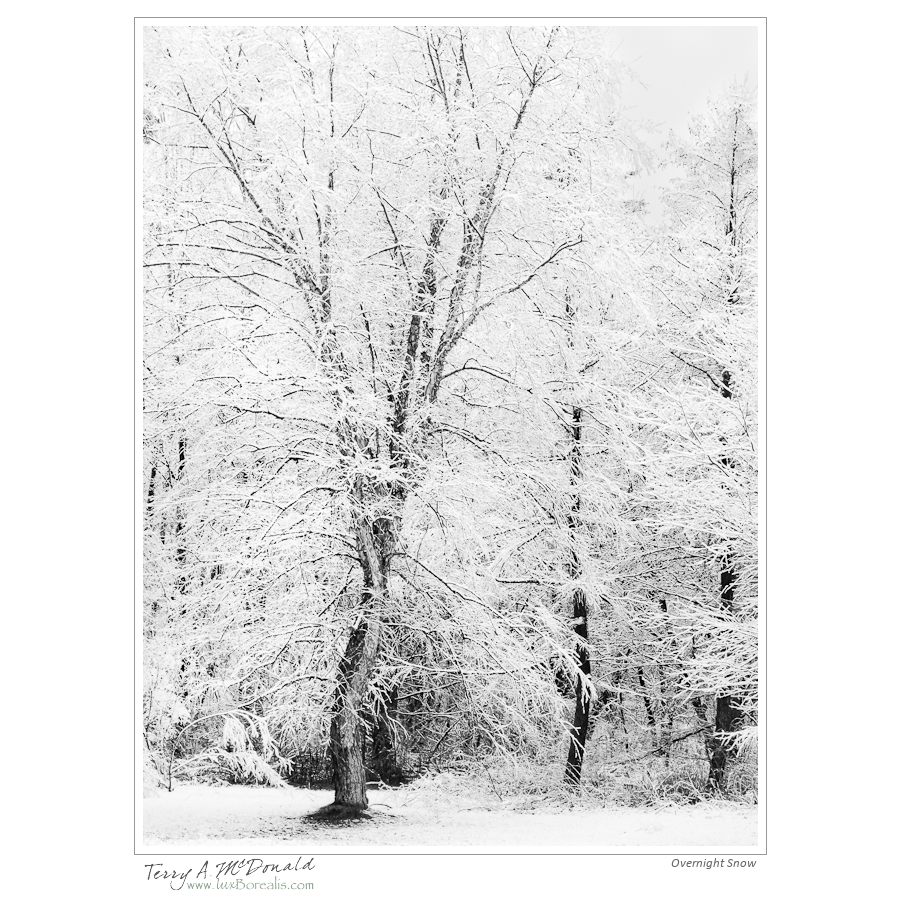
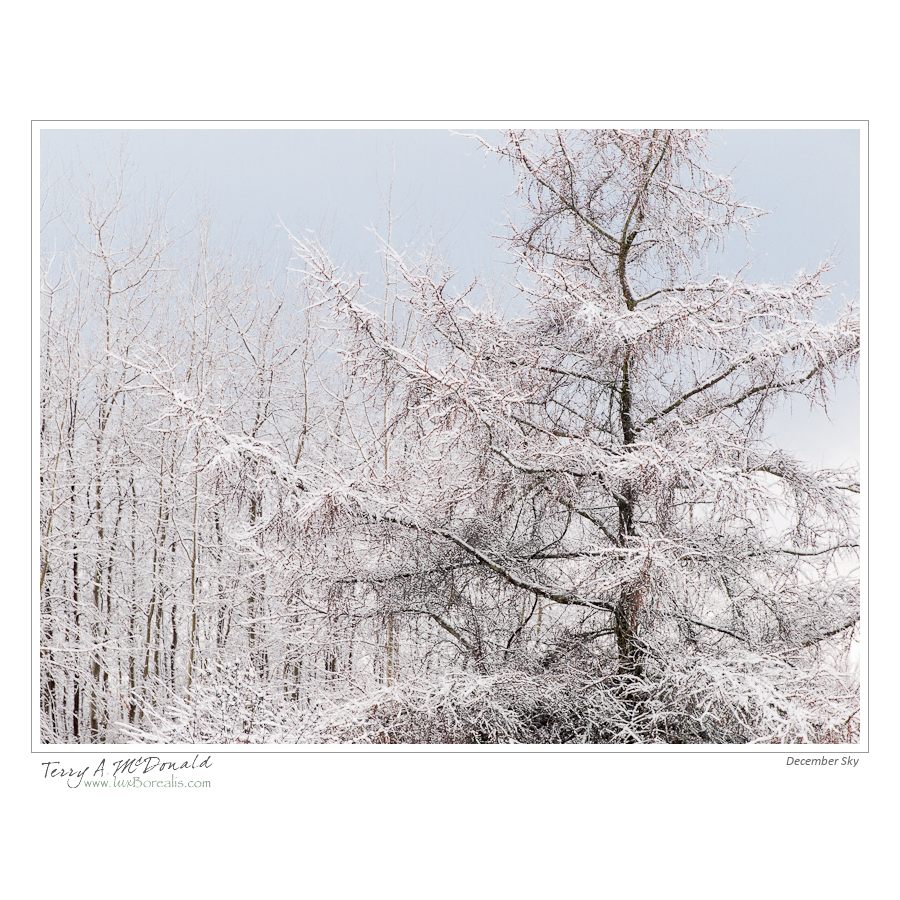
We awoke to a lovely winter morning scene of snow draped on every branch, twig and wildflower stem – sheer beauty. The only thing missing was some light – just a grey sky. So I headed out to the Arboretum – a favourite location close by – hoping to find just the right scene to reflect the day. Here are three. In the first two photos, I made a conscious effort to reduce/eliminate the sky as it did not contribute to either photo. In the third – December Sky – the sky had taken on a beautiful steel-blue tone that I couldn’t pass up. It was just the kind of sky I hoping to see on a day like today, one that says “Snow!”
-
- Overnight Snow
-

- Sumac, Winter

-

- December Sky
November View
Here’s a photo from earlier today… finally we had some light to work with – a brilliant November day with record-breaking temperatures.
I’ve passed this abandoned shed about a thousand times, always looking for just the right angle and light. Finally, I had some time to go over and have a closer look at a time when the lighting might just be ideal – confirmed with The Photographer’s Ephemeris, no less. Originally, it was the two garage doors out front that attracted my attention, but when I went around back, the November sun was creating this startling mosaic of shadow and light, peeling paint and corrugated sheeting. Fantastic. I had to work quickly as the shadows were disappearing with the sun moving around this side. I managed about 6 set-ups and 4 or 5 really usable photographs.

To my normal way of thinking, this photo should not work, after all, the tree is is a barrier blocking the view, disrupting the base pattern! Yet, there’s something about it I’m still trying to figure out that makes this such a compelling photographer for me. I love the pattern of shadows and light; the empty window adds another dimension with the seemingly dancing tree limbs adding movement.
Perhaps it’s the linear patterns and decay of the manufactured contrasting with the more recent and, ultimately, more enduring organic patterns of nature represented by the tree. Yet, the tree, too, is in a state of decline with autumn having stripped its leaves. I’ll look forward to printing this, for sure.
November Photo News Newsletter
The November Photo Newsletter is just been published. You can download a copy from the Newsletters page of my website: http://www.luxborealis.com/newsletters.html
Whether you shoot with Canon, Nikon, Pentax or Olympus at 5mp, 12mp or 18mp, photographers are always looking for ways to improve the image quality of our work. This month I take a look at nine ways to maximize image quality without the expense of buying even more megapixels. You will read about cleaning sensor dust, the advantages of a using middle apertures and a tripod, plus more.
Remember – Subscribers to my newsletter get a 20% discount off their first Fine Art Print Service order. Imagine custom-made fine art prints of your best images printed on museum-quality watercolour paper with archival inks.
As well, subscribing allows you to enter the photo contest. Submit your best nature and landscape photos from October, November and December and win a Print Service credit.
Find out more today and get out and enjoy this November weather!

November Squall, Albemarle Creek, Bruce Peninsula
 luxBorealis Blog