Dundas Valley Spring 2012
I spent a beautiful (albeit windy) Saturday morning leading my Nature Photography class from Mohawk College through a small part of the Dundas Valley in hopes of shooting some close-ups of spring wildflowers and other nature photos. I think we all came away with some good photos, but I must admit to being rather disappointed with the day. While there were quite a few Jack-in-the-Pulpits, there was an almost complete lack of anything else.
To me, this is discouraging in such a typically bountiful area as the Dundas Valley. While there were many patches of mayapples, we saw only one clump of trilliums. While one could argue the flowers were finished early, there weren’t even any tell-tale clumps of leaves of trillium plants. Even dog-toothed violets (trout lilies) were in short supply (no flowers, of course, as they are long gone, but very few scatterings of leaves). Instead, vast areas of the forest were covered by mats of either forget-me-not or garlic mustard. From a photographic stand point, these worked quite well, but as a naturalist, I am rather concerned that these aliens have choked out native species of this area.
Even ferns were in short supply. There were very few in the forested area and no Christmas ferns at all; just a few around the mossy boulders.
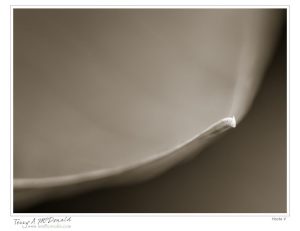
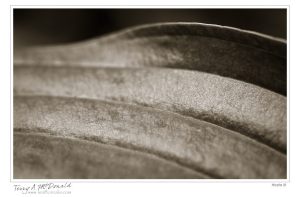
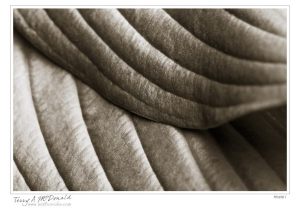
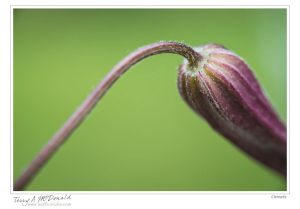
Oh well… I’ve posted four photos below. As it turns out, my wife Laurie had a wonderful morning birding in the Valley, having seen wood ducks, orioles, eastern bluebirds, a rose-breasted grosbeak and a myriad of warblers, including a number of palm warblers.
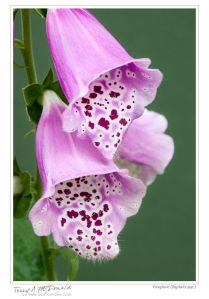
Some 105mm Micro-Nikkor photos
I’m still awaiting my D800e…perhaps just as well so Nikon has a chance to iron out a few bugs 😉
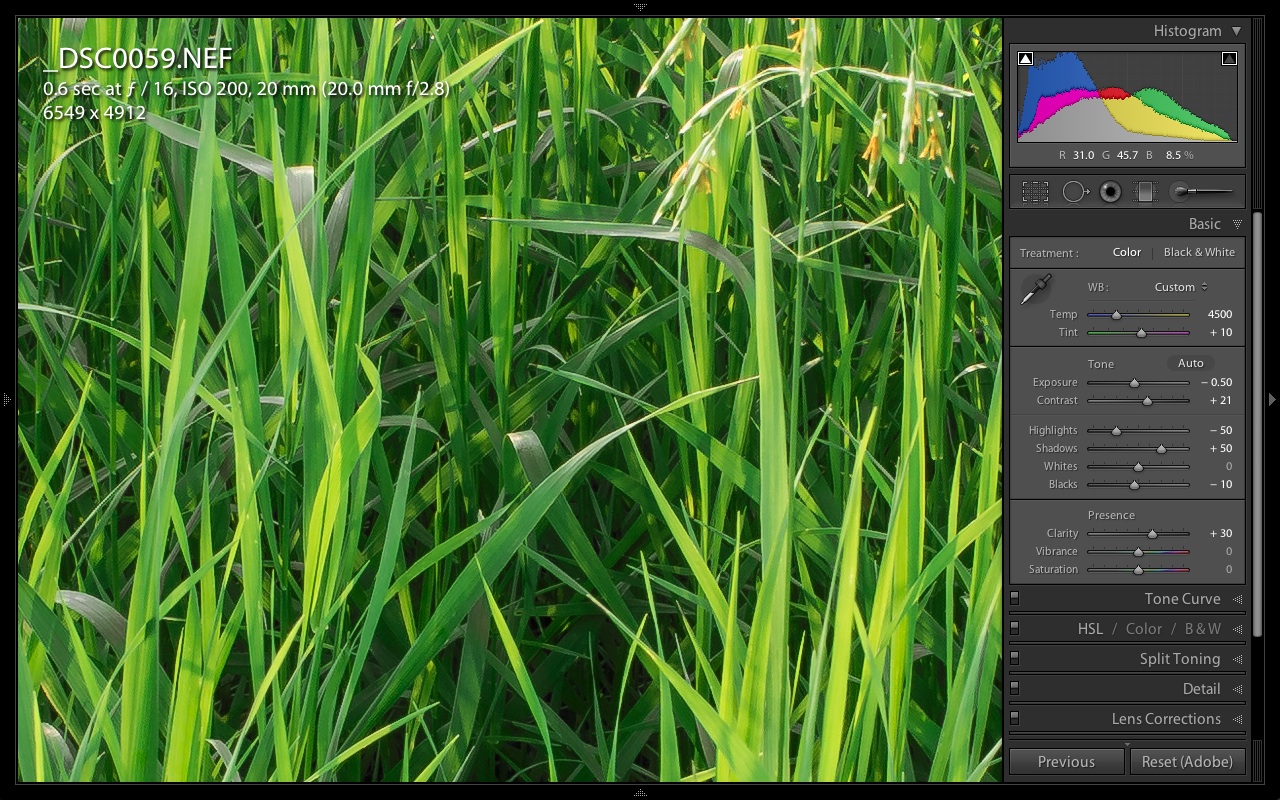
In the meantime, I’m using a D200 that belongs to my friend Kerry Little – many thanks! – to explore the prime lenses I’ve purchased. I am thrilled to be getting back into close-up and macro work with the 105 Micr-Nikkor, which, of course, is a 150mm on the DX camera. Wow – great working distance and wonderfully tight close-ups.
Our daughter turned 16 last week (yikes!) which brought a beautiful bouquet of flowers including two Protea. Our love of these beautiful and intricate flowers came with our trips to South Africa – their native land. Our two trips – both in April, their autumn – brought many close encounters with these flowers in the wild. Spectacular! They are incredibly ornate and colourful and make ideal subjects for photographers.
With these being cut flowers, I could move them to an east window after the sun had passed, giving strong, but filtered light. I shot on a tripod allowing for precise composition and the longer shutter speeds needed for small apertures. It was a luxury to be able to rotate and move the vase to get just the right views, framing and focus – something I don’t have the option of doing when photographing in the field!
Nikon D800 – “Should I upgrade?”
I have been asked by a number of people about whether they should upgrade to a Nikon D800. They are understandably attracted by the amazing potential that this camera holds for higher quality digital photographs and video. Once they get past the shock of its price, they start thinking about that state-of-the-art 36mp sensor – bigger has to be better, right?
Well perhaps, but not for everyone. There are a few things you need to consider before jumping on the D800 bandwagon:
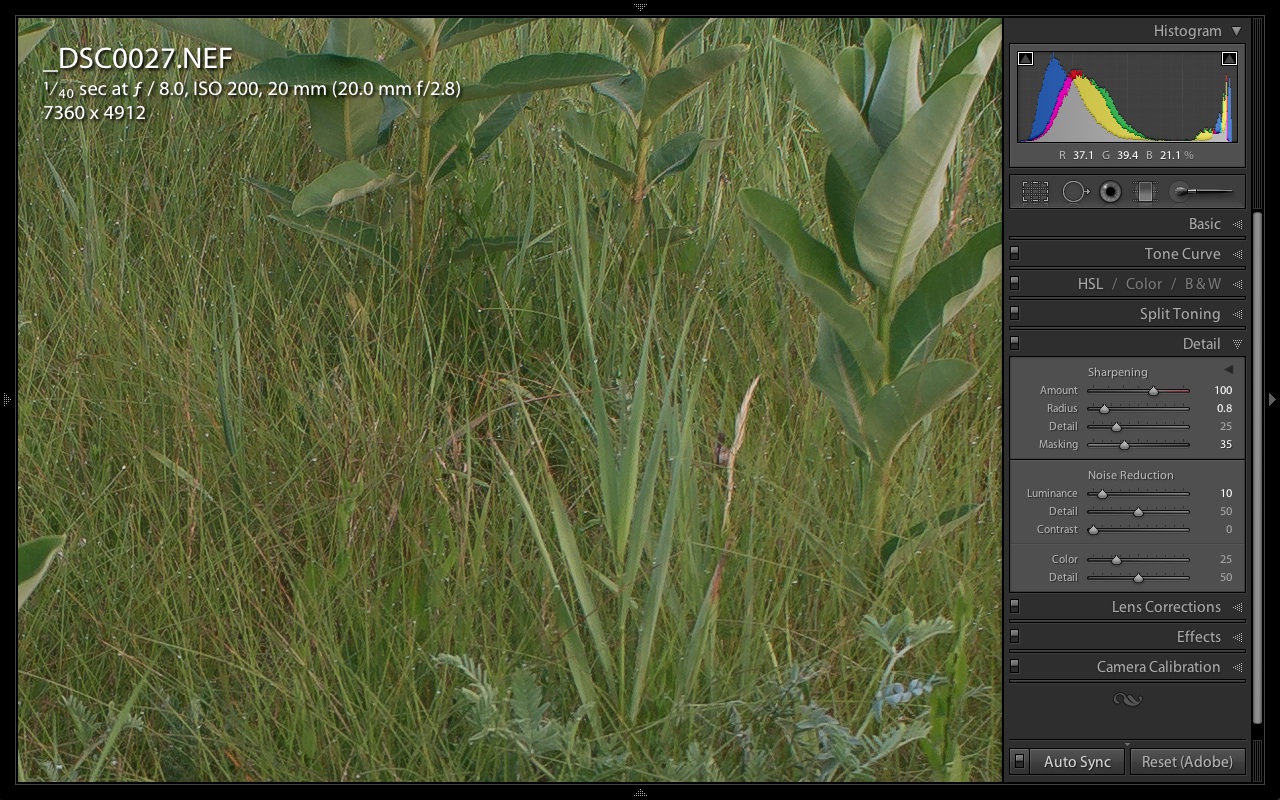
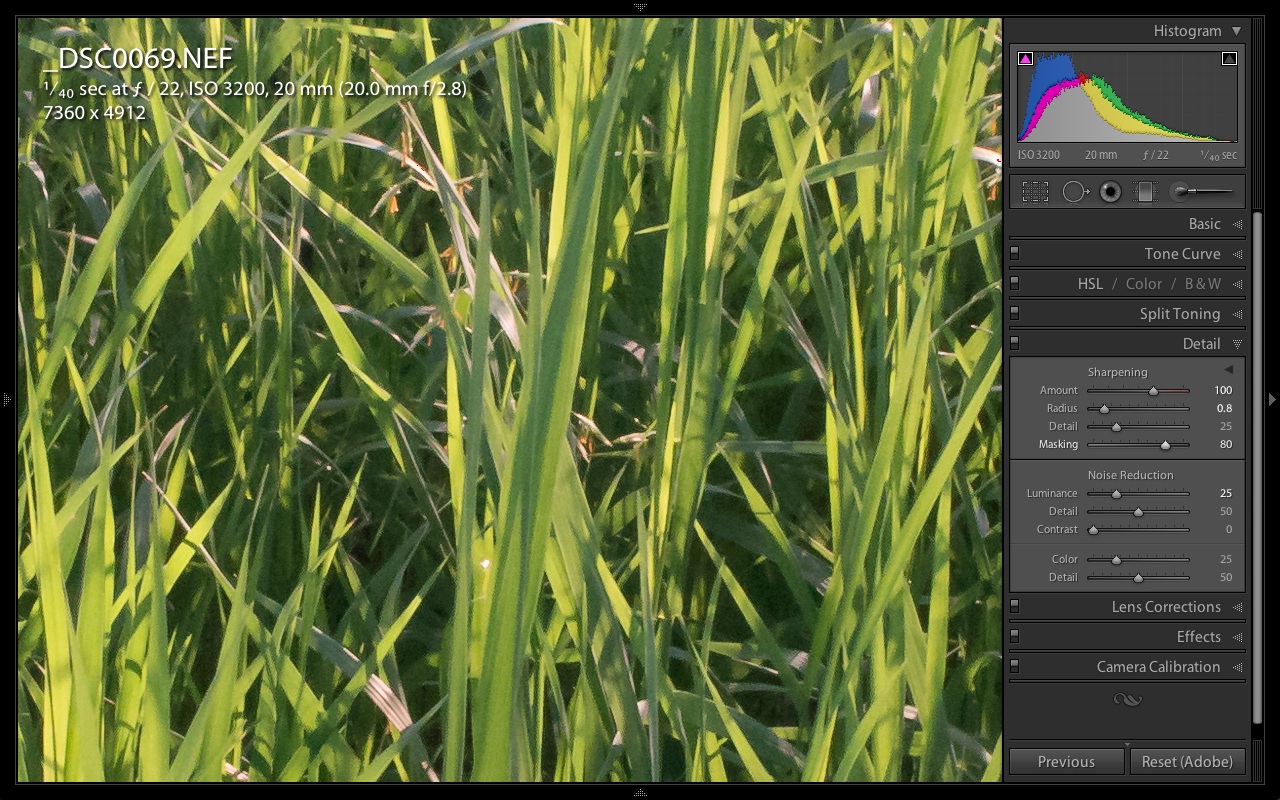
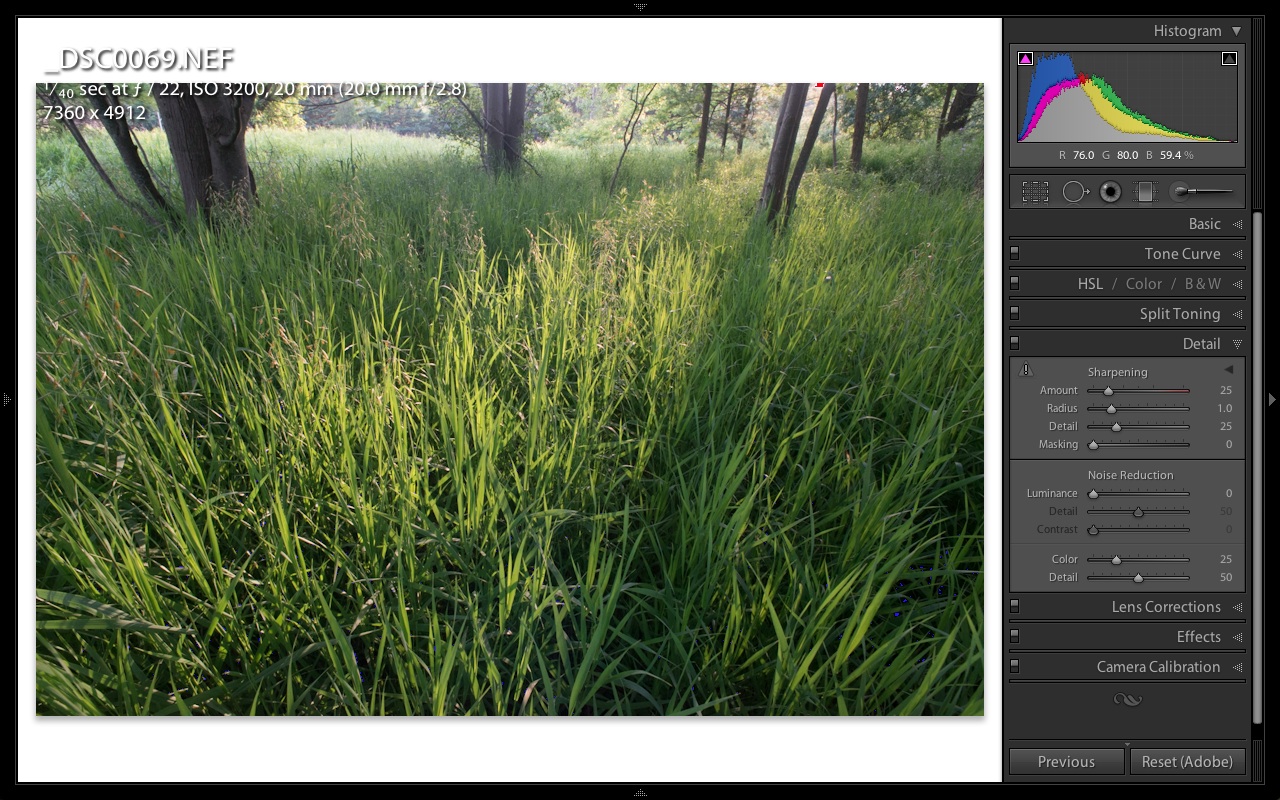
- How often do you enlarge photos to 16″ or more? The 36mp sensor in the D800 is 7360 x 4912 pixels. At 300ppi, it will produce uncropped prints of 16.4″ x 24.5″ or at 360ppi (for Epson printers) uncropped prints 13.6″ x 20.4″ in size. If you are making prints this size or larger on a regular basis, then the D800 is for you. Some have asked, “But wouldn’t downsizing from this file size result in better prints as well?” Quite possibly, yes, but the difference at print viewing distance would be minimal and perhaps only visible to someone who really knows what to look for (which is not the vast majority of people who buy large fine art photographs). By the way, I am speaking in terms of uncropped prints, because a photographer who is working towards mastering the craft will routinely compose to either fill-the-frame or at least fill one dimension to allow the other dimension to be cropped. Do you do this as common practice? If not, then perhaps the D800 is not for you.
- Do you shoot raw or jpeg format? Many pros shoot jpegs as that’s what their job demands: grip and grins that need to be processed and sent out immediately or news hounds that don’t have time (or the necessity) for post-capture fine-tuning. Even many wedding photogs are still shooting only jpegs. While it may be controversial for me to say this, but if you are shooting jpegs and you are not a pro – in other words if you are shooting jpegs because they are more convenient than doing some post-process work on your photographs – then the D800 may not be for you. The D800 is all about image quality. The photographs you are capable of producing will not improve with more megapixels, only their size will increase. If you are not willing to put the time and effort into fine-tuning raw image files, then the shortcuts you take in producing jpegs may well prevent you from taking full advantage of the benefits the D800 offers. Don’t get me wrong – the D800 produces amazing jpegs, but if it’s only jpegs you want – pre-processed and pre-sharpened with a truncated colour depth – then the D800 is not the ideal machine for you.
- Are you prepared for full-frame? This goes along with the next question. Your 18-55mm or 18-200mm zoom will not cut it on the D800 unless you use the camera only in DX mode. If that’s the case, you’d be better off with a D7000. If you are not prepared to upgrade your DX lenses to FX, then don’t consider a D800.
- Do you have lenses that will resolve to 36mp? Most of the kit lenses and cheap zooms produced by Nikon and the various 3rd party lens manufacturers will not resolve 36mp well enough from centre to corner to take advantage of the D800 sensor. While they will capture 36mp of data at full-frame, they will not resolve detail in ever one of those 36mp, even if the detail is in the original scene. Like the previous question, if you are not prepared to invest in lenses that resolve 36mp of detail, then you should rethink your decision to buy a D800. For more information, have a look at the work lensrentals.com is doing or the discussions on the Luminous-Landscape Forums here and here.
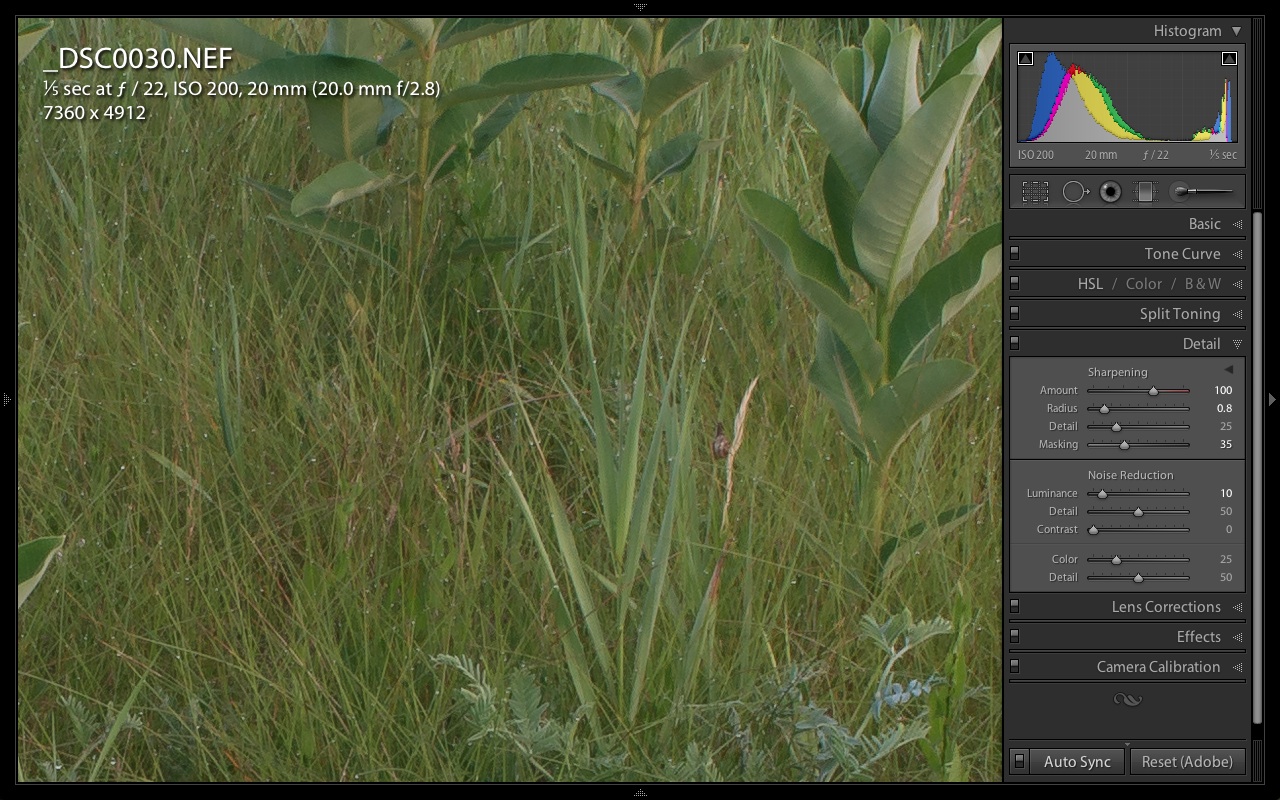
- Is your technique refined enough to get the quality from 36mp you are expecting? A number of D800 users have, in just this short time, realized that to get the most out of the D800 you need impeccable technique. Hand-held shots do not seem to be as sharp as they were with 12mp because even the smallest of movements are now being recorded. Diffraction at f/16 and f/22 is more noticeable. You may find that working on a tripod becomes the norm when using the D800 – would you be happy with that? You may also find (as other D800 users have) that each lens will need its autofocus fine-tuned. As well, many D800 users are making active use of live view for focussing. Are you prepared for that kind of precision?
- As a corollary to Q 6. (and there is no insult intended) – would you recognize the additional image quality provided by a D800? Many photographers are quite satisfied with their on-screen results and the prints they are producing. In your current photography, do you recognize that you have reached the image quality potential of your current system? If not, then the D800 is not for you. Do you recognize the flaws in IQ with your current system and wish to go beyond what you can currently achieve? If so, then perhaps the D800 is the way to go.
- Are you prepared to buy larger, faster memory cards? A standard raw file from a D800 is almost 75mb. your current 4GB card that may hold nearly 300 12mp raw files will now only hold 53 D800 raw files. Even the jpegs at highest quality are over 20MB in size. You will need to invest in larger capacity memory cards with faster write speeds, not just for raw files, but for video as well.
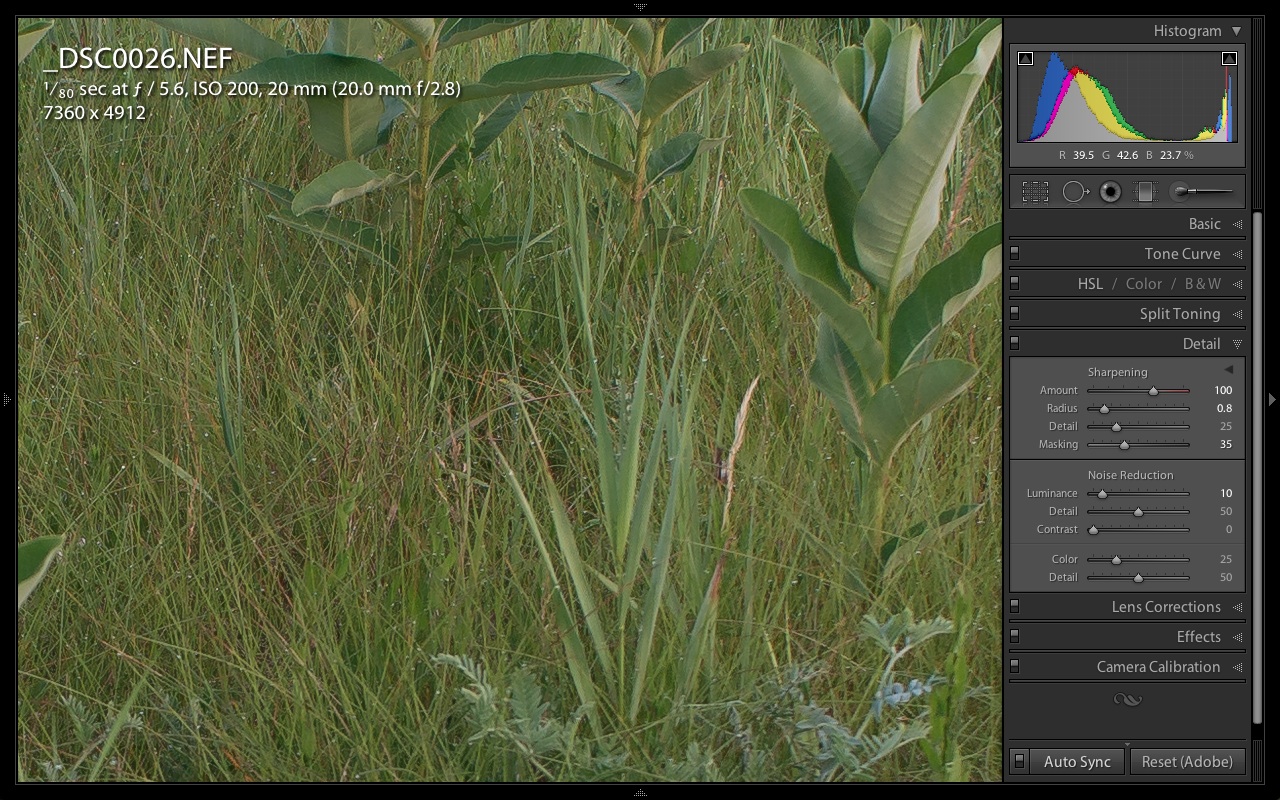
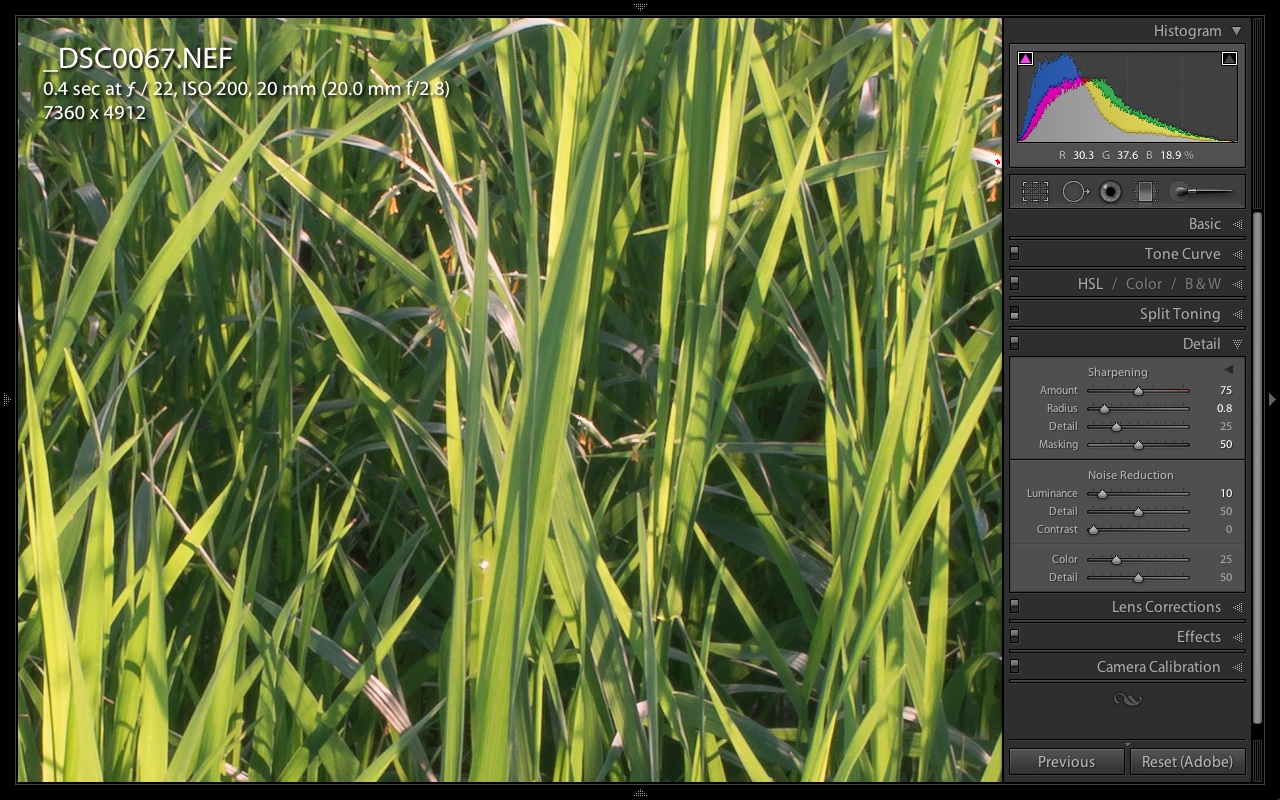
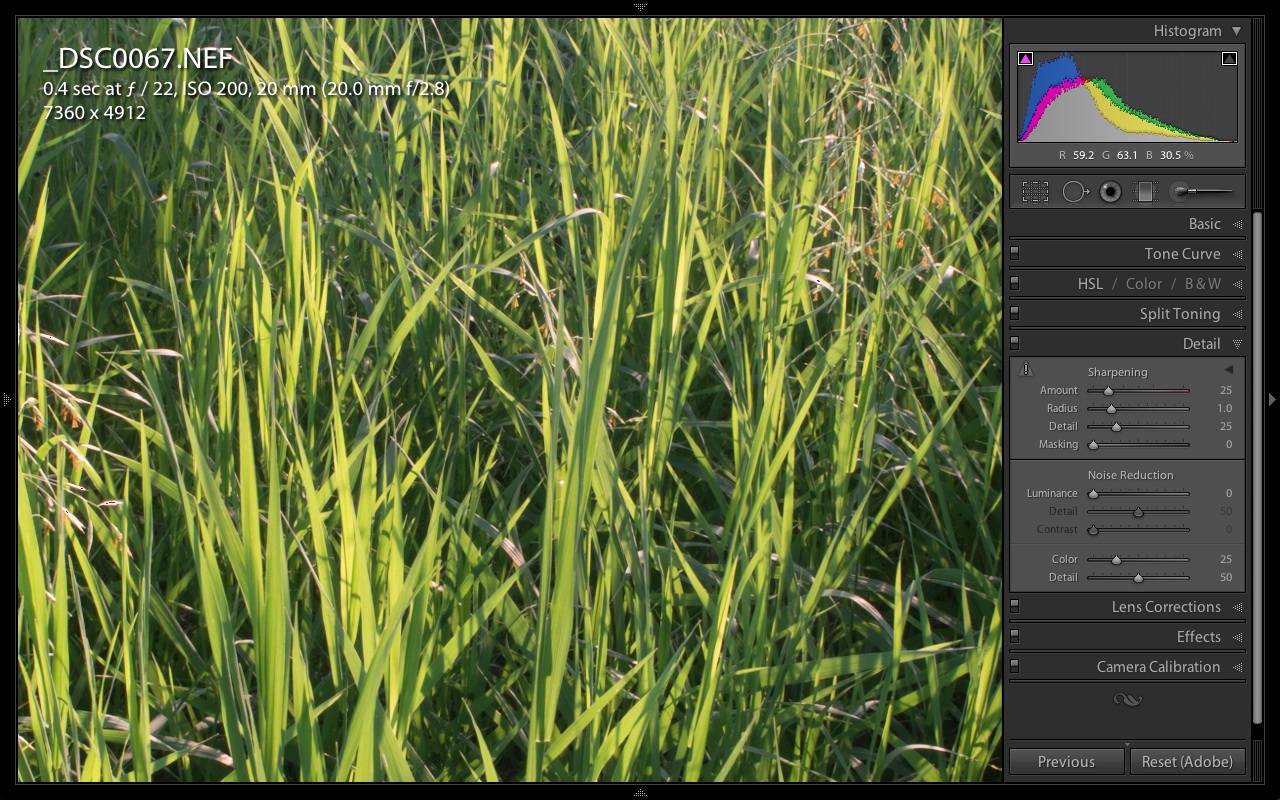
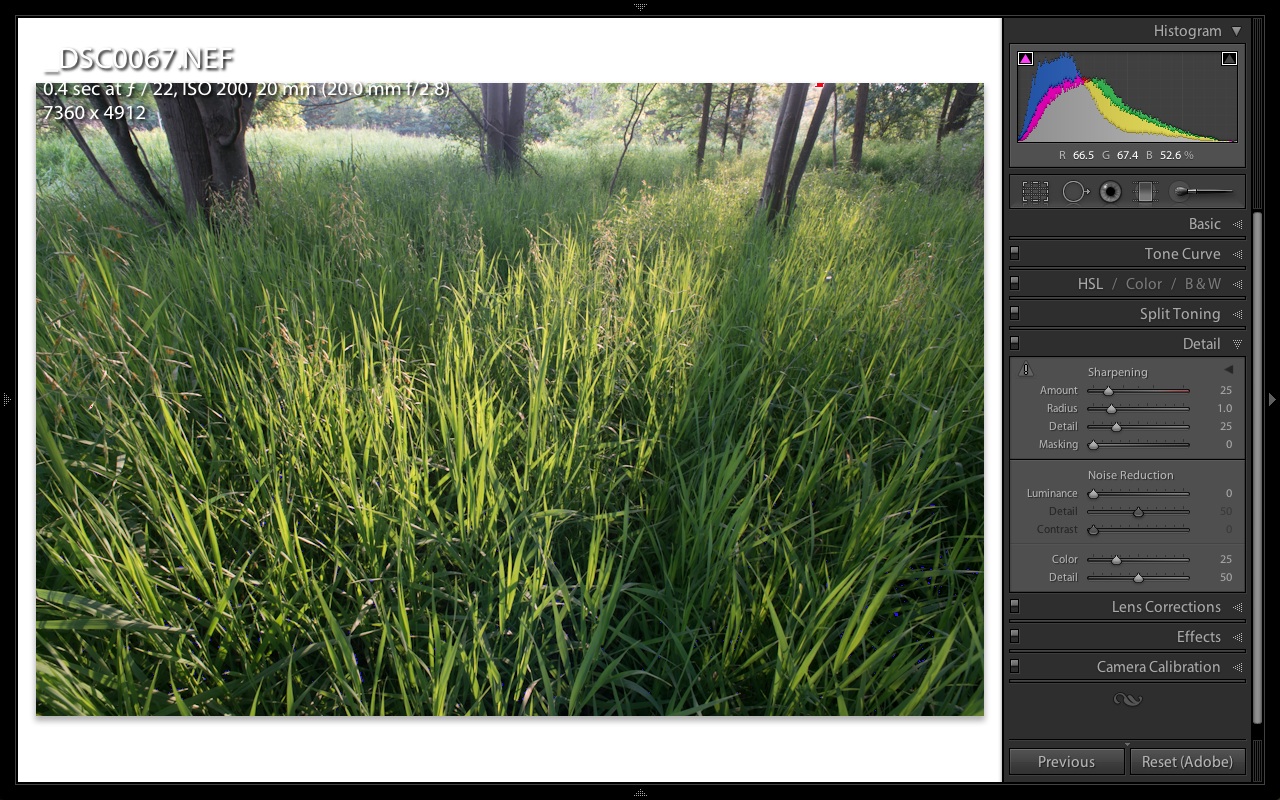
- Is your computer system and image management application up to processing 36mp files? Further to Q. 7, that 75mp raw file you’ve just captured will open in Photoshop at over 200MB – and that’s before you add any layers! Is your system up to manipulating these files? Realistically, however, most serious photographers will have already migrated to using a non-destructive workflow offered by Lightroom, Aperture and Capture One. But even there you will notice a speed hit, particularly when it comes to generating 1:1 previews (don’t do this upon Import, but rather only as needed) and when retouching. Be prepared for a slower work-flow!
Your investment of $3000 (+ tax!) for a D800 body may end up costing you a whole lot more if you haven’t thought things through thoroughly. You will need larger, faster memory cards; you may need a few new lenses or at least one of the more expensive high-optical-quality Nikkor zooms (and the circular polarizing and other filters for them); you may need a new computer system or at least a pile more ram. You may also need to invest in Lightroom, Aperture or Capture One to avoid the humungous file sizes generated by a Photoshop workflow. And, if you haven’t already adopted a non-destructive workflow, that may also be a learning curve you need to take on.
My decision to move from my 12mp Olympus to the D800e was not taken lightly. Nor was it taken without a hard look at (a) what style of photography excites me; (b) where I would like to go with my photography; and (c) how well my technique, workflow and equipment fit the requirements of a D800. As I have said before in posts, I come from a background of using manual, mechanical 6×7 and 4×5 cameras with prime lenses. I am quite happy to use a tripod and slow my methods down to squeeze from every scene as much image quality as possible– in fact, that’s where I thrive. For me, using a D800 will be like going back to my medium and large format days but with the added convenience of digital processing and printing, video capture and, when needed for extra reach from a telephoto, DX capture at 15mp.
I am greatly excited by the prospects and am anxiously awaiting the arrival a D800e body.
Prime Lenses for the Nikon D800
Once I made the decision to move to a Nikon system and prime lenses, the question became which lenses? From the start, I am a landscape and nature photographer, so my lens choice is dictated by the needs of this type of photography: wide angle lenses to capture the three-dimensional foreground-background style of landscapes I enjoy creating; a close-focussing lens for natural details; plus a telephoto lens for wildlife. For me, that means focal lengths of 20mm, 24mm, 105mm, 200mm and 300 or 400mm.
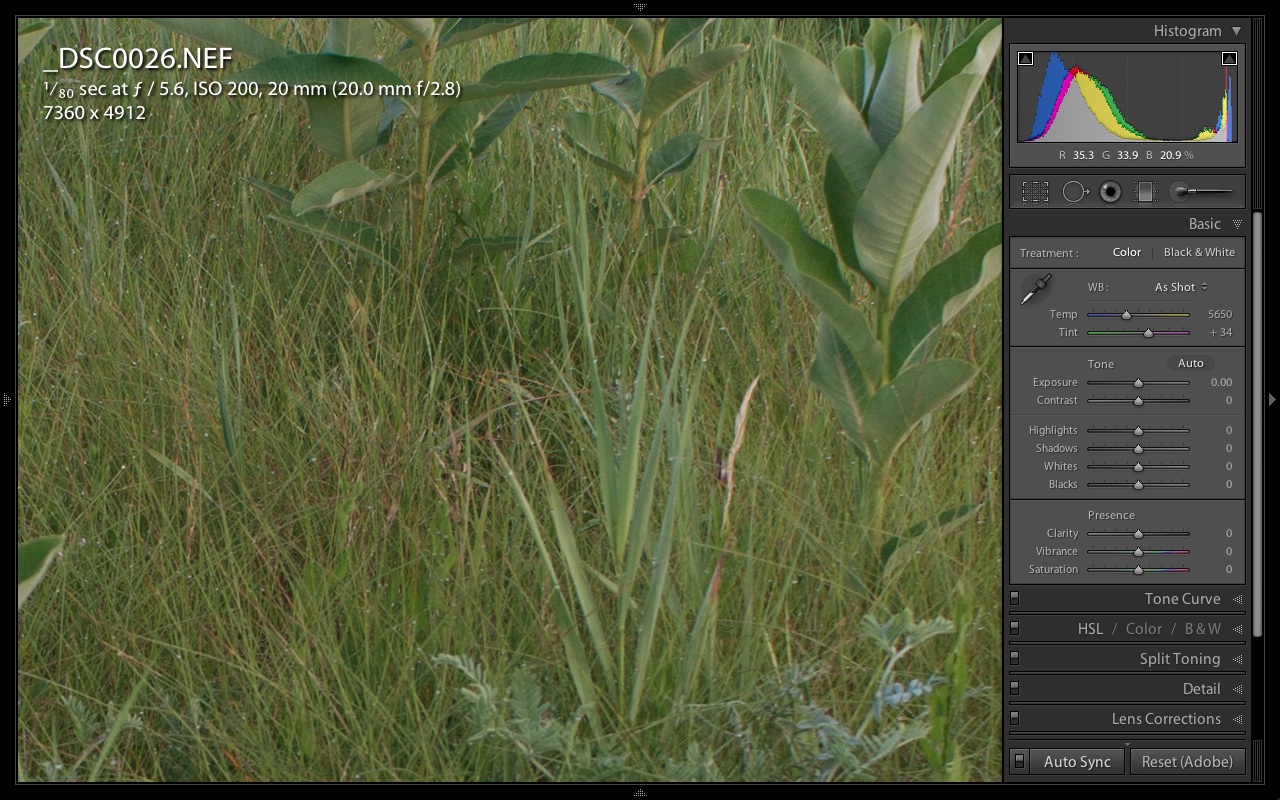
This is born out by my shooting stats. The beauty of Lightroom is that I can use the Library Filter to see what focal lengths I most common shoot at. One would expect that with using zooms for the last 8 years there wouldn’t necessarily be a strong pattern but, intact there was. By far, the most common focal length for me was 24mm – almost 25% of all images shot! The next biggest spike is in the 100-120mm range, then the 35mm range then the 400mm range.
In creating my “lens road map”, I started by listing the “most desirable” lenses from a technical and image quality perspective. Since much of my photography is done from trails and canoe portage routes, weight is also an issue as I have to carry all this gear, plus a proper tripod. I have always tried to create a system of lenses whereby each lens is 1/2 or double the focal lengths of the lenses on either side of it. This is less true in wide angles as even a few mm difference make s huge difference in angle of view. Traditionally, I’ve worked with 24mm – 50mm – 100mm – 200mm – 400mm.
My “most desirable” list includes in order of importance:
- Nikkor 20mm f/2.8 – ideal for super-wide with strong foreground elements. I have been shooting with 24mm for years and often found that it wasn’t quite wide enough;
- Nikkor 24mm – The f/1.4 version is the crème-de-la-crème for image quality, but it is also very expensive, I will have to settle for the f/2.8 version for now;
- Micro-Nikkor 200mm f/4 – An amazing lens – sharp as a tack and a wonderful working distance. Unfortunately, with it being in the $1500 range, I will have to settle for the 105mm Micro-Nikkor for now.
- Nikkor 300mm f/4 AF-S – A wonderfully sharp lens that’s not too large and heavy, comparatively speaking. It is the f/2.8 version that you see at sports events along with its 400mm f/2.8 bigger brother – both of which are too big and wieldy for hiking and canoeing, so the f/4 is more appropriate. As well, with today’s improved quality at higher ISOs (400 now-a-days compared to ISO 100 in the film days), f/4 will be fine, even with the 1-stop loss if I should add a 1.4x or 1.7x teleconverter. Furthermore, with the D800 set to DX mode (still with 15MP of real estate), the 300mm becomes a 450mm without a teleconverter.
Whether or not these are AF-D or AF-S was of little importance to me as both versions are technically sound and in many cases optically identical. The 300mm is not available in AF-D (only the earlier AF) so, the AF-S is one for me.
After a couple of weeks of buying and selling on eBay and Kijiji, I’ve ended up with the following – not quite ideal, but a healthy start that will allow for further expansion and changes:
- Nikkor 20mm f/2.8 AF-D – Perfect and the first lens I purchased;
- Micro-Nikkor 105mm f/2.8 AF-D – A great start for macro work and it’s a lens that keeps its value;
- Nikkor 28mm f/2.8 AF-D – not ideal, but I bought it along with the 105mm (and 50mm) and it will help “fill the gap”. Anyone want to trade for a 24mm?? (email me! – I’m serious!);
- Nikkor 50mm f/1.8 AF-D – again, not ideal, but it fills the gap for now.
- UPDATE 16 May 2012 – Just added a 300/4 AF-S – a spectacular lens – read more…
This gives me an appreciable range now with the top end – yet. More importantly, these lenses appear to be better built than the zoom I used to carry around and, while a bit heavier overall, each is more agile than the zoom. Yes, I will need to switch lenses more frequently and my system won’t look as “professional” with a big honking zoom out front with the petal lens hod, but I certainly won’t be suffering from any “lens envy” that others might feel with the smaller primes 😉
A new beginning with a Nikon D800e
Over the past six months, various aspects of my photographic and non-photographic life have caused me to think hard about where I am going with my photography and the equipment I am using.
Up until 2004, I was an ardent film user having started my photography in 1977 with a Praktica camera. My first serious system was a Minolta with their wonderful lenses. Eventually I “graduated” to a Nikon FM system with Nikkor lenses, but, upon moving to Pentax 67 (selling my Nikon gear to purchase the medium format system), I began using my wife’s Olympus system which I have stayed with all these years. The OM system with its small bodies and prime lenses was ideal for carrying alongside my 4×5 system which I began using in the mid-1990s for my serious work.
In 2004, I made the leap and bought a digital SLR. I agonized over the decision and lamented the fact that my Olympus lenses would not work on their new line of 4/3s DSLRs. However, Olympus once again won out as I could get the full range of focal lengths from 28mm to 400mm in two zooms that also had the same filter size – an ideal kit for travelling as by that time we were living and working overseas. It meant giving up my wonderful prime lenses, but zooms made sense at the time. Not long after returning to Canada I upgraded that system to a 12mp body with a zoom that finally allowed be to reach 24mm – my personal “sweet-spot” for landscapes. In fact, the 12-60mm f/2.8-4 (24 to 120mm equivalent in 35mm terms) was one of the finest zooms ever made – a brilliant range for the nature and landscape work I do.
But alas, the writing was on the wall. With Olympus’ new “flagship” E-5 only carrying 12mp (although a very sharp 12mp), the 4/3s system was quickly being out-paced by APS systems and Olympus began putting its efforts into mirrorles-4/3s. Many argue that it’s not megapixels that make an image and they are absolutely correct for the vast majority of photographers. However, I come from a 6×7 and 4×5 background where image quality and every little detail is absolutely essential.
The second big revelation came back in September of 2011, when I finally began doing some serious printing again after a 12 year hiatus. This meant re-tooling and relearning having spent more than 2 decades in the darkroom creating both black-and-white and colour prints. I don’t care what anyone says – a 12mp sensor simply does not hold up on a 17″ print, especially when I am trying to express the amazing detail found in grand landscapes. That being said, I have 5mp images that look stunning in large prints and many 12mp images that look even better, but they are few and far between and suffer from image breakdown upon close inspection.
With my photography moving more and more into fine art prints, I knew it was just a matter of time before my work would begin to take a back seat. Besides, if I am going to invest time and energy into getting myself in the right place at the right time, I want the resulting digital files to be worth it. Yes, I could just pick up my 4×5 and start shooting film again and scanning it, but the beauty of digital is just so tantalizing. The Pentax D645 with 39mp was just about ideal for this kind of work but it started at $10,000. The same-sized Leica system was also ideal but even $30,000 would’t be enough to do it justice.
With the demise of the 4/3s system and my quest for ultimate image quality at a price I could afford, I began looking seriously at the Sony ∝900 and 850 bodies and the wonderful Zeiss zooms available for them. But even those cameras began to look outdated. Word began spreading of a new Nikon body with megapixels galore. Really – 36mp! You’ve got to be joking!
Meanwhile, my brother Charlie who lives and photographs down in Naples, Florida helped to bring me back to my photographic roots when he sent me a booklet and calendar showing the work of Clyde Butcher. If you’ve never seen his work, think Ansel Adams in the Everglades. Amazing – you must visit Clyde’s website! His vision in making gorgeous photos of his “home turf” has re-kindled my desire to do the same here in Ontario.
So, now I’m thinking – while I’ve done some very rewarding work with zoom lenses, I enjoyed photography even more when shooting 6×7 and 4×5 (and 35mm) on a tripod with prime lenses. There is something about prime lenses and working on at tripod that makes you slow down, think and look a lot more closely. It’s not that you can’t do that when hand-holding a zoom lens, it’s just that with primes and a tripod, a certain discipline develops and that discipline of careful thought and placement and composition begins to seep into all areas of the craft and vision of photography. I, for one, benefit from that discipline.
Thus, the various alignments of the demise of 4/3s, the move to fine art prints, the arrival of a breakthrough, full frame 36mp DSLR and my recommitment to prime lenses have resulted in this new beginning. Over the past week or so, I have begun that metamorphosis by purchasing a variety of Nikkor prime lenses and selling my Olympus gear (thanks eBay and Kijiji). The metamorphosis will be complete when I begin shooting with the Nikon D800e that is currently on order and not yet available. Hopefully, my name isn’t too far down the list that I won’t be waiting too long to take delivery.
I have scoured the ‘Net for professional opinions of these new, ground-breaking DSLRs. Everyone who has used one arrives at the same conclusion: the D800 and D800e are truly game-changers. They bring what was once only possible with a minimum $15,000 investment into the hands of photographers like myself for whom that kind of expenditure was simply out of the question. In many ways, the Nikon D800 represents a democratization of image quality like we’ve never seen before.
Check out the Internet and you’ll see all the usual splash about new cameras on dpreview.com, but two things have helped me most in making up my mind. First were the numbers posted by DxOmark.com – a whopping 95 for the D800 – better than any camera of any sensor size, right up to 180mp. Phenomenal. While this is only a measure of the sensor, for me it was the D800’s amazing dynamic range of 14.4 stops that counts most – ideal for the kind of nature and landscape work I do. (In comparison, my E-30 scores 55 and the E-5, 56; the Pentax D645 scores 82 while the Sony 900 scores 79.)
The second bit of help I had in making this decision came from a photographer whose work I have greatly admired for many, many years – Jim Brandenburg of National Geographic fame. His 20-minute interview with WhatDigitalCamera.com and his work for Nikon on this project was a revelation. Granted, he would be a bit of a fan-boy as result of his close association, but, given his reputation, I’m sure he’s also not one to jump on a bandwagon that doesn’t have a solid foundation.
So, consider this my first post on the Nikon D800e. I will add more as I continue this exciting new beginning…
Note: Call it serendipity, but having sold my two Olympus zooms yesterday, just as I was writing this post, my E-30 sold on eBay. I am now completely divested of Olympus (yes, with a tear in one eye), but am now looking forward with even greater anticipation to the next week or so.