PhotoGeo Trip Down East: Part 4, Mahone Bay, Nova Scotia

and Lunenburg, Peggy’s Cove, and Blue Rocks . . .
It feels great to be back in Nova Scotia. The whole of Canada’s East Coast has a similar effect of slowing things down compared to the ‘gotta-be-busy-all-the-time’ frenetic pace of southern Ontario. The authentic, chill vibe found down East is much appreciated. In many ways, the following photo captures that mood—‘tranquila’ as our Latino friends say.

OM-1 w/ M.Zuiko 12-100mm at 31mm (62mm efov); ƒ5.6 @ 1/1600, ISO 800, HHHR; raw file processed in Lightroom.
It’s places like this that make the East Coast so photogenic. Quiet bays and traditional architecture are post-cards for the making. Perhaps it makes photography too easy as there is little to jar the senses. The only challenge is the weather, yet ‘good’ weather for photography can be defined in many different ways, as even fog or a stormy day have great potential.
After a couple of days here in Mahone Bay, Dan has now flown home, back to southern Ontario from Halifax. We had an excellent time devoted to serious photography and discovering parts of Canada neither one of us had visited previously. My wife Laura took the return flight back to Halifax to join me for more adventures here in the Mahone Bay—Lunenburg—Peggy’s Cover region, then we’ll be off to Cape Breton Highlands National Park after we pick up daughter who flies in later this week.


OM-1 w/ 12-100mm at 15mm (30mm efov); ƒ8 @ 1/125, ISO 800, HHHR; raw file processed in Lightroom.
In the very harsh light of a bright sky and deeply shadowed lupins, I specifically used HHHR due to its excellent dynamic range. In post-processing, I could raise the shadows without introducing noise. The original raw file is shown above.
Lupins, rhododendrons, azaleas—they are all at their peak in June, with a few lilacs holding onto their blooms as well.
I’m a sucker for angular design elements, so with the simple lines of East coast architecture, colourful houses and contrasting trim, I see photos everywhere. As with all travel photography, I shoot the obvious while keeping an eye out for the details. With an eye to careful composition—using back and side lighting plus eliminating distractions from the frame, such as power lines and stray grasses and branches—striking pictures abound. Note: To view enlarged versions, be sure to click/tap each photo.
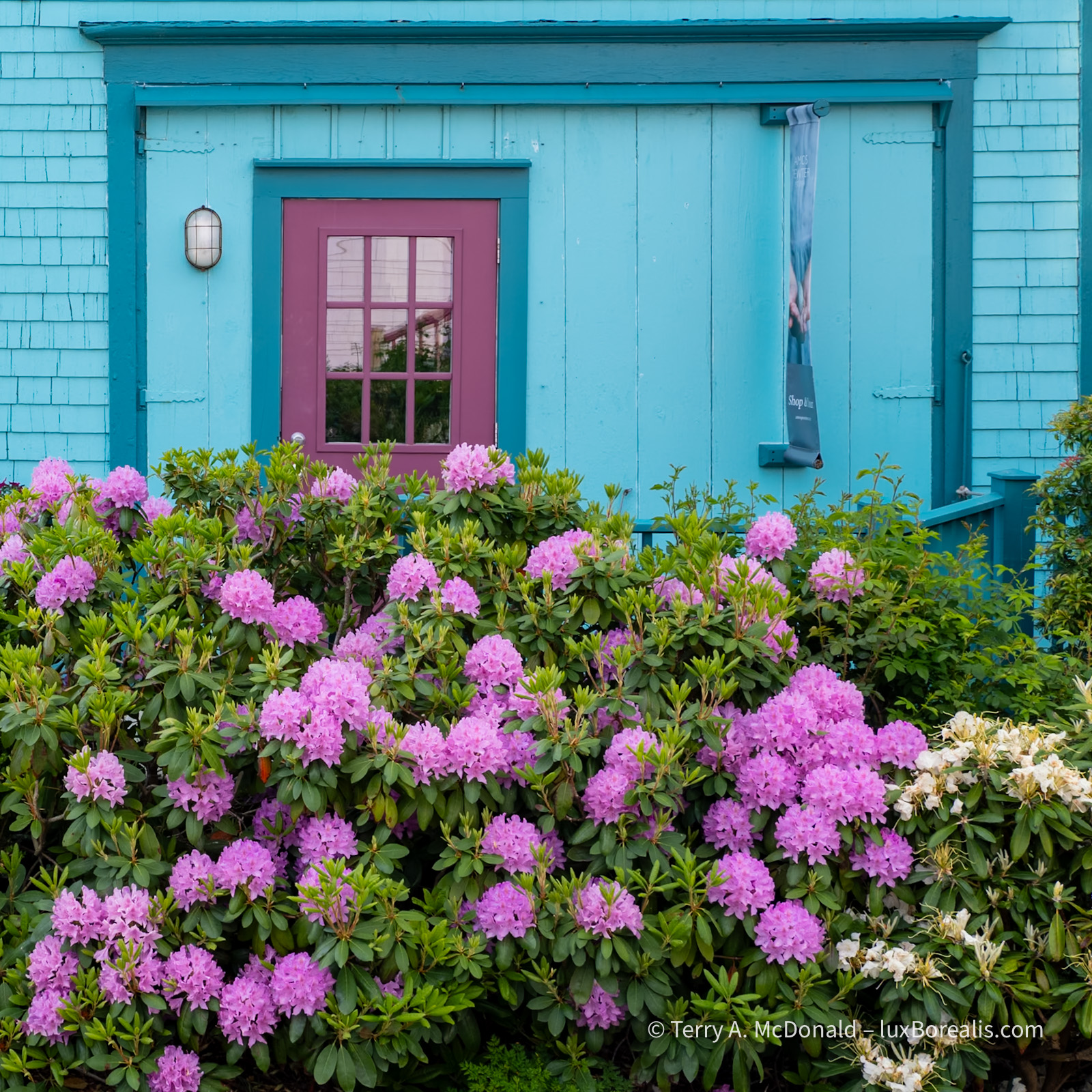
OM-1 | 24mm | ƒ5.6 @ 1/200, ISO 800, HHHR | Lr
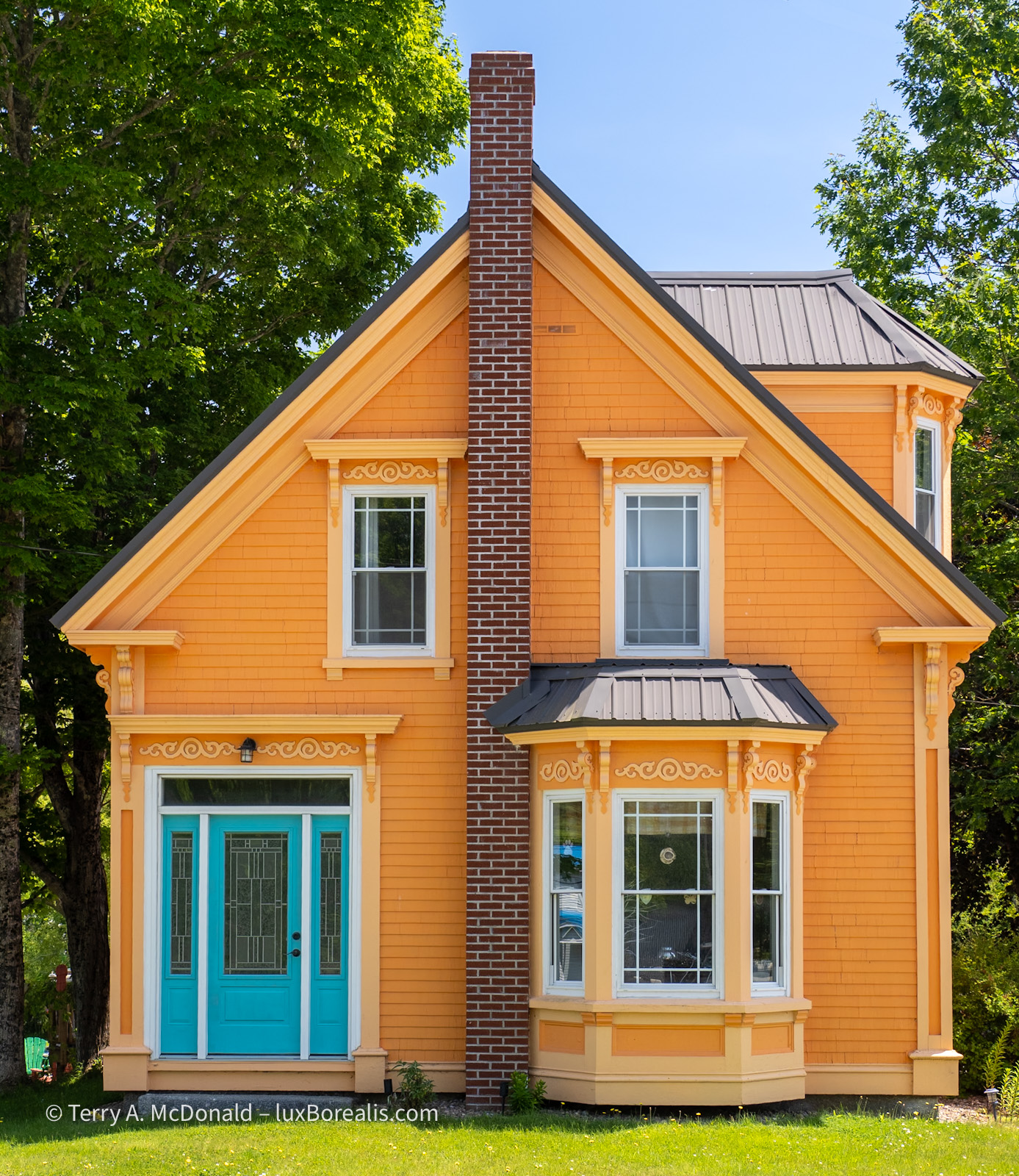
OM-1 | 25mm | ƒ 5.6 @ 1/160, ISO 200 | Lr

OM-1 | 28mm | ƒ5.6 @ 1/400, ISO 800, HHHR | Lr
Blue Rocks
South of Lunenburg and Mahone Bay is the small village of Blue Rocks. It’s still a fishing community, to some extent, though many of the houses are now summer homes. The classic views of boathouses and lobster traps are easy enough to photograph, to capture the essence of place . . .
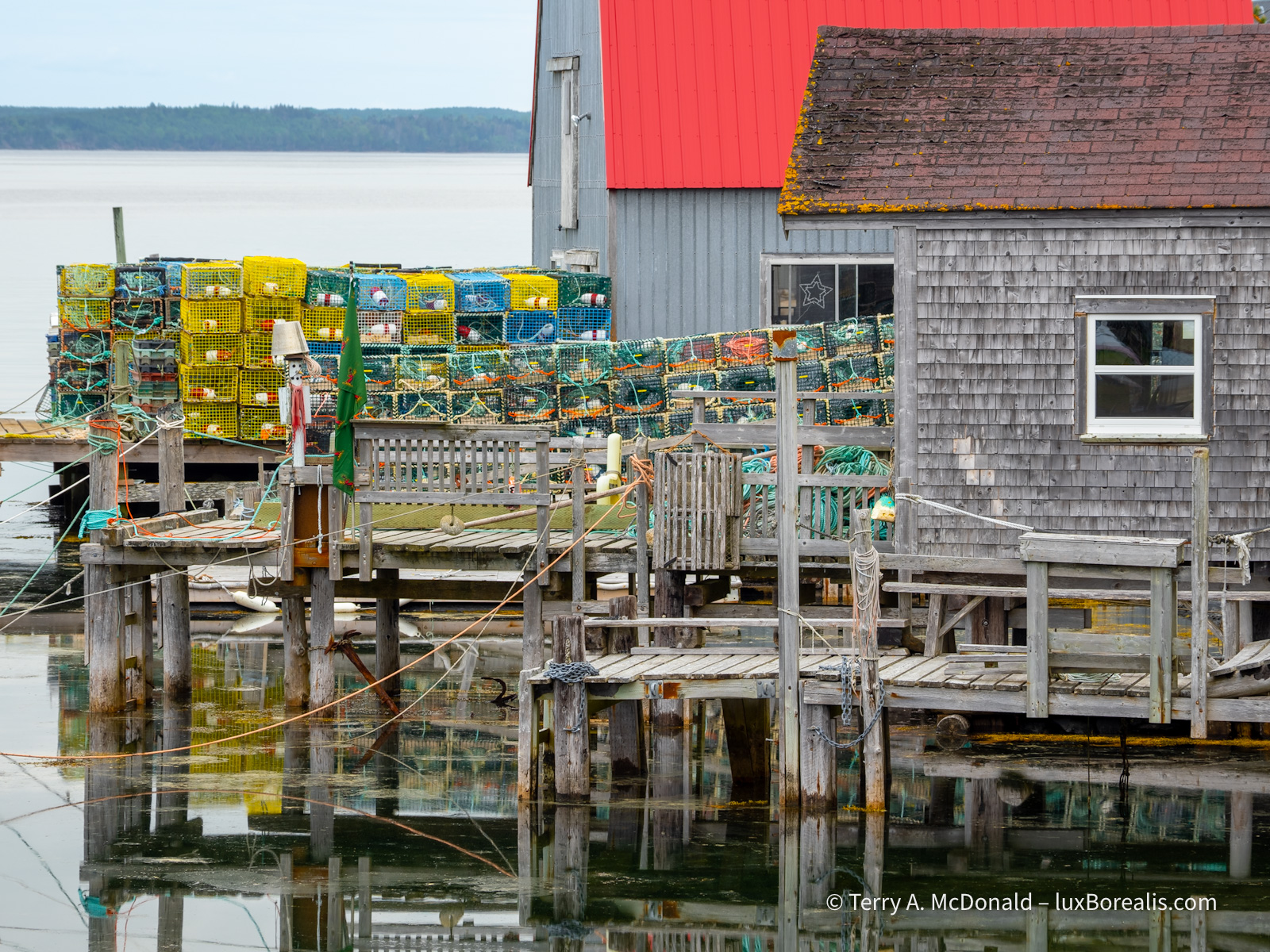
OM-1 | 86mm | ƒ5.6 @ 1/100, ISO 200, TripodHR | Lr
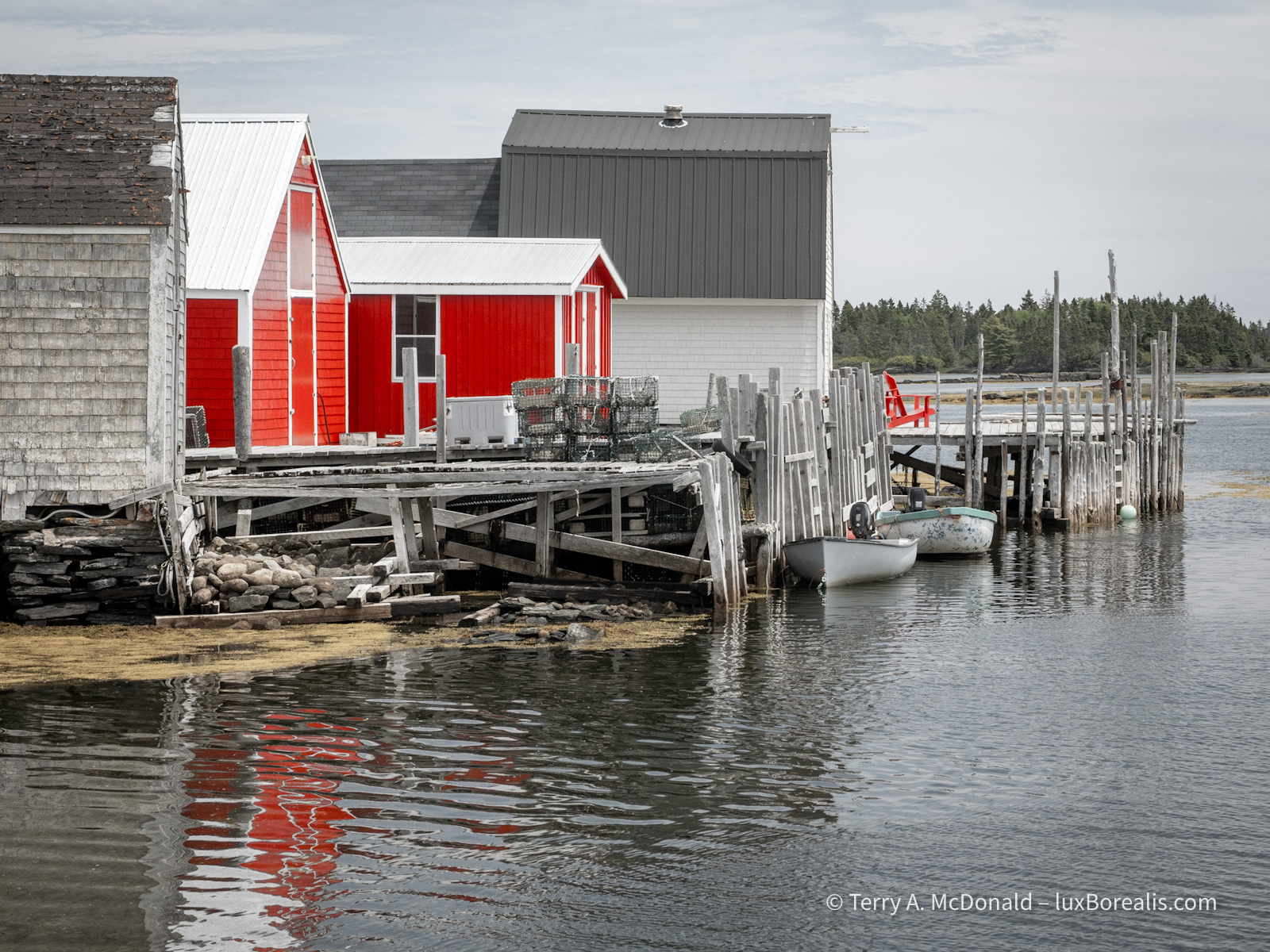
OM-1 | 44mm | ƒ8 @ 1/400, ISO 800 | Lr
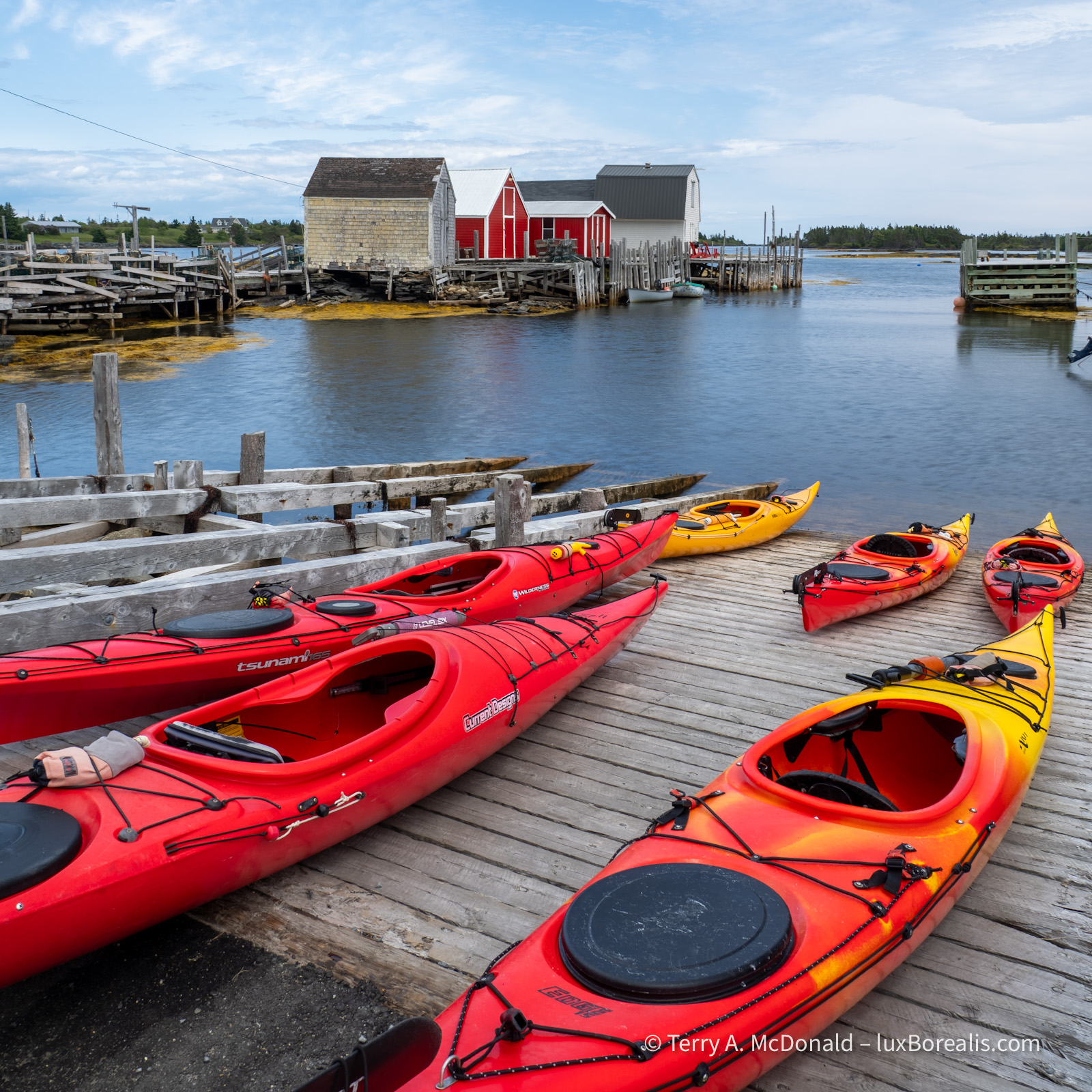
OM-1 | 12mm | ƒ8 @ 1/200, ISO 100 | Lr
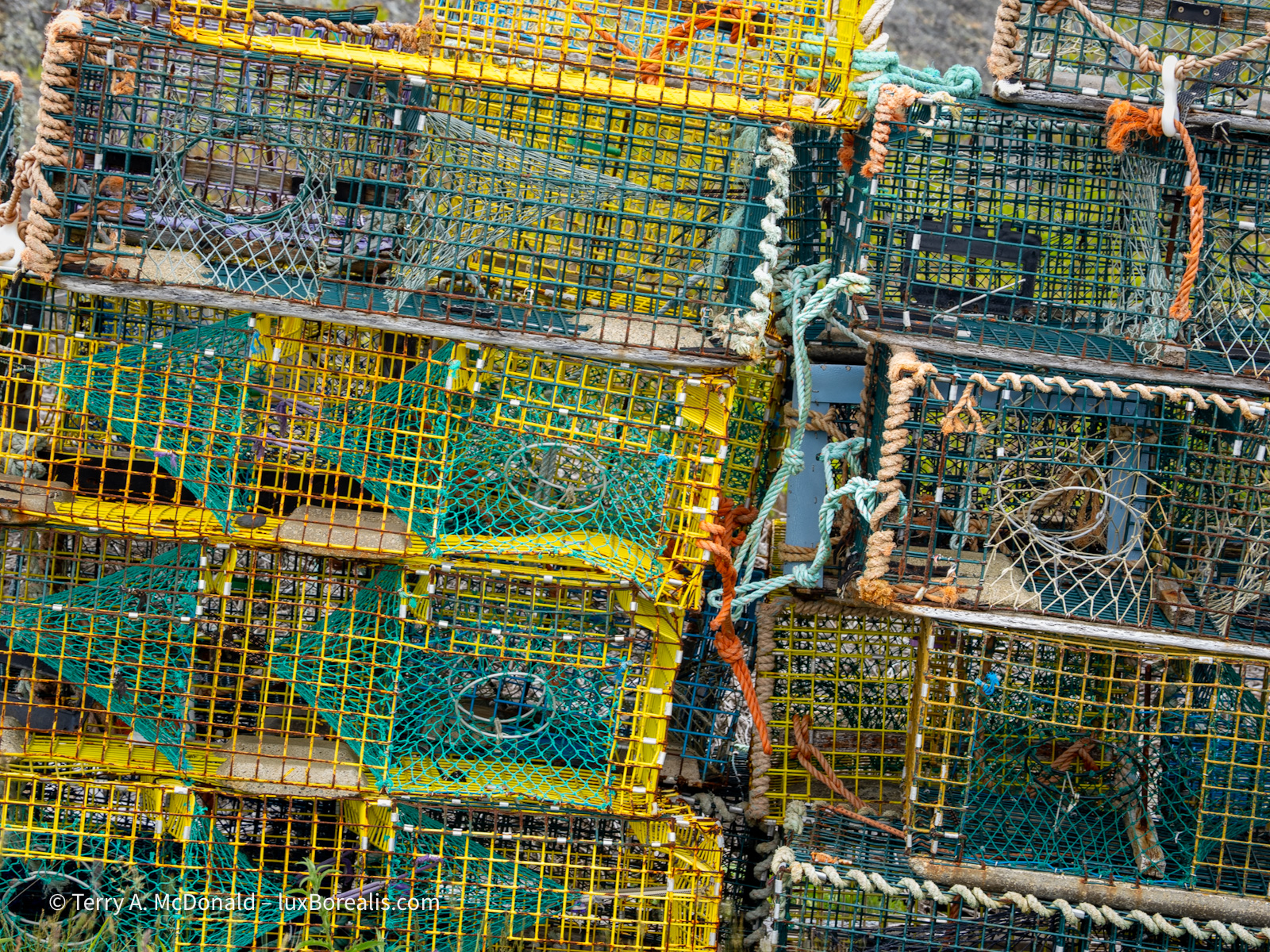
OM-1 | 92mm | ƒ8 @ 1/20, ISO 100, TripodHR | Lr

OM-1 | 34mm |ƒ4 @ 1/500, ISO 100 | Lr

OM-1 | 12mm | ƒ8 @ 1/250, ISO 800 | Lr
. . . but it took longer and some wandering around, to eventually begin to seeing past the obvious to capture the next level of images. Those who don’t photograph or don’t appreciate more serious photography are often perplexed by how long it can take to go through this process of seeing, especially with ticker tourists who only want a snapshot of the obvious. It’s one of the reasons I appreciated photographing with Dan for those ten days. He ‘gets’ it. My wife Laura also gets it and is very patient, often spending the time capturing her own photographs from her perspective.

OM-1 | 66mm | ƒ8 @ 1/125, ISO 800, TripodHR | Lr

OM-1 328mm | ƒ8 @ 1/400, ISO 800, TripodHR | Lr
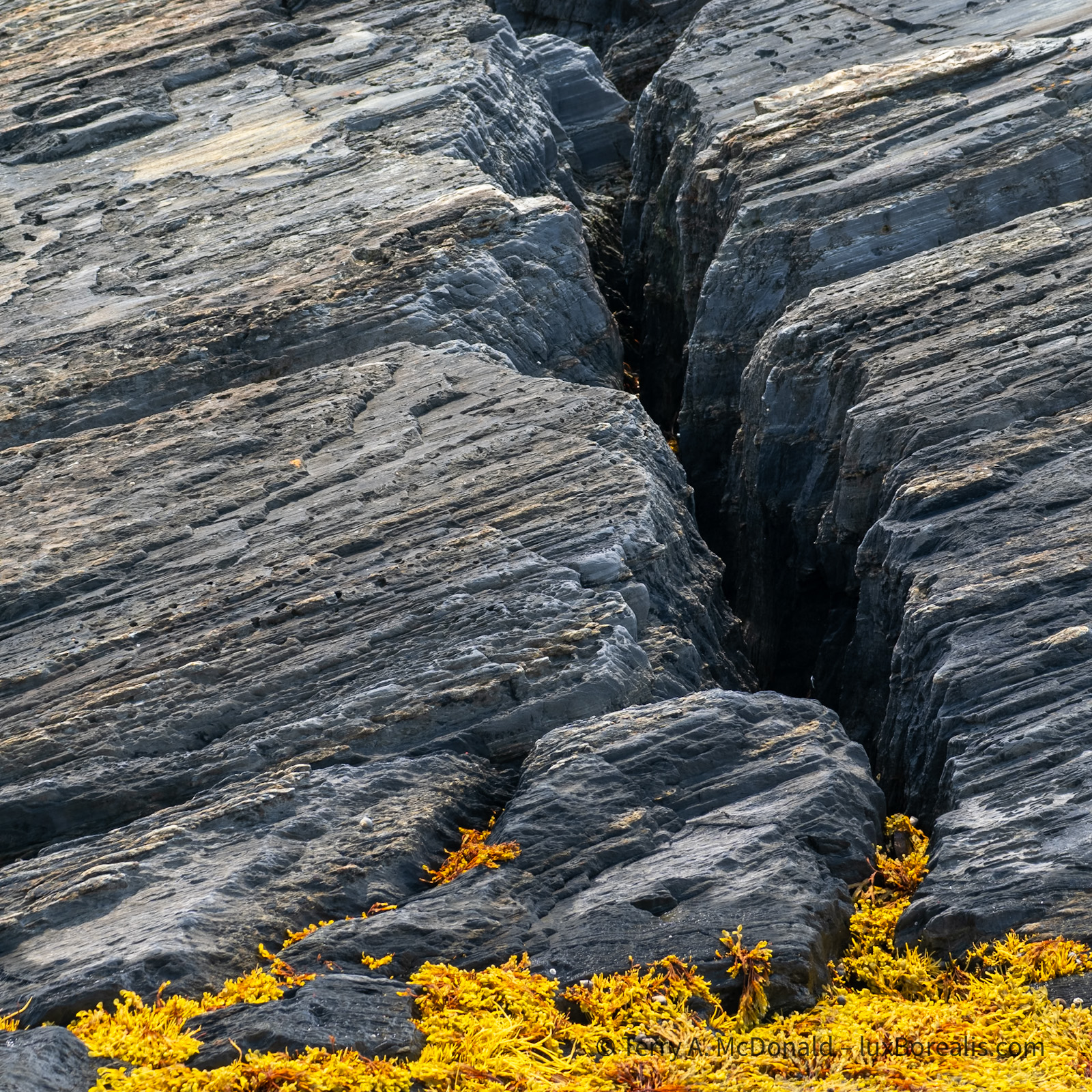
OM-1 | 138mm | ƒ8 @ 1/160, ISO 800, TripodHR | Lr
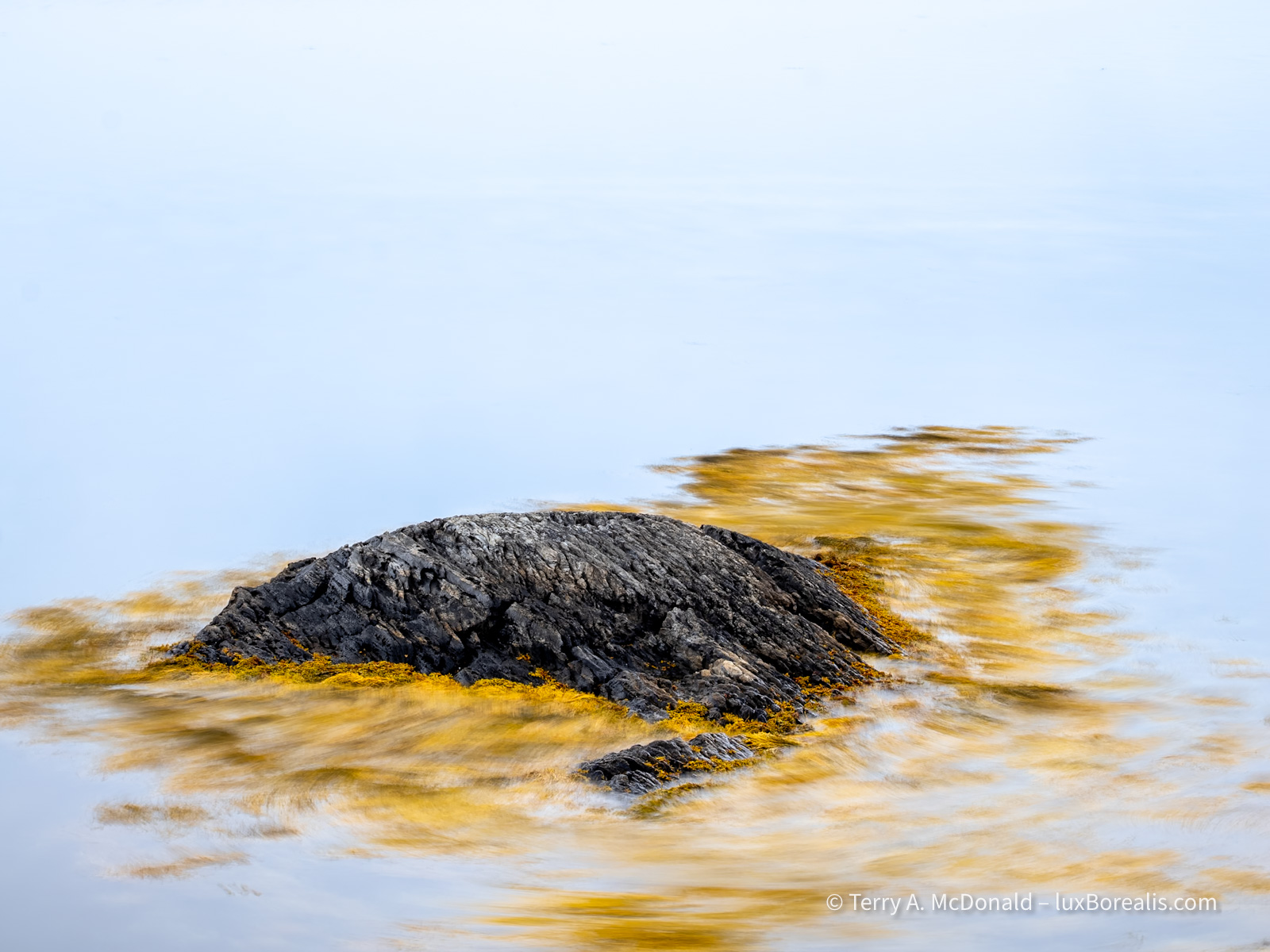
OM-1 | 75mm | ƒ16 @ 5sec., ISO 100, LiveND64 | Lr

OM-1 | 100mm | ƒ16 @ 10sec., ISO 100, LiveND64 | Lr

OM-1 | 86mm | ƒ8 @ 2sec., ISO 100, LiveND64 | Lr
In making these photographs, I got back to my roots and used a tripod while putting the OM-1 through its computational paces. TripodHR was the obvious choice, but having a sturdy platform also opened up more possibilities for using LiveND64 to capture the movement of the bright yellow rockweed. Using ISO 100 slowed the shutter speed down even further, without having to resort to a smaller aperture.
After using LiveND extensively on this trip, I’m thinking I may go back to using glass ND filters when it is bright out. With the brightness comes smaller apertures to get slow enough shutter speeds to show movement, even at ND64. With smaller apertures—ƒf11 and ƒ16–I’ve notice a decline in sharpness. The other advantage to glass ND filters is I can shoot using TripodHR which is not possible when using LiveND.
Lunenburg
There are two ‘cruise line’ destinations in this part of the East Coast: Lunenburg and Peggy’s Cove. Lunenburg is a UNESCO World Heritage Site, having kept its ‘planned British colonial settlement’ look. Dan and I were there on Saturday and it was a bust due to all the tourists. On Monday, with Laura, it was much less busy, but still had a ‘tourist trap’ vibe. Even with the Bluenose II in port, there was only a smattering of people around it. I’m sure I could have made dozens of beautiful photos throughout the town of the gorgeous houses and details, many of which are in tip-top condition, but I was on the look out for something different.

OM-1 | 100mm | ƒ8 @ 1/160, ISO 200, HHHR | Lr

OM-1 | 34mm | f?8 @ 1/00, ISO 200, HHHR ? Lr

OM-1 | 57mm | ƒ8 @ 1/250, ISO 200 | Lr and Pages
It was a fun challenge that resulted in a grand total of three photographs. Golden Dories is thanks to the Canadian Dory Racing Association and some fun with composite imagery, along with a nod to Stompin’ Tom Connors’ whimsical song, The Man in the Moon is a Newfie, who’s “sailin’ on to glory, away in the golden dory”.
Peggy’s Cove
Like Lunenburg, Peggy’s Cove is a huge tourist draw. After arriving, we turned around and left. There were simply too many people all after the same view. Decades ago, Laura had visited Peggy’s Cove; I’d never been, but I’ll be back, perhaps in the winter or at 6am when the place isn’t crawling with people. By nature, we’re not ‘tickers’, so I don’t at all feel hard done by. I’d rather put my energy into finding landscapes that are more unique.
Instead, we spent some time at the beautiful Swiss Air Flight 111 Memorial nearby. Then, we found a little cove just down the road, deserted of tourists, but with photographic potential and views few others will see.

OM-1 | 23mm | ƒ11 @ 1/40, ISO 200 | Lr

OM-1 | 29mm | ƒ8 @ 1/160, ISO 800, HHHR | Lr
Some of the other views that caught my eye are:
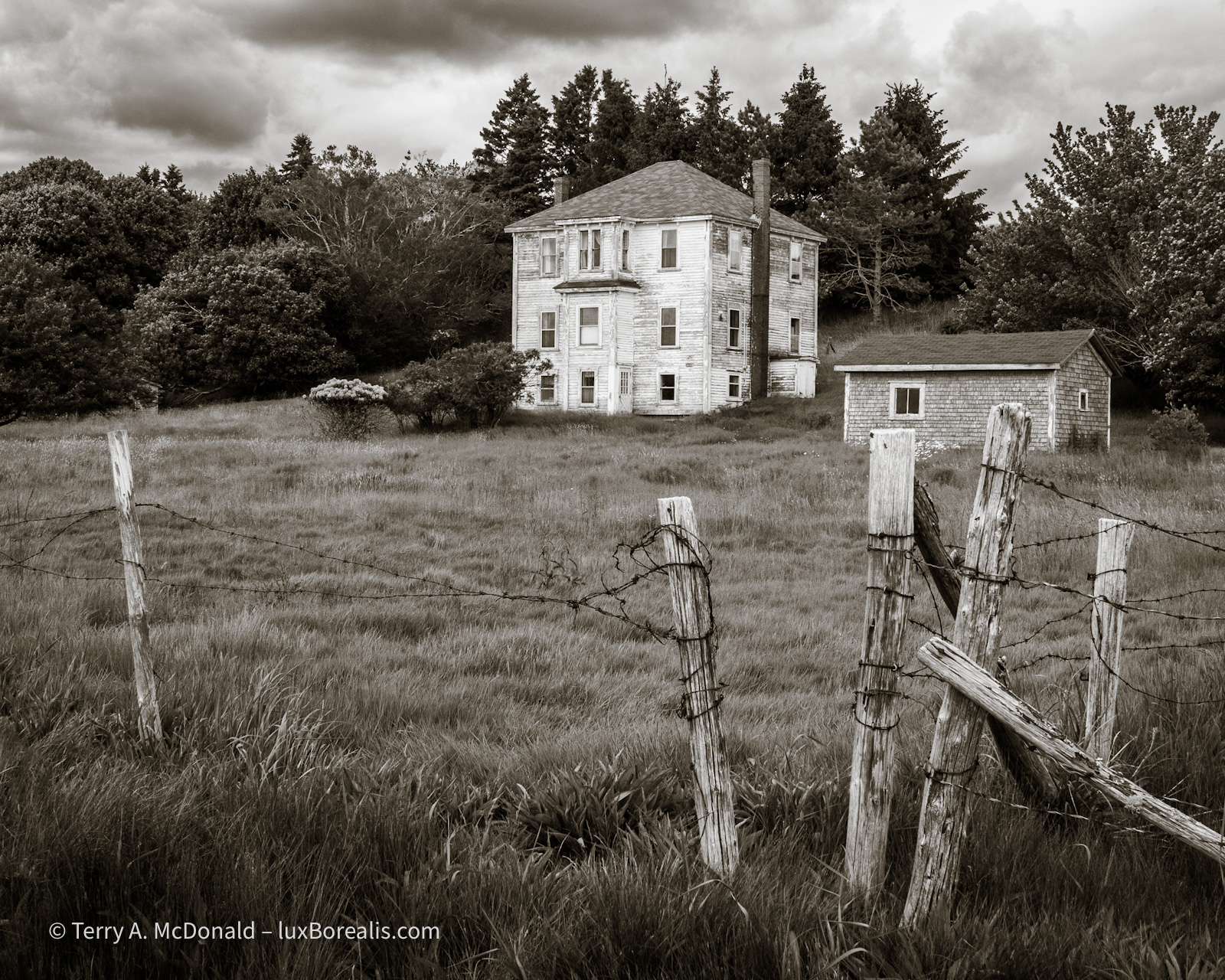
OM-1 | 24mm | ƒ8 @ 1/250, ISO 800, HHHR | Lr

OM-1 | 12mm | ƒ10 @ 1sec., ISO 100, HHHR | Lr
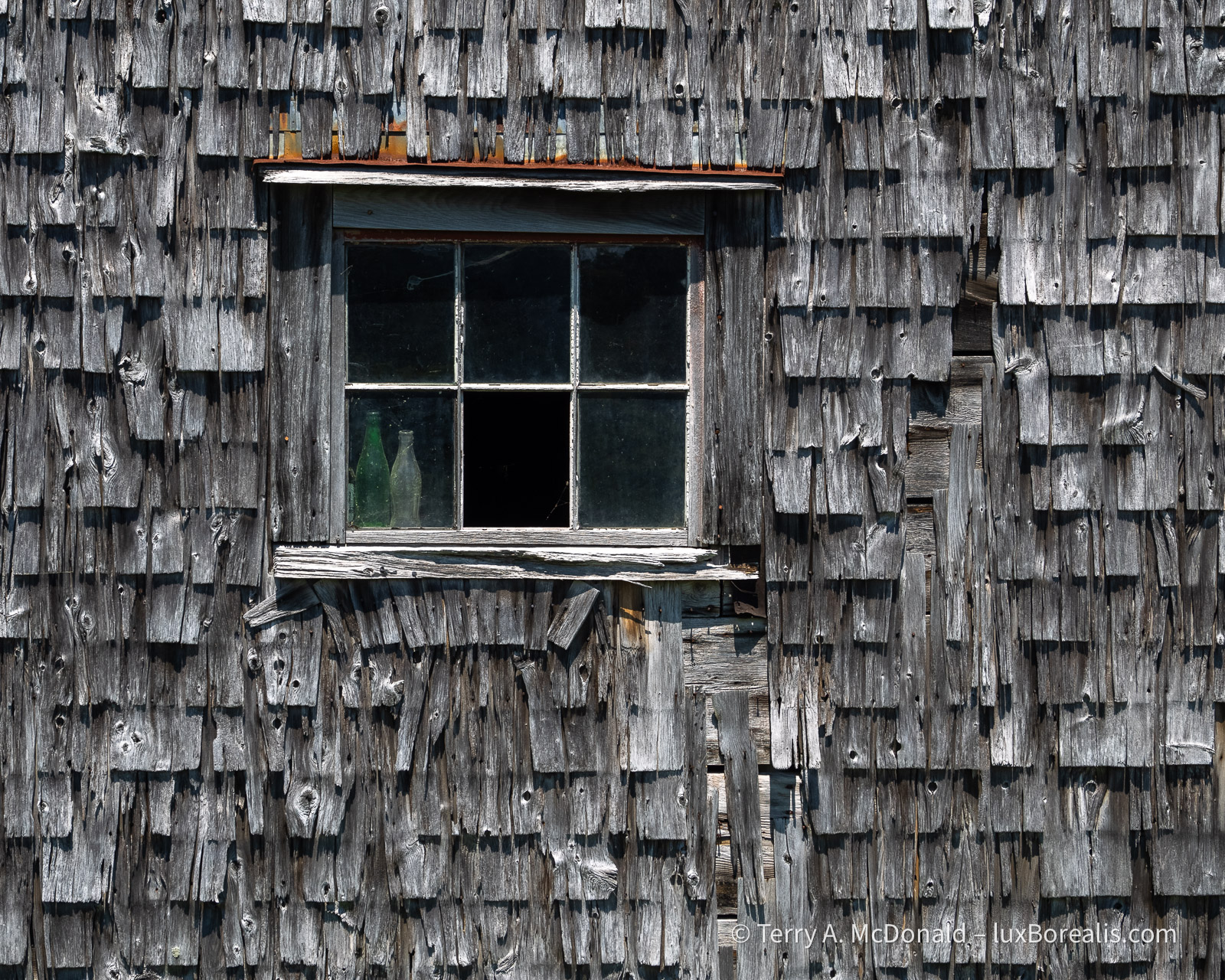
OM-1 | 47mm | ƒ5.6 @ 1/2000, ISO 800. HHHR | Lr

OM-1 | 15mm | ƒ8 @ 1/250, ISO 400 | Lr
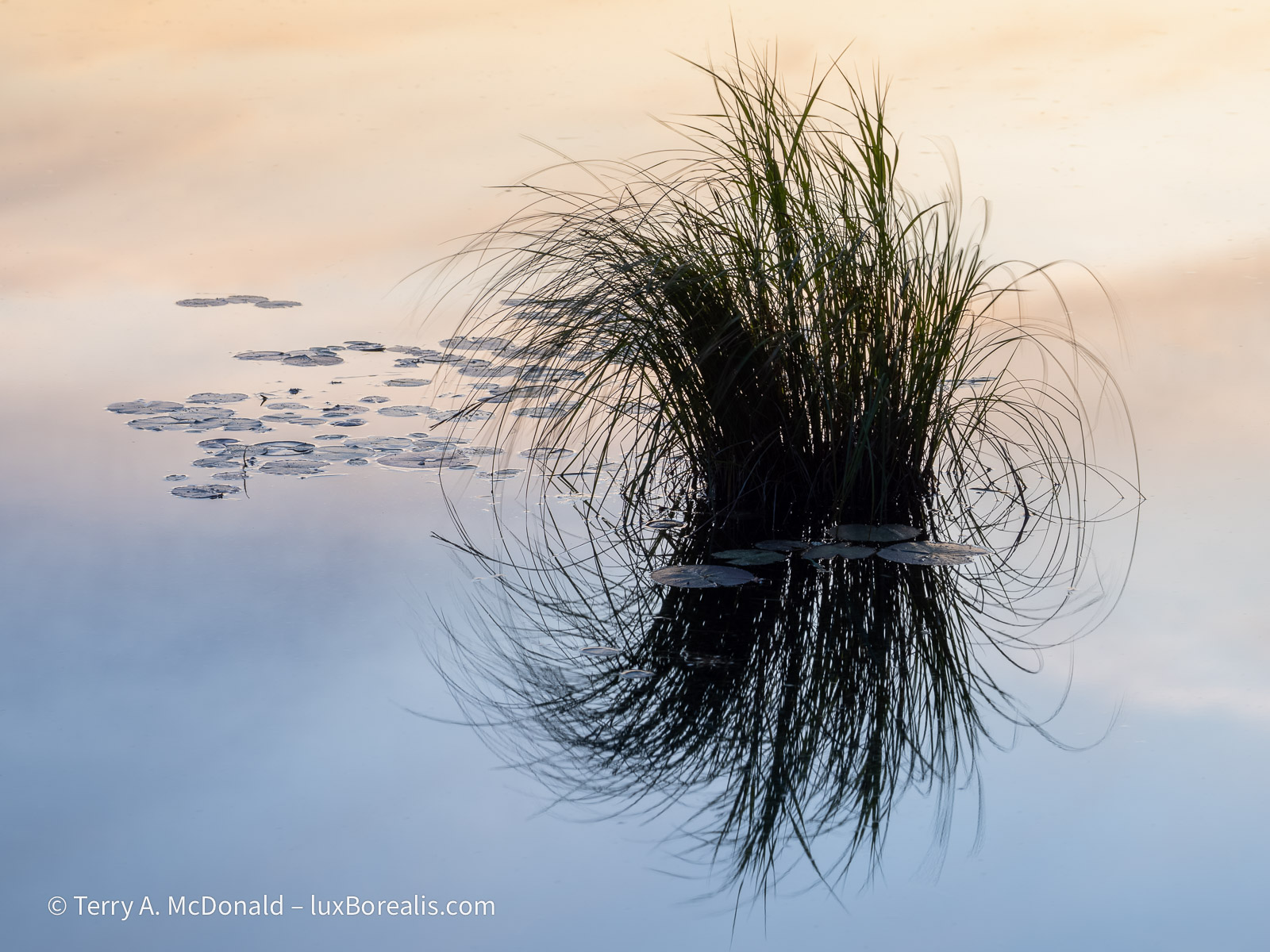
OM-1 | 57mm | ƒ5.6 @ 1/25, ISO 200, HHHR | Lr
I hope these photographs adequately portray the atmosphere of the South Shore of Nova Scotia and the peacefulness I felt when making them.
The last photo, Grasses, is from a particularly fascinating place. Near where our BnB was at Indian Point, is a massive 2m by 20m beautifully arced beaver dam. The grasses are from the pond behind the dam. But the interesting thing is that the Fire Department has constructed a gravel drive below the dam and an access ”deck” to the dam as an alternate source of water. Huh? That’s right—they are using the ingenuity and ’free labour’ of the beavers to ensure they have an adequate back-up water supply.
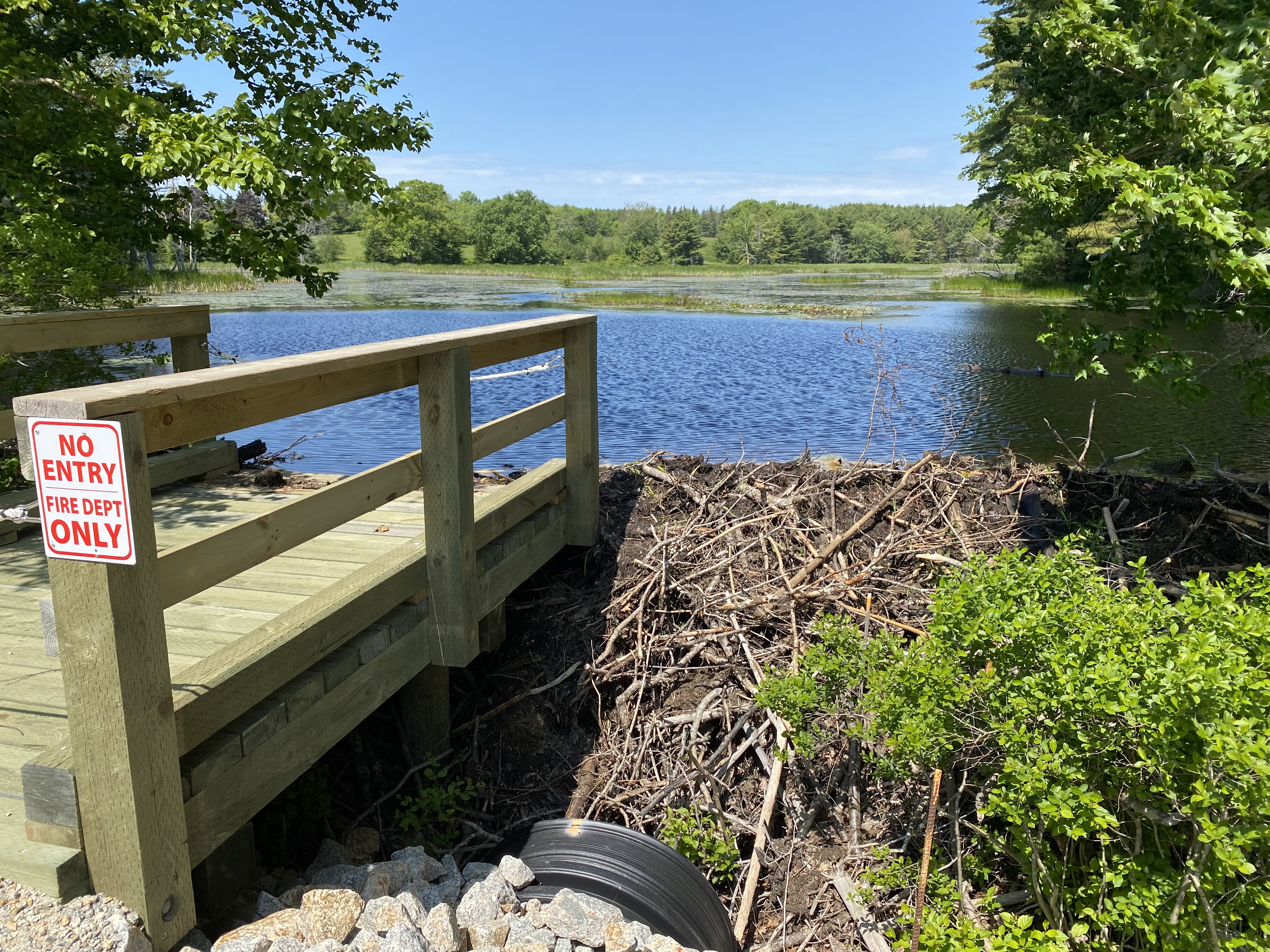
Wonders never cease. Maybe it’s a Down East thing, working with nature, not against it, like we seem to do all too often.
Thanks for reading! I’ll have more photos from Halifax and the Cape Breton Highlands over the next week. Please add to the discussion with your questions, comments and observations in the COMMENT section and be sure to SHARE and SUBSCRIBE!
Discover more from luxBorealis Blog
Subscribe to get the latest posts sent to your email.
 luxBorealis Blog
Stunning photos! I am still trying to understand the “Golden Dory” — it’s a very interesting photo!
Hi Terry,
Magnificent photos. I love the colour and the detail.
Gerry
Thanks Gerry. It’s such a lovely part of the country.