Finding the Sweet Spot in Photography
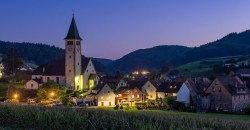
NOTE: This article first appeared on the Luminous-Landscape.com as a three-part series, beginning with: https://luminous-landscape.com/finding-the-sweet-spot-in-photography-part-1/. The whole of the article is included below.
If you’ve ever played tennis or baseball, then you’ll know what a sweet spot is—the magical power centre of a racquet or bat between ‘best bounce’ and the ‘dead zone’. Finding that sweet spot can make the difference between repeated success or pain and frustration. So too with photography, but over the years, as technology has advanced, that sweet spot has changed with it, creating a new ideal point where image quality, system size and cost meet.
I’m not a working pro, but like many photo enthusiasts, I take my photography very seriously. A few years ago, unhappy with the status quo, I began a quest to find that photographic sweet spot. It was not a quest for perfection as much as finding a camera system that fulfils my demands of landscape, nature, birds & wildlife and travel photography—one that:
→ produces raw files of high enough IQ for publication and fine art prints;
→ can get wet, performs in extreme weather, and at ‘the edge of light’;
→ has fast autofocus, excellent stabilization, sharp lenses, and high ISO detail; and
→ won’t break the bank.
In all, a system that works with me, not against me.
But this defines a lot of systems out there. In fact, I could make a case for any of the systems I’ve used through my photography journey: 35mm film, 6×7, 4×5, 4/3, digital full frame, 1” sensor, even the camera that’s ‘always with us’—the ubiquitous phone camera. Each has performed extremely well for me in a variety of outdoor, indoor, and studio situations.
NOTE: Tap or click on a photo to open it full-screen. Use the back button to return to the blog. Each photo is optimized for 1200px on the longest side. If your device shows it larger, some blurring may be noticeable.

Navigating the trade-offs
Photography is and always has been one trade-off after another. Take landscape photography: a smaller aperture is needed for greater depth of field, but not too small to cause diffraction. Yet, a fast enough shutter speed is needed to stop the motion of foreground grasses or cattails. We’ve all been there, waiting patiently, perhaps for the light, but more often for the @#%$! wind to die down.
On the other hand, birds and wildlife demand long telephotos, tack sharp and well-stabilized, often heavy and costly. For both scenarios, we need a sensor large enough to capture, in low light, fine details in foliage, fur and feathers, but equipment that is not so large and heavy as to make it unwieldy. More trade-offs.

Travel, reportage and documentary photographers want a small, light, portable system with fast lenses, but they don’t want to give up image quality either. Can there possibly be a sweet spot to meet all these demands?
Yes, and surprisingly, it’s been out there all along, hiding in plain sight, gradually evolving, maturing and perfecting its specs. The problem has been that, like many in the field, I’ve had blinders on. Embarrassingly, I began my digital journey with the ideal system but, following the hype, I went down the path most travelled instead. All this time I’ve been looking in the wrong direction. It took a young, open-minded student of mine to get me to remove the blinders and re-consider my roots.
The proof is in the print
Before I get to that sweet spot, I want to share some photographs since, in the end, it’s the results that count. Here are three photographs from a recent trip to Tanzania. I’ve chosen them because each represents one or more limiting factors in photography: fine detail, low-light performance, and smoothness of tone. Other factors contributing to overall performance include ergonomics, weight, and speed or ease of use. However, the costs and benefits of these can only be judged through hands-on experience with the equipment.
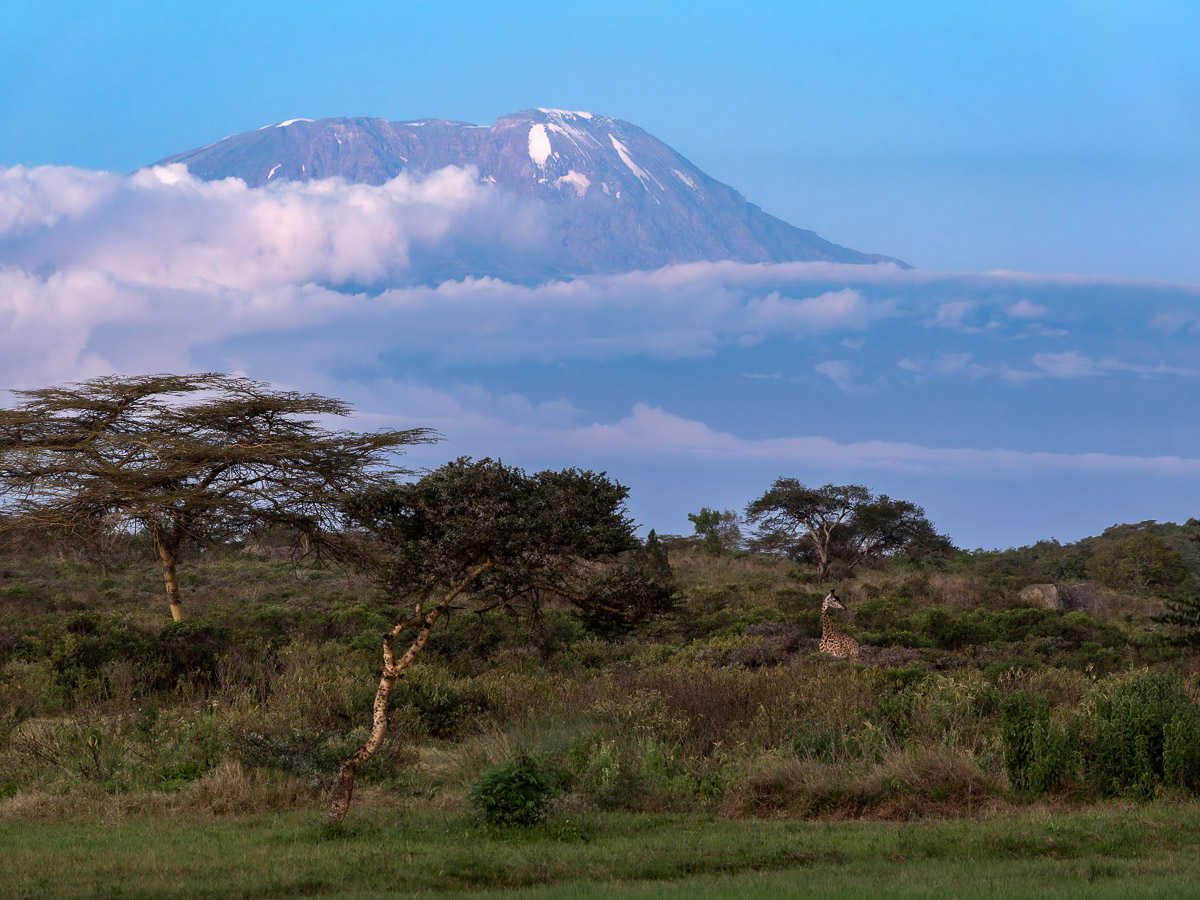

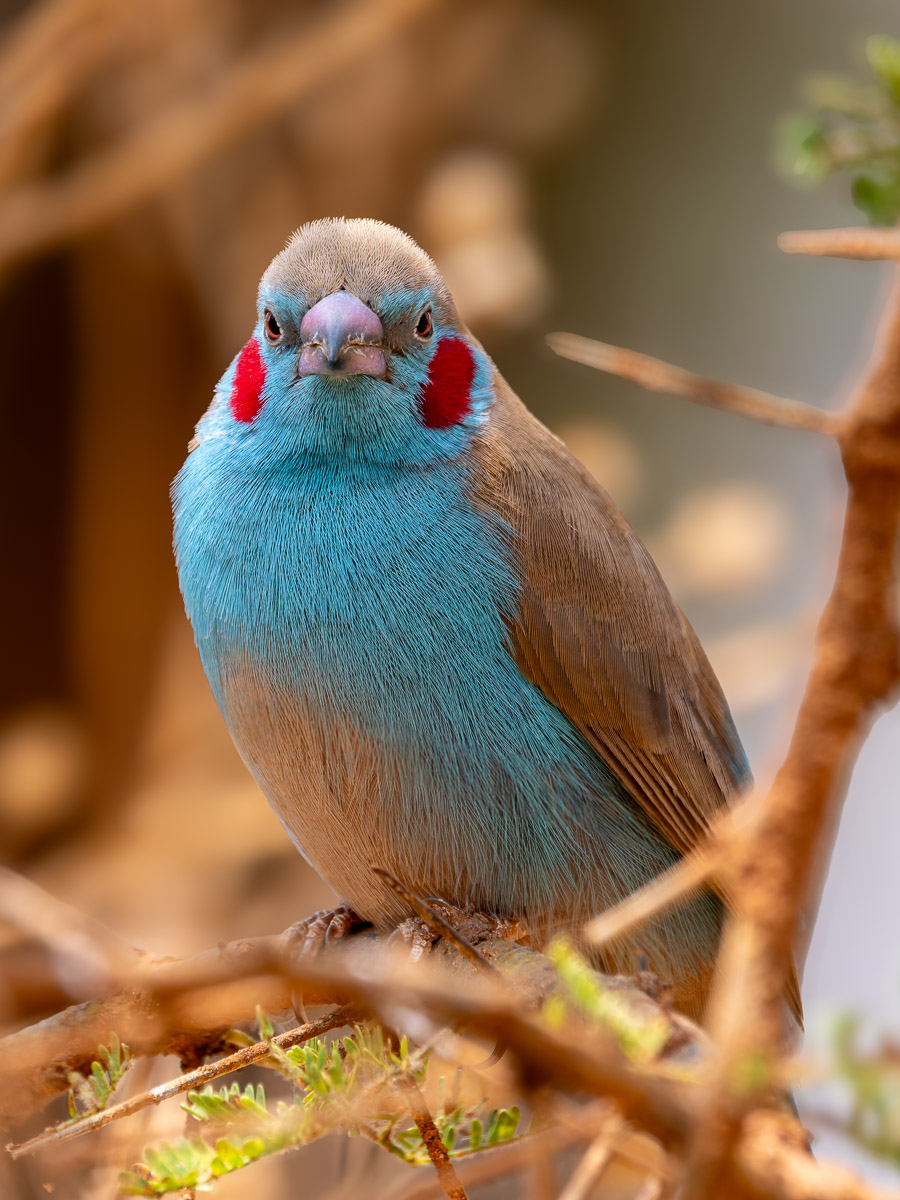
Note: All three photographs were made handheld, a testament to modern IBIS.
So, what about those trade-offs?
Would you believe me if I said these were made with an iPhone? No, definitely not. How about a 1” sensor camera. Possibly. A few years ago, I wrote in LuLa about The Ultimate Travel Camera—the Sony RX10iii (now iv), with its excellent ƒ2.4-4 stabilized Zeiss 24-600mm equivalent lens. What about M43s? APS-C? Full frame?
When I shot 4×5, it was because I could not get a decent 16×20” print from 35mm. With recent advances in digital technology, I can now produce a 16×20 from my current system that is of higher visual quality than a 16×20” made, at the time, from a 4×5 negative or transparency. And, I can make that raw file without a tripod from a camera and lens combination weighing less than a quarter of my 4×5 camera and lens.

The high image quality of these files gives pause for thought. I know you want to pixel-peep them, and you may have already started, but they are down-scaled JPEGs for online use, so you don’t get the genuine experience of seeing them ’live’.
But it’s pixel peeping that created the beast we live with and has become a national past-time for photo bloggers around the world. Yet, that’s not how we view photographs. Perhaps it’s time to turn the Holy Grail on its head. If it sounds provocative, it’s meant to be. You can take in one of two ways: either take a moment to think differently, even if it’s just a thought exercise at this stage, or you can remain trapped in the status quo.

Let’s face it, full-frame is the default, though costly option and marketed as the best choice for modern photographers. After all, bigger is better, isn’t it? Why drive a Ford when you can afford a Ferrari?
But perhaps we’re looking at it the wrong way around. If the files produced above are of high enough quality for prints and publication (which they are), then shouldn’t that be the ruler we measure systems against? After all, you don’t need a 20-foot ladder to climb a 10-foot wall. While the 20-foot ladder is bigger, it’s not necessarily better. While you may claim neighbourhood bragging rights for having the longest ladder, it’s overkill and it’s unwieldy.
I ran into this two winters ago when I missed some shots of snowy owls. For me, it was the last straw, after missing other bird shots over the previous year. I was using a 3.3kg (7¼ lbs) FF Nikon camera plus telephoto zoom and it was too unwieldy to acquire focus and shoot in time. My current system with 60% more telephoto reach is only 2kg and half the size.

Confession Time
You’ve probably figured it out by now, but I did not make these photos with my iPhone, nor with a full frame system. They’re from an OM System OM-1 with M.Zuiko lenses. My guess is you are now scrolling back up to those images, scrutinizing them for any tell-tale signs. I’ll admit, they are downsized to 1200px from the originals and shown as JPEGs online, so you don’t get the genuine experience of seeing them ’live’.
But let’s get back to real-world scenarios—when was the last time you made a fine print larger than, say, 13×17”? Typically, photos are never shown larger than 3840×2880 pixels which is an 11MB file, the same width as a 4K TV. In fact, it’s estimated that more than 90% of photos made are never seen beyond a computer screen. Another way of looking at it is this: how may MB have you paid for, but are throwing away each time you downsize a file?
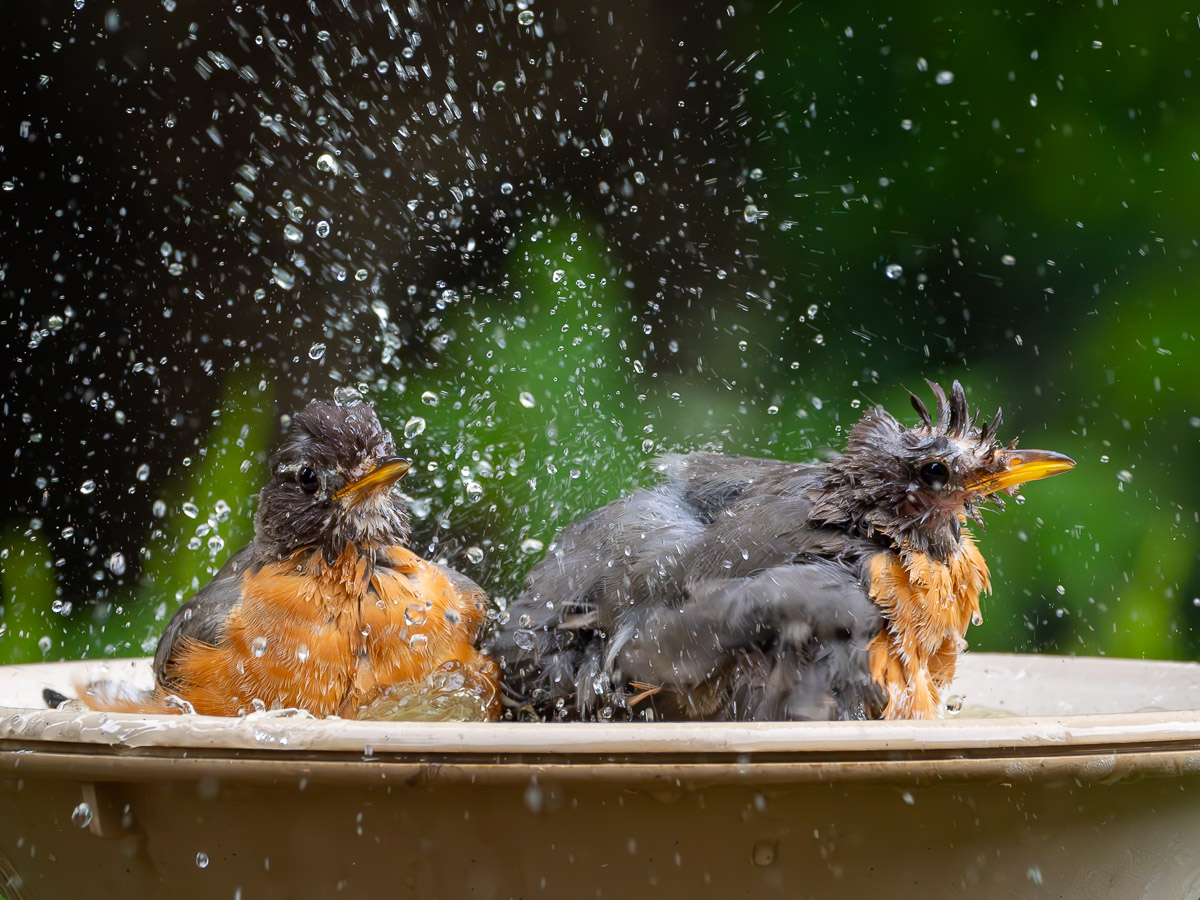
I feel I might be hitting a nerve right now. During presentations, this is when the audience starts to shift uncomfortably in their seats and the defensive posturing begins, usually around the need for extra pixels for cropping. If that’s the case, then M43 is the sweet spot as the effective focal lengths are doubled. So my 100-400mm/5-6.3 zoom provides the equivalent field of view (efov) of a 200-800 full frame lens. My 12-100/4 PRO IS lens is like a 24-200. Tack sharp from one end to the other and corner to corner, it’s the perfect zoom for travel photography. And my landscape lens is an 8-25mm/4 PRO, or 16-50mm in FF terms, another ideal zoom range, unavailable for FF.
All this represents photography’s dirty secret that no one wants to admit to—unless they’ve actually worked with M43: small sensors are now technologically advanced to compete with full frame. The system is mature enough to have a range of high quality optics that don’t break the bank. In one sense, M43 represents a democratization of photography in that we can achieve high IQ without paying the full-frame premium. I could never afford the kind of FF telephoto lens that is producing the wildlife and bird photos I am now able to make. Nor would I want to carry it around.
Back to prints
Many pros claim to make 30×40” fine art prints. They’re big and they’re gorgeous. Can you do that directly from M43 raw file? No, not without up-scaling. But you can’t make them directly from a FF sensor either. Even a 60MP sensor has a maximum direct print size of 21×31”. Are there M43 users making 30×40” and selling them? You bet there are. The bottom line is this: If you make dozens of 20×30” fine art prints (not canvases, as they require less resolution) a year and sell them, then a FF maybe your best option.
But here’s what Pulitzer Prize-winning and National Geographic Photographer Jay Dickson said, ”I have prints hanging in our home, shot with an [M43] Olympus, that are 50” on the long side, and the quality is stunning.” (Link) That was said eight years ago—long before OM System upgraded the sensor for the OM-1 and OM-1 Mark II.
Professional wedding and portrait photographer Joseph Ellis agrees. He regularly makes, “absolutely stunning prints from M43 up to what the Europeans call A1 (about 23”x33”). (Link) In his side-by-side comparison of 30” prints from a 20MP M43 Olympus and 60MP Phase One IQ16030, there was ”no discernible difference at normal viewing distances”. As he described, differences didn’t really show up until they were ”sniffing the prints”.
In one sense, a paradigm shift from full-frame to M43 mirrors that of the shift from large and medium format to the ’compact’ and ’miniature’ 35mm cameras that began to appear over 100 years ago. While not the first 35mm, ”Oskar Barnack had designed the original 35mm Leica back the 1920’s with the design ethic of small, compact, unobtrusive and capable of extremely high quality” says Jay Dickman (Link). Dan O’Neill adds, ”While older photographers avoided Barnack’s invention, the younger crowd embraced it. Leica quickly became popular with the new generation of artists and photojournalists influenced by avant-garde styles like the Bauhaus movement”. (Link) Whether or not M43 gains the same kind of following remains to be seen, but the shift in thought remains the same: smaller, lighter, yet professional in design, build and performance.
Micro 4/3 achieves a number of sweet spots each of which have suffered from a disturbing amount of disinformation on photography websites, eager to monetize by promoting the more popular SoNiCan full-frame and APS cameras.
Effective aperture and shutter speed
Despite the disinformation regarding aperture, depth-of-field and exposure scattered around the web, physics tells us that ƒ8 on a M43 lens has the equivalent depth of field of ƒ16 on a full-frame lens of equivalent field of view (efov), the M43 bonus being a shutter speed 2EV faster. Let’s go back to that landscape: given the same ISO, a M43 exposure of ƒ8 at 1/125 produces the identical result in terms of depth of field and exposure as a full frame shot of ƒ16 at 1/30. To me, having that 2EV faster shutter speed means less time waiting for the @#%$! wind to die down. Combined with industry-leading stabilization (see below), it also allows for more flexibility with hand holding the camera.

Sensor Size
A 20.4MP M43 sensor is 5184×3888 pixels, or 17×13” at 300ppi—large enough to cover a two-page spread in a photo book with full bleed. How many prints larger than that do you make? When I need something larger, I use one of two methods for up-scaling:
(1) Lightroom’s Enhanced Super Resolution after running the base raw file through DxO PureRaw or ON1 No Noise—both with phenomenal results; and (2) Topaz PhotoAI’s upscale. It all depends on the photo. There is also OM System’s native High Res Mode, either handheld for 50MP or on a tripod for 80MP. Both do an excellent job. A third alternative I’ve begun using more often is to lock exposure and shoot multiple photos panoramic style. Three-across gives me a vertical of 5184px with a horizontal of around 7000px for a 17×23” direct print. Another option is to shoot across and down in rows, then Merging them in Lightroom with outstanding results.

Size and weight
To me, this is the elephant in the room. Photographers will jokingly complain about the weight of their FF gear, but still consider the struggle part of the experience. Those days are gone for me. I’ve hiked the remote and rugged Superior Coast trail with 35mm and 4×5 gear, and dragged full-frame gear all around the Galápagos Islands. Working with M43 is so much sweeter!
With full-frame gear, I always needed a backpack, and it was nothing by a pain. I couldn’t switch lenses on the go like I can with a sling or waist bag. A backpack, must be removed and put down somewhere to open it, take out a lens and switch over, or change a battery, or get a filter, etc. Where I work, this is a problem: next to waterfalls, on a beach, in a wetland, along the muddy banks of a river.
My whole OM system fits into a small sling bag. I have the FF equivalent of 16mm to 800mm glass plus a 120/2.8 Macro lens and a 1.4x Teleconverter, all in a small LowePro AW sling along with a POL, a couple of NDs, a spare battery, a lintless cloth, lens cleaning kit, and a couple of granola bars. When flying, it’s my ‘personal bag’—with all my gear—and it weighs about 4.5kg. When I ‘travel light’ with only a LowePro waist bag, I can still have my three zooms covering from 16mm to 800mm: two in the bag and one on the camera on a shoulder harness, with all the same extras. It doesn’t get better than that.
Cropping
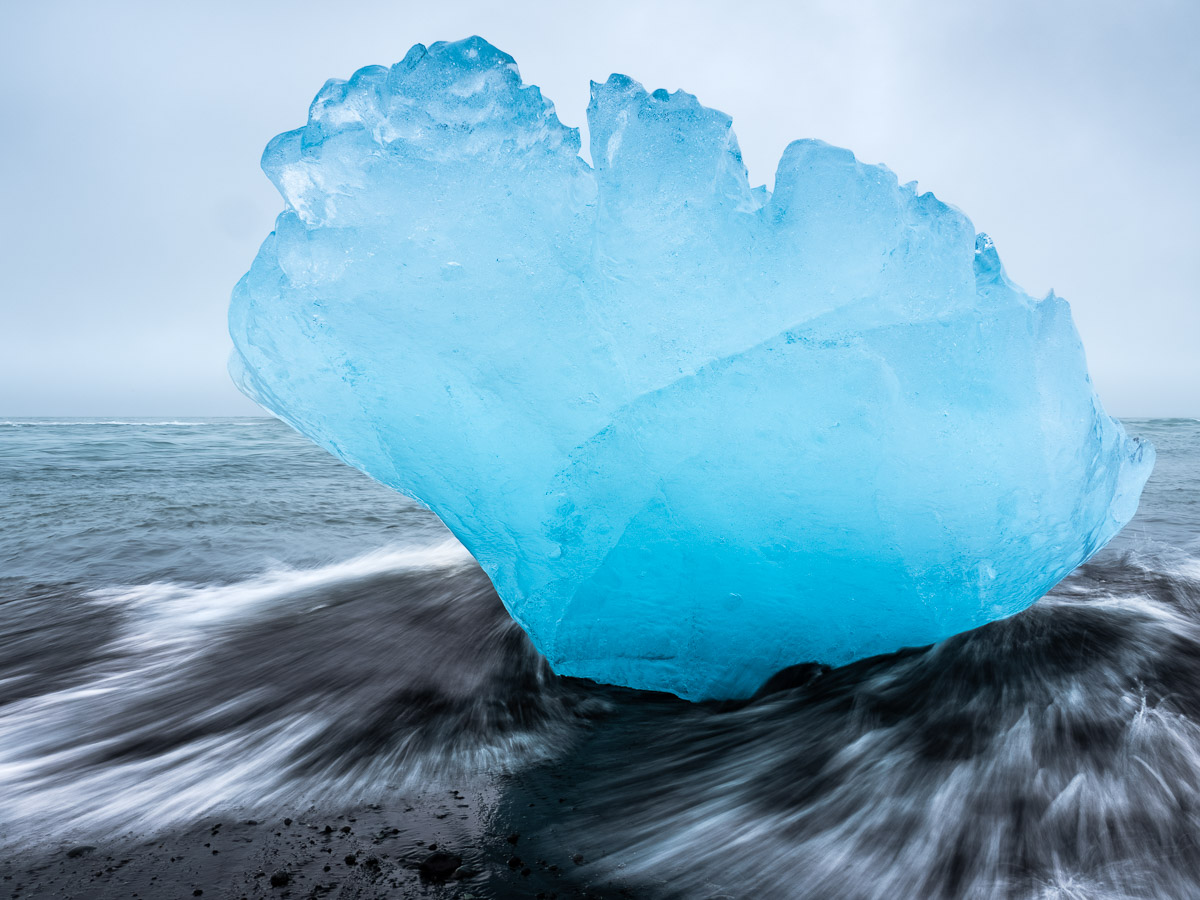
Admittedly, there are times when ’zoom with your feet’ isn’t feasible. Take the Cordon-bleu bird above. Tack sharp. I got as close as possible to it and managed a 3888×2916 pixel image—a vertical crop from a horizontal frame. Could I have achieved the same with a full-frame system? Almost. Although the focal length was 400mm, on a M43 sensor, that’s equivalent to 800mm in FF terms. If the same shot was made on a 60MP Sony A7Rv with a 400mm lens, the height of the identical photo would be 3461px (13mm/23.8mm*6336px), a loss of 427 pixels at an additional cost of CAD $3000. With a 47MP Nikon Z8, the image height would be 2994px (894 pixels less) and $4100 more expensive. That’s the FF premium. So, as far as pixels on subject are concerned, the OM-1 has it.

Sensor stabilization
I am neither a physicist nor an engineer, but what I understand from both is that the smaller M43 sensor is far easier and more efficient to stabilize than a full-frame sensor 4 times the size. Therefore, in a less expensive camera, Olympus has achieved extremely effective in-body stabilization, some say industry-leading, especially when paired with in-lens stabilization.
The High ISO Noise Debate
There is no doubt that M43 produces more noise than a full-frame sensor at every ISO. You can see the difference on-screen at 100%. In fact, it was the first thing I noticed with my OM-1 files. However, that’s the trap everyone falls into. Internet pundits love comparing on-screen at 100%, but no one who actually appreciates photographs examines them on-screen like that, only pixel-peeing photographers and internet bloggers do. The reality is, it’s the final photograph that counts, and its emotional appeal. Is grain noticeable in the final photograph? Not for the vast majority of uses, and if the on-screen noise bothers you, cleaning it up is only a few clicks away using DxO PureRaw, ON1 No Noise, Topaz PhotoAI or Lightroom’s Denoise. While I find DxO and ON1 the best of the lot, any one of them cleans the image up beautifully. Voilà, no noise. (More on raw file optimization in an upcoming article).
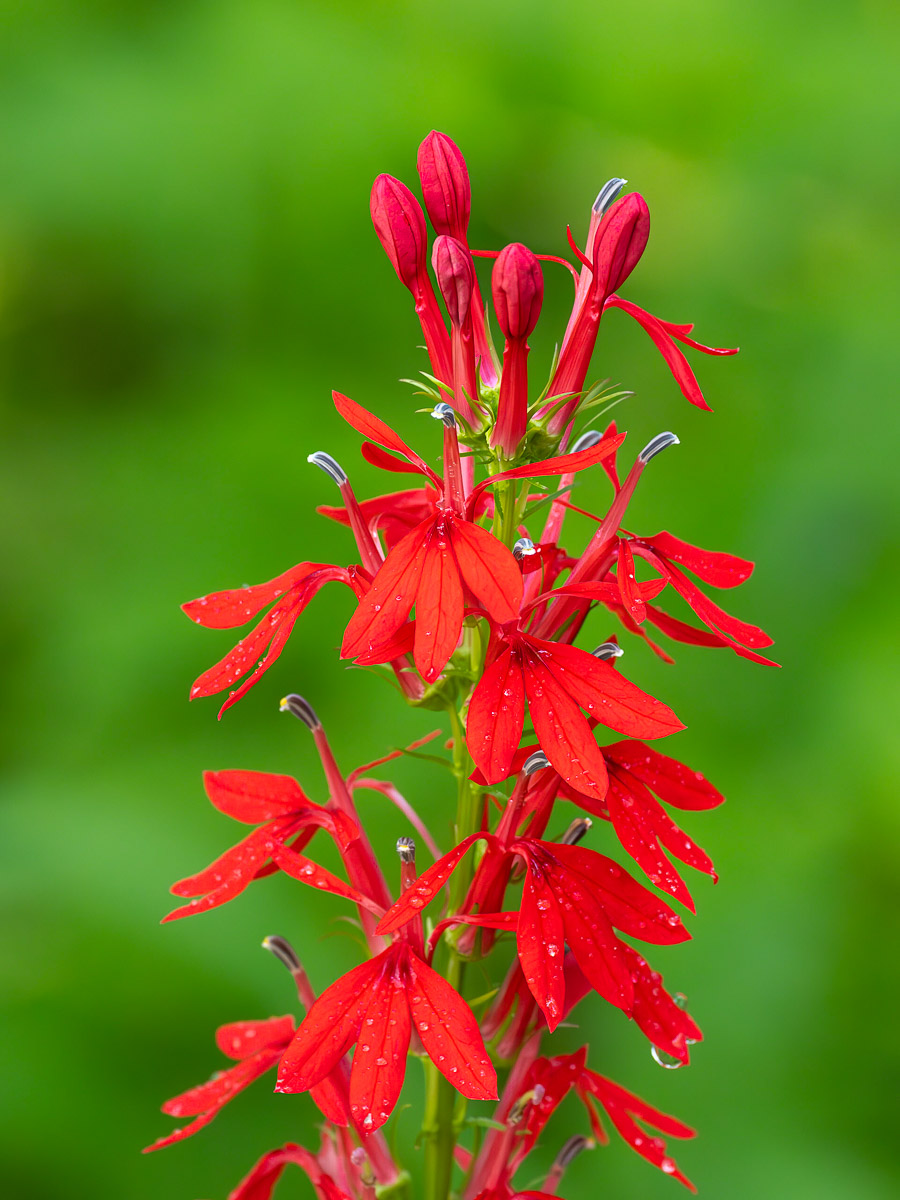
BTW, the lion shot up above was shot at ISO3200 and you can see every fine hair, even before it was cleaned up. Raw optimization just made it sing.

What about Dynamic Range?
M43 sensors have less dynamic range than FF sensors. There is no doubt. The most recent data from DxOMark measures the DR of the older Olympus OM-D E-M1 Mark II at 12.8, two EV lower than the class-leading Nikon 850 at 14.8. When a scene’s brightness is too great for any sensor to handle, photographers use exposure blending to compensate, to ensure detail is captured in both the shadow and highlight areas. With my OM-1, I keep HDR controls in my customized ’My Menu’, and use them about as often as I do with my D800E (DR of 14.3), which is rarely.
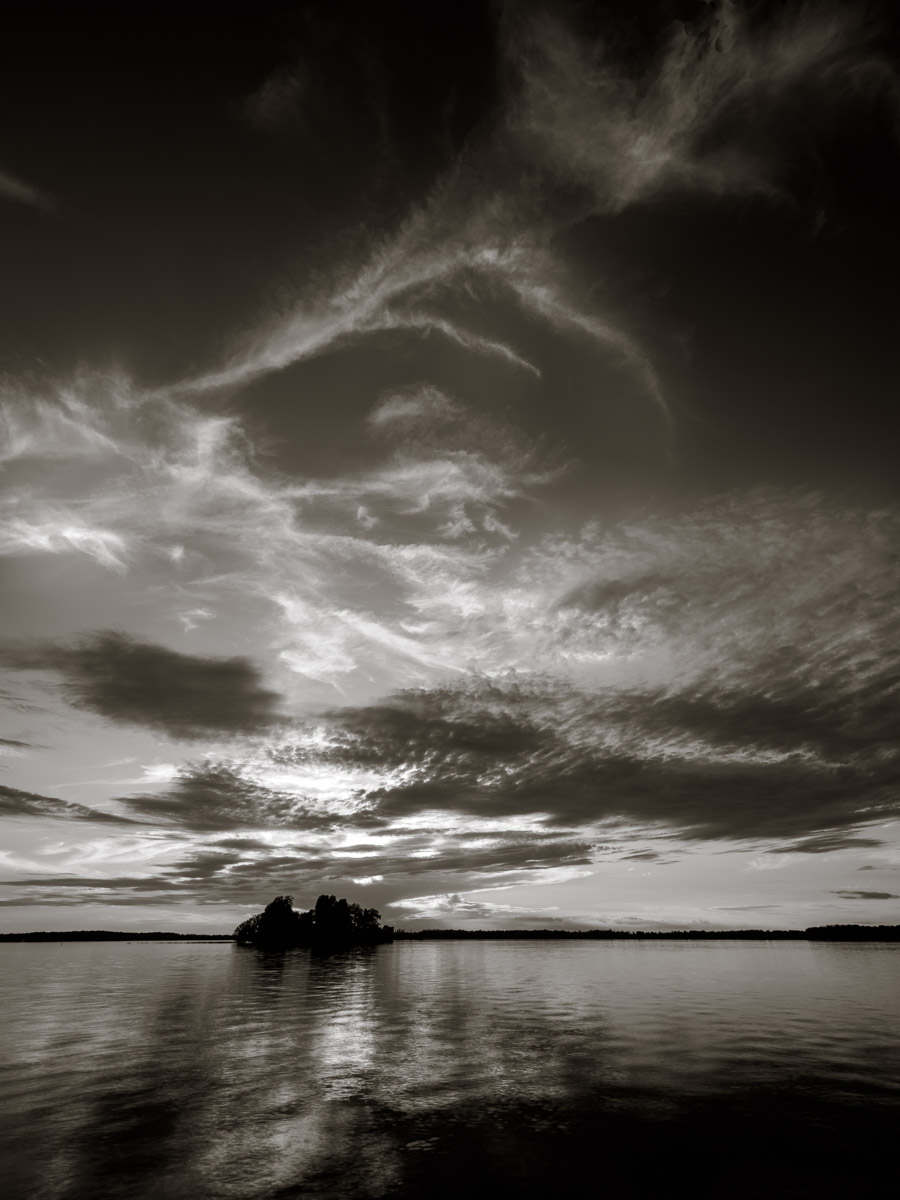
Why not APS? Isn’t that the sweet spot?
APS seems like a good option, but is it really? For me, there are too many trade-offs. If you already have a full-frame system of lenses, then you might think an APS body is the way to go, but you’re not saving any weight or bulk. The savings comes in matching an APS body with lenses designed for it. While lighter-weight APS bodies and lenses certainly have very good functionality at a low price, they have two inherent problems. One: APS bodies and lenses are cheaper for a reason. They are simply not built as ruggedly as an OM-1 or FF, and they often have only one memory card slot along with those shortcomings. Secondly, APS lenses tend to be slower and lack the corner-to-corner and full zoom range sharpness and professional finishing of both FF and M.Zuiko lenses.
To me, the sweet spot lies in creating engaging, high IQ photographs with equipment rugged enough to perform under any circumstances. A system that captures grand landscapes with dramatic light, minute details on a forest floor lit only by tree-hued softness, fleeting birds and wildlife—in any weather, at any time of day, even after the sun’s gone down. A system that will travel with me, provide a range of high quality optics from ultra-wide to telephoto, all in a small package. Funny, how similar the thinking was behind the ’miniature’ Leica 35mm camera. A hundred years on, are we on the brink of another sea change in photography or is the ‘bigger is better’ mantra still too entrenched?
What’s in your future?
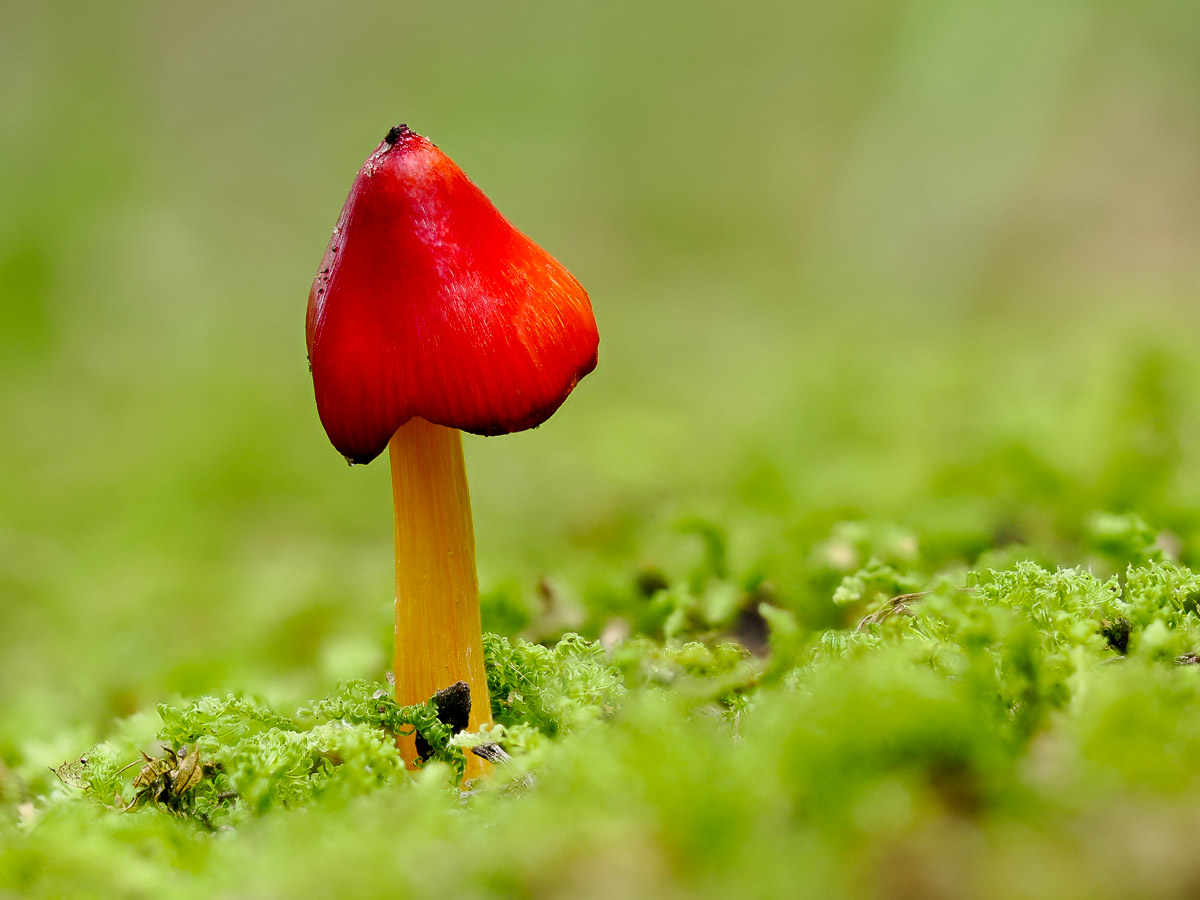
Thanks for reading! If you have any questions about OM System and the quality it produces or the photos shown above, be sure to add a comment.
Please SHARE this with other photographers or with your camera club, and consider signing up to receive an email notice of new blogs.
Have a look at my work by visiting www.luxBorealis.com and consider booking a presentation or workshop for your Nature or Photo Club or a personal Field&Screen workshop at Workshops.
Discover more from luxBorealis Blog
Subscribe to get the latest posts sent to your email.
 luxBorealis Blog
I use the R7, 2 card slots weights only 13 grams heavier and coupled with the RF100-500 I have the same length (800mm) with 32mp sensor, plenty to crop and weights is just a tiny bit more than the OM1 with 100-400 lens.
Only wonder if the auto focus might be better on the OM1.
That’s a great combination. Though the lens is a little heavier and more expensive, it certainly has the reach needed. With the OM-1, I find it’s helpful to have ProCapture and the various other computational modes such as LiveND, Starry Sky AF, and the HighRes settings.