Paradigm Shift

It’s funny how one, brief conversation can turn the world on its head. Okay, maybe I’m being a bit dramatic, but that’s what happened a few weeks ago when one of my Grade 12 Yearbook photographers challenged my beliefs about full frame sensors and camera systems. I mentioned to him that I was considering going mirrorless and getting a Nikon Z8, when it comes out.
I’ve been shooting Nikon full frame for 10 years now and have loved the experience. I clearly remember the absolute joy of adding the D800E to my camera pack. “Finally,” I thought, “I have the quality of 4×5 photography in a digital body.” In the film days, 4×5” negs and trannies were a cut above all else and an image standard I had longed for since the advent of digital systems. With a 36mp Nikon FF body on my tripod, I felt life was complete and I began assembling an appropriate arsenal of FX lenses ranging from 20mm through to the 200-500mm zoom.
Thinking back to the discussion William and I had about the pros and cons of sensor size, I’m surprised at how quickly I drifted into what I now recognize as “full frame arrogance”, as in ”Full frame is better, period,” and, ”Nothing can compare with the versatility and image quality of full frame.” How many times have you heard, ”If you really want to be a professional, you need to be shooting full frame.” William was questioning those beliefs, and had the facts to back up his assertions.
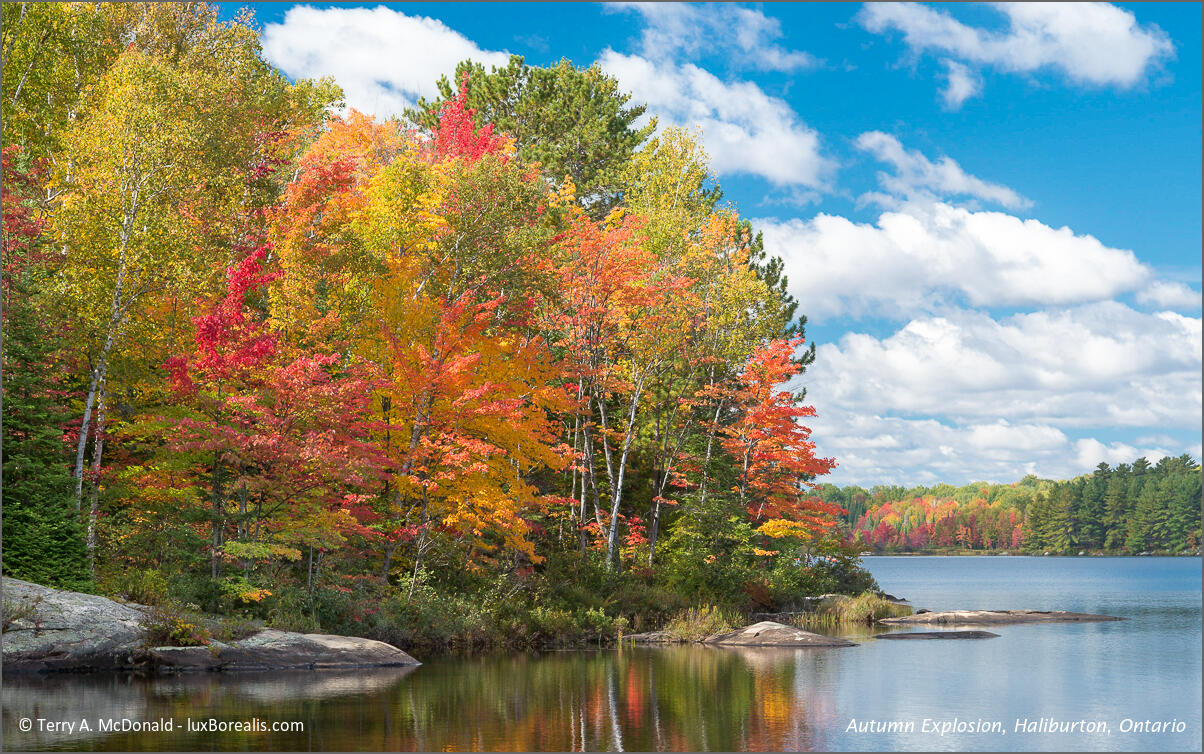
Nikon D800E w/ Micro-Nikkor 105mm/2.8; ƒ11 @ 1/50 with Polarising filter; ISO 100; EV–⅔
It’s not like I didn’t know about crop sensors. When I first entered the digital realm, there was no “full frame”. I had great success with Minolta 1:2.3 sensor, followed by Olympus Four Thirds. When FF came on the scene, the pixel count wasn’t anything special (6mp) and the cost was truly outrageous (over $8000). Even after switching to a full frame D800E in 2012, I followed that up with a 24mp Nikon D7200 APS-crop sensor body, specifically to turn my 200-500 into a 300-750mm zoom – ideal for wildlife and birding. So, yes, I knew about crop sensors.
However, my real epiphany with regards to small sensor cameras came earlier and only a few of years after diving into FF. While lugging many kilos of full frame equipment around in the heat of the equatorial Galápagos Islands, I began thinking, “There must be another way.”
Research led me to a new discovery: Sony’s wonder-camera, the RX10III with a 20mp 1” sensor. Amazing! A sharp, fast 24-600mm (equivalent) zoom, complete with raw file output that could comfortably print up to 12×18”. Up until COVID ended all travel, the Sony was with me in Iceland, then back to the Galápagos, then on to Vietnam and to northern Ethiopia. But, despite the amazing photos from that little sensor, I still felt something was missing. So, I entrenched myself back into full frame, continuing to opportunistically capture birds and nature, and my first and true love, landscapes.
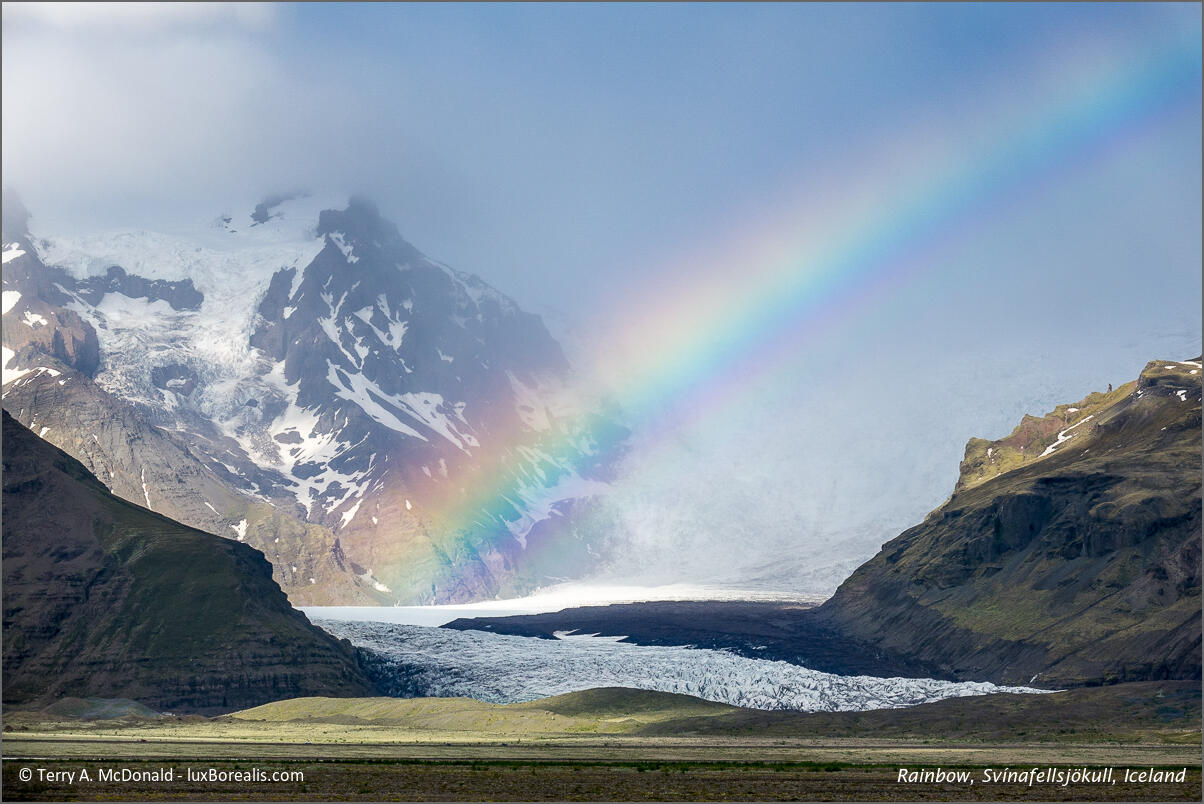
Sony RX-10III w/ 7.7-220mm/2.4-4 Zeiss lens @ 127mm (efov); ƒ5.6 @ 1/500; ISO 100
Enter William, who blind-sided me with determined arguments about newer, higher quality sensors, pixel-shift technology, faster and more precise autofocus and, something I hadn’t considered—the vastly improved software interpolation that is part and parcel of the photography experience these days. He capped off his case with the all-important weight and size factors, exactly the reasons why I chose the Sony. It was like he knew my soft spot!
William got me thinking and wondering if there might just be a ‘best of both worlds’ option out there, so I began researching. And my research turned up some interesting points. Bottom line, William was right. My “full frame arrogance” had blinded me into believing that if you really wanted to be professional, you had to shoot full frame. And I was beginning to see why photographers had formed that opinion.
That arrogance came directly from the big three manufacturers: Nikon, Sony, and Canon. None of them take crop sensors seriously, especially with their newer mirrorless offerings. Pros shoot wide angle – where are the wide angle lenses for APS sensor cameras? They all max out at 18mm, the equivalent of 28mm, hardly in the realm of the 24s, 20s or 18s of landscape photography. Pros want fast zooms; there aren’t any for APS cameras. And, more recently, the new mirrorless APS sensor camera lines offer only two “kit lens” zooms – great for snaps, but with glass that does not do their sensors justice. Furthermore, except for Sony, the mirrorless APS sensor bodies are plasticky, have only one card slot, and lack professional-level AF, EVFs, build quality and system integration. Sure you can put FF lenses on the APS sensor bodies, but then you have the bulk and weight of full frame unnecessarily dragging you down. That doesn’t make sense!

Nikon D7200 w/ AF-S Nikkor 200-500mm/5.6 @ 500mm (750mm efov); ƒ5.6 @ 1/250; ISO 400; EV–⅔
Basically, the big three were ignoring the potential gains of smaller sensor cameras. They were writing off their own crop sensor cameras as lower-grade consumer items. Even the one glimmer of hope from Nikon, the D500, which is fully professional in every way, has not been ported into mirrorless. So, if the big three were designing crop sensor cameras for consumers, what does that tell you? It told me, there must be another way. Maybe another company was doing it right.
Interestingly, after writing this, I stumbled upon a DP Review article that basically confirmed what my research had already told me. They said Nikon was “making APS-C products for beginners and hobbyists, and full-frame cameras for advanced enthusiasts and professionals”. That was said four years ago, and since then, nothing has changed! The article goes on to say, “there are very few high-quality lens options available for APS-C anywhere, including from third-parties”. Again, this hasn’t changed in the past four years, even with the new push on mirrorless. Sad, really, and it’s all driven by demographics and what they think photographers want. Apparently FujiFilm is thinking outside the box, but even their latest offering is weak on AF and weak on stabilization. Things weren’t looking good.
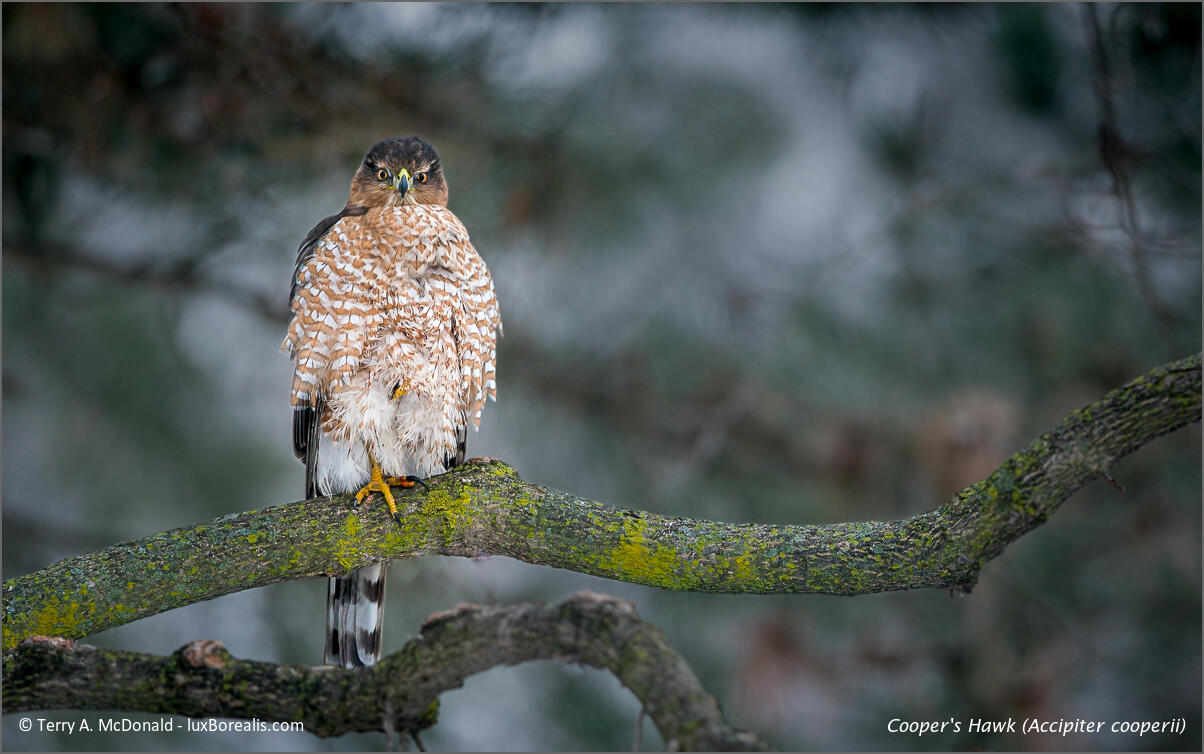
Nikon D800E w/ AF-S Nikkor 300mm ƒ4; ƒ4 @ 1/250; ISO 800
Again, I pounded the internet pavement, but this time, I began to notice a pattern emerging. Reading blog after blog and watching dozens of YouTube videos of active professional photographers, all using crop sensor cameras, led me to realize they all had one thing common: these pros were shooting with Olympus Micro Four Thirds.
What?!? This didn’t make sense. Four Thirds sensors are even smaller than APS. How can they be considered professional? I had given up on 4/3s 10 years ago when I adopted Nikon FF. What the hell’s going on here? Yet, here they were, earning a living doing corporate photography, portraits, weddings, bird, nature, wildlife, and landscape photography, all with Micro Four Thirds!
Little did I realize the efforts Olympus had put into building a truly professional system around the Micro Four Thirds (mirrorless four thirds) sensors. Over the years, Olympus has been pouring R&D into creating a sensor and software system that allowed bewildering opportunities in computational photography, integrated with high end AF and stabilization, all housed in a well-built, mirrorless, professional-quality, weather-resistant body that now defies the big boys.
And that’s the Olympus difference. They simply put their minds towards making a crop sensor camera that professionals could trust. More importantly, Olympus created professional quality lenses to support their cameras. And to top it off, their professional-grade gear is half the size, half the weight, and, best of all, half the price of the equivalent full frame gear. Now we’re talking!
Hands down, Olympus has the finest set of glass anywhere for small sensor cameras. In fact, their whole ethos is around creating and maintaining a fully professional small sensor platform, and it’s the way of the future.
When I visited OM Digital Solutions website, I was reminded of the thinking behind Olympus:
“WE ARE THE DARK HORSE.
We don’t run in the race, never have, and never intend to. For over 80 years, we have blazed our own path, pushed the limits of technology, and broken barriers of common convention . . . “
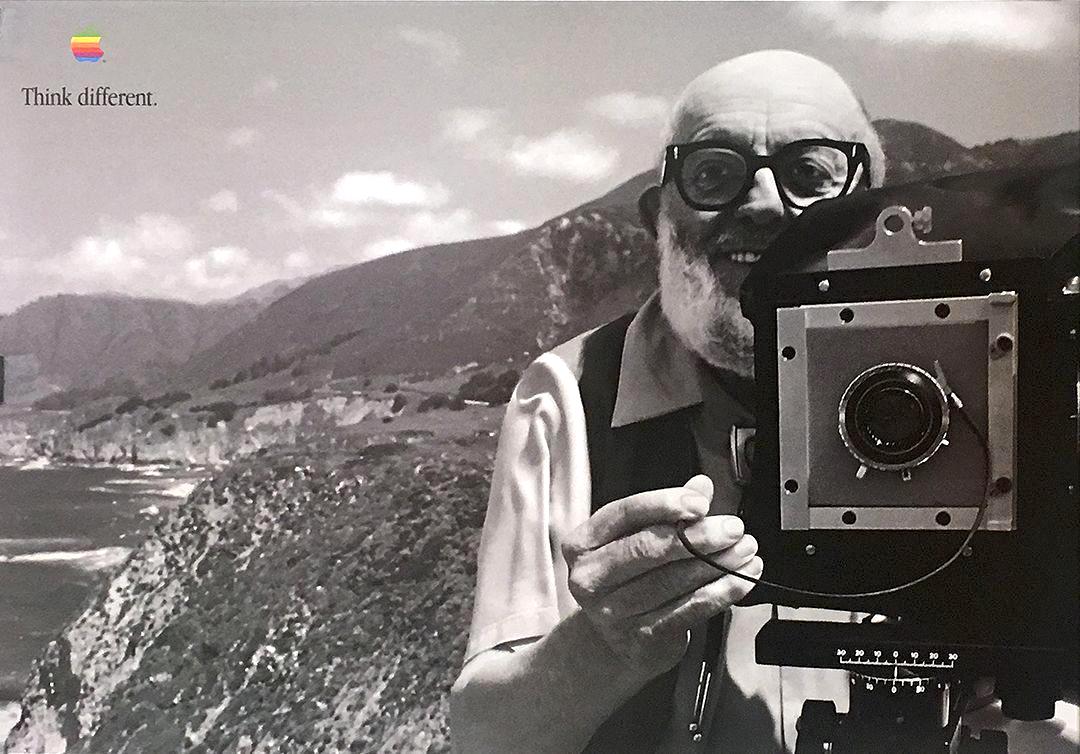
This resonated with me, deeply. It has a hint of Apple’s very successful “Think Different” campaign. Despite the Olympus corporate upheaval of 2020 – Olympus Imaging is now OM Digital Systems – they came out with the most cutting edge professional camera in years with the OM-1. Even that has an Applesque sound to it.
Or maybe it’s the mystique of the name, “OM-1” that has grabbed my attention. Back in the film days, I loved the OM-1. Built like a tank, it was lightweight and compact, as were the lenses, and it had some of the best glass in the industry. I went on to own an OM-3 and an OM-4, until everything changed with digital.
So, here I am, going full circle. William’s arguments have won the day. Thank you William! Maybe there’s still hope for us old dogs.
Having started my photography career with an Olympus OM-1, and having worked in 6×7, 4×5, and even my beloved iPhone camera (talk about punching above its weight!!), I’m now coming home again, some 40 years on, to an OM-1 and some of the sharpest glass in the business. Most important to me, though, is the high quality raw imagery I expect from a camera system. Being half the size and half the weight of my FF Nikon gear is also an important consideration, as I’m not getting any younger. The bonus? A fully professional Olympus system will be half the cost of upgrading to Nikon mirrorless. it really is a win-win-win situation.
Thanks for reading. Be sure to subscribe to my blog. You’ll find the Subscribe field by scrolling up to the top right.
If you have any questions about the bog or the photos, please send me an email: terry at luxborealis dot com.
Happy Shooting!

Nikon D800E w/ AF-S Nikkor 300mm/4.5 and 20mm extension tube; ƒ7.1 @ 1/400; ISO 200; EV–⅔
Discover more from luxBorealis Blog
Subscribe to get the latest posts sent to your email.
 luxBorealis Blog
Hi Terry: Sat on pins and needles as I read this blog, waiting for the punch line. What will the final choice be, the result of your epiphany?A smile on my face when the Olympus name filled the spot. I made the switch to the OM-D E-M1II for our pre-covid trip to South Africa, based on my 2016 experience in Iceland where my uncle was shooting away with his OM-D in the waterfall mists while I continued to lug around my D-610, protecting it from the elements and getting way too much weightlifting time with my left arm. It was great to be able to “downsize” but I too suffered (and perhaps still do) from the FF arrogance. Looking forward to pairing a suitable lens for the bird shots with this body (my 12-100 doesn’t make the cut even when I’m standing on tippy-toes). Would look forward to advice on suitable choices.
Thanks Dan. I wish we had spoken sooner about cameras! The new system is on its way. I’m looking forward to the 12-100 as my “go to” lens. To replace the Nikkor 200-500, I ordered the 100-400 and am greatly looking forward to working with it. For landscapes, I ordered the 8-25. It seems like each lens hits the ideal sweet spot for focal lengths. Cheers!