Winter Photography on the Saugeen-Bruce Peninsula

12 photographs; 1040 words; 6-minute read
This collection of photographs celebrates winter. Real winter. Winter away from the dreariness of cities. Winter that is blue and white with snow, not grey and brown with slush.
The settler name for this area is the Bruce Peninsula, but long before that it was the home of the Saugeen First Nation, hence the re-introduction of a more traditional name. About 90km long and between 10km and 25km wide, the Saugeen Peninsula juts northwards from southern Ontario, splitting Lake Huron into its main body and that of Georgian Bay. It is part of the same feature that creates Manitoulin Island to the north and the Saginaw Peninsula in Lake Michigan to the west. The Niagara Escarpment runs along the peninsula’s east coast creating the dramatic headlands and cliffs of limestone that plunge into the cold, blue-green waters of Georgian Bay.
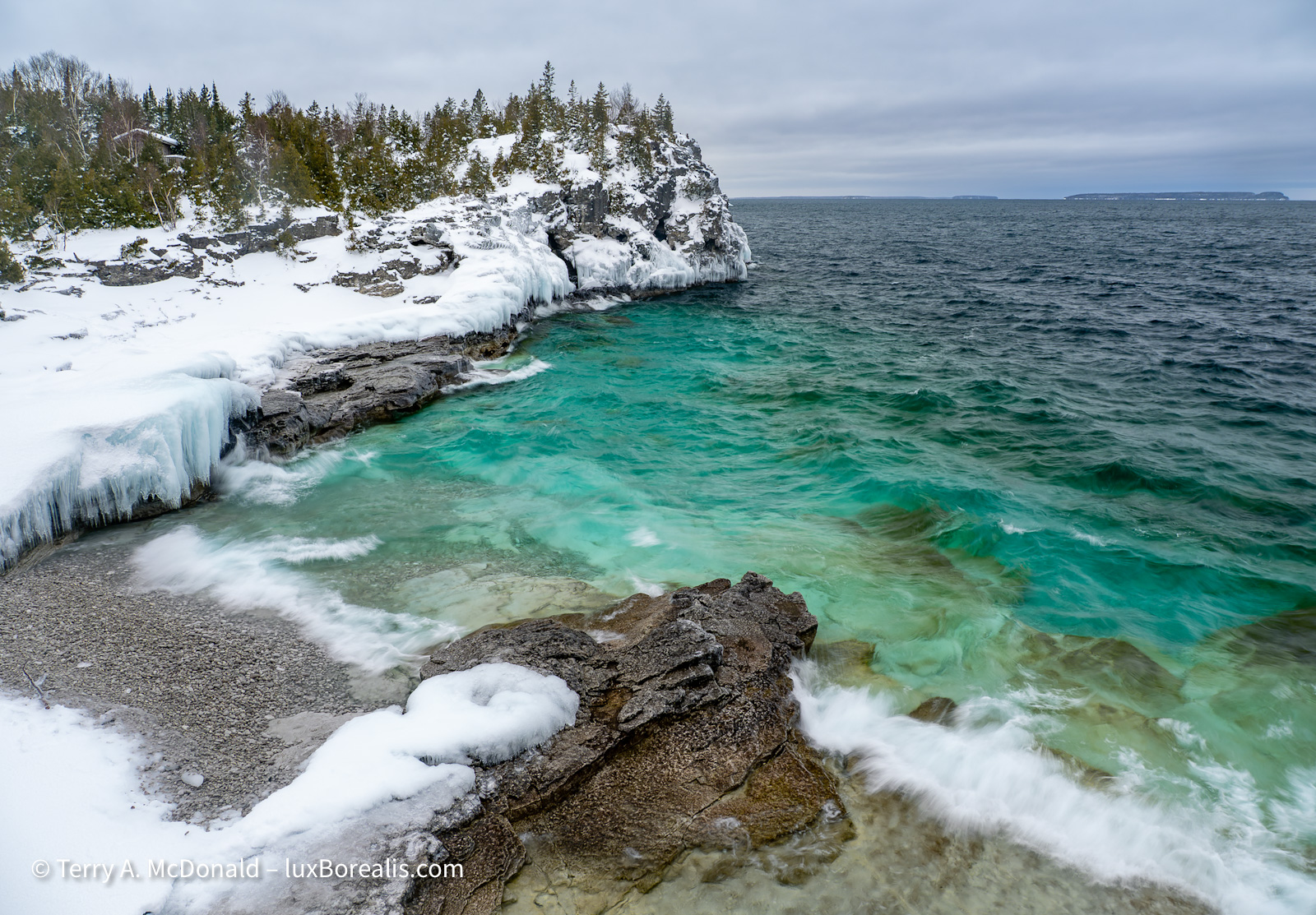
OM-1 w/M.Zuiko 12-100mm PRO at 12mm • ƒ5.6 @ ⅕ • LiveND 16 • ISO 800 • Lightroom
Tropical turquoise contrasts with the cold snow and ice of a Canadian winter. Using LiveND allowed me to slow the shutter down to capture the wave action as motion.
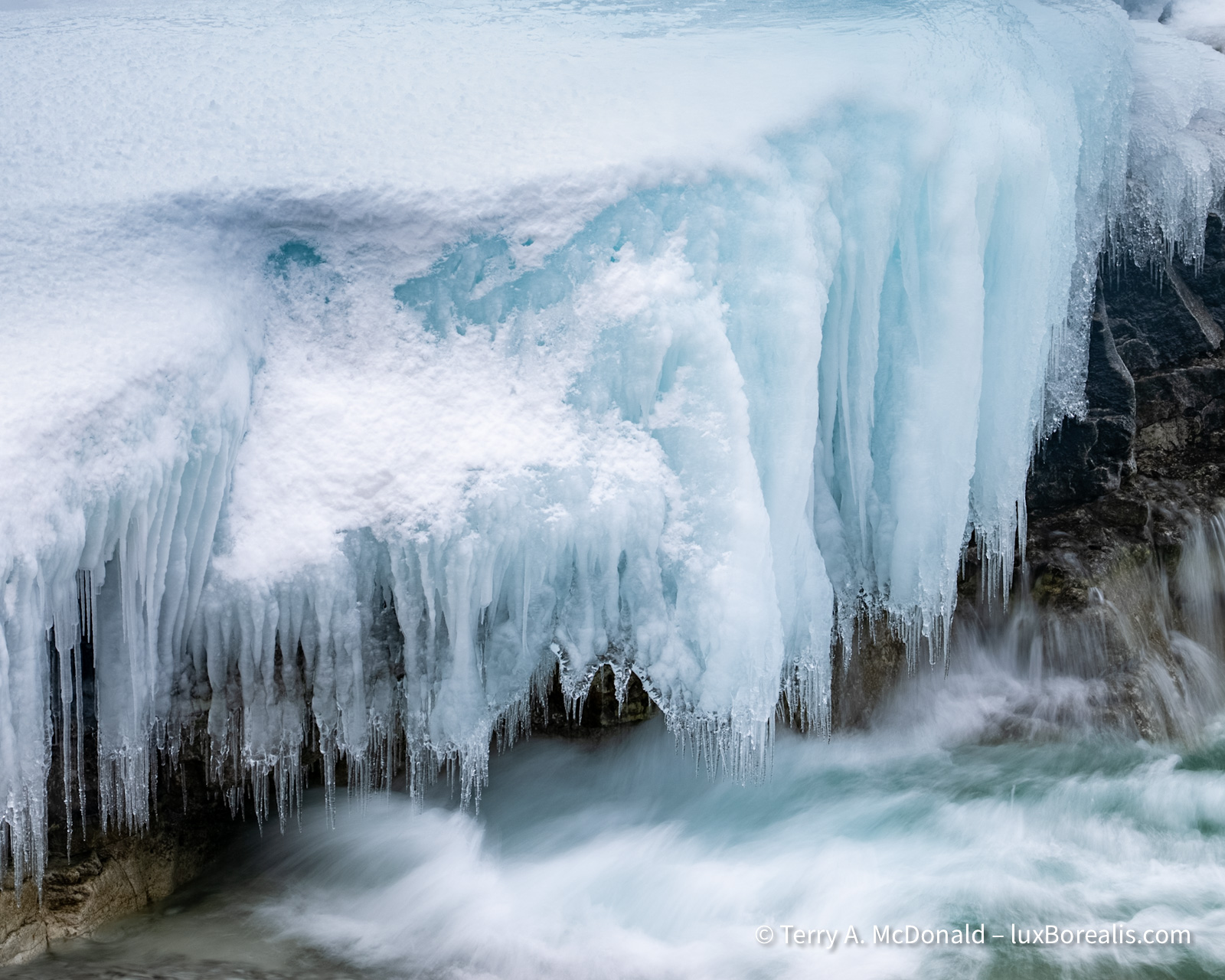
OM-1 w/12-100mm at 75mm • ƒ11 @ ⅕ • ISO 800 • LiveND 8 • Lightroom
Yes, the ice really is that blue! Even our ski tracks and footprints turned the snow electric blue.
With over 80% of Canadians living in cities, it’s no wonder so many hate winter. I’d hate it too if all I saw were people in over-stuffed, drab coats, cars white-washed with salt, and sidewalks, parking lots and roads slathered in slush.
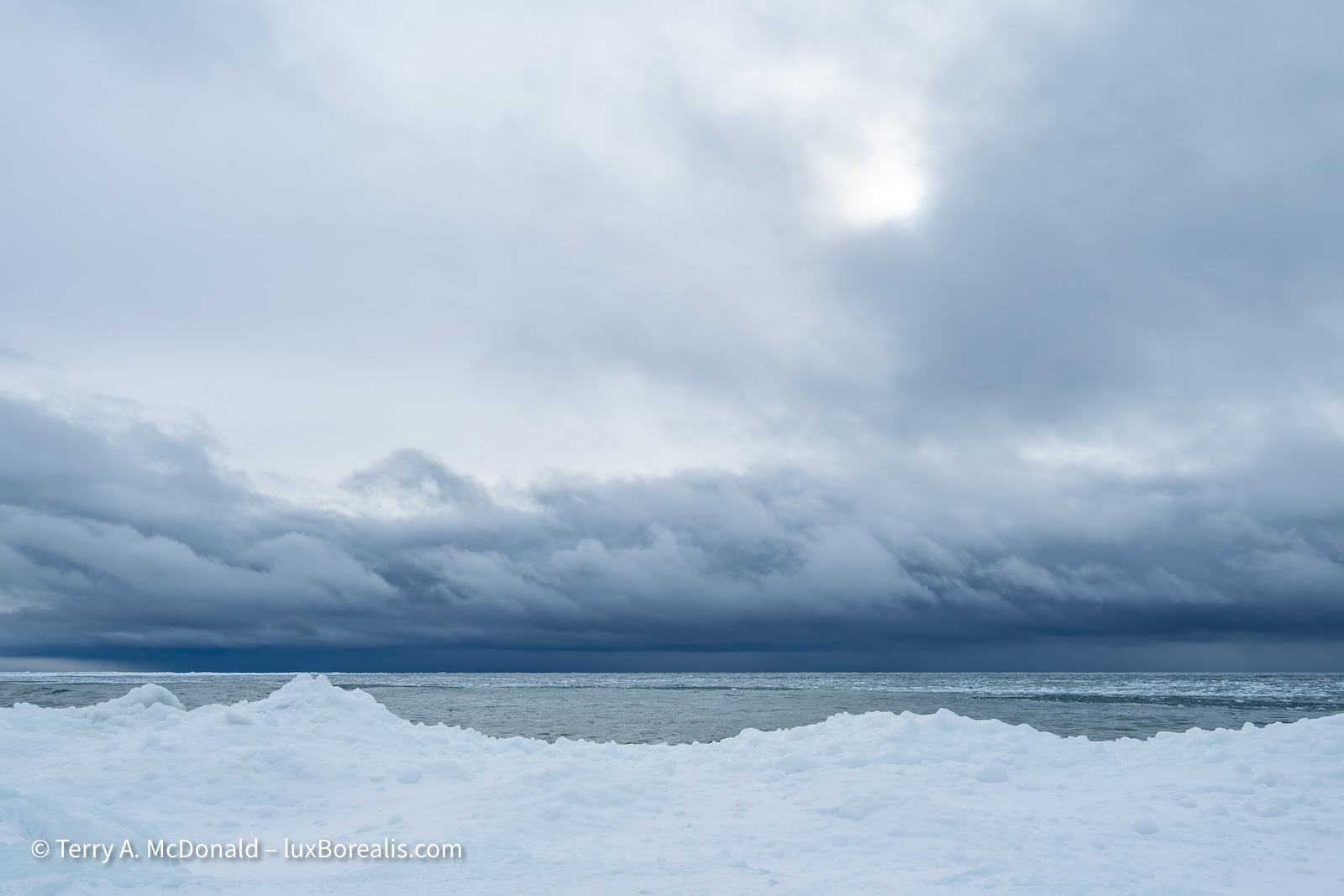
OM-1 w/12-100mm at 16mm • ƒ8 @ 1/250 • ISO 200 • Lightroom
Winter really comes into its own when you get away from that. Even a short drive out of the city puts you into a different world. A world where the colours of spring, summer, and autumn have been erased and replaced with shades of blue into white. Ochre grasses and grey-brown trees stand tall through the blanket of white creating a mysterious world of shapes and shadows.
This is winter as it’s meant to be!

OM-1 w/12-100mm at 12mm • ƒ11 @ 1/60 • HHHR • ISO 200 • Lightroom
Handheld High Resolution mode (HHHR) creates files 50 MP in size, reducing noise and retaining more shadow detail in addition to the extra detail of a larger image file.
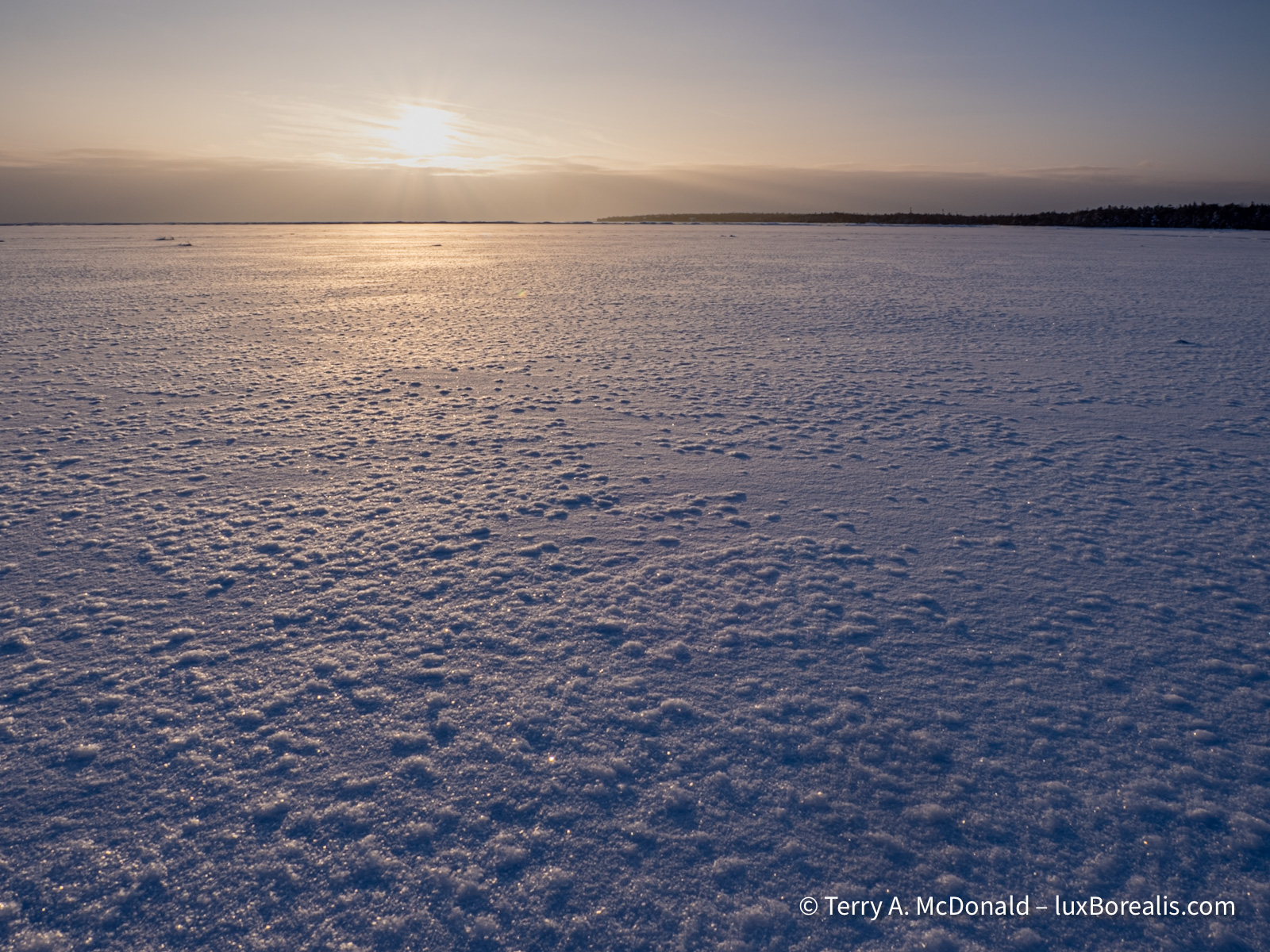
OM-1 w/12-100mm at 12mm • ƒ8 @ 1/800 • ISO 200 • HHHR • Lightroom
Most of our time up here on the Saugeen Peninsula was spent at Bruce National Park, the crown jewel of the peninsula. Parks Canada are piloting winter activities there with the hope of expanding as more people are attracted to coming up in winter. We rented an AirBnB cottage on Dorcas Bay, which was a good move as, for now, there is only one restaurant open in Tobermory (though a few more in and around Lion’s Head). Being in our place also gave us the chance to enjoy aprés-outdoors charcuterie and meals at our own pace.
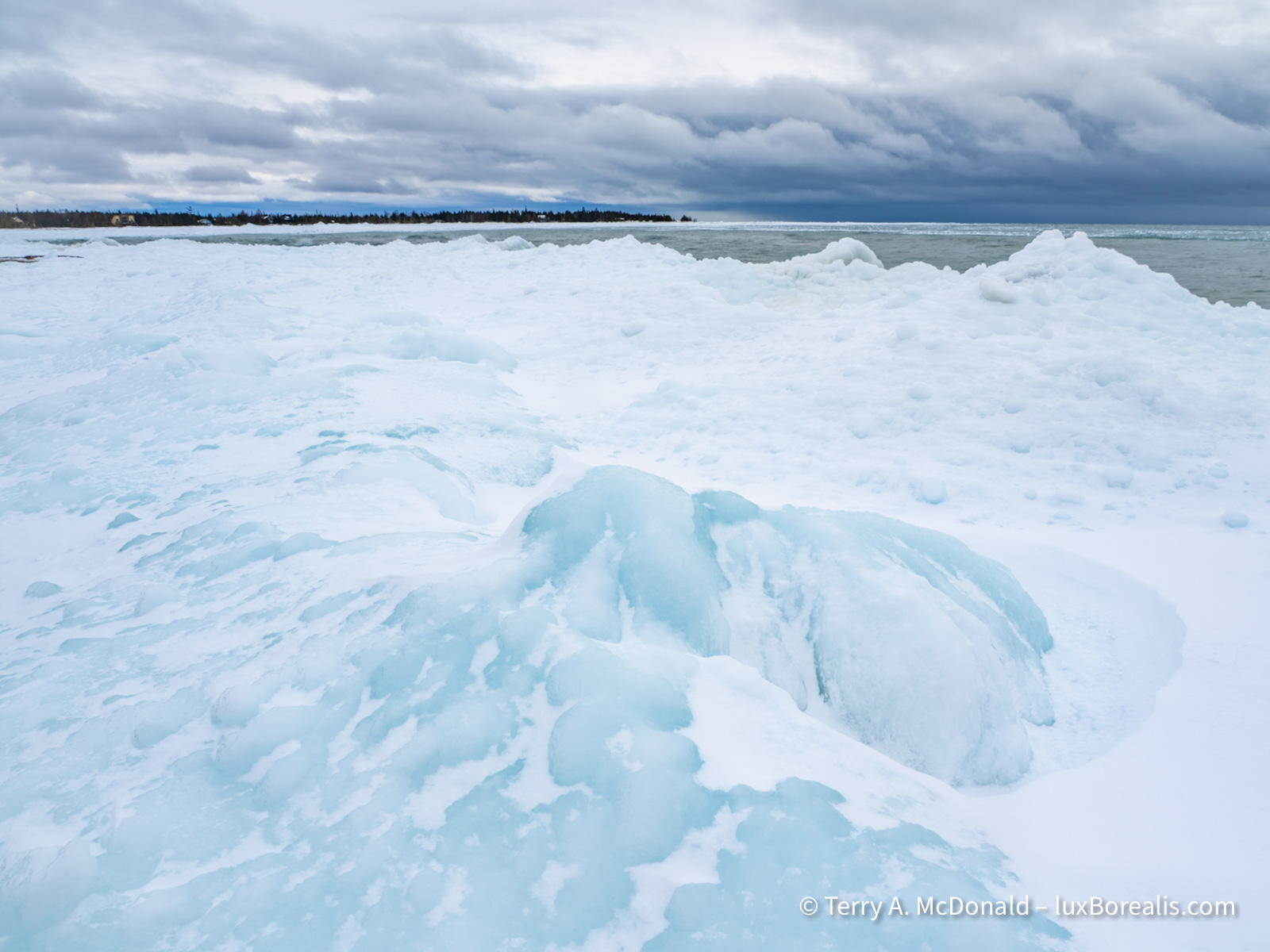
OM-1 w/12-100mm at 12mm • ƒ8 @ 1/250 • HHHR • ISO 200 • Lightroom
Ice blue is so distinct, more true blue with no cyan or green.
My daughter was great at dragging me out early—one morning for sunrise along Dyer’s Bay. Though the sun didn’t shine through the cloud, we had an amazing ski on 25cm of fresh snow. I let her break the trail along the former Cabot Head Road, otherwise I wouldn’t have gotten very far!
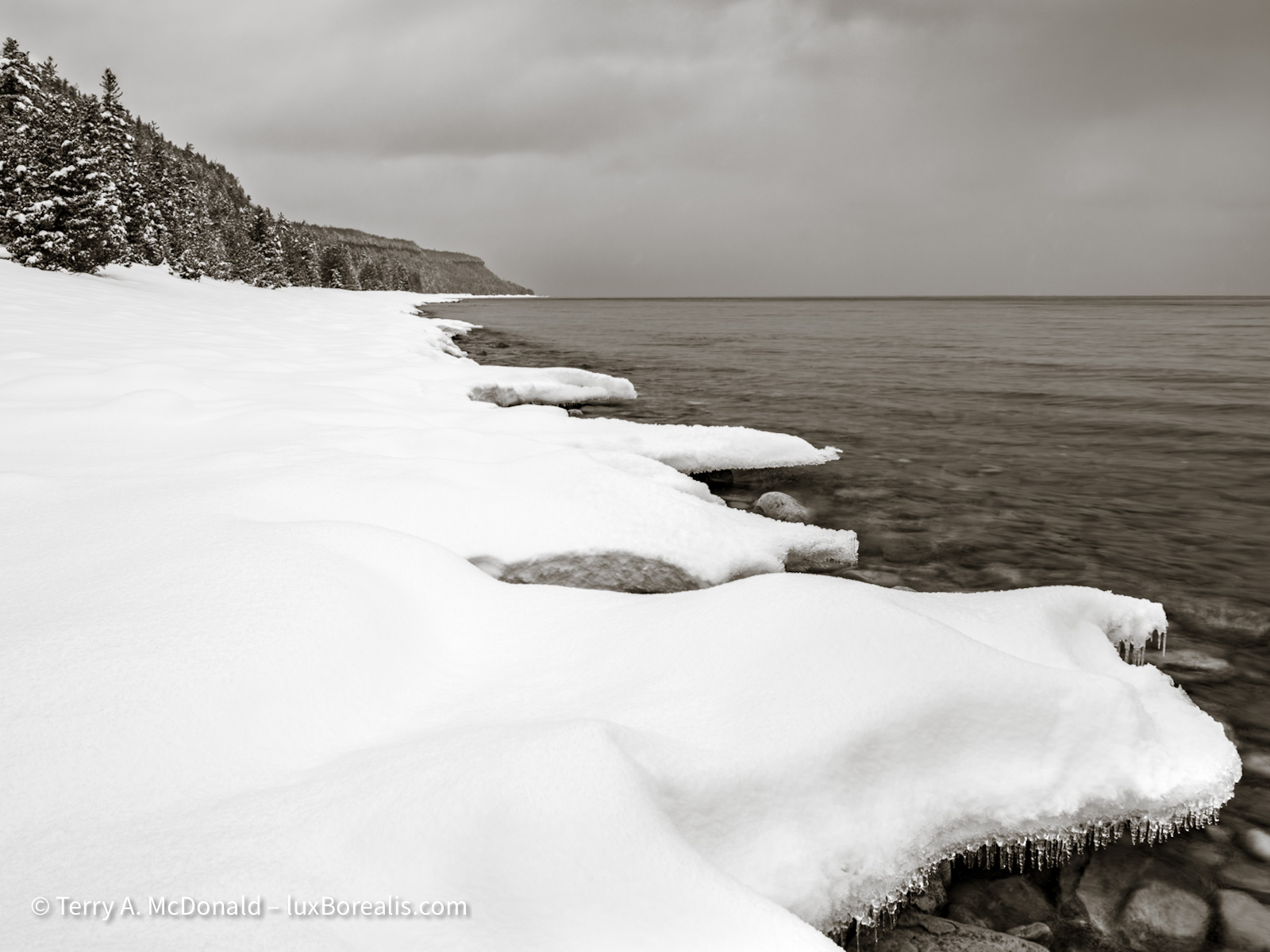
OM-1 w/12-100mm at 12mm • ƒ8 @ 1/125 • ISO 800 • HHHR • Lightroom
In Lightroom’s black-and-white mode, I use Colour Grading applied to the shadows to introduce a subtle warm tone which, to me, takes the edge off the starkness of neutral tones.
Twice, I tromped down the Georgian Bay Trail at Cypress Lake to Indian Head Cove. The water of Georgian Bay was, as ever, a beautiful Mediterranean tourquise.
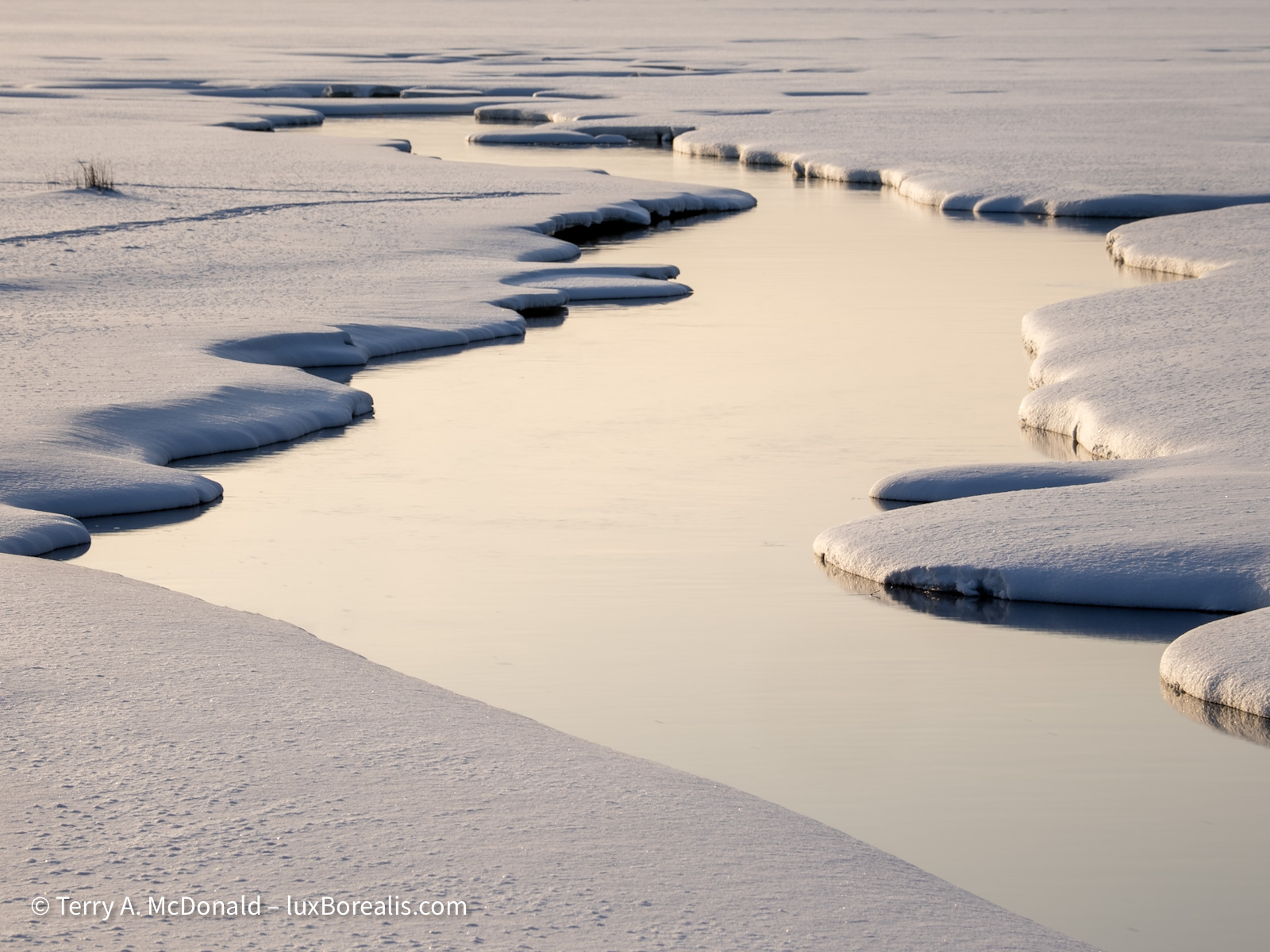
OM-1 w/12-100mm at 100mm • ƒ8 @ ⅕ • ISO 200 • HHHR • Lightroom
And twice we tromped and skied at Singing Sands, each time with some great photo ops. The Lake Huron side with its gentle slope is a compete contrast to the Georgian Bay side. The sun made an appearance, which made for some great lighting. On both occasions we saw a Great Grey Owl. Unfortunately, I didn’t have my telephoto zoom with me, so missed the photo op.
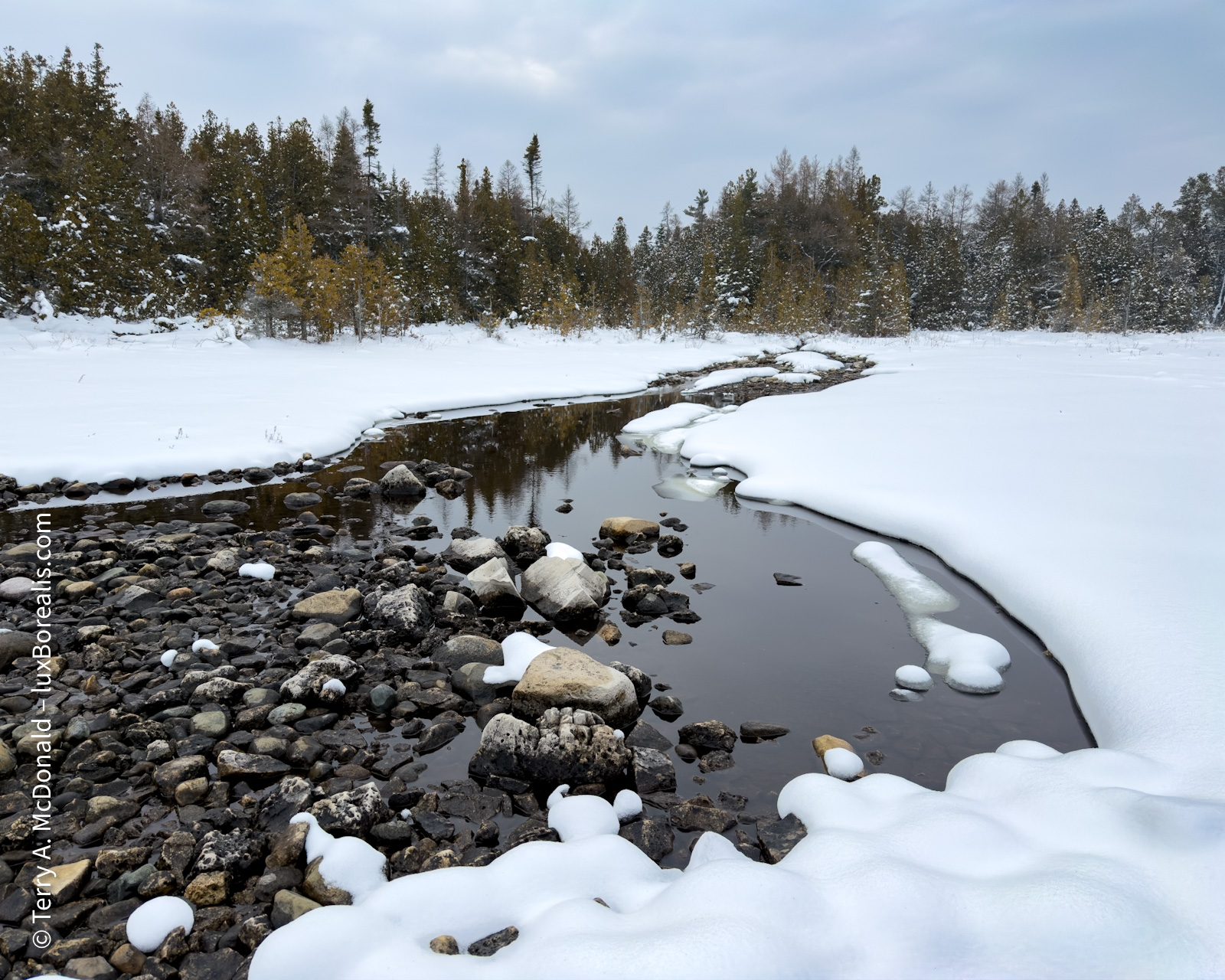
iPhone 17 Pro • 24mm (efov) • ƒ1.8 @ 1/600 • ISO 80 • Apple ProRAW DNG • Lightroom
Having a sharp, 24mm lens producing 48 MP raw files is a distinct bonus of the 17 Pro, though the large aperture limits depth-of-field for sweeping near-far landscapes.
I really encourage you to get out to spend some time in winter—at a local park, natural area, conservation area, for a rural road trip, or to a provincial park nearby. Today, many are celebrating the 10°C ‘heat wave’ we’re experiencing. But hopefully, winter will soon return to southern Ontario!

iPhone 17 Pro • 35mm (efov) • ƒ1.8 @ 1/43000 • ISO 64 • Apple ProRAW DNG • Lightroom
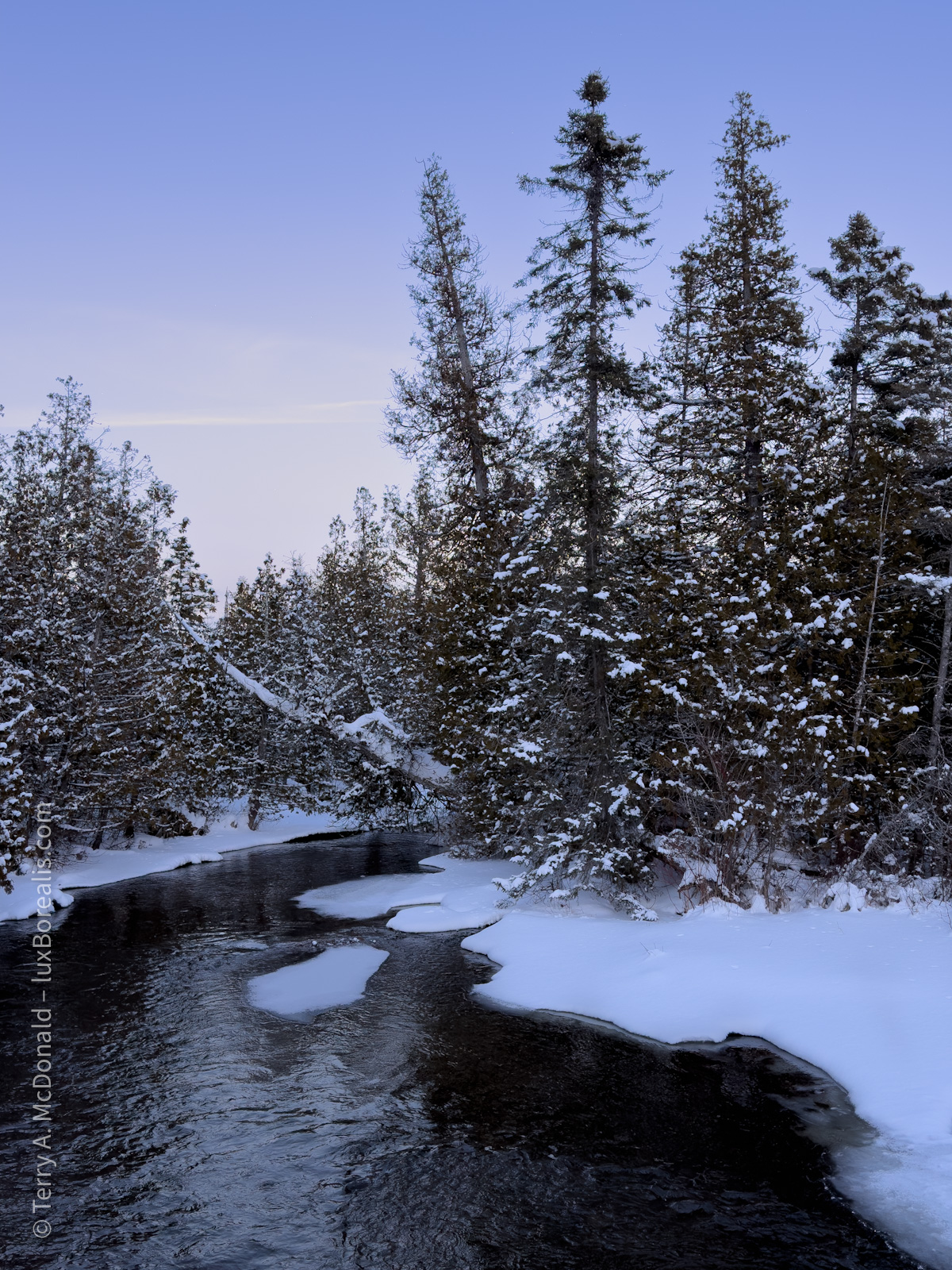
iPhone 17 Pro • 24mm (efov) • ƒ1.8 @ 1/390 • ISO 64 • Apple ProRAW DNG • Lightroom
Stay tuned for my review of the cameras, their various focal lengths and formats, as well as the Apple ProRAW DNG output from the iPhone 17 PRO.
Thanks for reading. Be sure to continue the discussion by adding your COMMENTS, questions or observations and feel free to SHARE with others.
This blog is completely free and does not include commercial affiliate links. To help keep it free, consider buying me a coffee . . .


iPhone 17 Pro • 35mm (efov) • ƒ1.8 @ 1/60 • ISO 100 • Apple ProRAW DNG • Lightroom
I wish the 48 MP raw format was available at all focal lengths. Sadly, it’s only for the 14mm, 24mm, and 100mm cameras. 28mm is captured at 34 MP, 35mm at 24 MP (both still respectable) and 48mm at a disappointing 12 MP, though all are very sharp. More to come!
Discover more from luxBorealis Blog
Subscribe to get the latest posts sent to your email.
 luxBorealis Blog