12, 2025
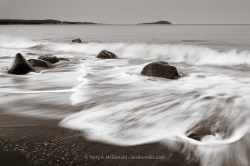
Twelve significant photographs in any one year is a good crop
–– Ansel Adams
18 photographs; 1700 words; 9-minute read
Taking the word of the master to heart, I have assembled what, to me, are my twelve most significant photographs for 2025. I wrote about this last year and encouraged readers to work through this exercise.
Have you begun narrowing down your 12 for this year? I find it to be an excellent exercise in seeing: seeing what is working for you and what techniques you might consider refining or getting more practice with. Are you seeing a lot of repetition of technique or vision or are you working beyond what you have traditionally photographed?
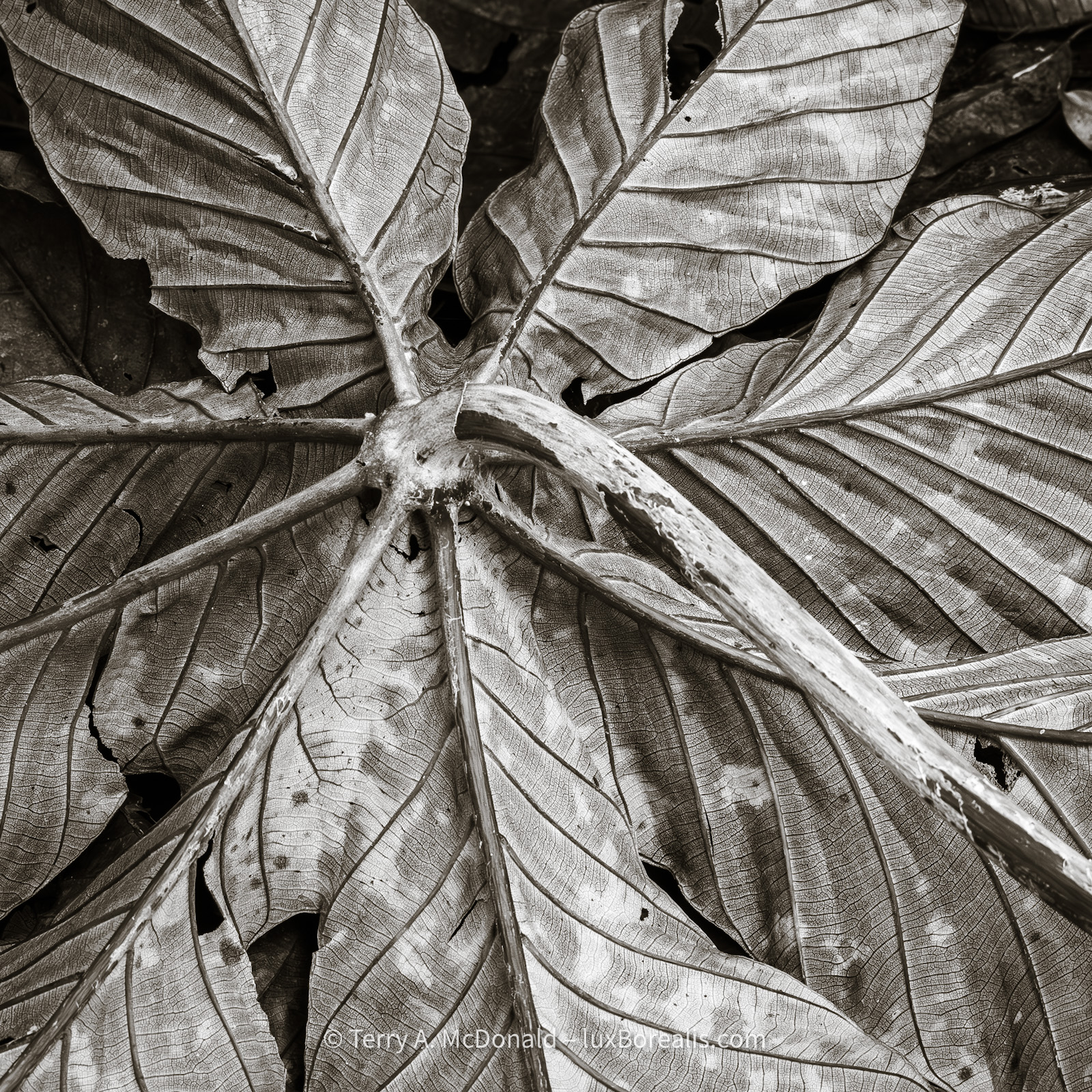
Being a nature photographer, this kind of image speaks volumes to me about life in the rainforest. No, it’s not one of the shiny green new leaves, but one that is rotting its way to become nutrients for the next generation.
The process
Narrowing down any body of work is a process, one I began a month ago by filtering all my 4- and 5-star rated photographs. But which ones are ‘significant’?
I define significant in a few ways. First of all, I want photographs that reflect a variety of locations and experiences I’ve had over the year. Each photograph must also have ‘nailed it’ in that they must work technically, aesthetically, and emotionally.
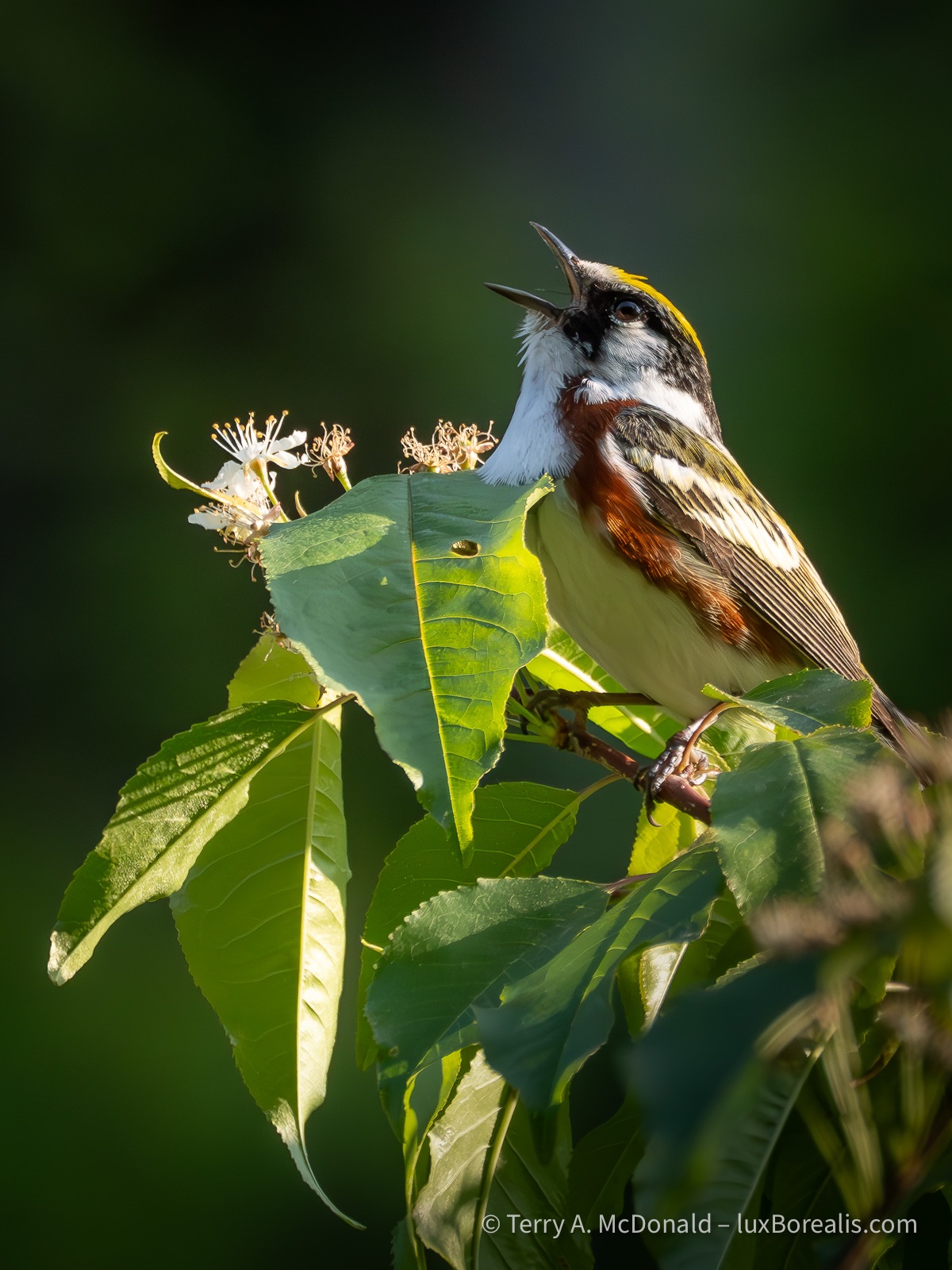
I wish still photos could capture sound. This year, I photographed dozens and dozens of birds, some of which were startling colourful, but only two made ‘the list’. This was not one of them, but is in my 25.
Significance
Technical significance means I have used the tools of photography to their best advantage in capturing the moment. To be aesthetically significant, a photograph must have that perfect blend of composition and movement to draw the viewer in, to have them ‘look again’, to tell a story, or evoke questions.
The most difficult aspect of photography is emotion. When I write of emotion, I don’t mean cutesy set-ups of babies or pets or couples walking on a beach at sunset. With nature and wildlife, this will often mean cute young fox kits or lambs gambolling or tender mother-young interactions. That is not what I want when I choose emotionally significant photographs. I want the photograph itself to be emotive, not the subject.
To me, emotive photographs cause the viewer to wonder and feel something beyond, “Oh, that’s cool.” They are drawn into the photograph on a level beyond the simple visual connection. Very few of my photographs ever achieve this level of engagement and certainly not all of my ‘12’ for this year have achieved it.
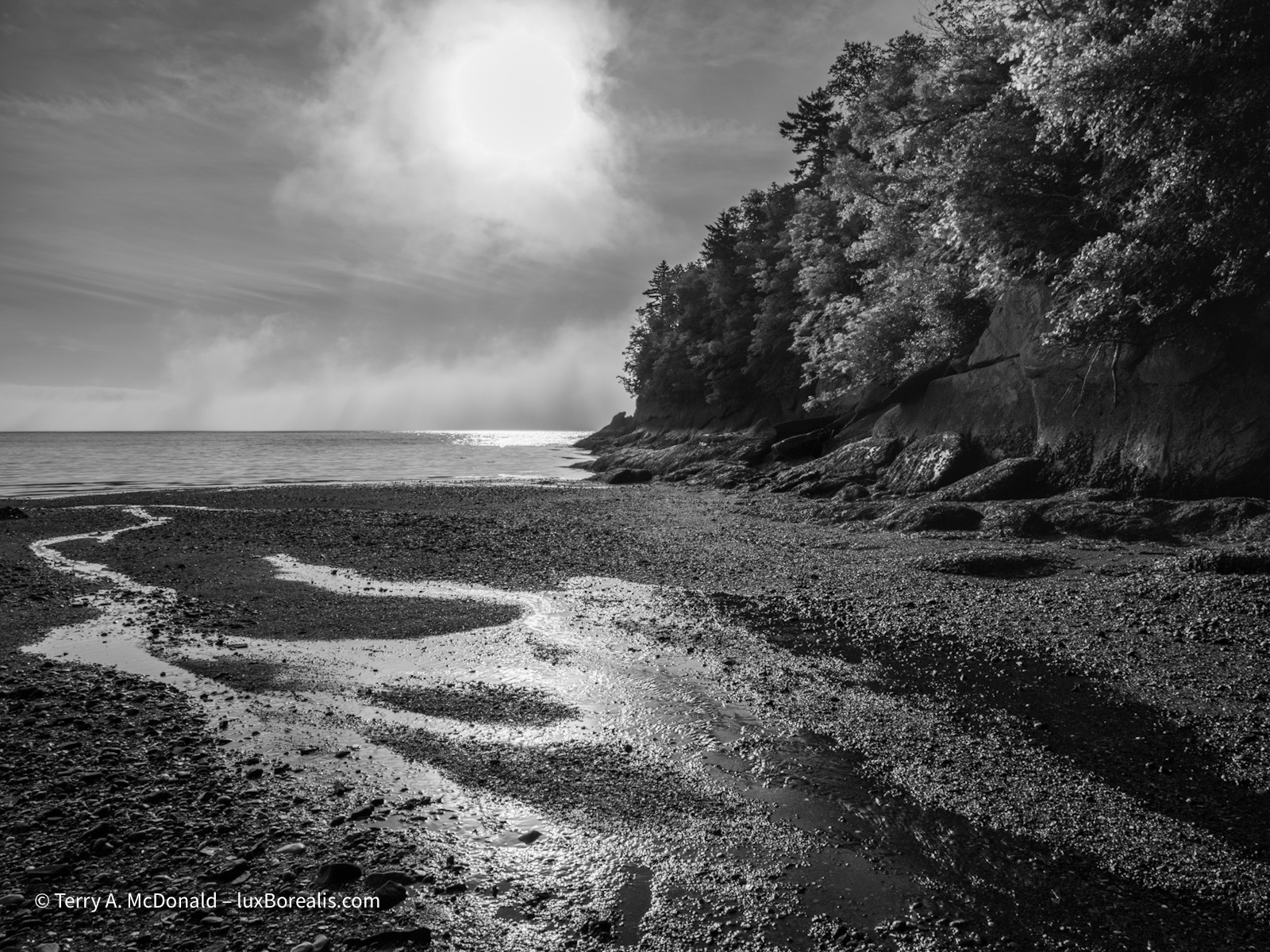
When I look at this photograph, I get a feeling of complete ease, tranquil as they say in Spanish. This was the morning of Canada Day, one I vowed to spend photographing—a few hours of complete Zen. That’s what I feel, anyway.
42 to 25
So, from all those 4- and 5-star photos, I selected 42 to begin my whittling down to 12. I looked for photographs that were successfully made using techniques new to me. Others speak to my dual desire of capturing ‘the essence of place’ and ‘the art inherent in nature’. Some are colour, others are black-and-white. Some portray movement and others are composite photographs—a technique I enjoyed exploring in 2025.
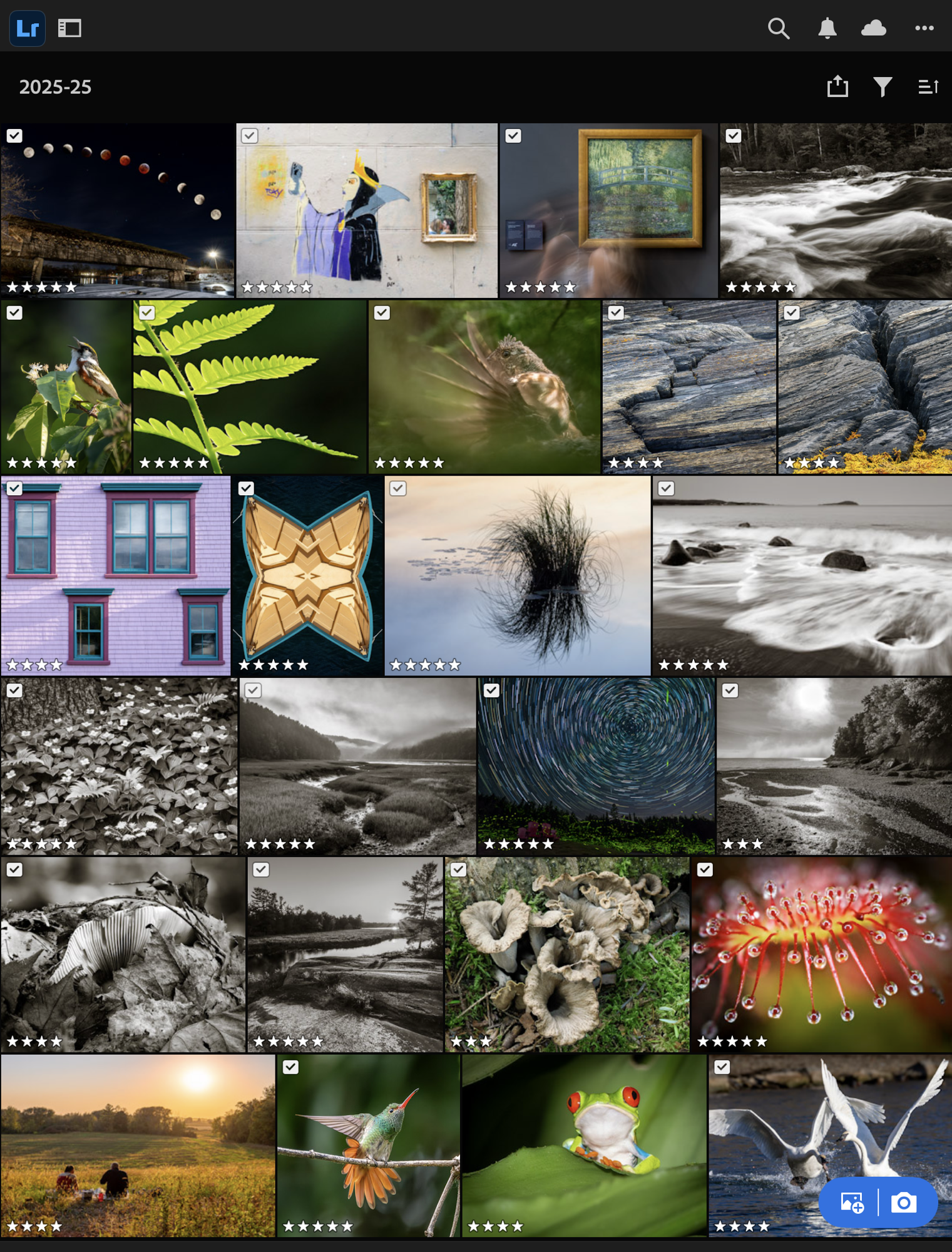
By carefully considering which duplicates and similar photographs to eliminate, I am managed to get that 42 down to 25; which is where the real work began. The process was simplified in Lightroom by creating albums: 2025-Best → 2025-25 → 2025-12.
The Final 12
In the final 12, I tried to preserve not just different photographic techniques, but also different perspectives, different ways of seeing and different experiences. You see, these are not my 12 ‘best’, but rather my 12 most significant. I could have chosen a dozen landscape scenes, or brilliantly coloured birds. The landscapes would simply be repetitions of landscapes; and for the bird photos, well, in many cases, it’s the bird that makes the photograph, not me, the photographer.
This happens a lot, as I alluded to above in the discussion about emotion. Over the course of each year, I see thousands of photographs across a variety of media, and I’m always conscious about whether it is the photograph that is significant or the subject.
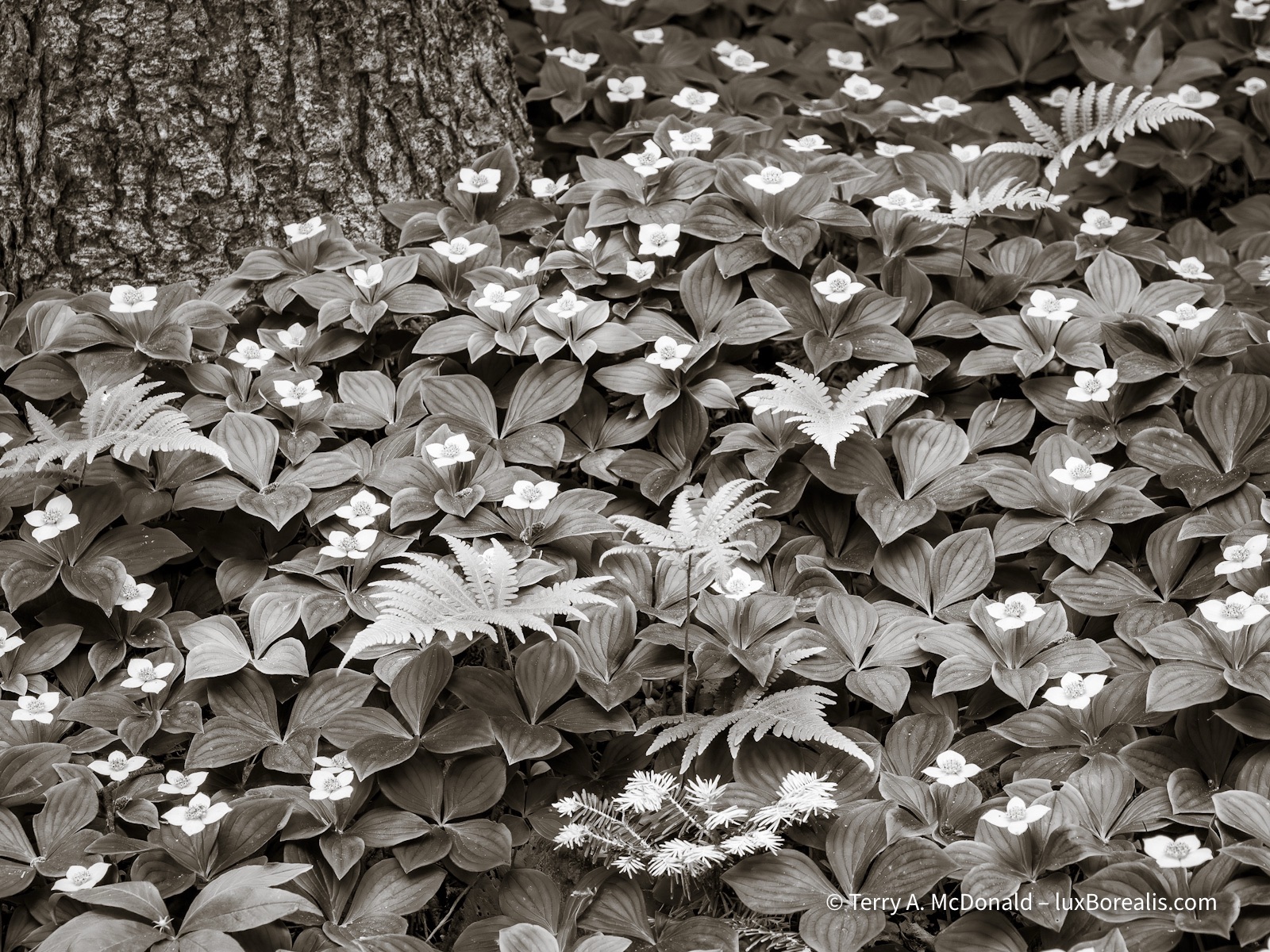
I love the detail, tones and soft light of this photograph. It represents the intricate relationships found on the forest floor and reflects my personal interests in ecology, making it significant to me.
Is it the photograph or the subject?
Photographers are very proud of their work, and rightly so, but many of the photos we see are great because of what was captured, as opposed to what the photographer did to make the photograph. I respect that there is certainly a lot of grey area between what any two people may think regarding where a photograph is on that spectrum, but to me it’s an important consideration.
Every photograph must have a subject of some kind. When considering photographs, the question I try answering is this:
Is it the subject that is drawing me in to the photograph, or is it the photograph itself—that combination of technique and aesthetic that creates an emotive response?
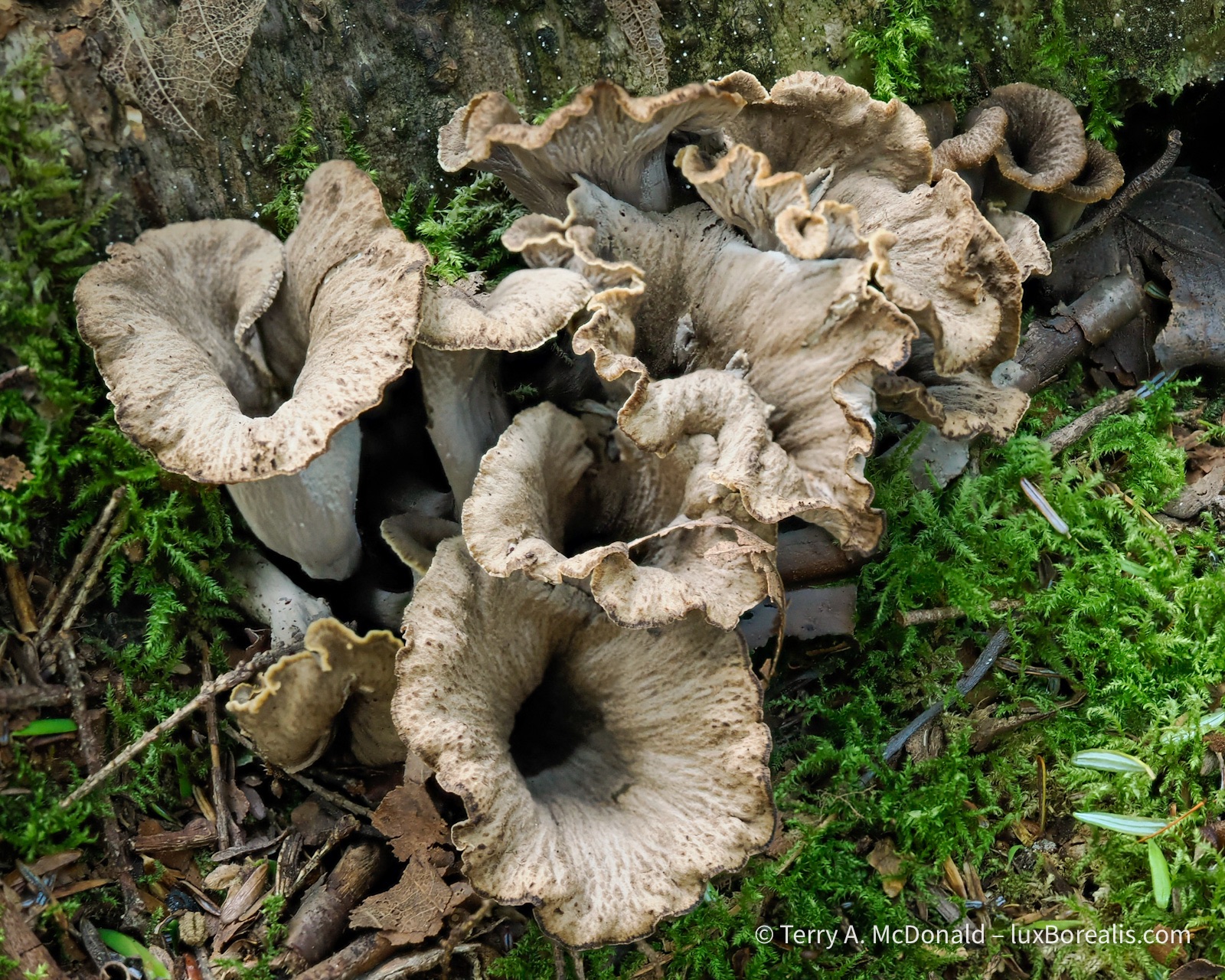
The week I spent at Killarney as their Artist in Residence was very productive but in ways I wasn’t expecting. I was thinking astrophotography, but ended up down on Earth, literally, admiring the array of different mushrooms that proliferated with the rain.
It’s the reason why I’ve left out many of the bird photographs I made. They sharp and colourful, but that just makes them glorified textbook images. As a result, I have preciously few photographs that rise to beyond this. My problem is, I am not one to see the abstract or the concept in subjects or scenes. By nature, I am a realist devoted to #RealWorldPhotography—the pursuit of photography to accurately reflect the reality of the scene or subject in front of me.
In other words, I tend to shoot the obvious. I work hard at going beyond the obvious, but still have a ways to go.

I am always attracted to patterns and designs in nature. They remind me that in what often appears to be the chaos of nature, there is an underlying structure.
Conceptual Photography
There is nothing worse than a sharp image of a fuzzy concept. — Ansel Adams
As I review my photographs each year, I tell myself this, over and over again—look beyond the obvious to the conceptual, the abstract—and re-commit myself to that goal. Over the years, I’ve made some progress, but am still blinded by all the beautiful, exotic, and colourful patterns and designs, tones and hues of the world around me.
Okay, enough introspection . . . Now for the photographs. They are presented in a Gallery format, sorted by capture date. Click on any photo to start and it will open in full-screen view with arrows to take you back and forth through the twelve. There is also a small ‘ i ’ button for more information.
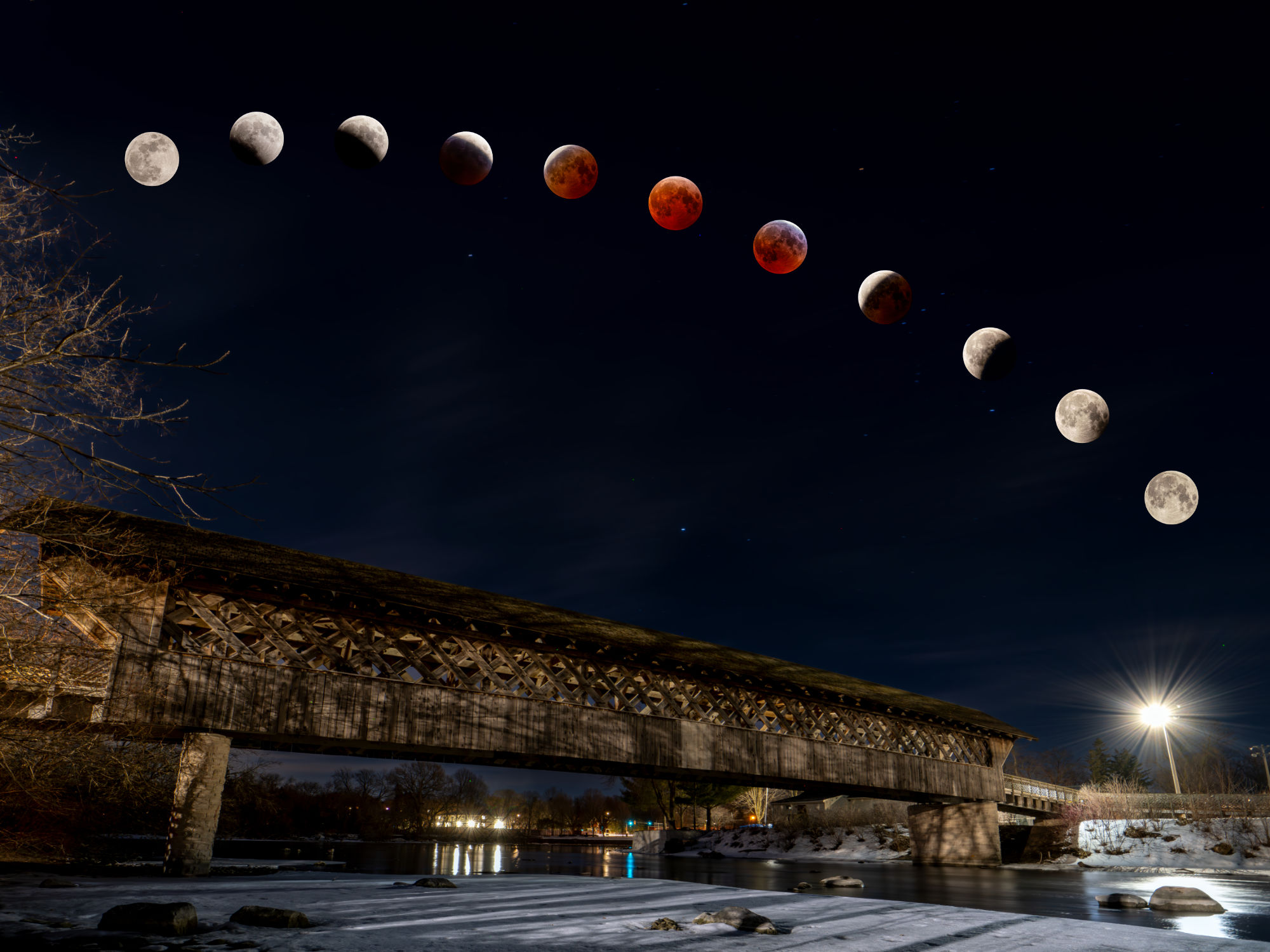
Finally! I have visualized this photograph for years, waiting for just the right combination of clear skies and personal time to prepare for the event, capture it, and assemble the photos into a composite.
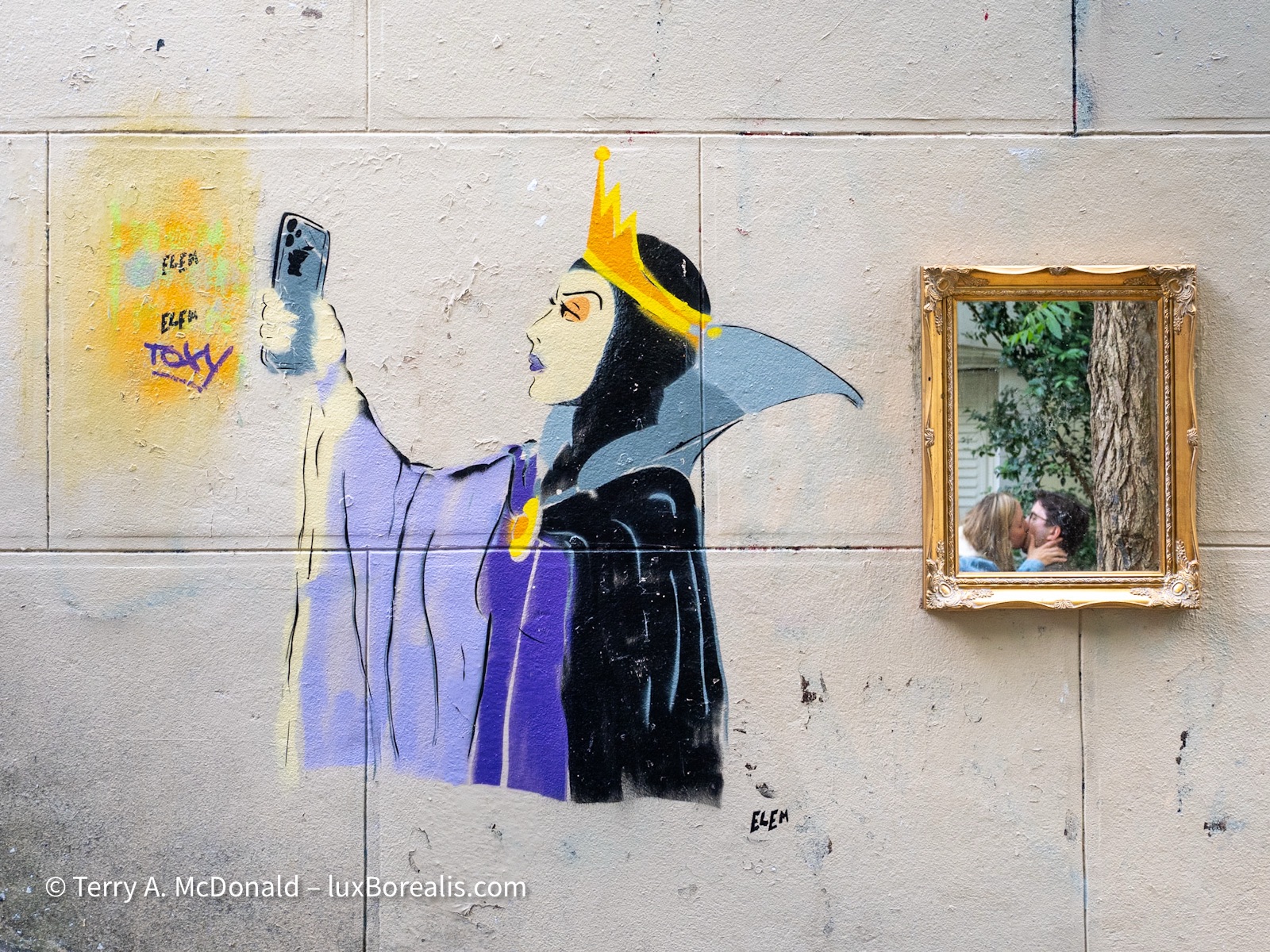
I enjoy photographing street art in Paris and this juxtaposition of the fairy tail, the mobile phone and the mirror—not my creation—caught my eye. It was serendipity that brought the two Paris lovers together in a kiss.
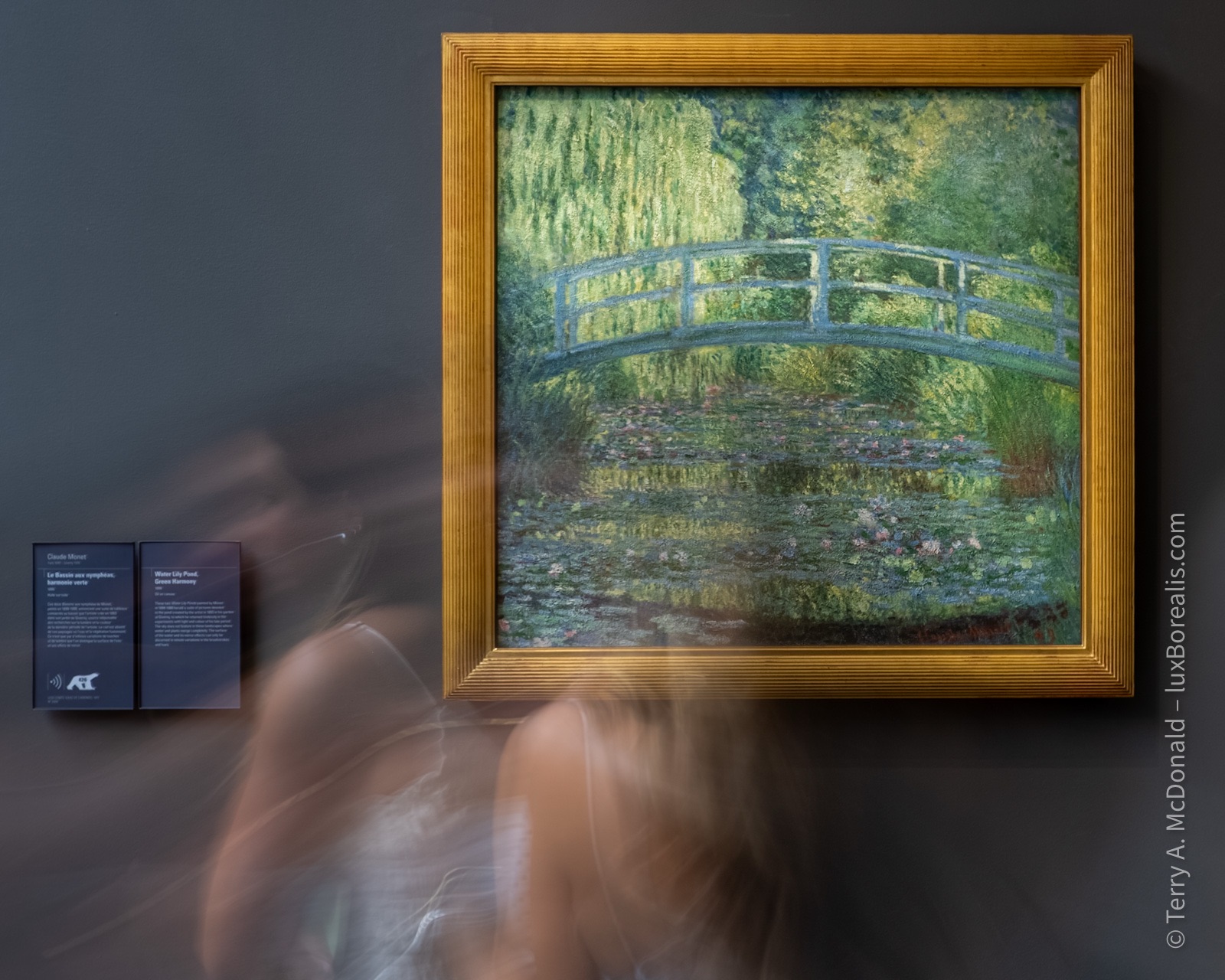
I set myself the goal of capturing the essence of place within the Musée d’Orsay using LiveND and slow shutter speeds. This was one of the many photographs that resulted.
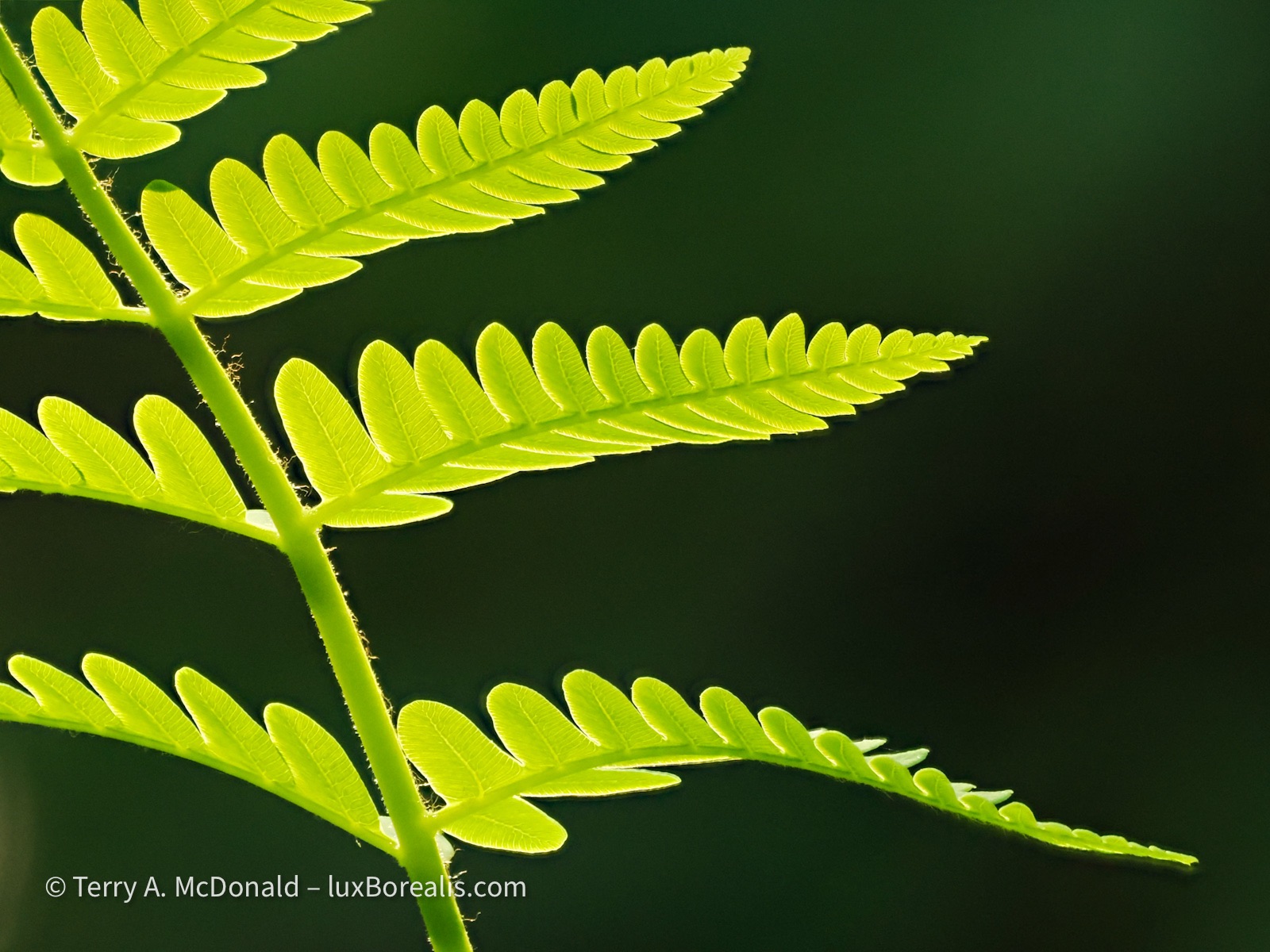
Pure simplicity captured using handheld focus stacking
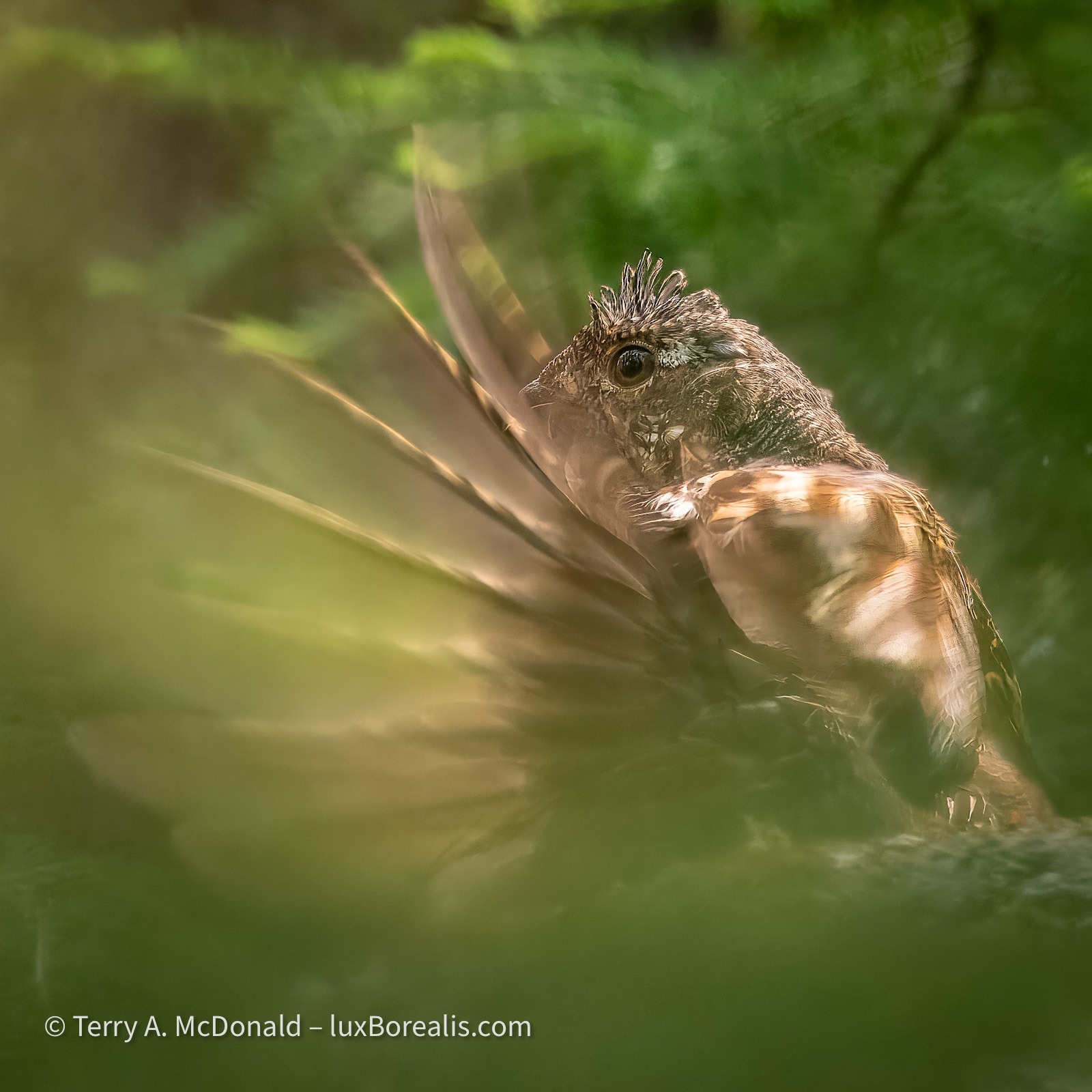
For decades I’ve been startled by the sudden thump-thrump-thrump of a grouse wingbeat, so to watch it and photograph it was exhilarating!

Lunenburg is, well, Lunenburg: quaint and beautiful, but in a beautiful-for-tourists way. So I actively looked for something different. This composite photograph is the result.
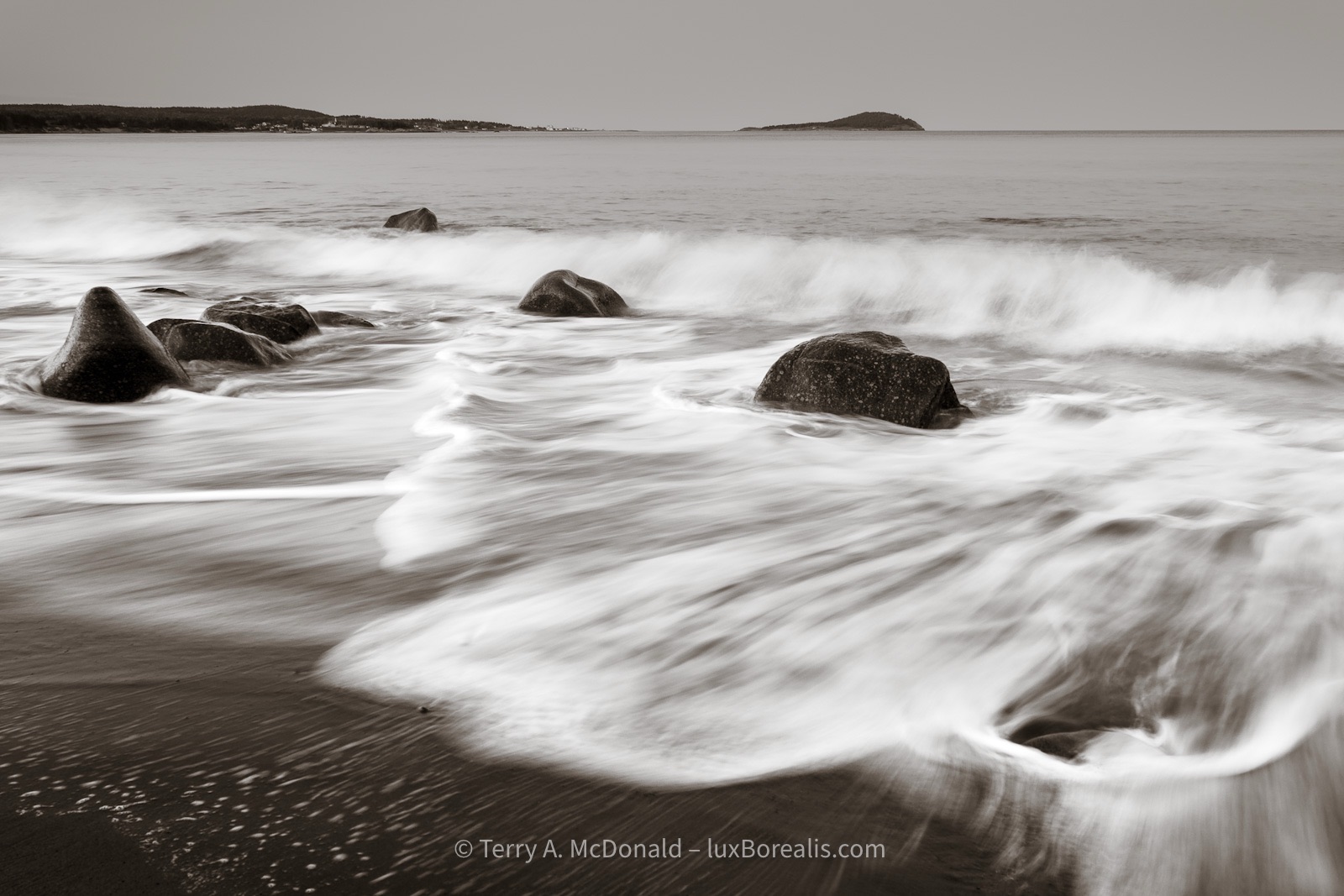
This came out of nowhere—a casual evening walk with my daughter and her dog down to the beach. After 20 minutes, they left and I stayed, using LiveND to capture the. magic.
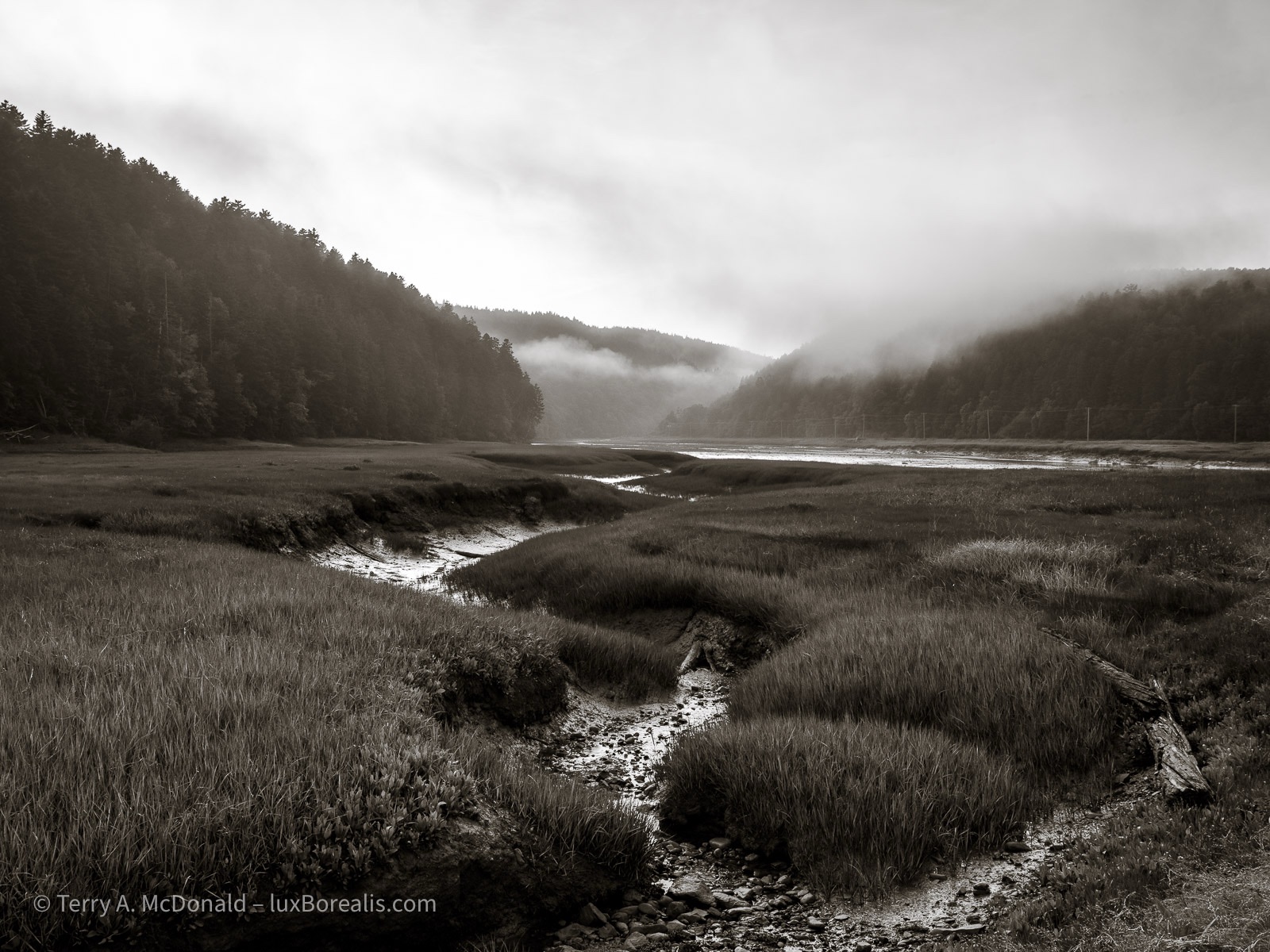
As the tide receded and the evening fog rolled in, I watched this photograph develop in front of me. What I needed was a foreground, and I found it.

My goal was to devote the whole of Canada Day to photography. That meant starting at 1:30am. The clear sky demanded an attempt at star trails. Little did I realize there would be hundreds of fireflies in attendance!
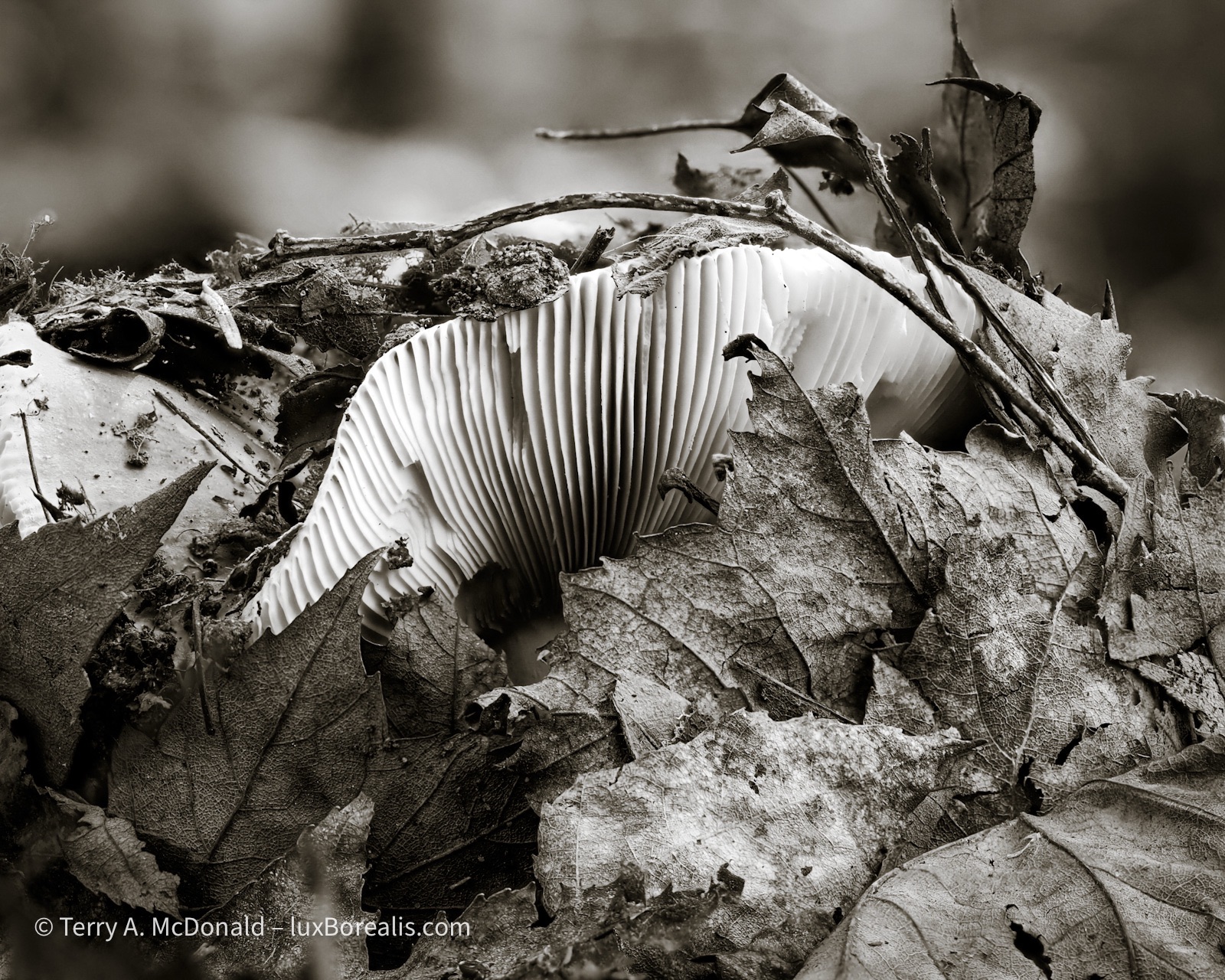
We always see mushrooms fully erupted from the Earth. To see this one still emerging, swaddled in leaf litter, was like capturing a slow-motion dance in mid-move.
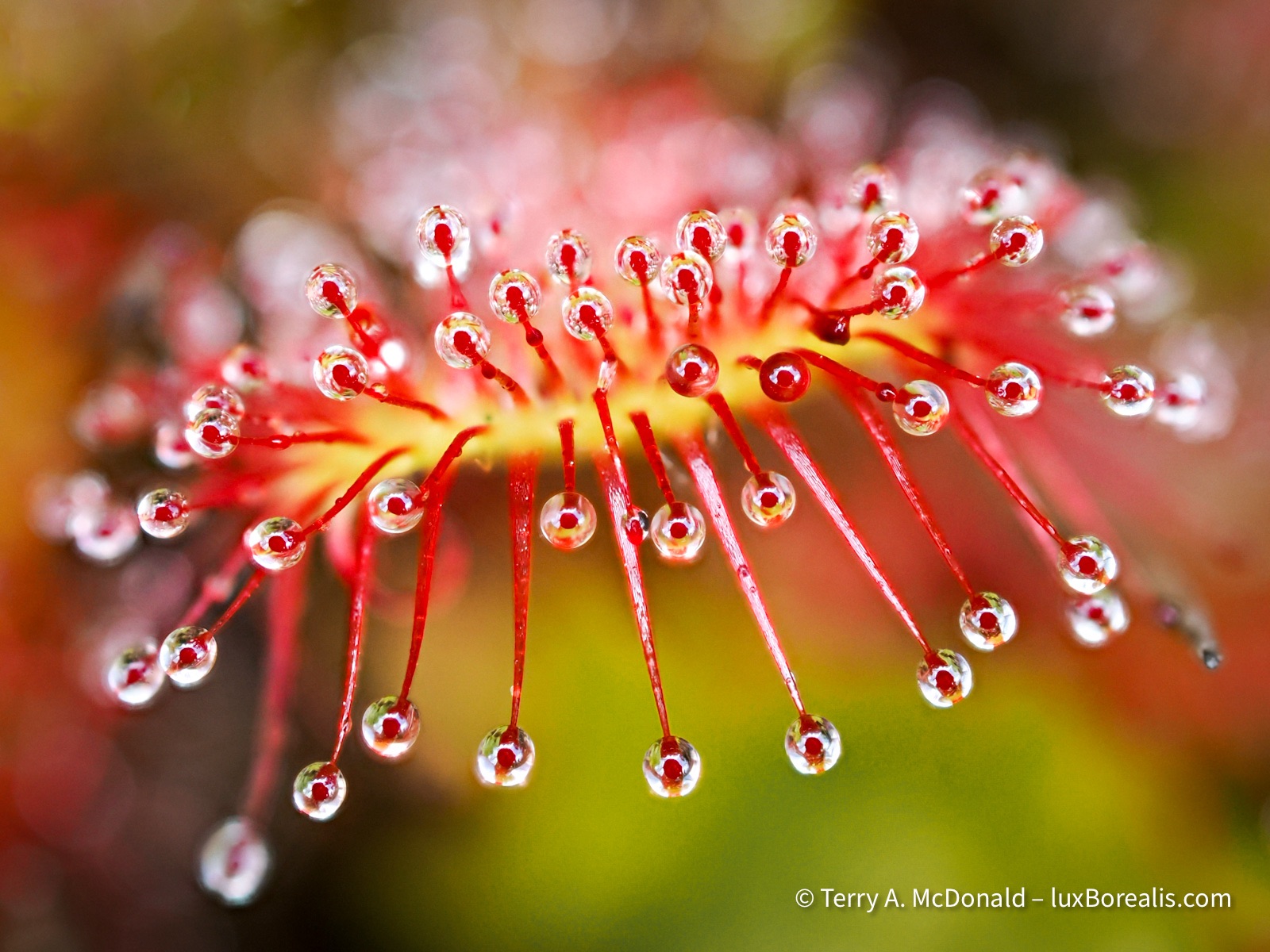
I’m enjoying using the 60mm Macro lens—the sharpest lens I’ve ever owned. Getting close handheld with sharp focus has never been easier.
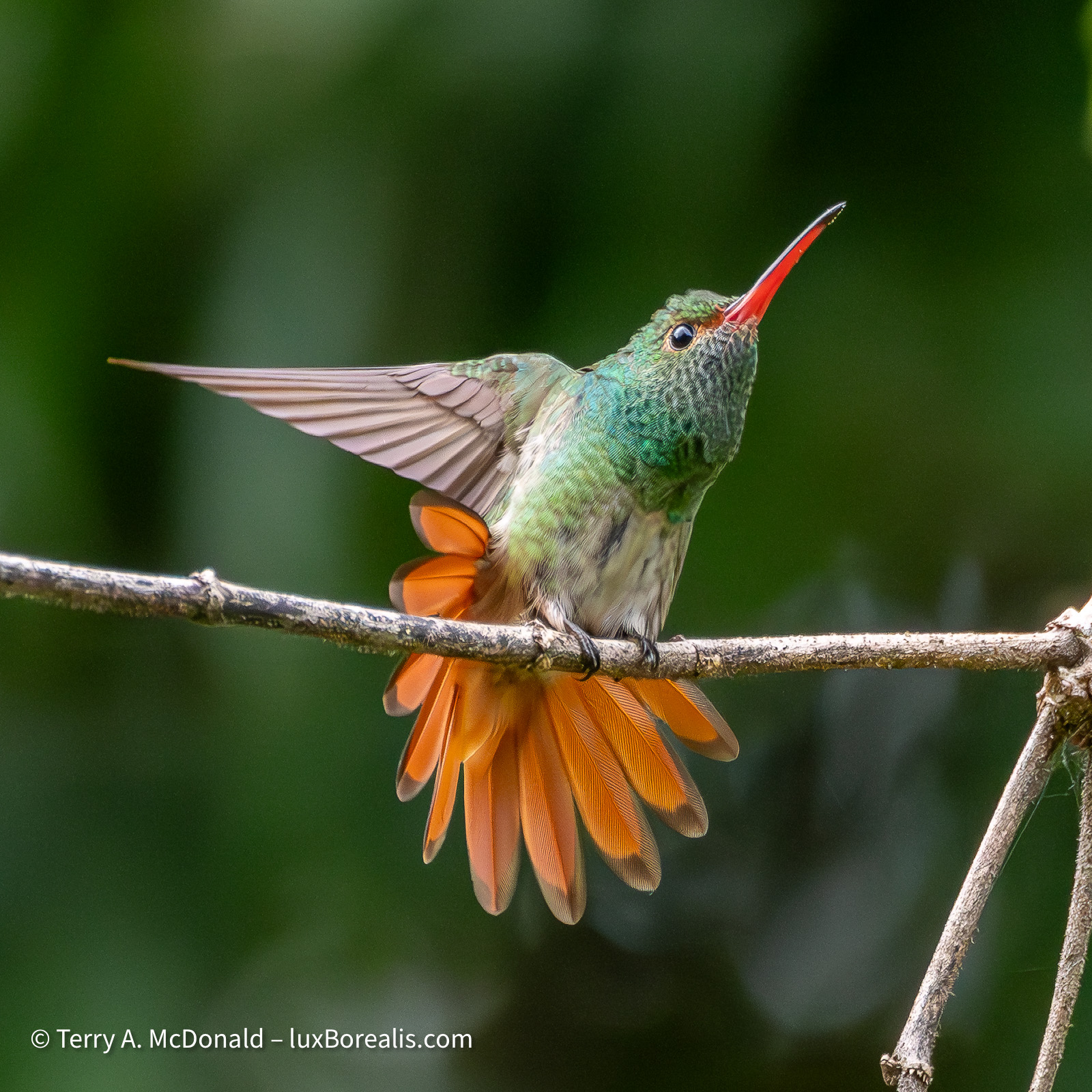
Hummingbirds are everywhere in Costa Rica, but capturing one doing something other than feeding, resting or hovering was the challenge.
So what do you think? Please continue the discussion by adding your COMMENTS, questions or experiences. And take a moment to SHARE this post with other photographers.
Discover more from luxBorealis Blog
Subscribe to get the latest posts sent to your email.
 luxBorealis Blog