PhotoGeo Trip Down East: Part 3
In the previous installments, I described our trip through the Eastern Townships and the Charlevoix Region of Québec, followed by Saguenay Fjord, then Forillon National Park out on the Gaspé Peninsula. Now we’re headed into the Maritimes proper: New Brunswick and Nova Scotia.
Kouchibouguac National Park
(That’s ‘Koo-shi-boo-zhou-ack’ for the uninitiated.)
If we thought the drive to Forillon was long, from Forillon to Kouchibouguac seemed to take forever, especially through Québec. Every time we would get up to the speed limit of 90km/h, there would be yet another dump truck and another ‘Travaux’ sign (construction) or a small town with stop lights, where the speed limit would drop to 70, then 50 and even 30 if a school was along the route. I could never quite get into a rhythm of driving. Ugh!
That changed when we crossed into New Brunswick as NB has a limited access highway. It’s only one lane in each direction (with passing lanes on hills), but a constant 100km/h made all the difference. Of course, the long day became even longer when we factored in the time change to Atlantic Time, but it was still bright and sunny when we arrived at Kouch.
Where Forillon is dramatic, with its cliffs and ridges, Kouch is sublime. Mostly forested, with no topography, it’s just a gentle slope down towards the salt marshes and barrier islands of the coast. However, it was a great place for birding and bird photography.
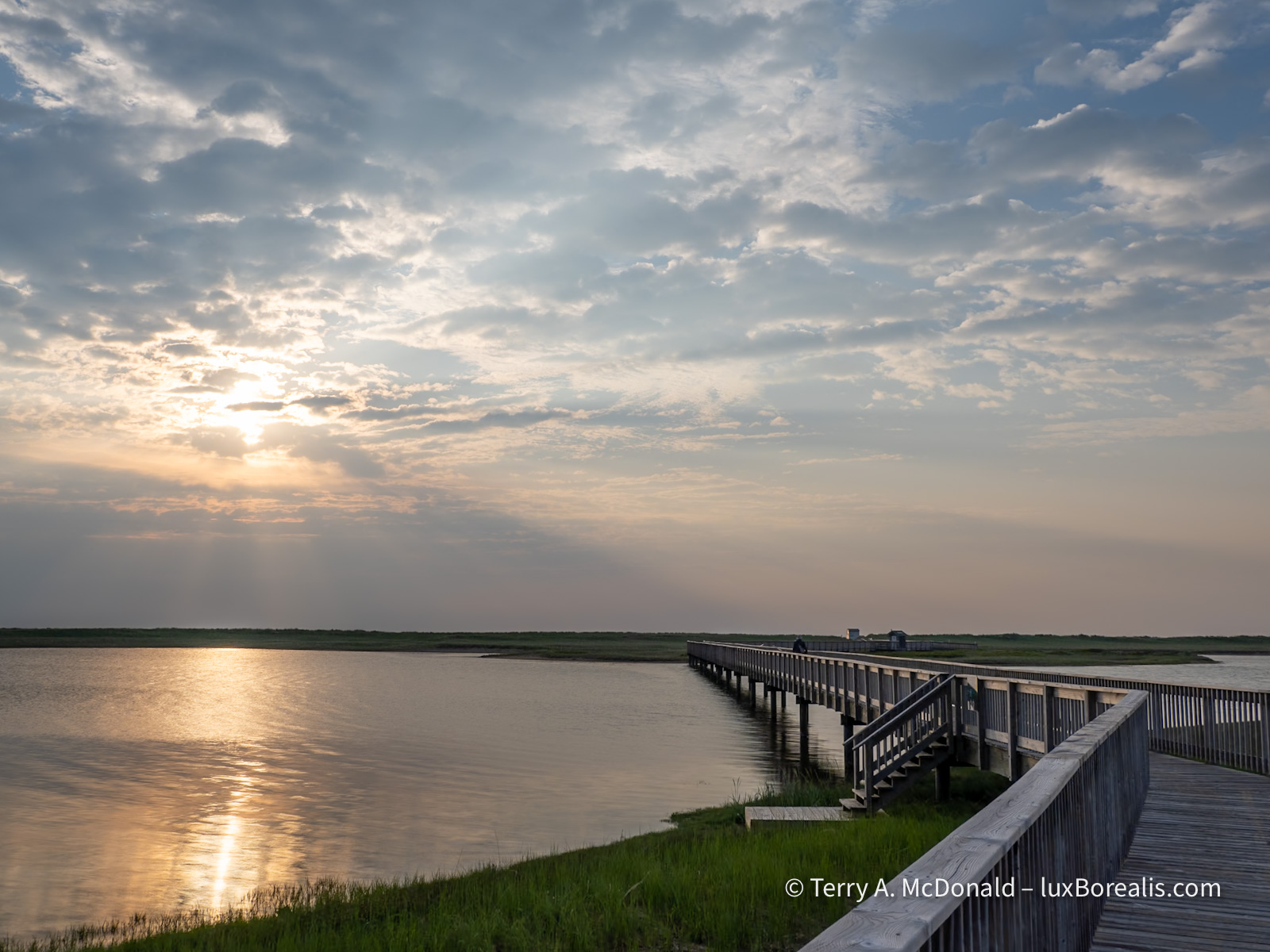
OM-1 w/ M.Zuiko 12-100mm/4 PRO at 16mm (32mm efov); ƒ5.6 @ 1/1000, ISO 200; raw file processed in Lightroom.
The rather significant boardwalk out to one of the barrier beaches was a great starting point. Though the herons don’t arrive from their nests (in a heronry far, far away) for another month, Common Terms were feeding. Their acrobatics proved a good challenge for practicing bird-in-flight photography. I have my C3 set with bird tracking, C-AF Silent, spot focus and spot exposure, and ISO 1600. I’ll switch it up to 3200 if needed or down to 800 when possible. Timing the terns’ entry and getting just the right angle to show the subsequent catch took some effort, and a lot of missed frames! There was also a willet out and about, and a double-crested cormorant.

OM-1 w/ 100-400mm at 400mm (800mm efov); ƒ8 @ 1/3200, ISO 3200; raw file processed in Lightroom and Topaz PhotoAI.

OM-1 w/ 100-400mm at 400mm (800mm efov); ƒ8 @ 1/3200, ISO 3200; raw file processed in Lightroom and Topaz PhotoAI.

OM-1 w/ 100-400mm at 400mm (800mm efov); ƒ8 at 1/6400, ISO 3200; raw file processed in Lightroom and Topaz PhotoAI.
Dan kept a running list of bird calls and sightings on his phone using Merlina nd eBird and though the list was long, the photo ops were few and far between. The afternoon was spent out on the Bog Trail under threatening skies and rain, followed by part of the River Trail from La Source..
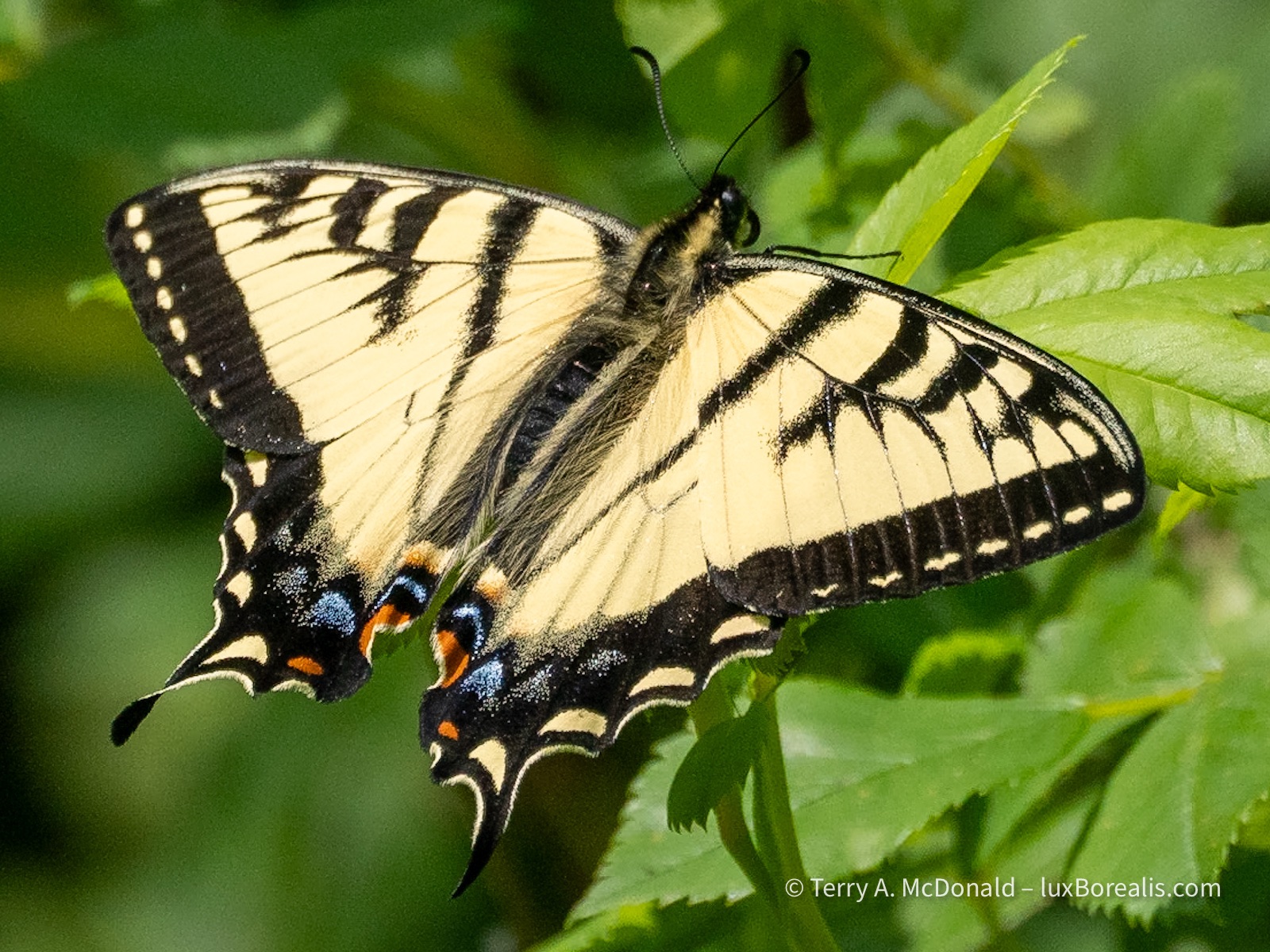
OM-1 w/ 100-400mm at 400mm; ƒ8 @ 1/2500, ISO 800; raw file processed in Lightroom.
The bog was wonderful, with excellent interpretation. I learned that it is an expanding bog, gradually growing outwards. As the peat piles up forming a dome, the moisture seeping out chokes out the surrounding trees—so different from many bogs in Ontario that are shrinking as the trees grow in from the outside. There were many bog plant species to photograph. We even had a very quick flyover of an immature bald eagle.
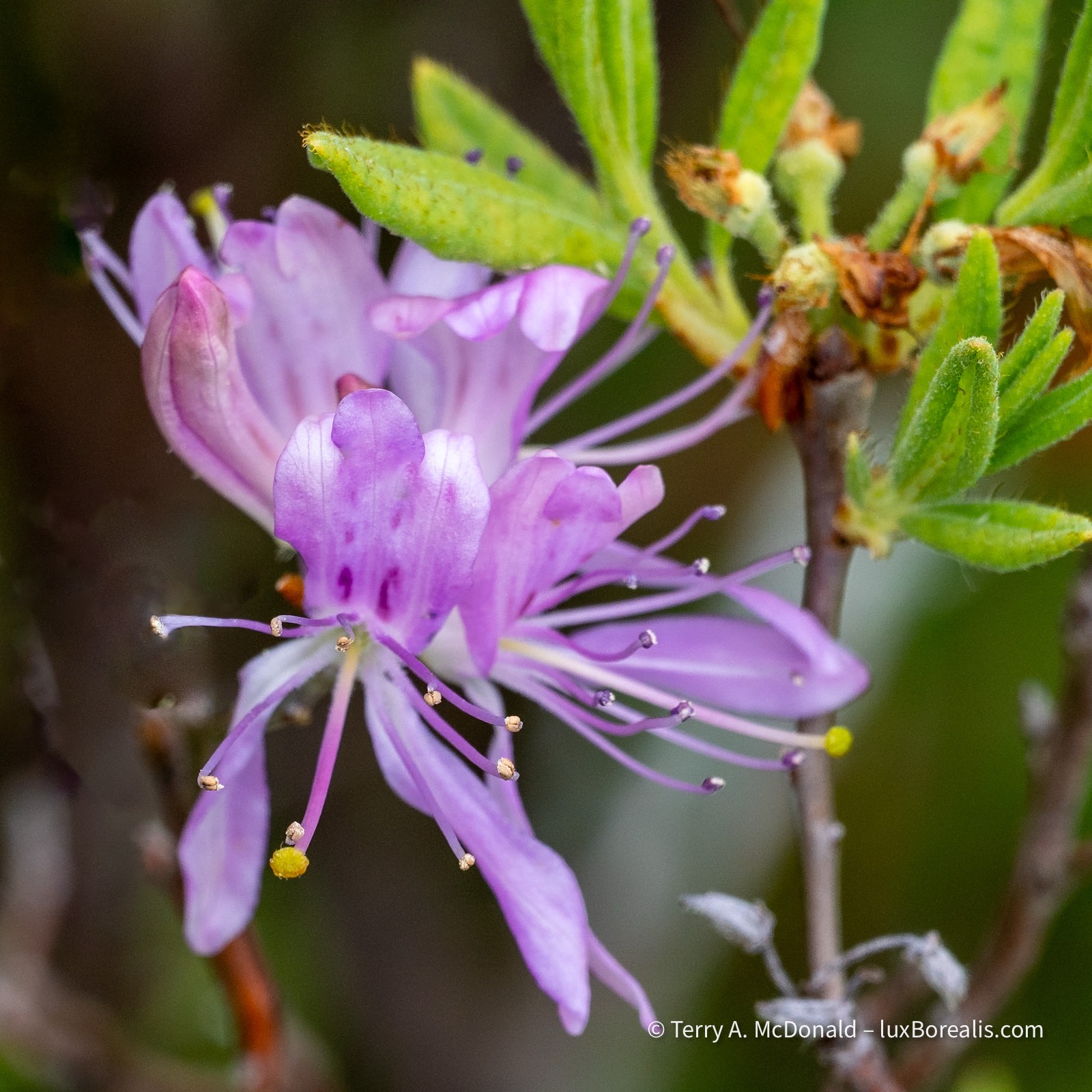

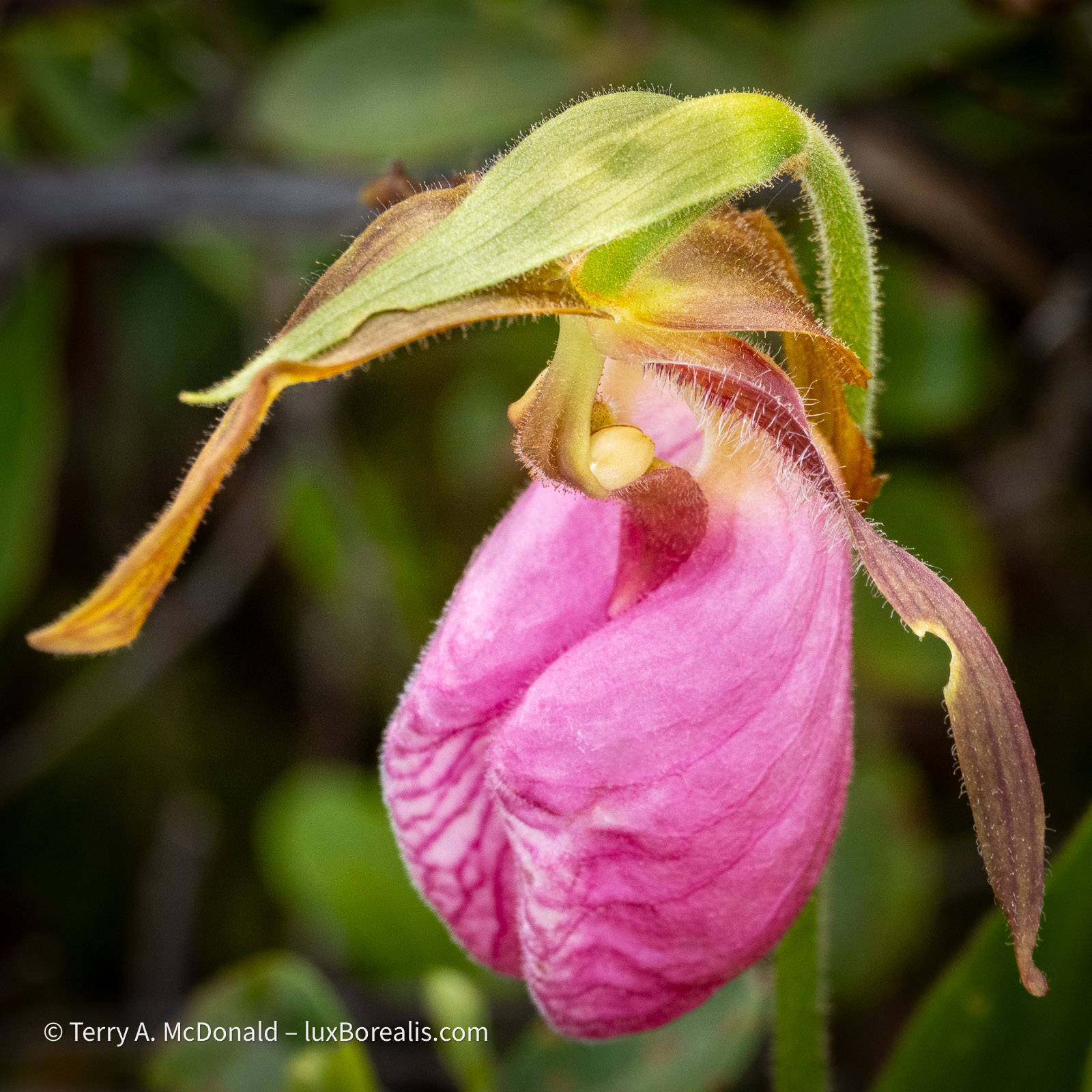

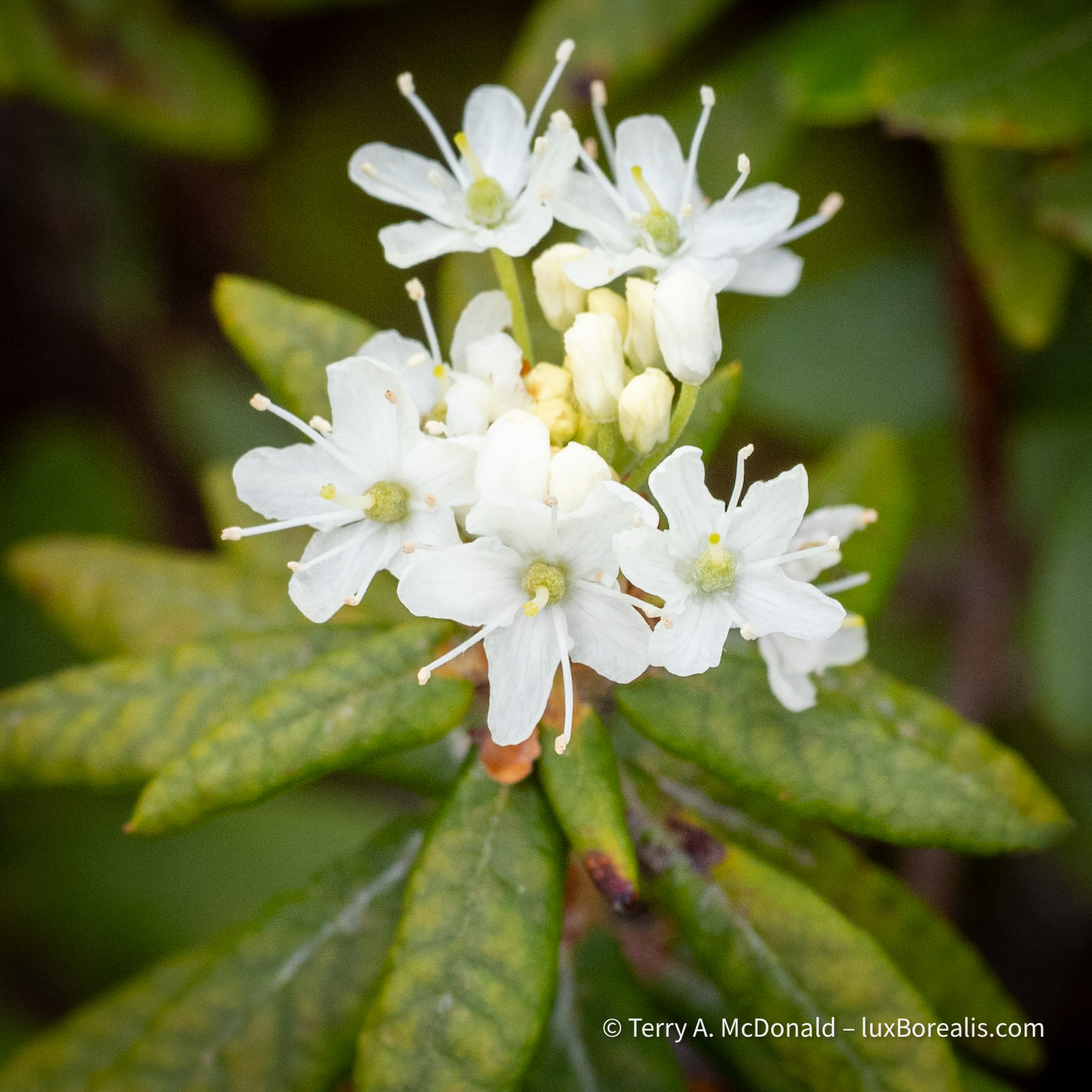
The five photos in the gallery above were made NOT with the M.Zuiko 60mm macro lens as you might expect, but with the ever-versatile 100-400mm zoom., mostly at 400mm, with a couple at 200mm. Unless I am specifically working on macro photos, having the ability to focus very closely, down to 1.3m (at 800mm efov!) means one less lens to carry. It also provides excellent working distance, as was the case with the swallowtail shown above, as well as providing a more blurred background.
———
The trail along the river didn’t yield much, other than the swallowtail and, finally, the most mystical, magical, melodic of singers in the forest—a Swainson’s Thrush. You can listen to it here (YouTube). The one above us literally posed for us, sitting in a forest opening on a the limb of a dead tree.
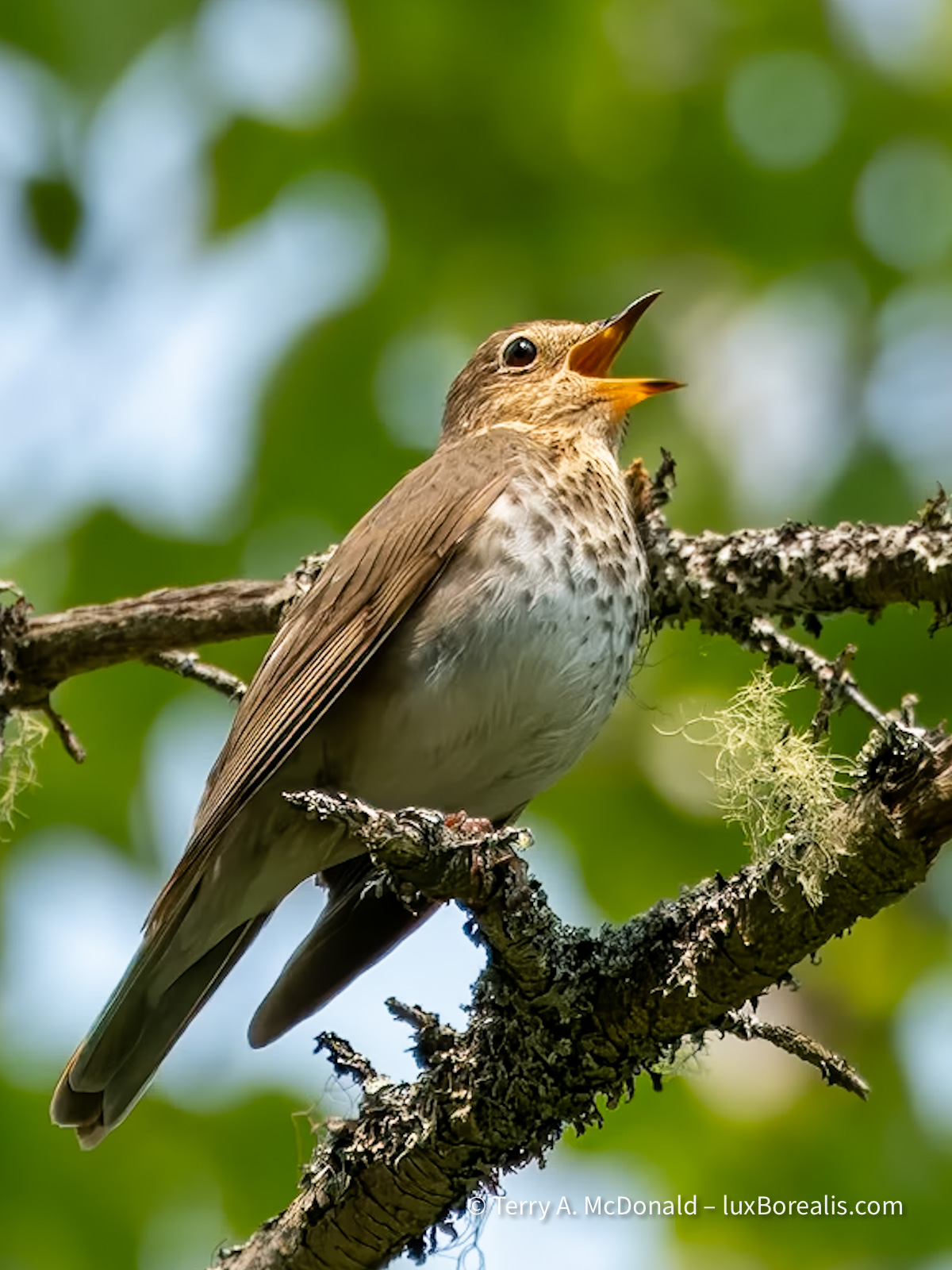
OM-1 w/ M.Zuiko 100-400mm/5-6.3 at 400mm; ƒ8 @ 1/640, ISO 800. Being in the forest, I started shooting at ISO 3200, but quickly realized there was light enough for a lower ISO. I’ve never been a big fan of Auto ISO as I like to be in control of shutter speed and ISO. Raw file processed in Lightroom and Topaz PhotoAI.
Sackville Waterfowl Park
After a quiet morning and a later start—not too long a drive today—we were on our way to Mahone Bay, south of Halifax. On the recommendation of a woman we met on the River Trail who was a birder, we stopped at Sackville Waterfowl Park, part of the vast Tantramare Marsh. The Internet tells me that “Tantramar is derived from the Acadian French word “tintamarre,” meaning ‘din’ or ‘racket,’ which refers to the noisy flocks of birds that feed in the Tantramar Marshes”. Part of the vast marshlands are protected as a National Wildlife Area as it is critical for migratory birds.
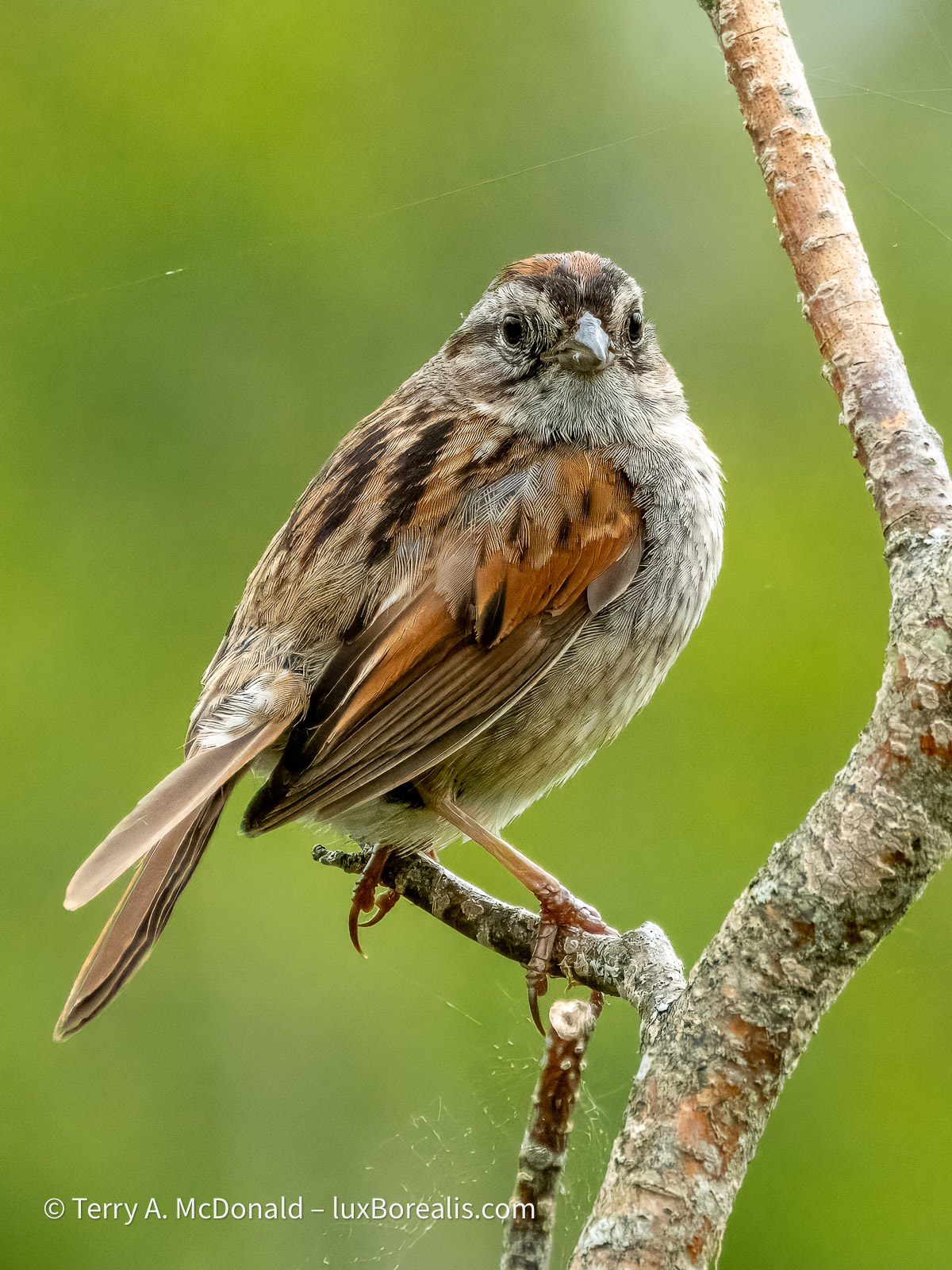

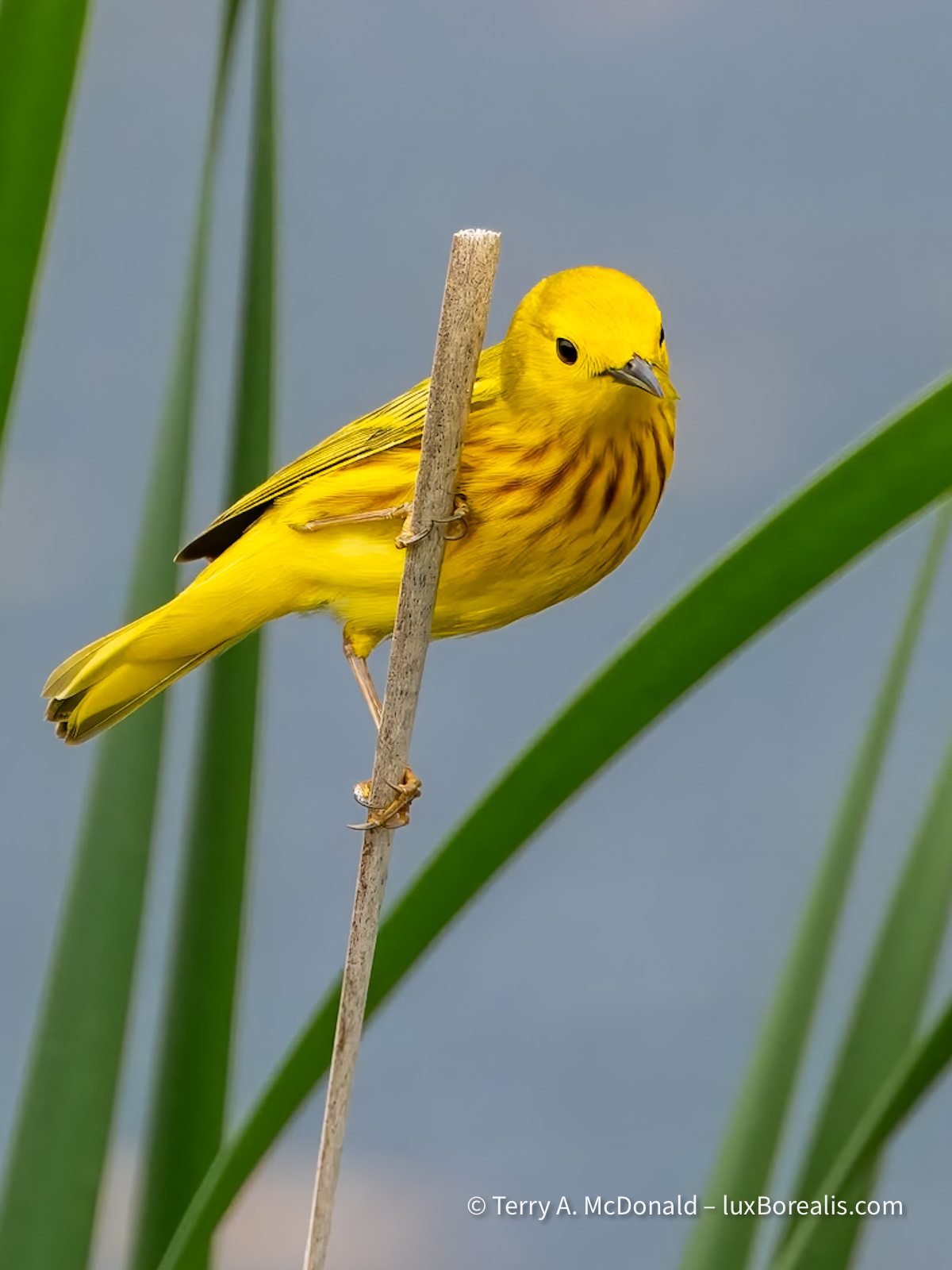

Birds of the sackville Waterfowl Park. Click on photos to view larger versions.
OM-1 w/ 100-400mm at 400mm (800mm efov). Raw files processed in Lightroom and Topaz PhotoAI. For the Swallow, ProCapture2 was used to capture it’s take-ff from the top of a nesting box.
———
The Waterfowl Park is just one small part of it and is a city park with boardwalks all around providing great views of a number of habitats. Across the highway is another part that is next to the regional high school, whose students play a key role in managing that part of the marsh. Needless to say, we were duly impressed—much better than anything we can relate to in southern Ontario, whose ‘nature infrastructure’ for marshes and wetlands seems woefully lacking in comparison, both in terms of natural areas protected and access to them.
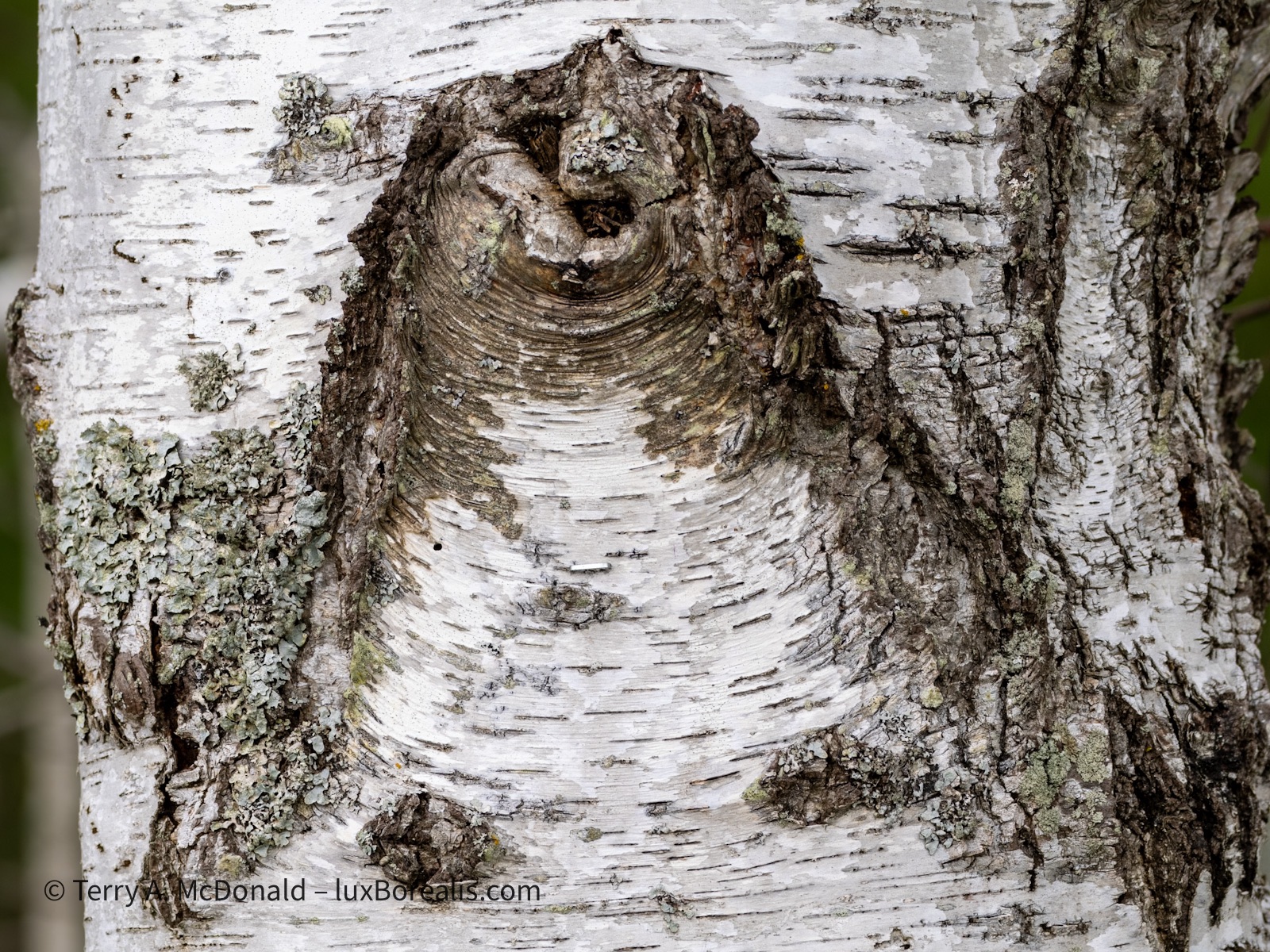

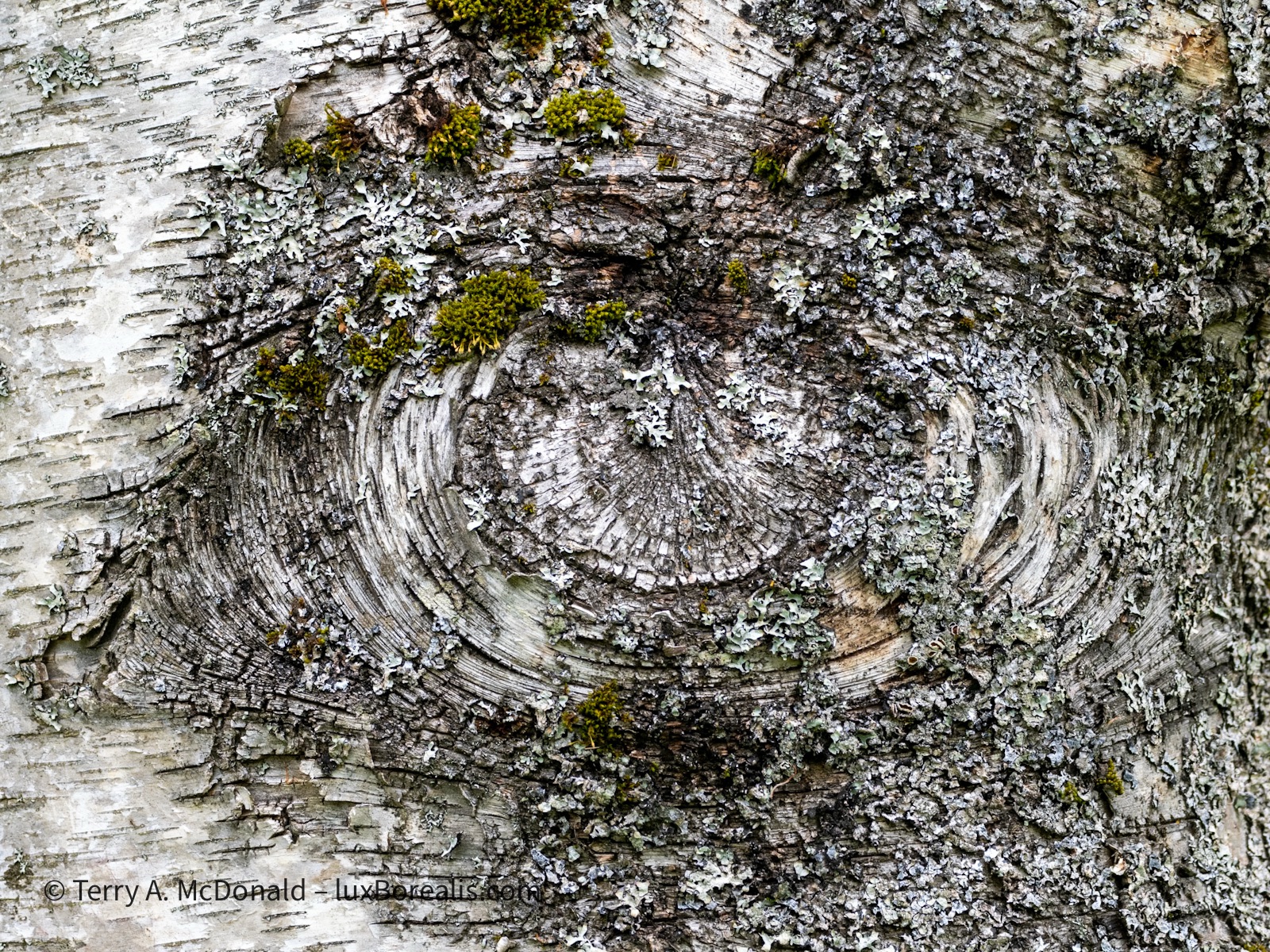

Details: Birches All OM-1 w/ 100-400mm at 200mm (400mm efov). Click on photos to view larger versions.
One of the trails at the Waterfowl Park was called ’The Birches’. While only a couple of these photos are from that trail, it’s hard not to pass up close-up studies of the various designs of bark-splits and lichens on the trunks of birch trees—similar to looking at clouds on a summer day.
———
While we never expected to find one, the woman who recommended Sackville Waterfowl Park said there were nesting Pied-billed Grebes. Sure enough we found not one but two nests. Grebes are such skittish birds, at least they up on the Rideau where I usually see them. But here they were nesting in plain site of anyone walking along the boardwalk. Very convenient for someone with a telephoto lens!


Pied-billed Grebe (Podilymbus podiceps) Both OM-1 w/ 100-400mm at 400mm (800mm efov).
On the left, the grebe is pulling matts of foliage around and over the nest. The decomposing foliage helps keep the eggs warm. The awkward legs and huge webbed feet can be seen in the photo on right. I can’t Imagine this bird ever being able to move on land!
———
What a gem of a park! We ended up spending about three hours there, far longer than expected. Two hours later we were on the seacoast, at our BnB in Mahone Bay, Nova Scotia. What a beautiful spot and very photogenic—Mahone Bay is well-deserving of its own blog post.
Thanks for reading. Be sure to add to the discussion with a question, comment or observation in the COMMENTS section.
Discover more from luxBorealis Blog
Subscribe to get the latest posts sent to your email.
 luxBorealis Blog