Travel Photography: Capturing ‘the Essence of Place’
We’ve just arrived home from 10 days in Paris, so I thought it would be helpful to illustrate what I mean by ‘the essence of place’. To me, this is the epitome of Travel Photography, when a single photo or series of photos reveal the true character of a place. Back in the 70s, Joni Mitchell captured the essence of Paris with:
I was a free man in Paris,
I felt unfettered and alive.
Nobody was calling me up for favours,
No one’s future to decide.
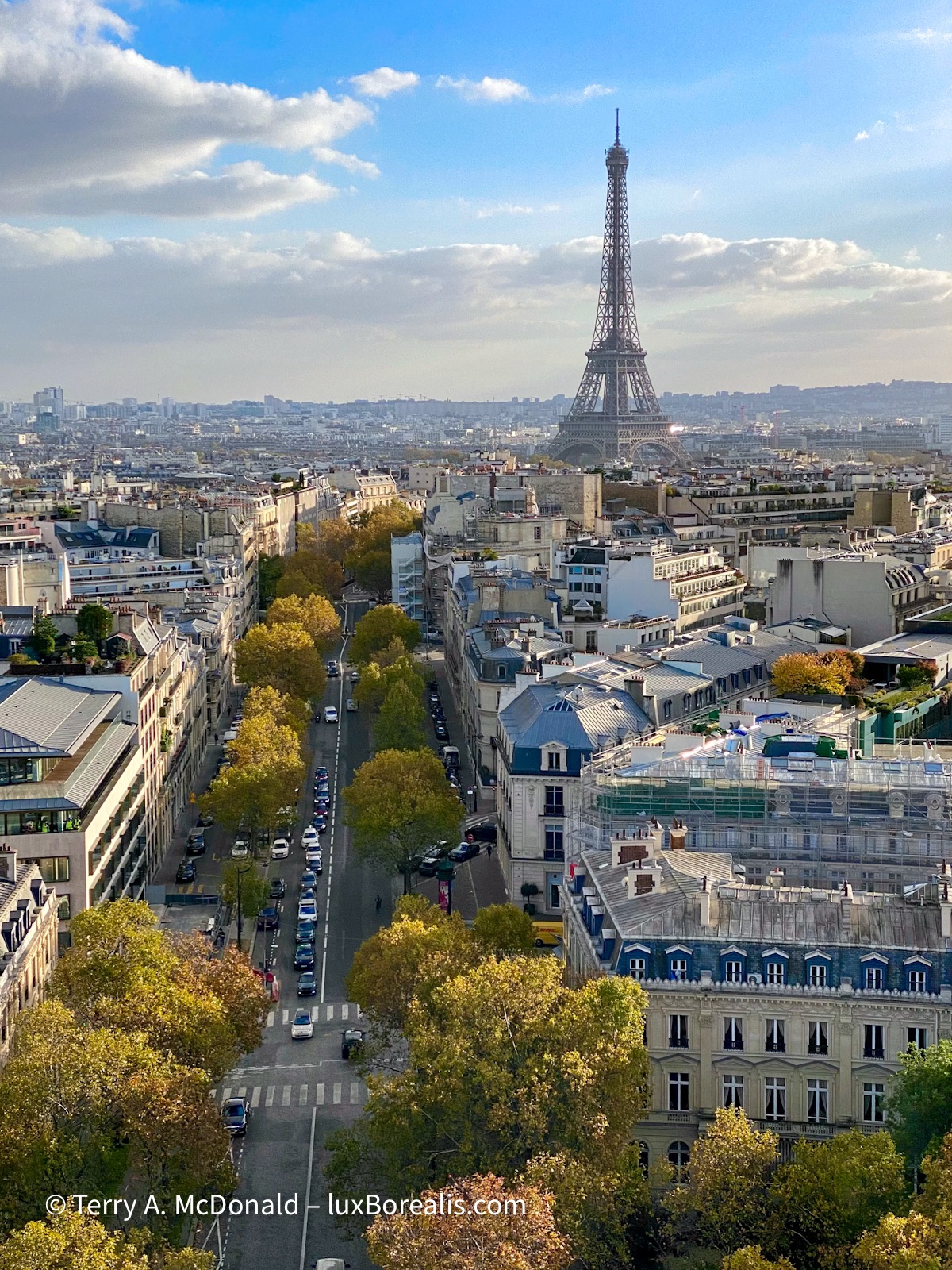
The best view of the Eiffel Tower is from the top of the Arc de Triomphe, especially later in the afternoon and in autumn with the trees leaves changing colour.
iPhone 11 Pro; Lightroom camera app; raw file processed in Lightroom
Travel photography is exhilarating. You are discovering new places or re-discovering old favourites. Either way, the places are different from home, making them more exotic. While creating memories is one of the driving forces for Travel Photography, the novelty of different places has a way of stimulating the creative juices, compelling us to see things differently, then photograph them.
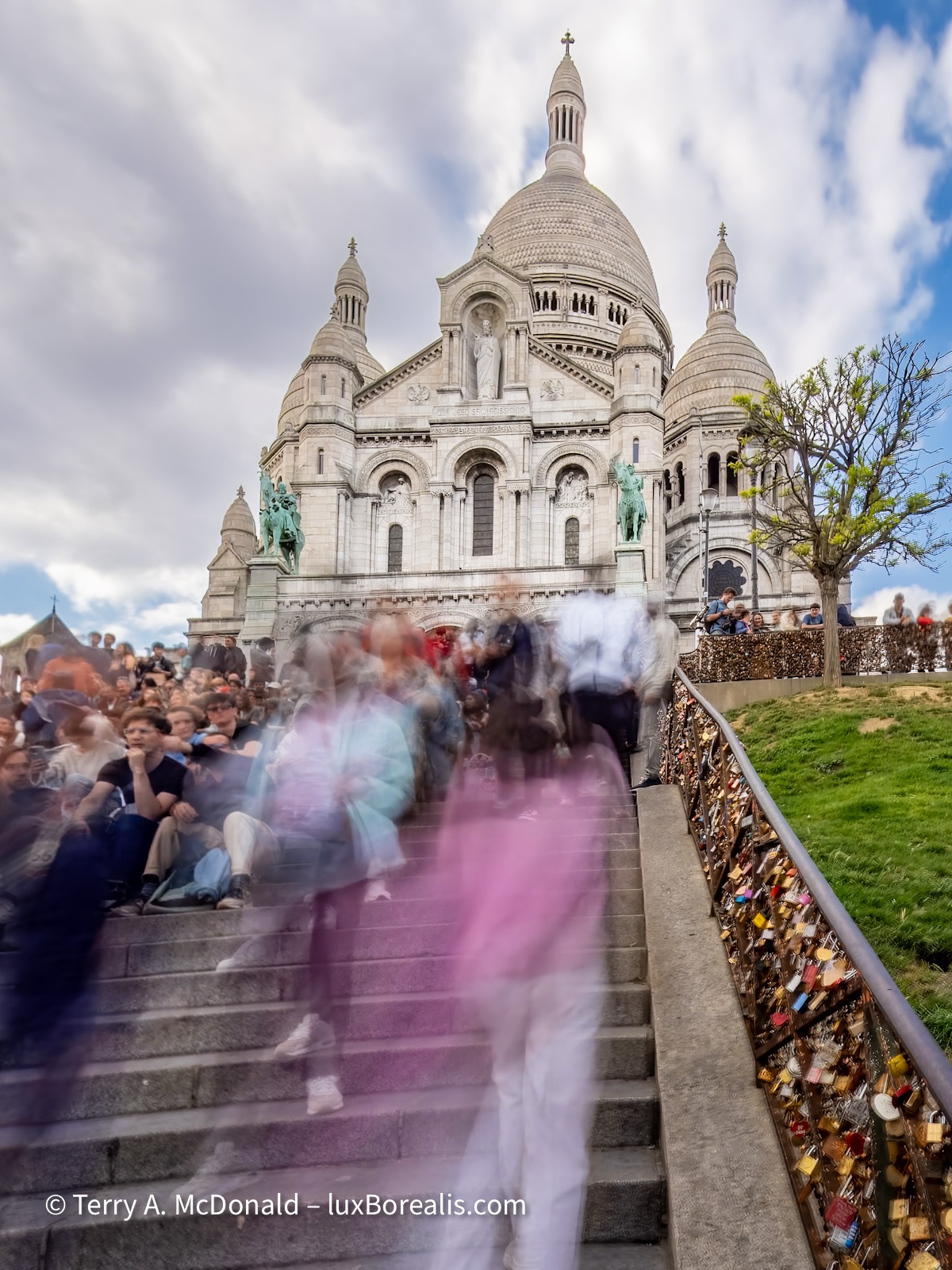
There is no avoiding the throngs of people at Sacré Cœur except in the dead of night. OM-1 w/ M.Zuiko 12-100mm ƒ4 PRO at 12mm (24mm efov); ƒ22 @ 2.5 seconds, ISO 200; LIveND mode; raw file processed in Lightroom and Topaz PhotoAI.
Making the most of limited time
Like London, Berlin, Prague, Rome and other great European cities, Paris is dynamic and diverse, touristy, but also a working city. Capturing the experience of being there is difficult at best. It’s taken me a few visits to really get to know the city, so what do you do when you’re only there once and for only a few days? I have a some suggestions that apply to really anywhere you travel:
Don’t book a tour—book a flat. Use Booking.com or AirBnB to find a place near one of the main Metro stations. This gets you away from the higher cost, touristy areas and into the real city. It also allows you the flexibility of making your own plans and meals. Getting out into grocery stores, bakeries and green grocers, connects you with the neighbourhood around your flat. You get to know the street, the shops, the cafés, the terraces—the places people live in.
If I had my way, I’d just walk through those doors
And wander down the Champs-Élysées
Going café to cabaret
Thinking how I’ll feel when I find
That very good friend of mine
—Joni Mitchell, ‘A Free Man in Paris’
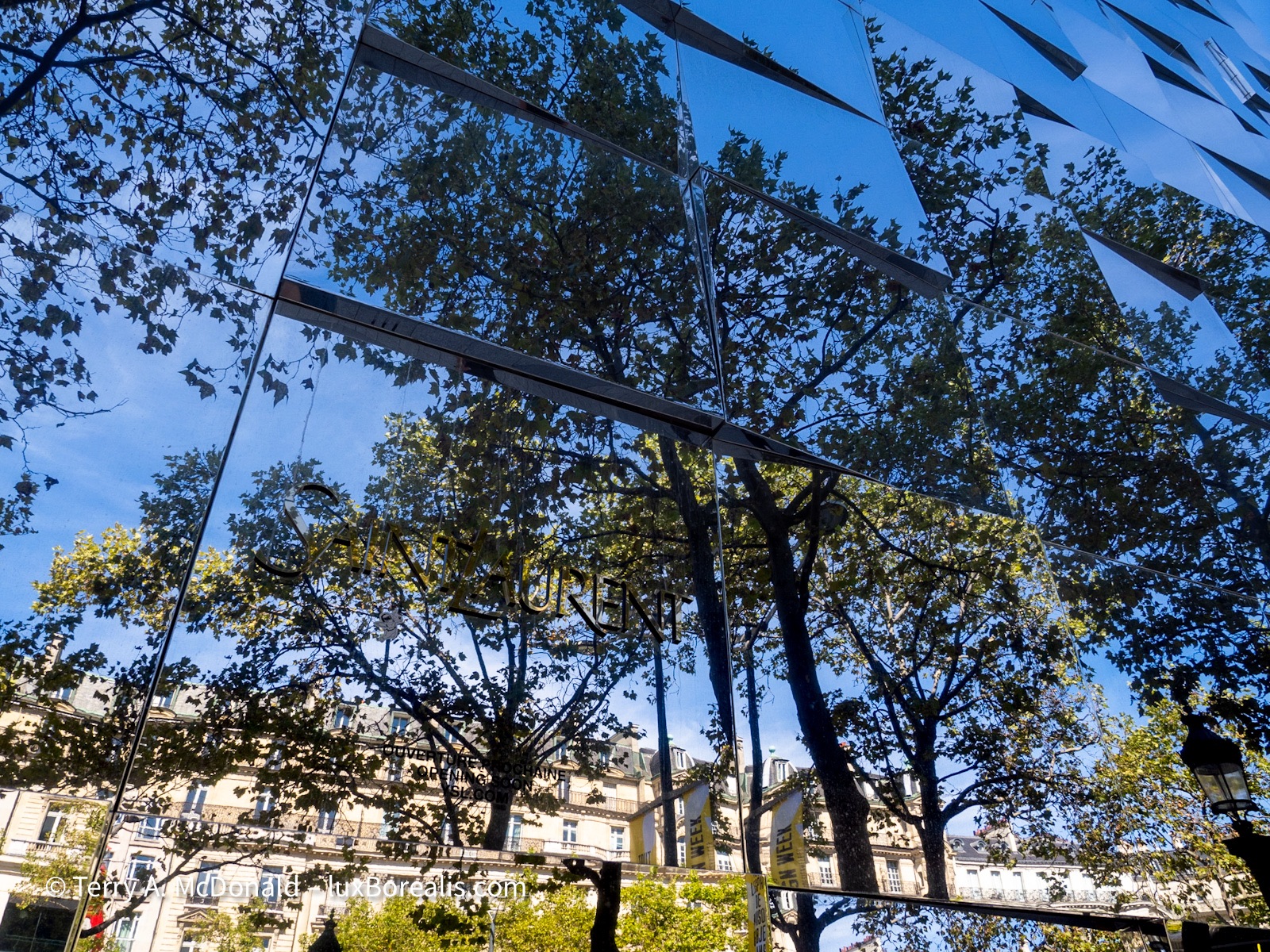
Over the decades, how many millions have walked the Champs Élysées? As a traveller, how do you even begin to capture it in some unique way? Remember what I said about patterns and designs? Thank you Yves Saint Laurent!
OM-1 w/12-100/4 at 12mm (24mm efov); ƒ8 @ 1/250, ISO 200; processed in Lightroom.
If it’s your first time in a city, get a ticket to one of the Hop-On-Hop-Off tourist buses and spend a day getting to know the layout. This gets the touristy places checked off and helps you develop a feel for the city. Then, you can return to and spend more time in places you found most engaging. But beware, you still need to be in the streets around your flat to really get to know the city.
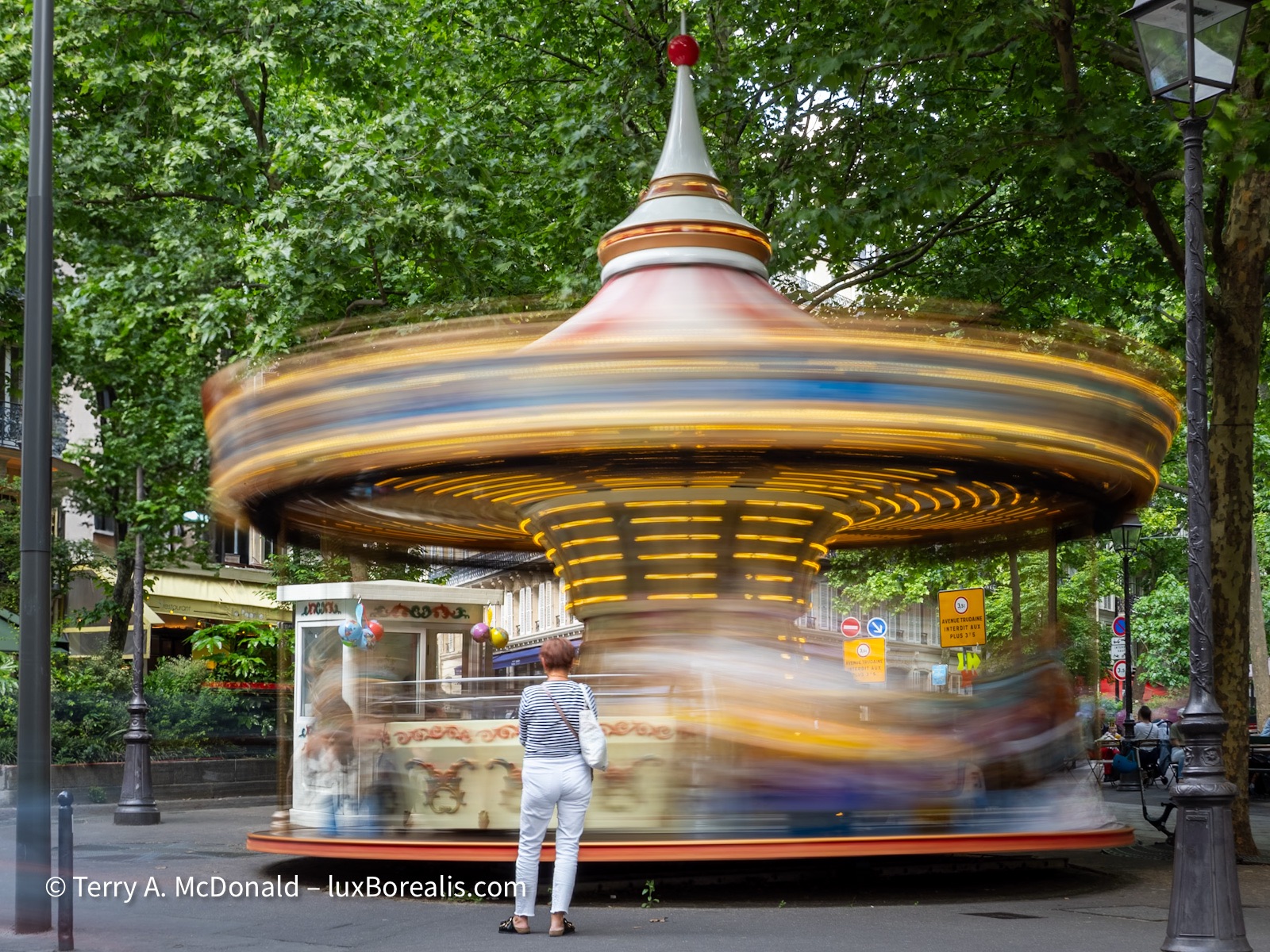
Carousels are part of the street life in a number of neighbourhoods of Paris. Apparently there are more than 20 scattered around the city.
OM-1 w/12-100mm at 25mm (50mm efov); ƒ11 @ 2sec, ISO 200; Live ND mode; raw file processed in Lightroom.
Save the museum visits for the 10am to 4pm time slots so you can get out onto the streets in the morning and evening. (Aside: Also, book your tickets ahead of time to save time in the queues.) For outdoor street photography and views of iconic places, you want to be there when the low-angle, warmer light is on your side. And, consider staying out after sunset to capture night scenes.
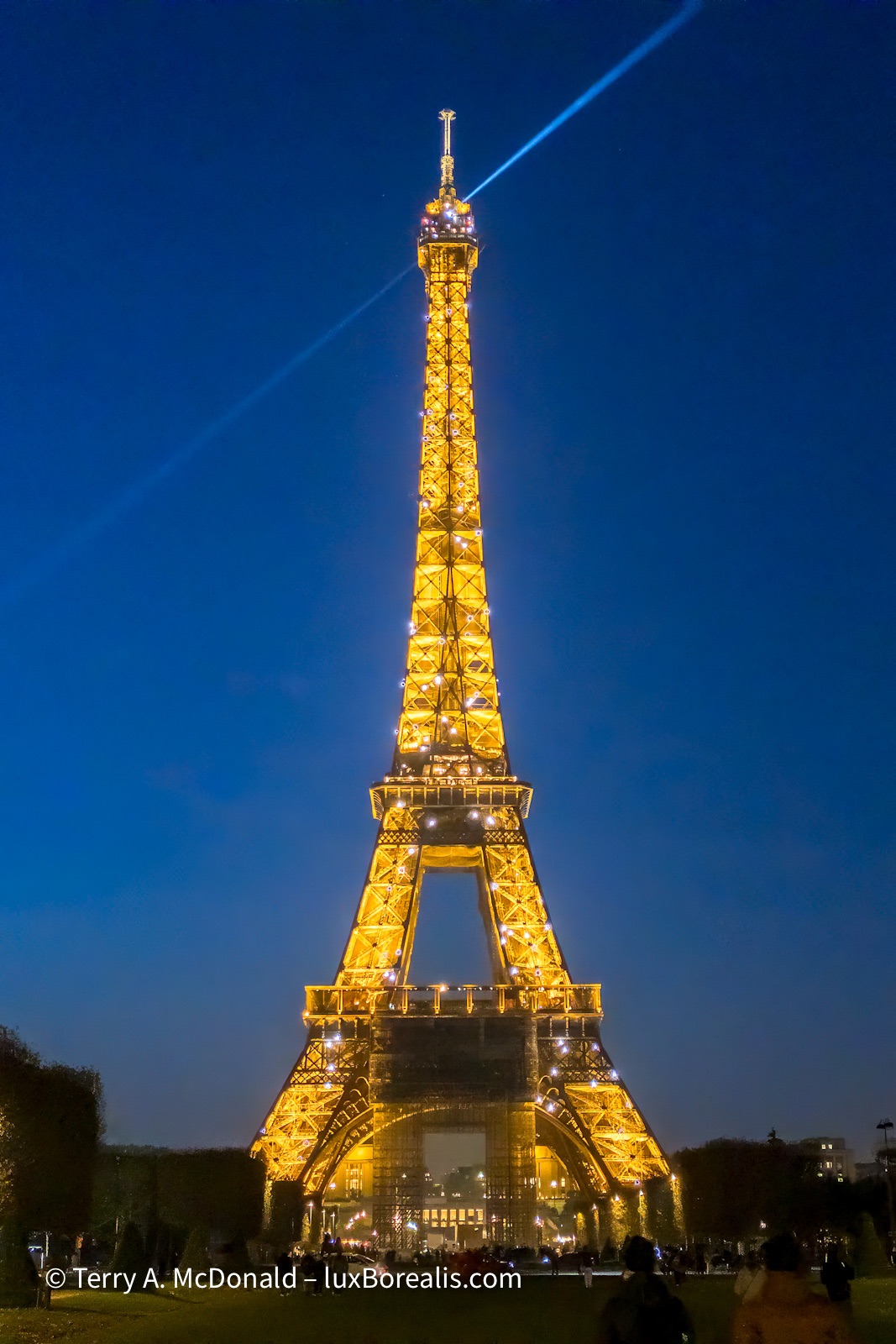
Shoot the obvious, but try doing it in way different from the run-of-the-mill shots. Night photography offers a new way of seeing.
Spend time wandering the streets. Look for different views of the standard places and, more importantly, be open to seeing the unexpected. Getting out to buy groceries or patisseries or to enjoy a coffee or glass of wine at a terrace allows you to see the city and the changing light.
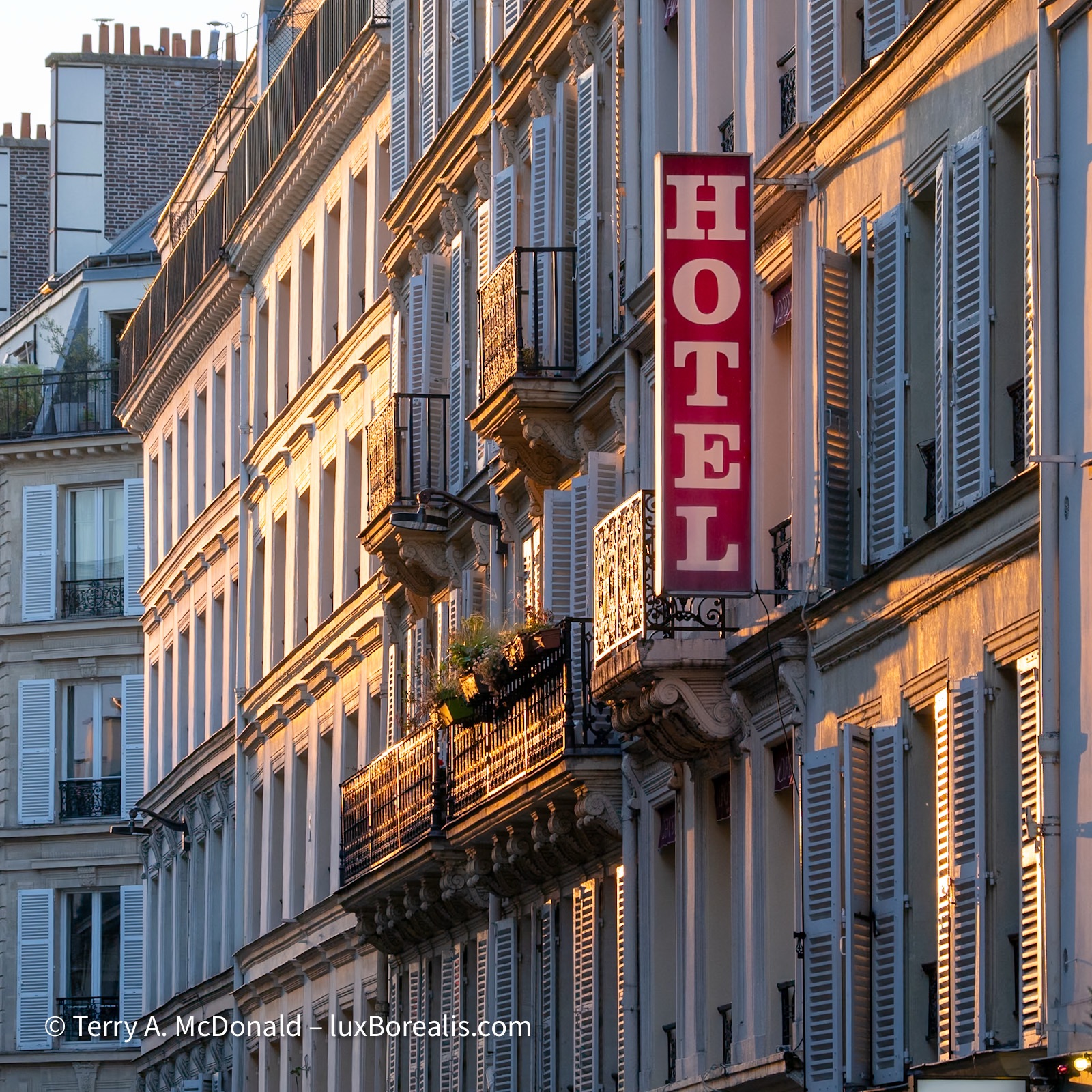
As with most European cities, Paris streets do not follow any kind of grid pattern. So, anticipating exactly how the evening sun will hit a certain street is impossible. You have to be out walking the streets, looking for the light.
OM-1 w/12-100mm at 75mm (150mm efov); ƒ5.6 @ 1/125, ISO 200; raw file processed in Lightroom.
Whimsical Works. Keep an eye out for patterns, designs, shadows, street art, and street performers.
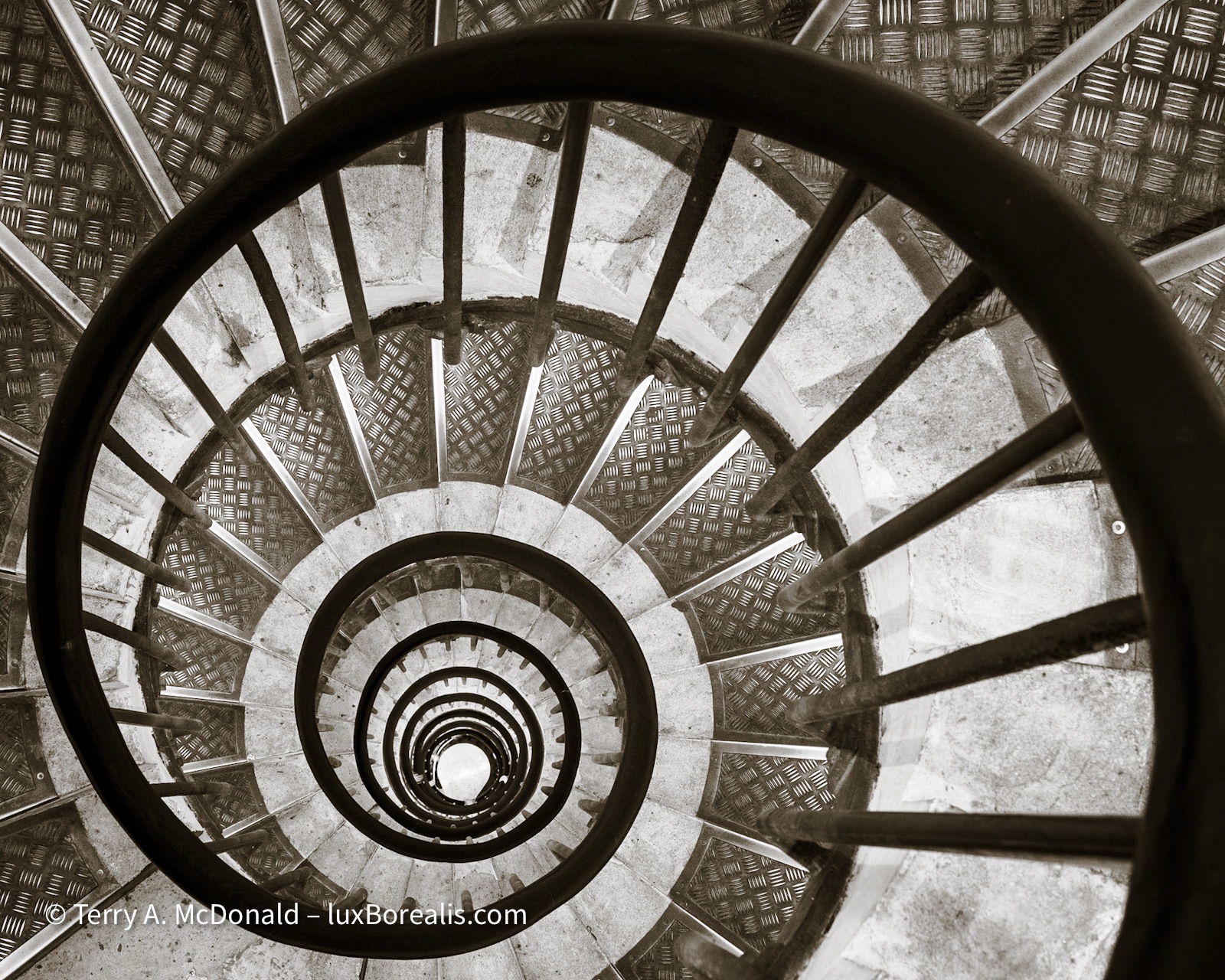
Look past the obvious tourist icons—designs and patterns are everywhere once you attune your eye to them. These are the stairs down from the viewing platform atop the Arc de Triomphe. A few moments of waiting cleared the many hands from the rail.
Olympus OM-1 with 12-100mm at 25mm (50mm efov); ƒ8 @ ⅓, ISO 200; raw file processed in Lightroom.
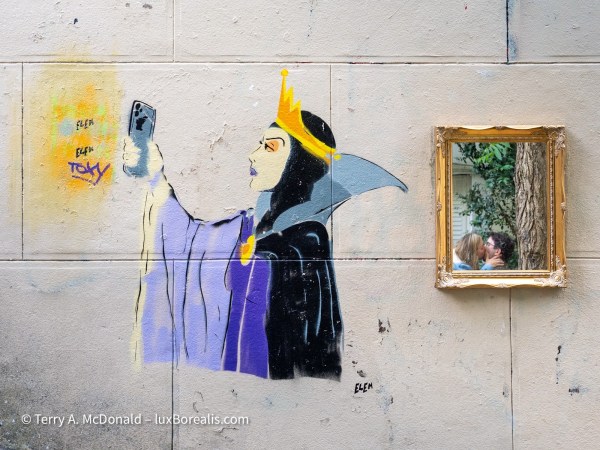
I enjoy street art and Paris is full of it—tags, graffiti, and pieces like this—true street art. I take no credit for the art itself: the evil stepmother looking not into a mirror, but today’s alternative—a phone. But check out the real mirror. Just as I was shooting the street art—voilà—what should be in the mirror but a classic French scene reminiscent of Joni Mitchell’s In France They Kiss on Main Street. Pure serendipity.
OM-1 w/12-100mm at 29mm (58mm efov); ƒ5.6 @ 1/50, ISO 640; raw file processed in Lightroom.
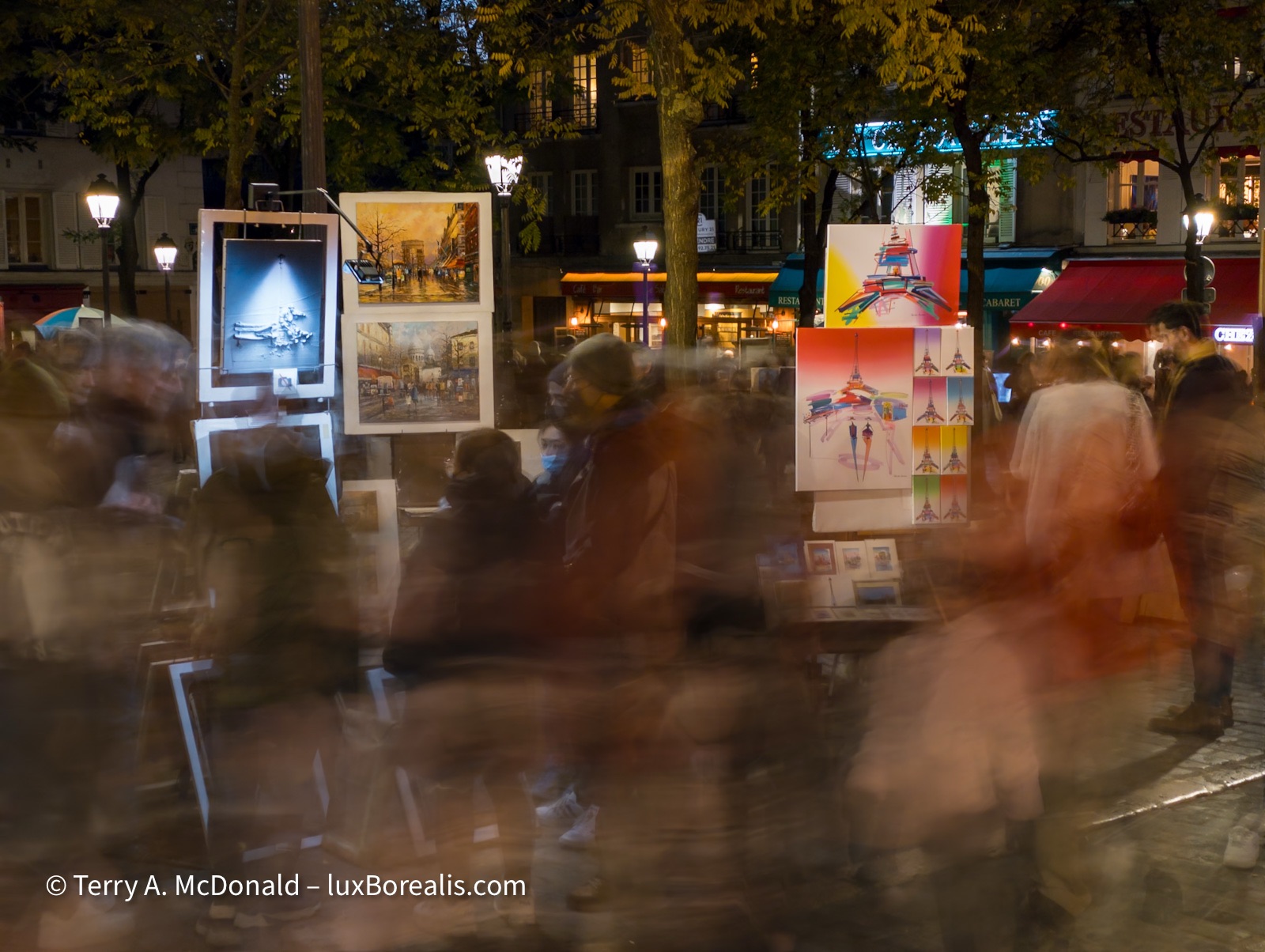
Try something different. Museums are museums, and can be inspiring. They display the masters of art and craft, grounding us in what the giants of before have done, and perhaps providing inspiration for the next generation. Taking a lesson from the Impressionists, I used a slow shutter speed to transform scenes, making them fluid, dynamic, even ethereal, as you saw in the Sacré Coeur and Carousel photos above.
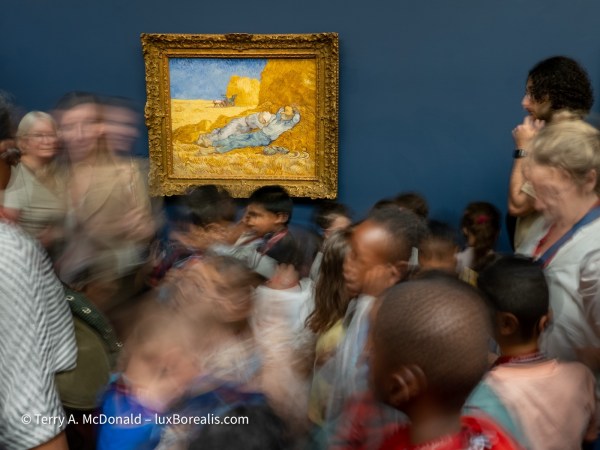
Pictures of the works of the masters are helpful for study purposes, but I wanted something a bit different, photos that showed the nature of the place—the heaving masses of people.
OM-1 w/12-100mm at 18mm (36mm efov); ƒ5.6 @ 2 seconds, ISO 800; Live ND mode; raw file processed in Lightroom.
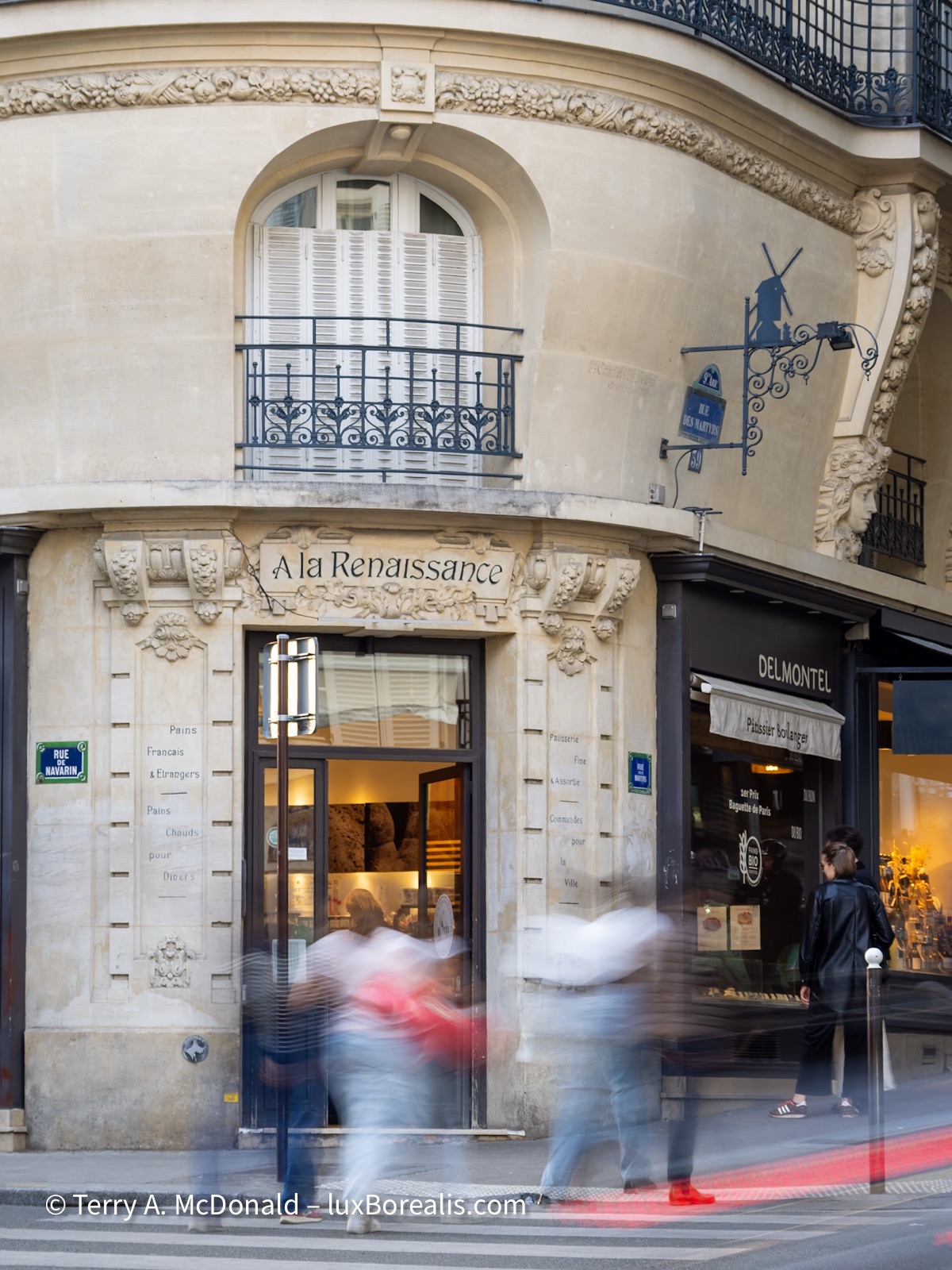
One of our favourite patisseries along the Rue des Martyrs near Montmartre. The building façade is beautiful in itself, but an otherwise static scene is transformed by the addition of movement.
OM-1 w/ 12-100mm at 54mm (108mm efov); ƒ4 @ 0.6sec, ISO 250; handheld, Live ND mode; raw file processed in Lightroom.
The camera with you
You’ll notice that some of the shots in this article are made with an iPhone. Why? ‘Cause that’s what I had with me at the time. How many times has it been said, the best camera is the one that’s with you.
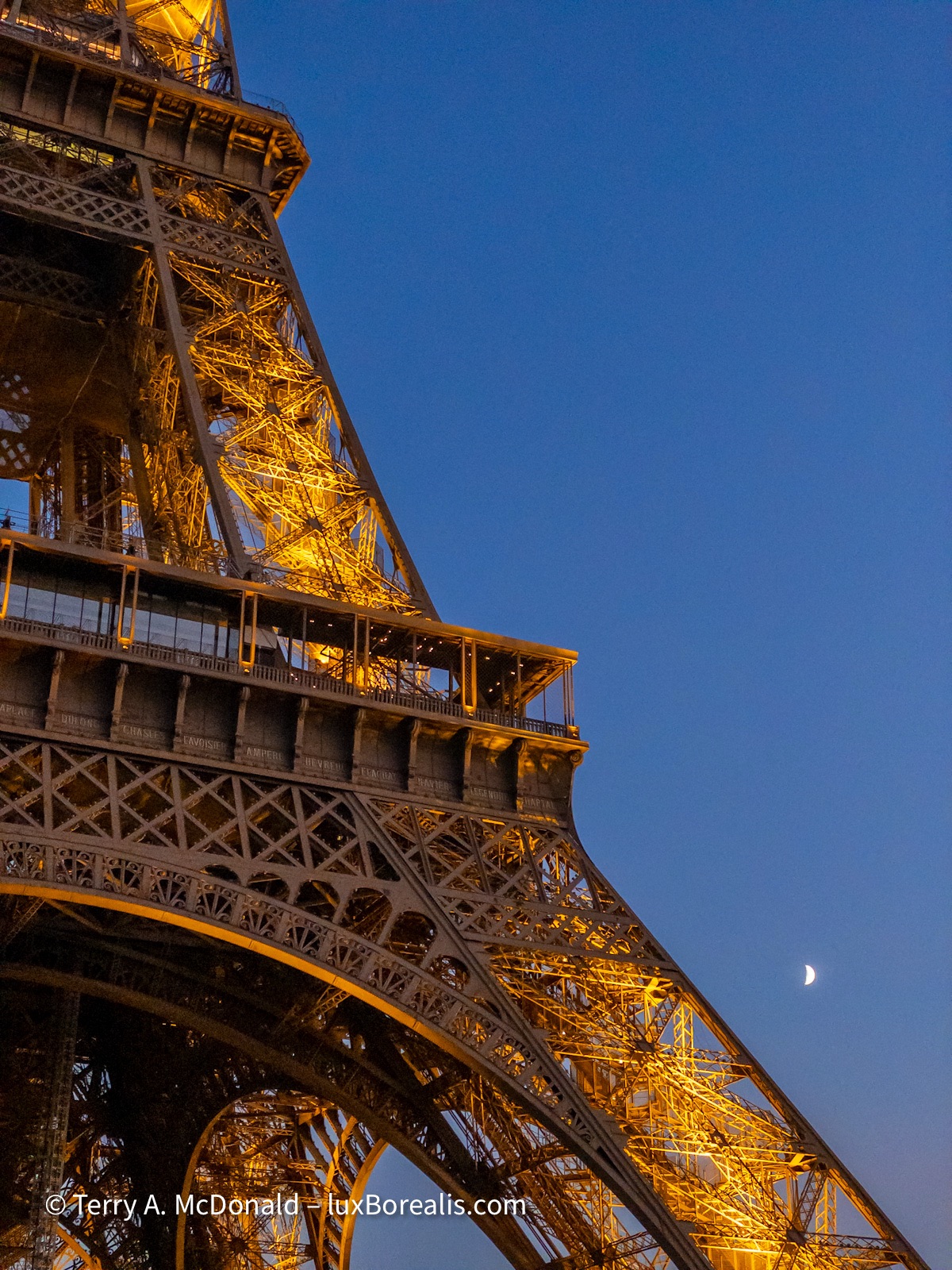
No need to tell anyone this is Eiffel Tower, but in the evening it looks very different. iPhone 11 Pro; Lightroom camera app; raw file processed in Lightroom.
Am I distraught that these photos were ‘only’ made with an iPhone. Not really. The quality is good, plenty good enough for a small print, a calendar photo, even a page in a photo book. Could I make 16x20s from them? It would be a stretch and I would need to use an up-scaling app such as Topaz PhotoAI, but, yes, 16x20s are possible. What more do you need?
For some reason, Adobe removed the long exposure option in its Lightroom camera app—Argh! Since moving to Olympus/OM System, LiveND mode has filled the niche.
iPhone 11 Pro, Lightroom camera app on Long exposure; ƒ2 @ 5 seconds, ISO 320; raw file processed in Lightroom.
Could I win a photo competition with phone photos? Possibly. The images are unique, to a degree, but they are not earth-shattering. But what’s the goal with Travel Photography? Some of the photos you take will be competition-level shots, but not all of them, nor do they need to be. Now, if you’re a working pro, you will have a more-capable camera with you everywhere, all the time. But if you’re not, don’t sweat it, as you’ll always have your phone.
So what do you take with you? For city trips, my suggestion is yo go light and go versatile. I always have my trusted M.Zuiko 12-100mm ƒ4 Pro lens (24-200mm efov). It is sharp from end to end and, most importantly, wide open. With it on my OM-1, attached to an over the shoulder harness, I can walk around all day with it under my arm, but always at the ready. And, with the excellent weather sealing (IP-53), I’m never worried about rain damage.
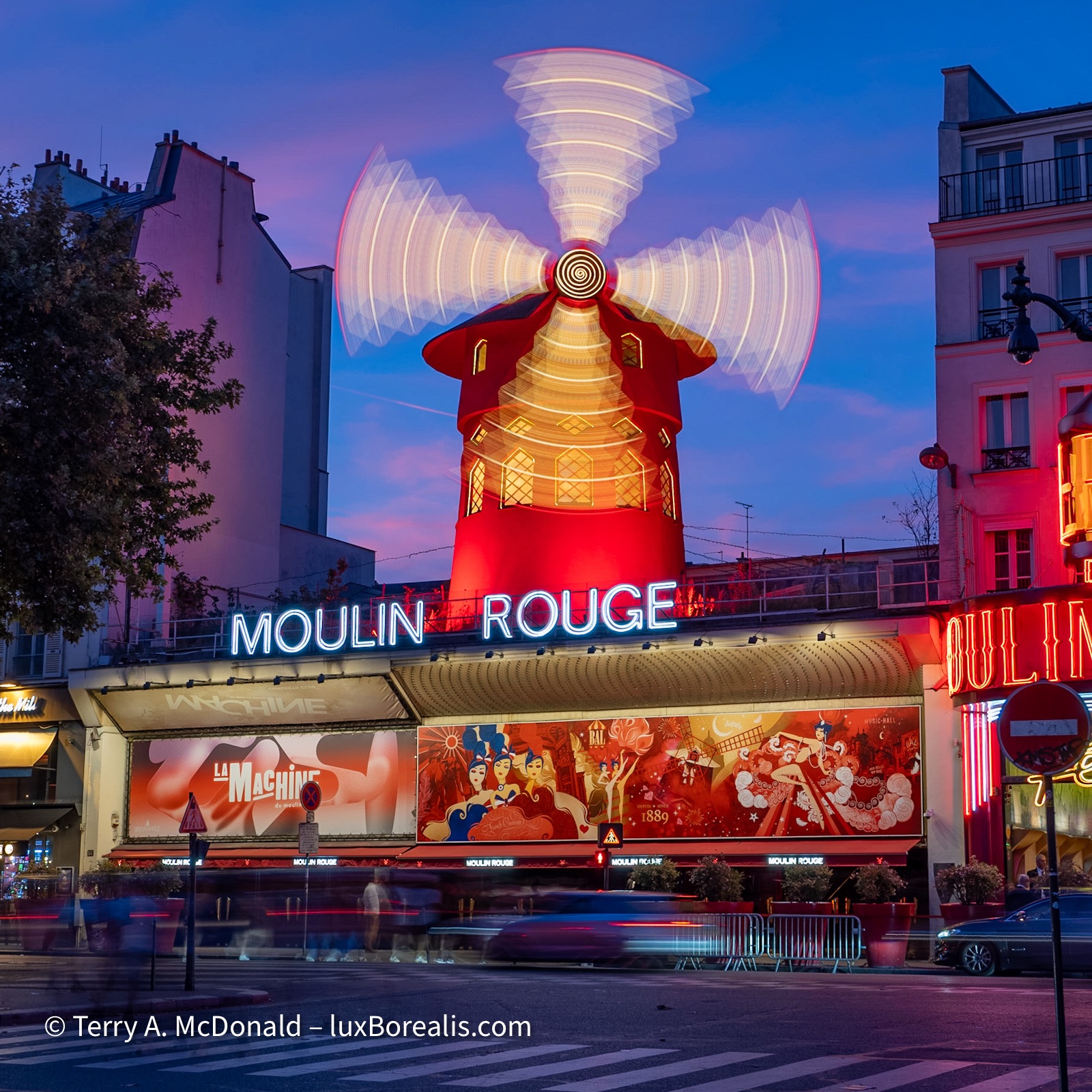
One of the icons of Paris, lifeless by day, but alive at night!
OM-1 w/ 12-100mm at 24mm (48mm efov); ƒ5.6 @ 2sec, ISO 200; raw file processed in Lightroom.
When I’m out for a day touring around, I sometimes bring my M.Zuiko 8-25mm ƒ4 Pro (16-50mm efov), but I rarely use it. Yes, there’s some overlap and I could reduce the weight and bulk by choosing my Panasonic-Leica 10mm ƒ1.7, but I like the versatility of a zoom when I may not have the time to create tight compositions with a prime lens.
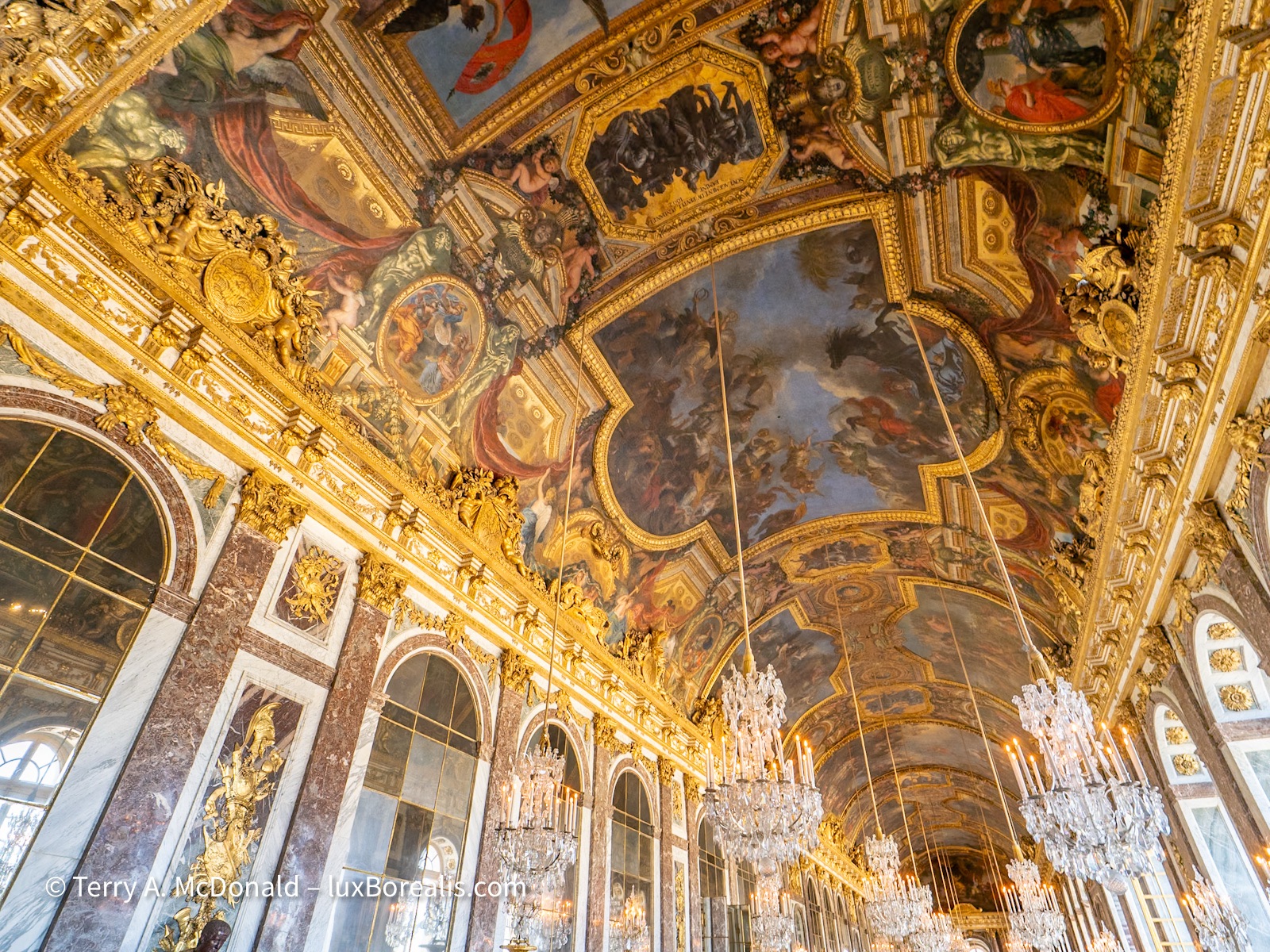
8mm comes in handy with grand ceilings in even grander palaces. Not much interpretation here, just a photo of the affluence and excess of past monarchs celebrating the talents of the many labourers and craftsmen and women who are rarely credited for their work.
OM-1 w/ M.Zuiko 8-25mm ƒ4 PRO at 8mm (16mm efov);
For details, such as gargoyles on cathedrals and when there might be birds or wildlife, I have my M.Zuiko 100-400 ƒ5-6.3 lens with me—but it’s not a lens I’ll lug around a city too often unless there is significant chance of a payoff.
One question I am often asked is, “Are ƒ4 lenses fast enough for dark interiors?” Ƒ4 has never slowed me down, probably because at ƒ4, the M.Zuiko lenses are still sharp. The two alternatives are (1) faster primes, which lack the versatility of zoom lenses; and (2) ƒ2.8 zooms. To me, the extra size and weight of them is not worth the gain of only 1 EV, which is the equivalent of choosing ISO 800 instead of ISO 1600. Any ISO now cleans up beautifully with the noise reduction modules in Lightroom, DxO or Topaz.
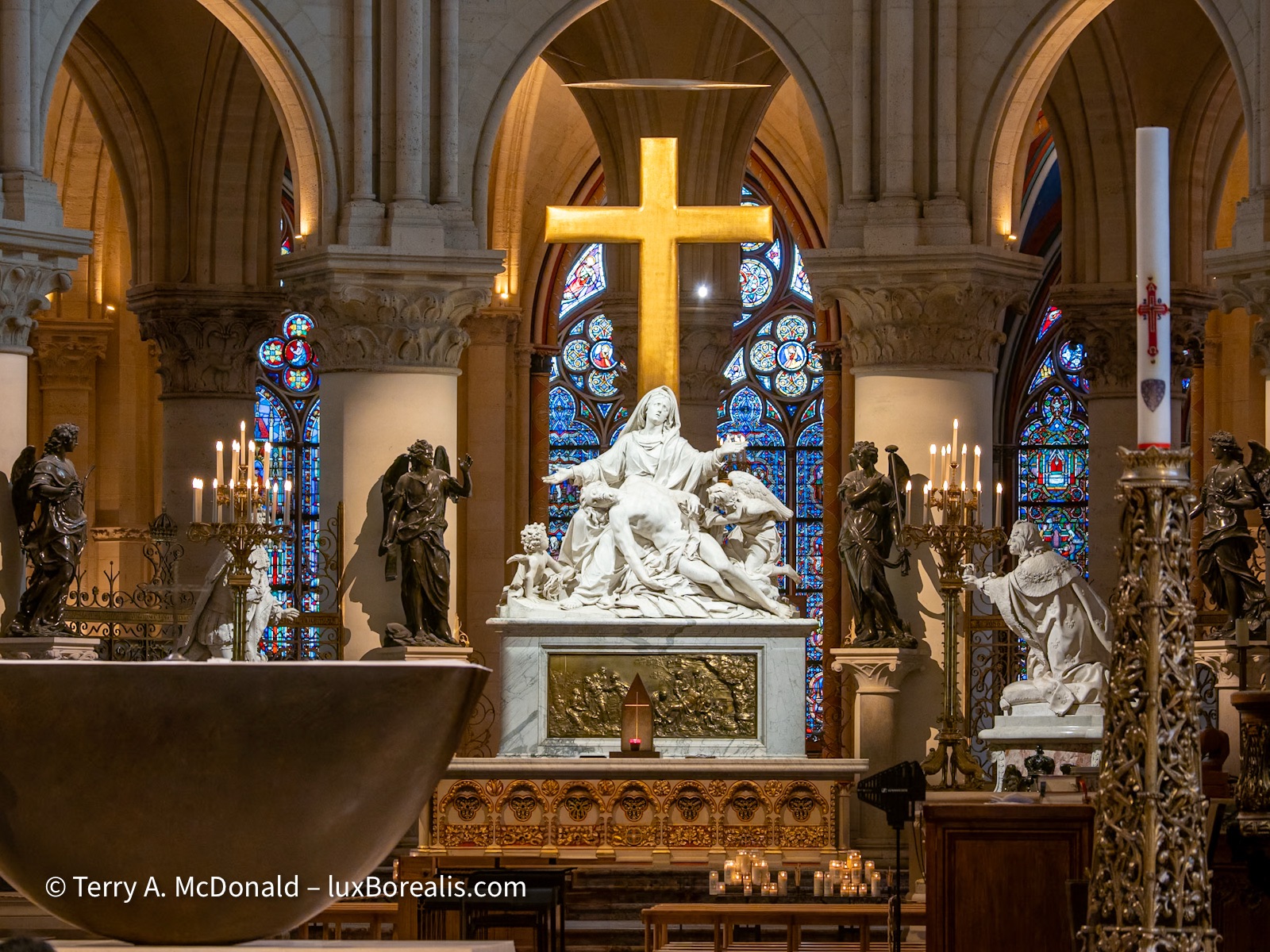
Entering a rebuilt and cleaned Notre Dame Cathedral was an overwhelming experience. Having watched it burn 6 years ago, and to see it today is a testament to the thousands of first responders, craftsmen and women and artisans who restored this icon of Paris.
OM-1 w/12-100mm at 92mm (184mm efov); ƒ5.6 @ ⅛, ISO 200; raw file processed in Lightroom.
The Essence of Place
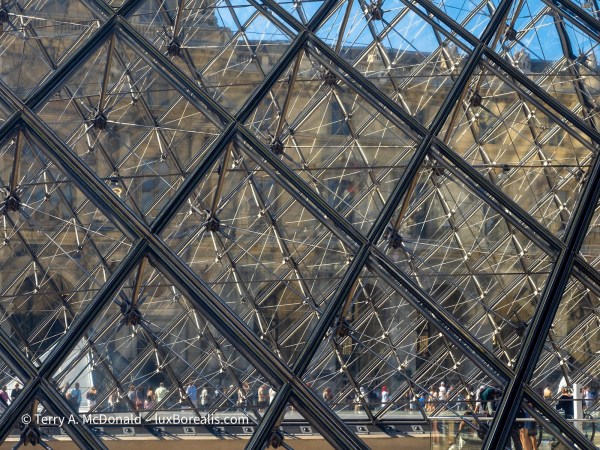
Amidst the jumble of diamonds and triangles created by the Louvre Pyramid, a long line of people queue for tickets.
OM-1 w/12-100mm at 38mm (76mm efov); ƒ8 @ 1/400, ISO 200; raw file processed in Lightroom.
When travelling, crowds and queues are difficult to avoid. Too often, it’s a matter of ‘if you can’t beat ‘em, then join ‘em’. I know it’s trite to say, but what else can you do? Try making the most of the time you have. Get the ‘tourist’ shots, but also spend time walking the streets, looking for the different, the unique—a new way of looking at places millions have visited and made photos of, or a different view of a place people think they know. Try capturing the essence of place where ever you go, taking time to enjoy the flavours and experiences that come with travel.
Thanks for reading! Be sure to COMMENT — SHARE — SUBSCRIBE!
Terry McDonald is fine art landscape, nature and travel photographer based in southern Ontario. View his work at luxBorealis.com; select Workshops to enquire about Field & Screen learning and PhotoTalks for you and your camera club.
This work is copyright ©2025 Terry A. McDonald and may not be reproduced in whole or in part without the written consent of the author.
Discover more from luxBorealis Blog
Subscribe to get the latest posts sent to your email.
 luxBorealis Blog