A Birding Day Out: Tom Stirr, ProCapture and the M.Zuiko 150-600mm lens
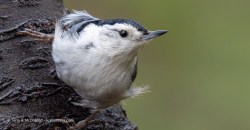
This week, I met up with Tom Stirr of SmallSensorPhotography.com to spend a few hours photographing in two locations around Burlington, Ontario. It gave Tom and I an opportunity to catch up, while we worked towards capturing some bird photos. Tom is the resident expert on ProCapture, so that was one of my goals. The other was to try out his M.Zuiko 150-600mm ƒ5-6.3 IS zoom lens.
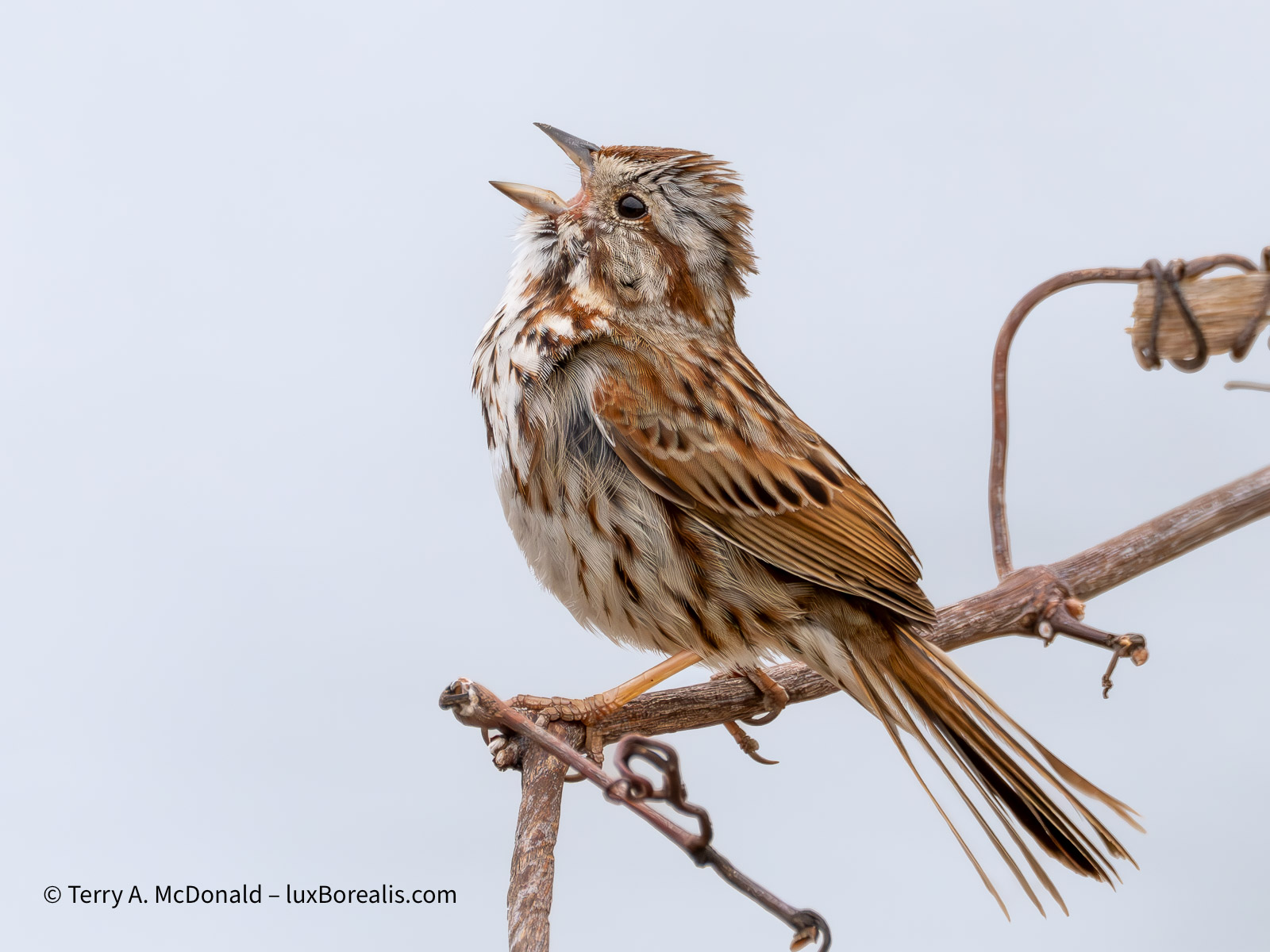
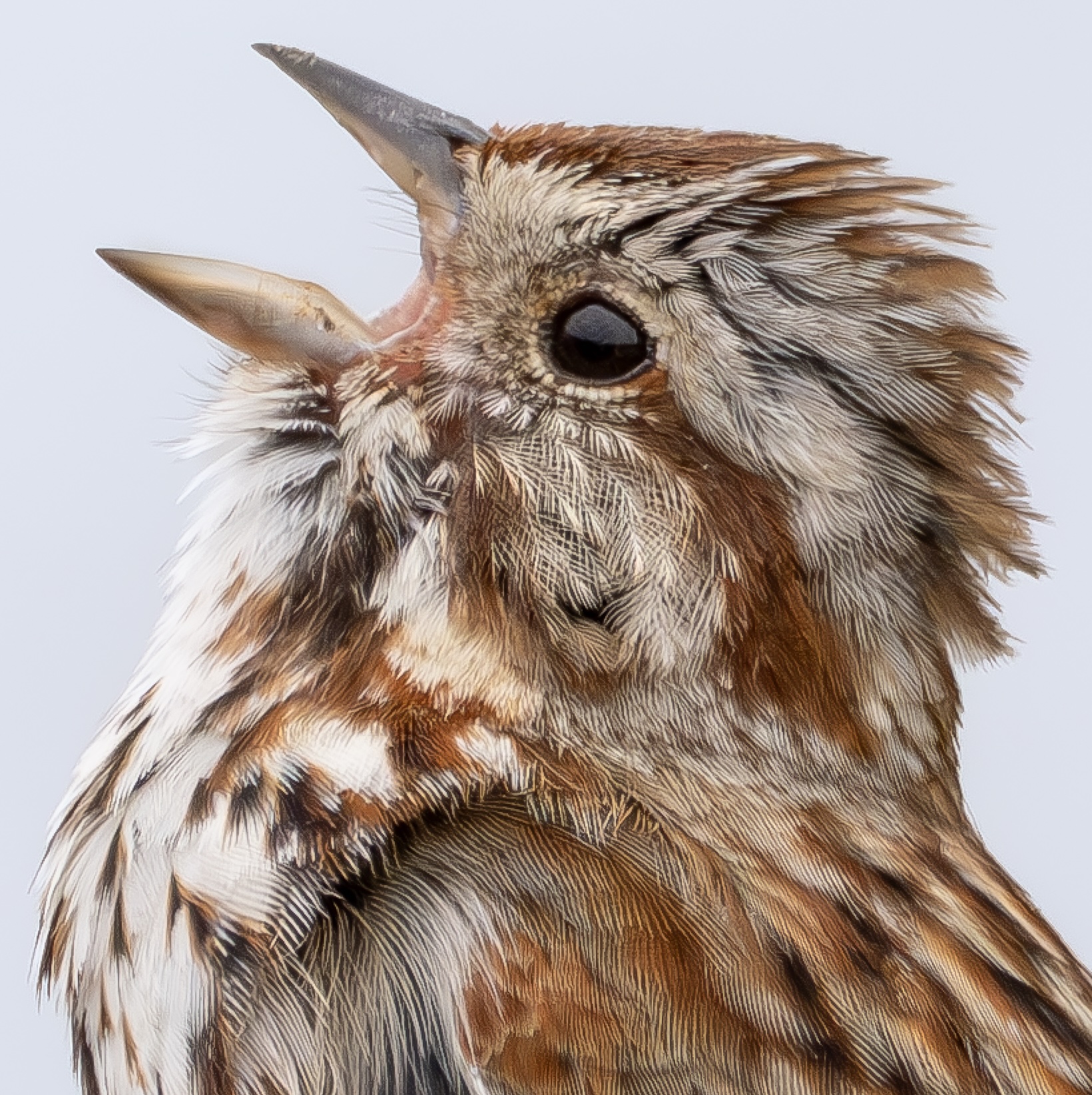
OM-1 w/M.Zuiko 100-400mm ƒ5-6.3 IS lens at 400mm (800 efov); ƒ/8 @ 1/1600, ISO1600; raw file processed in Lightroom. Even at this distance, where a small bird fills only a quarter of the frame, the sharpness of this lens is remarkable as shown in the screen capture below.
The light was terrible—flat without direction and seemingly colourless with no hint of warmth or sparkle. Both of us remarked that we wouldn’t normally be going out in weather like this, but to be shooting together was worth it. The day was cool for May (10°C) with a cool breeze off Lake Ontario, complete with the threat of rain. About an hour in, there was a brief shower, but we kept shooting, remarking on the advantage of the excellent IP rating of our OM gear. Tom, who has been to this same location regularly, recounted watching the SoNiCan crowd disperse with the first bit of rain.
OM-1 w/100-400 at 210mm (420mm efov); ƒ8 @ 1/1600; ISO 3200; raw file processed in Lightroom.
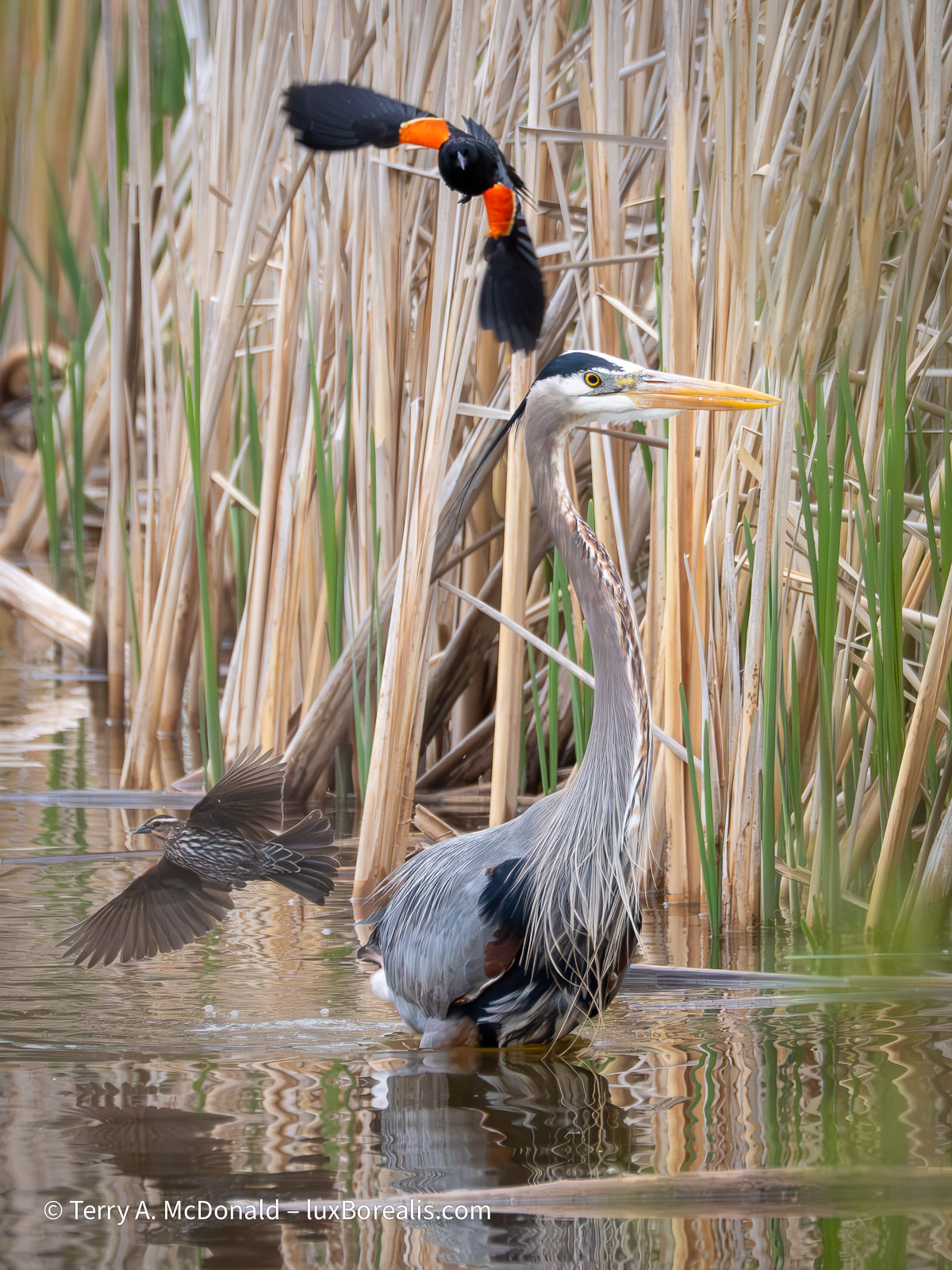
OM-1 w/100-400 at 400mm (800 efov); ƒ8 @ 1/1250, ISO 3200; raw file processed in Lightroom.
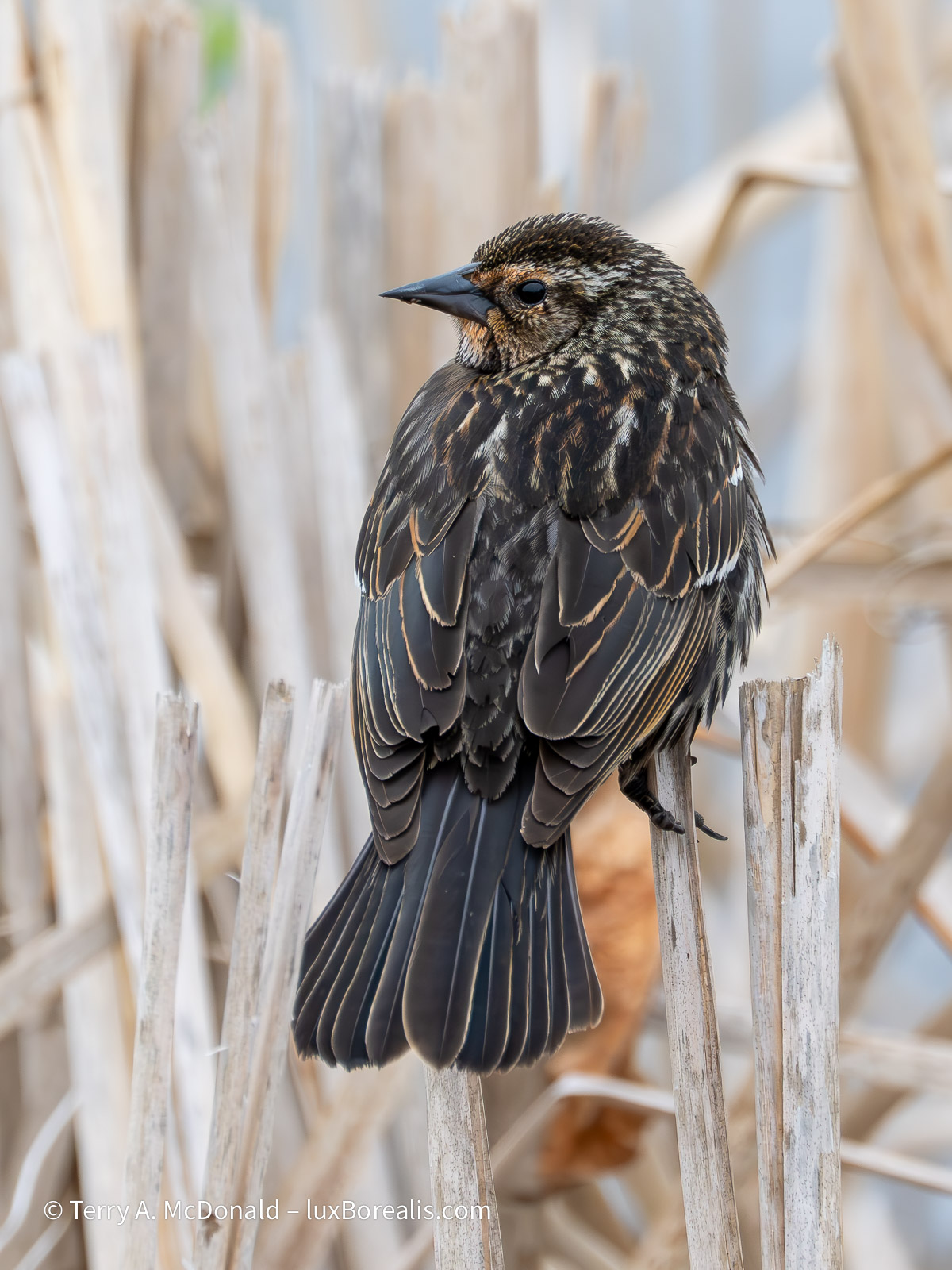
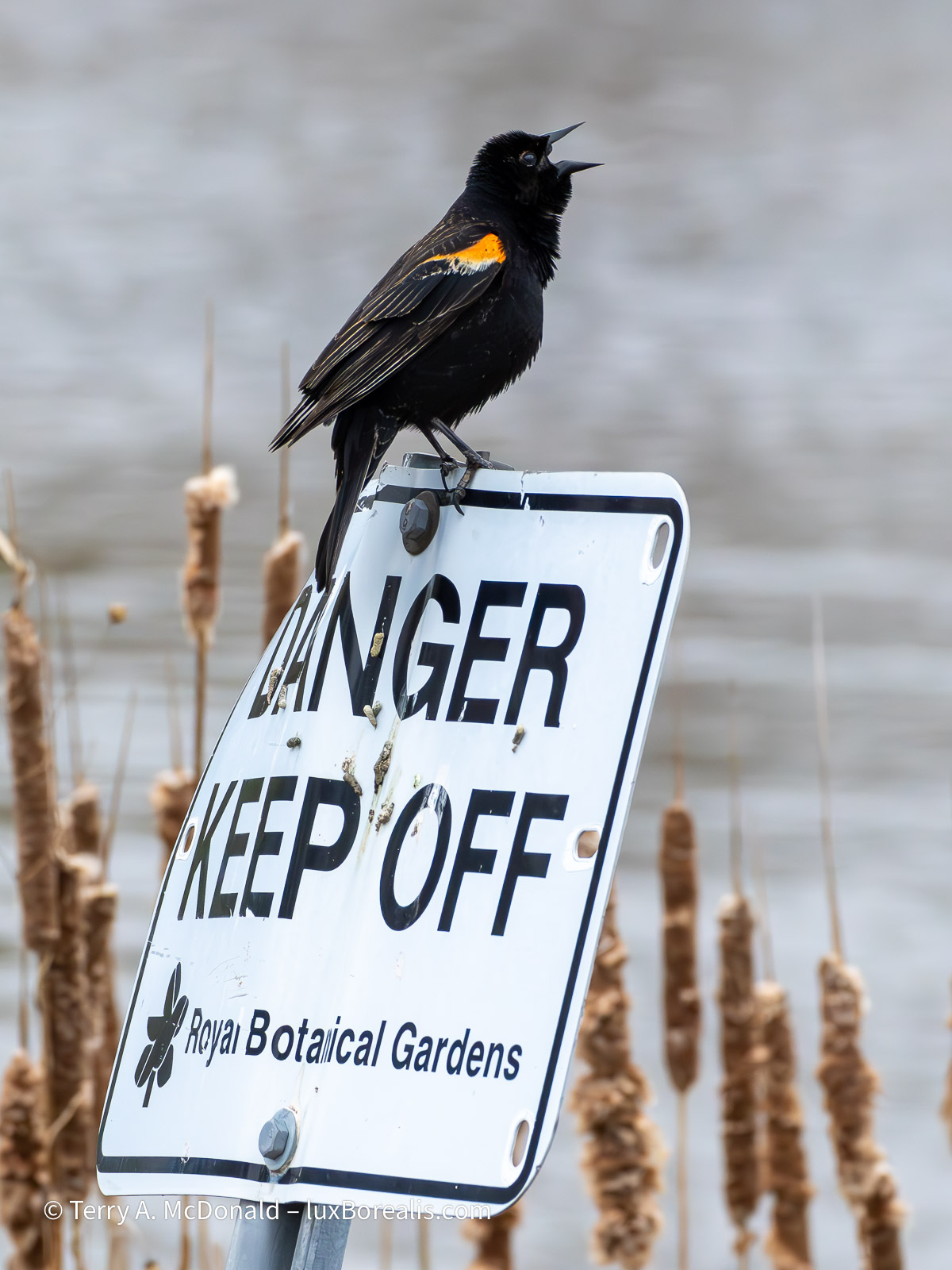
OM-1 w/100-400 at 400mm (800mm efov); ƒ8 @ 1/640, ISO 3200; raw file processed in Lightroom.
One thing that surprised me about the day was how approachable the birds were in both locations: Grindstone Marsh and the La Salle Trail along Burlington Bay. At Grindstone, the Tree Swallows and Red-winged Blackbirds were all around us and the Great Blue Heron did not fly off at our first movement, like they do around where I live. At La Salle, it wasn’t just that the chickadees and nuthatches, who are accustomed to being hand-fed, but also the cardinals, wrens, even a Red-tailed Hawk that seemed to lack the skittishness found almost anywhere else. The warblers were more evasive, but that’s to be expected as they are just passing through.
Grindstone Marsh is a fairly small area, but with pathways that allow photographers to move around the marsh to capture different angles. The diversity is good, with many of the common waterbirds moving in an outl: Common Terns, Canada Geese, Mute Swans, Cormorants, plus a number of tree birds and, on better days, Ospreys feeding. Tom told me how this is quite a draw for the long lens crowd, with up to four osprey feeding at once, particularly when teaching the youngsters how to feed. Even under the dreadful conditions we had, we were both surprised at how quickly two hours passed, especially as we patiently waited for tree swallows to do something more than just perch.
ProCapture is a fascinating, if not slightly frustrating computational mode. It is ingenious in taking and spooling images prior to releasing the shutter, then saving the last 25 or so (how ever many are programmed) plus the number programmed after release. Given our naturally slow reaction times, it allows users to capture the moment a bird takes flight. Mid-air shots are far more interesting than static perching. For me, however, it will take some getting used to.
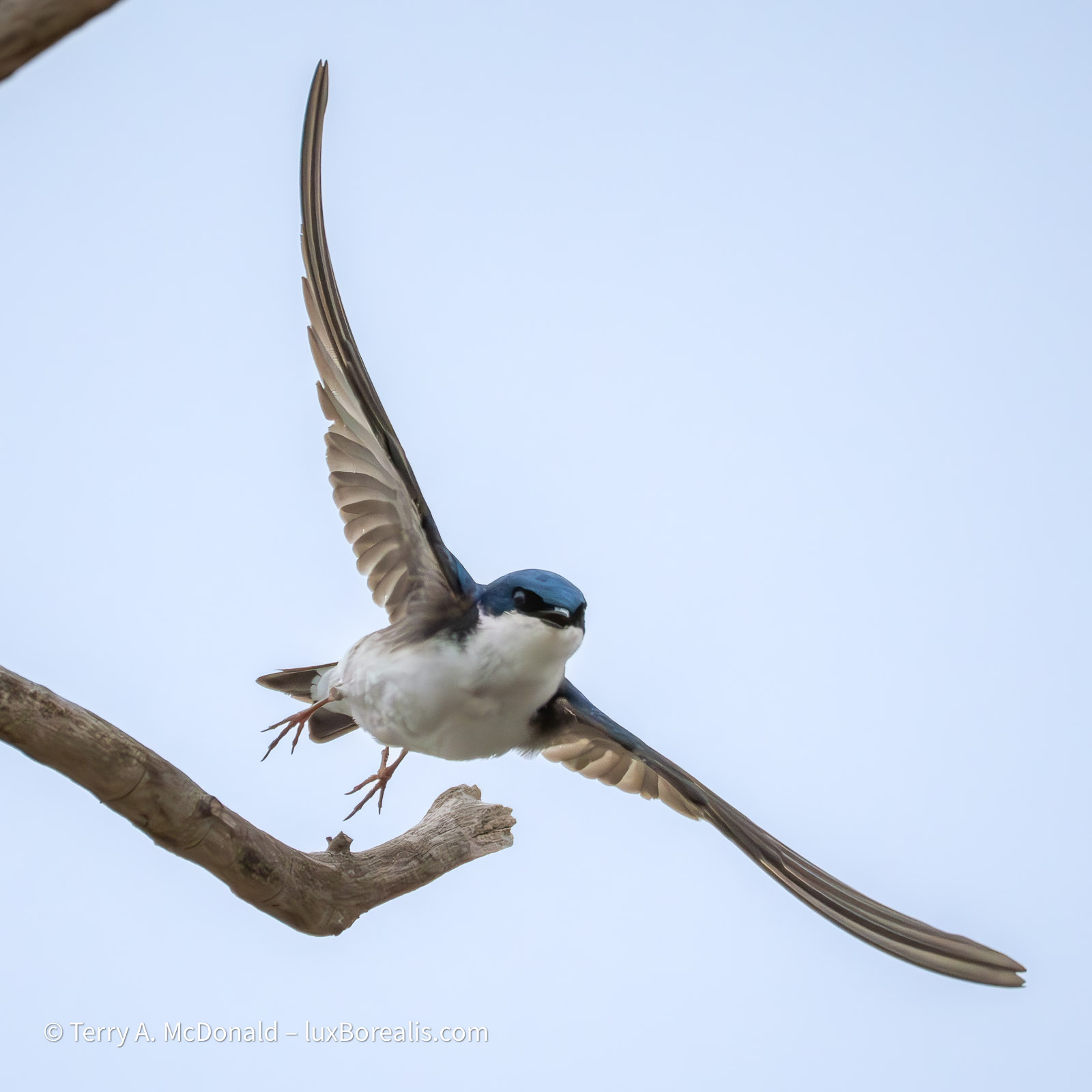
OM-1 w/100-400 at 400mm (800mm efov); ƒ6.3 @ 1/10000, ISO 3200; raw file processed in Lightroom. This is one of a series made using ProCapture SH2, which focusses between each of the 25fps captured prior to the shutter release.
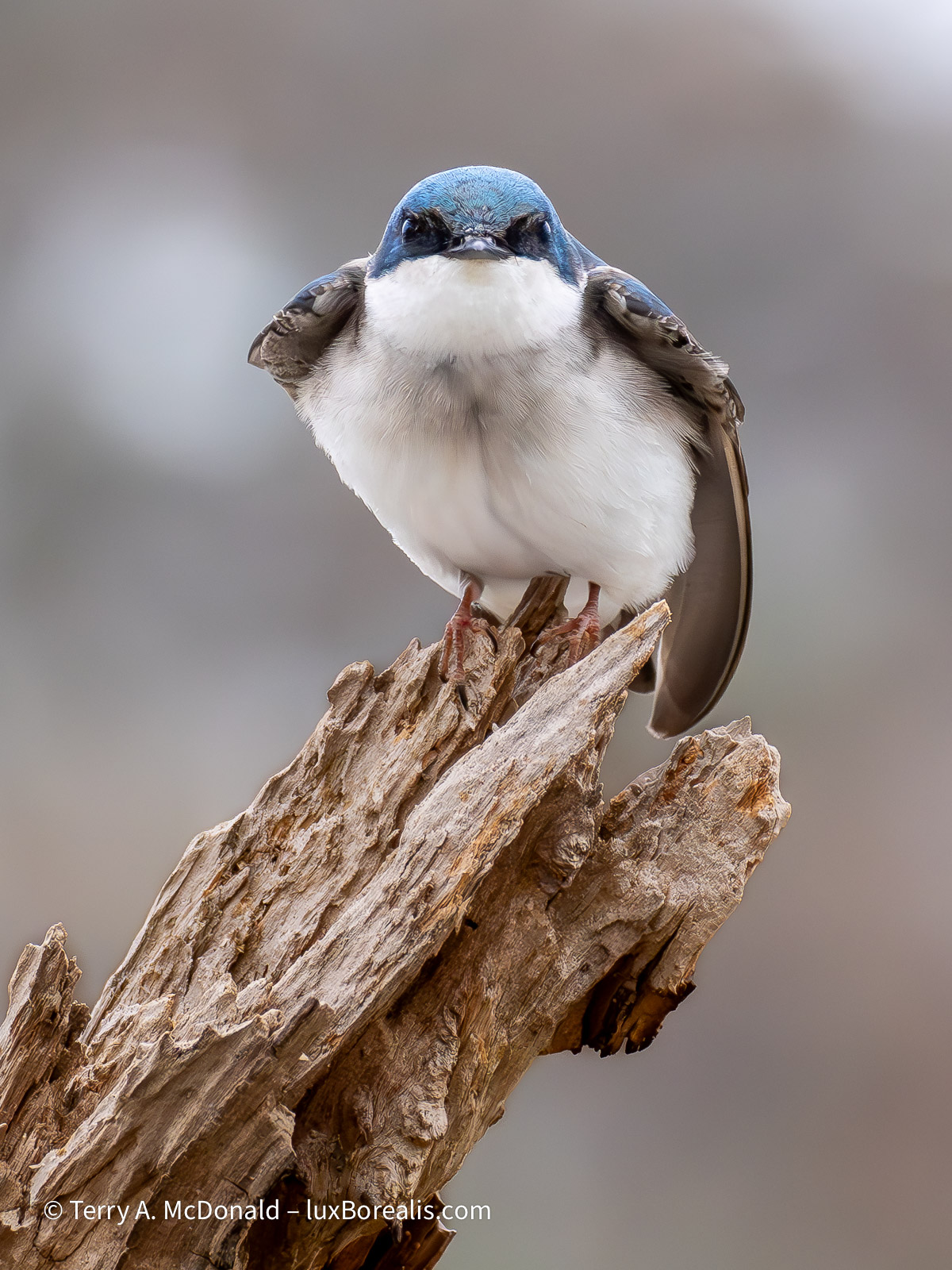
OM-1 w/100-400 at 236mm (472mm efov); ƒ8 @ 1/1000, ISO 3200; raw file processed in Lightroom.
The theory of ProCapture is brilliant; it’s my practice, or lack of it, that generates the frustration. I end up taking a gazillion frames which I must then wade through, checking the sharpness of each. I’m also very poor at throwing frames in the bin, which I’ve had to learn to do en masse. My biggest faux pas is forgetting ProCapture is set, then wondering why dozens of frames are being saved to my card. As I become more proficient with ProCapture, I’m sure these teething problems will diminish. ProCapture is a technique Tom has mastered, so if you want to see how it is really done or have any questions about it, I direct you to the various articles he’s written at SmallSensorPhotography.com.
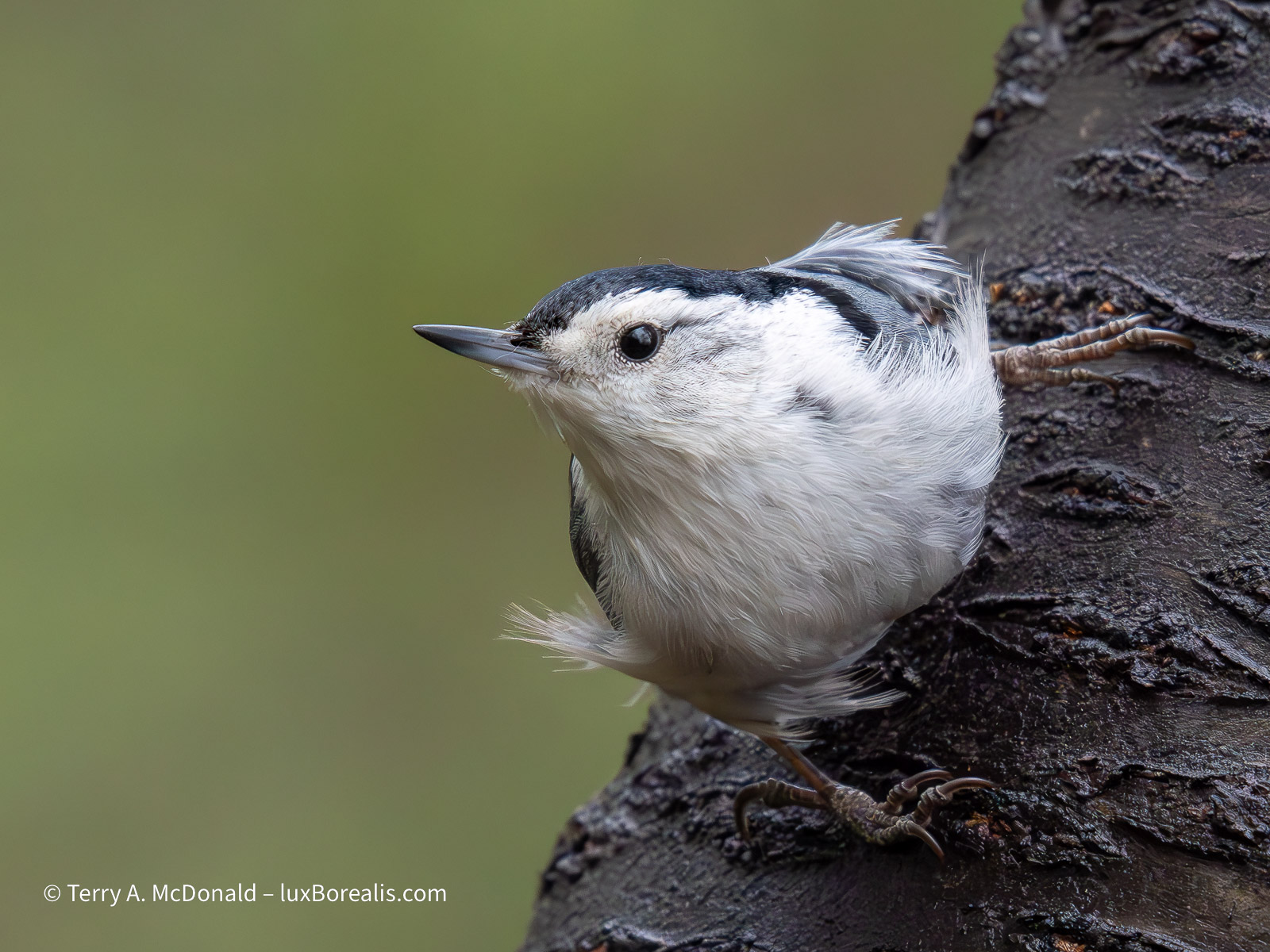
OM-1 w/ M.Zuiko ED 150-600mm ƒ5-6.3 IS at 500mm (1000mm efov); ƒ8 @ 1/1000, ISO 3200; raw file processed in Lightroom
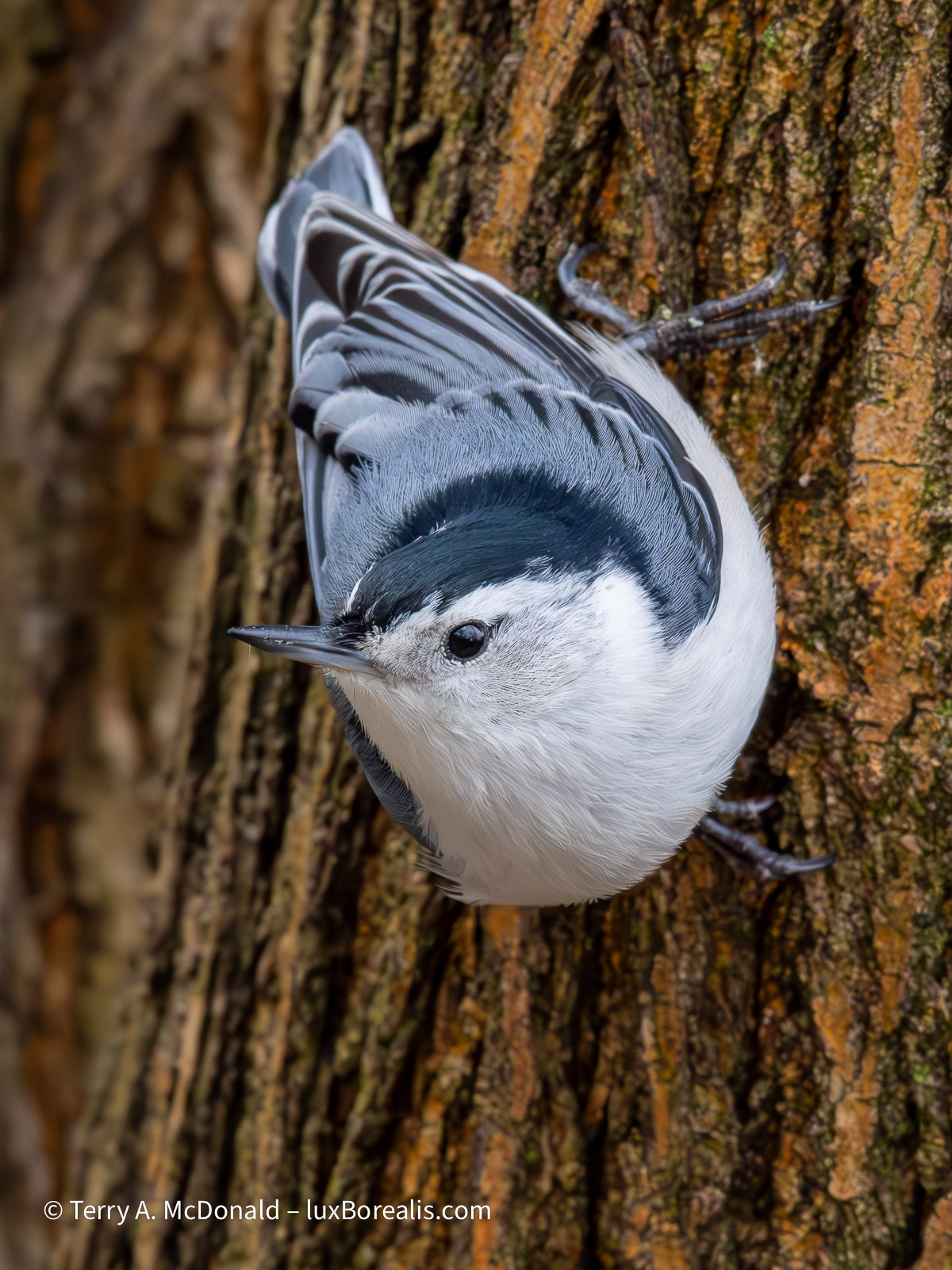
OM-1 w/ M.Zuiko ED 150-600mm ƒ5-6.3 IS at 240mm (4800mm efov); ƒ8 @ 1/1000, ISO 3200; raw file processed in Lightroom
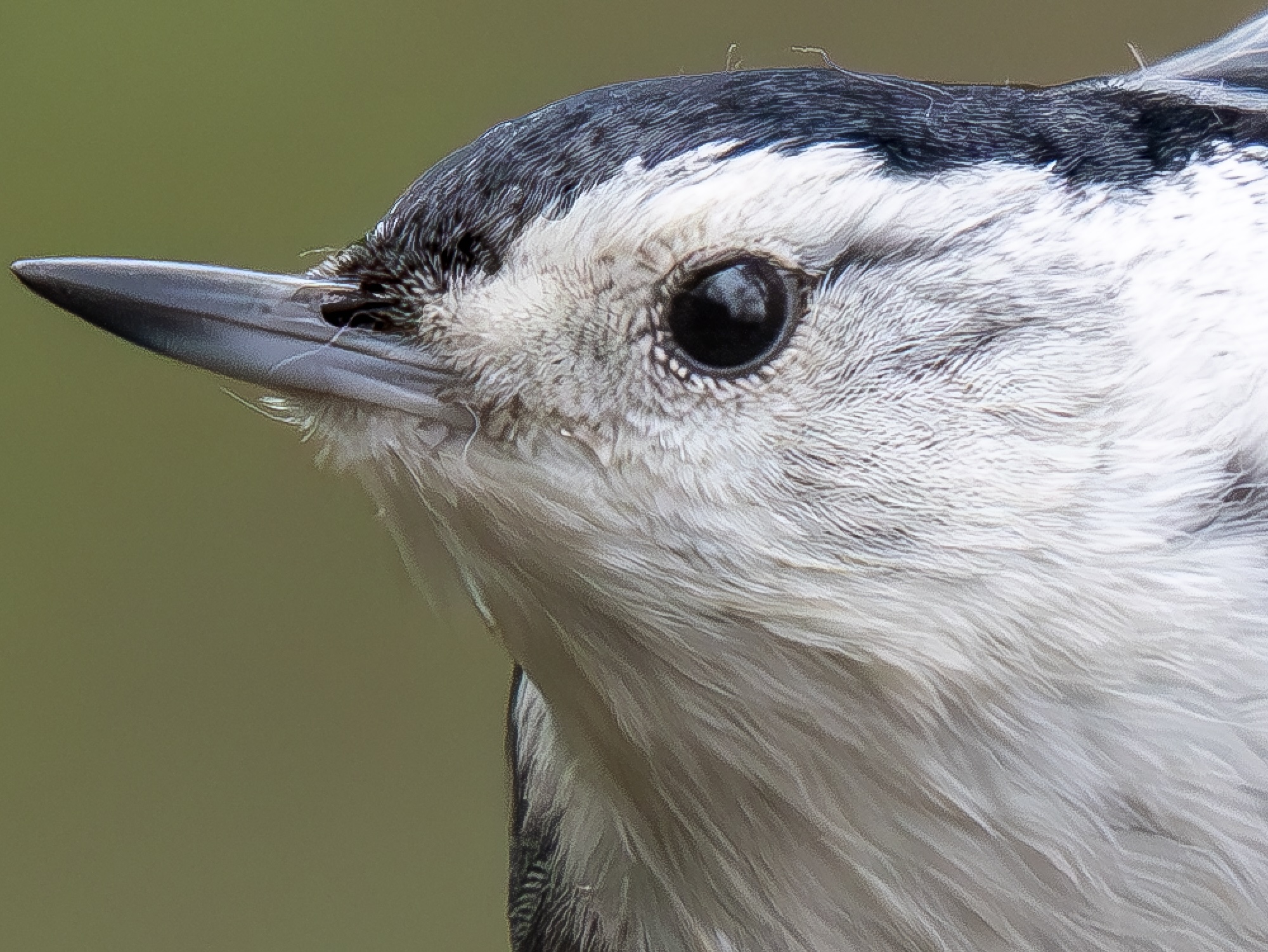
As far as the 150-600mm lens goes . . . I’ve been following the various online discussions around it and can now confidently say, what you read about the 150-600 simply being a re-branded Sigma lens is mostly hogwash. Yes, it’s made by Sigma, but to OM System’s specs. I noticed the additional weight right away, and though it is at the upper end of what I’m willing to carry around, it truly is an M.Zuiko lens through and through, given its excellent sharpness, its IPX1 water resistance and 5-axis IS that works with the camera’s own IBIS system for unparalleled stability.
The Wren below was photographed at 1/100th at 600mm (1200mm efov), which is unheard of. Tom has shots as low at 1/13. And the higher quality glass throughout means not only sharper photos, but snappy contrast as well. It is definitely a step up from my M.Zuiko 100-400mm. Having the extra reach of 600mm (more than adding a 1.4x teleconverter) at the same ƒ5-6.3 aperture, makes it a compelling lens, and is plenty fast enough with the OM’s excellent high ISO performance.
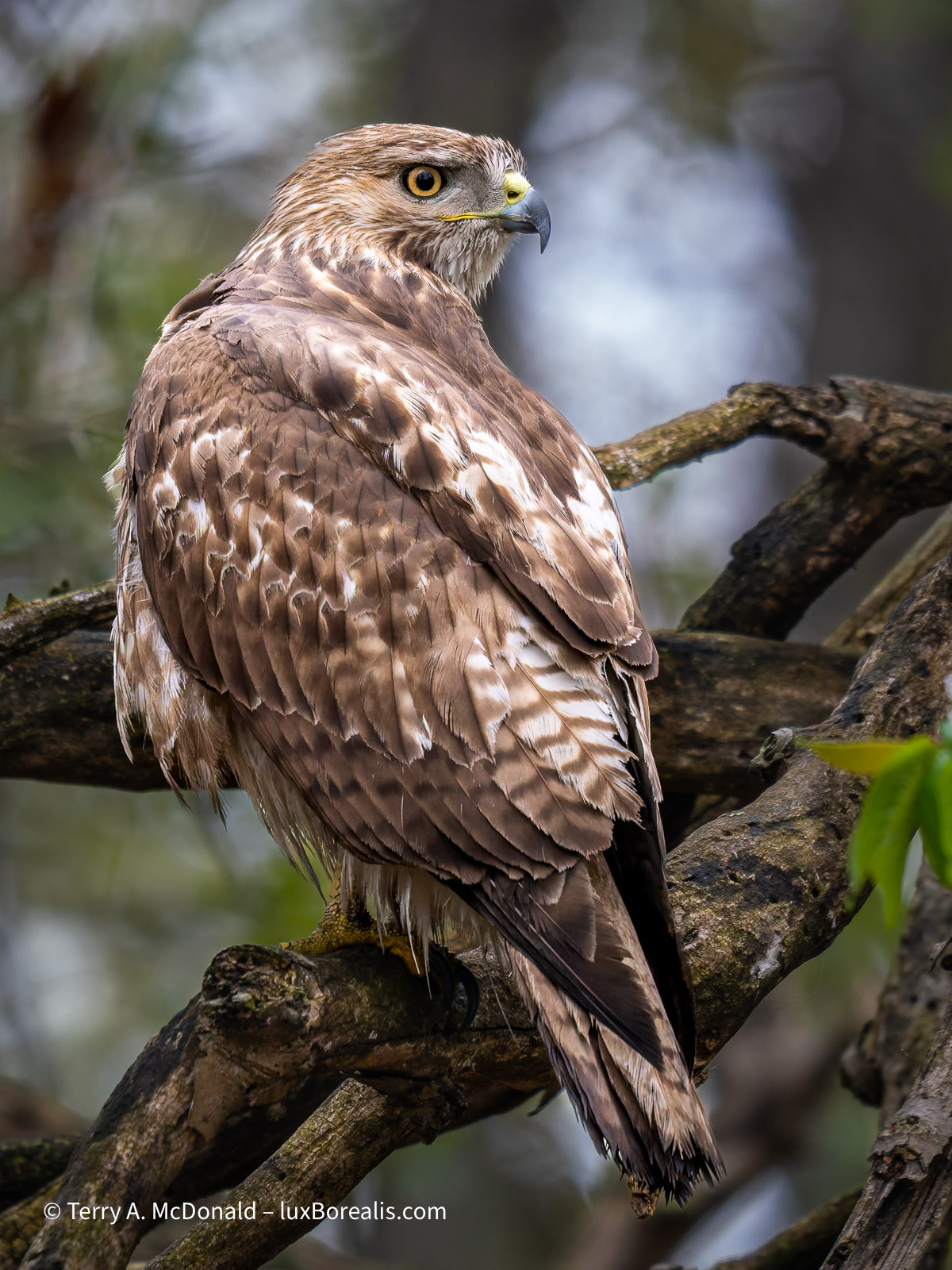
OM-1 w/150-600 at 473mm (946mm efov); ƒ8 @ 1/200, ISO 3200; raw file processed in Lightroom and DxO PureRAW
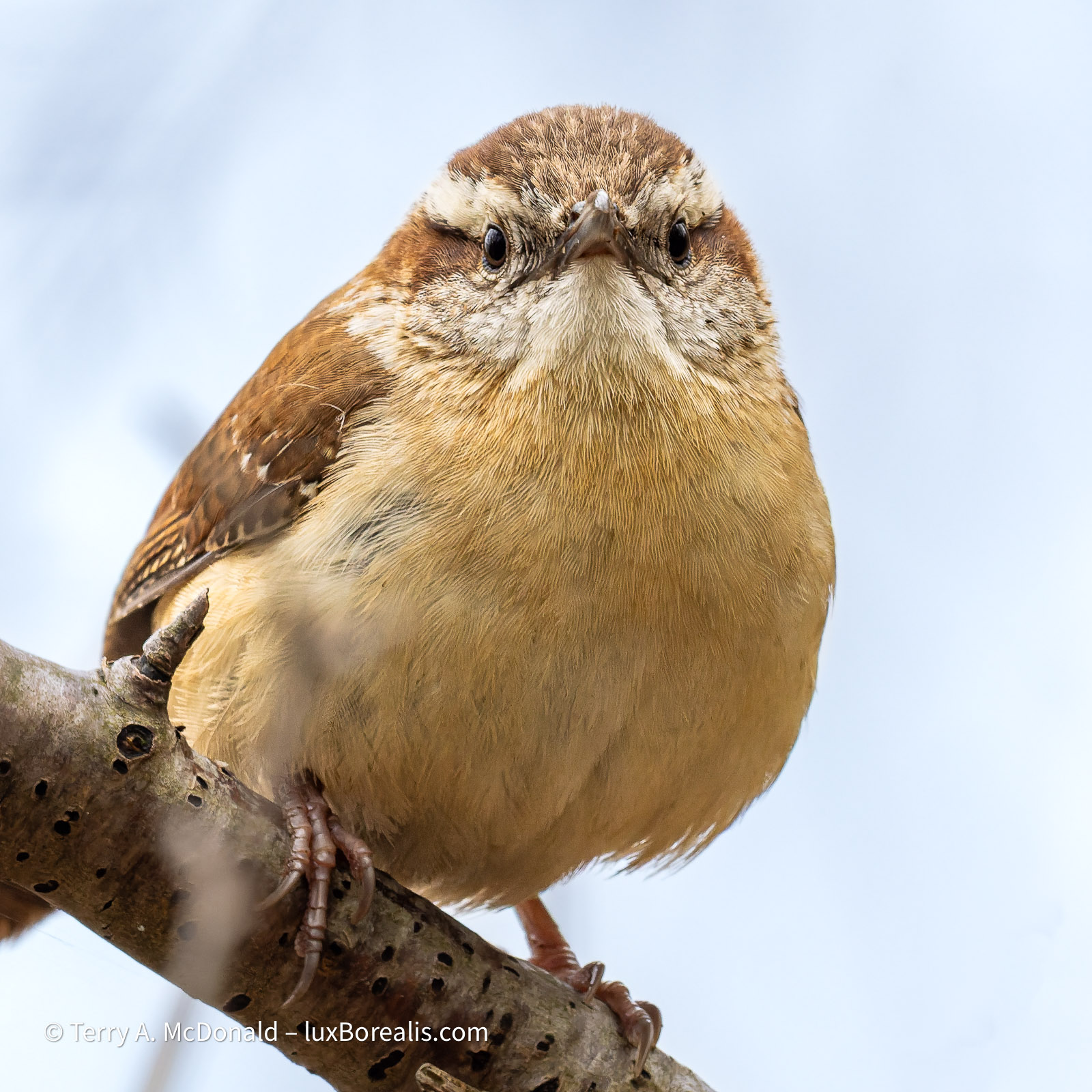
OM-1 w/150-600mm at 600mm (1200mm efov); ƒ11 @ 1/100, ISO 3200; raw file processed in Lightroom and DxO PureRAW
Ergonomically, the lens feels good in hand. It is solid and well-balanced. One very helpful feature is the push-pull zoom. While it has a rotating zoom collar, a switch on the side converts the lens to push-pull zooming, ideal for following birds and acquiring focus at lower magnifications, then zooming in to full magnification. The magnification level is high enough that this becomes the preferred shooting method, at least until one becomes more precise at raising the lens to the exact position of the bird—something which definitely requires practice.

OM-1 w/150-600 at 600mm (1200mm efov); ƒ8 @ 1/320, ISO 3200; raw file processed in Lightroom and DxOPureRAW.
To assist with the extra weight of the lens, Tom uses a Cotton Carrier Hyker Slingbag which integrates the Cotton Carrier slide holster for hands-free carrying. It also keeps the camera and lens ready-to-go. Without the Cotton Carrier, the lens itself has a strap and attachments which makes for much easier carrying than using an on-camera strap. Having now been bitten by the bug, it becomes difficult to argue against purchasing this lens, though the CAD $3600 price tag is nothing to sneeze at (currently on sale from OM System for CAD $2900 until 1 June 2025). I switched away from my Nikkor 200-500mm zoom specifically because it was a heavy lens—do I really want to be using a lens nearly that heavy again? Hmmm. Food for thought.
What are your thoughts? Do you have experience using ProCapture and/or the M.Zuiko 150-600mm zoom? Engage in the conversation by adding a COMMENT or a question below.
Discover more from luxBorealis Blog
Subscribe to get the latest posts sent to your email.
 luxBorealis Blog
Great insights on the M.Zuiko 150-600 mm – it sounds like a dream lens, though that price tag is definitely a hurdle! As a hobbyist, I’ve been weighing options like the Nikkor 200-500mm (or Sigma/Tamron alternatives) for better reach without breaking the bank. The weight trade-off is real, though – once you go lighter, it’s hard to go back! Do you feel the 150-600mm is noticeably sharper, or is the Nikkor still competitive (just heavier)? Always torn between gear lust and practicality!
HI Mike,
The 100-400 is easily as sharp as the Nikkor 200-500, and the 150-600 is sharper, not to mention the reach being much better—1200mm efov vs 750mm when I used the 200-500 on the D7200.
Another thought occurred to me: the OM-1 with both the 100-400 and the 150-600 is faster to focus and with the tracking, I get far more ‘keeper’ shots.
Thanks for breaking it down in a way that actually makes sense! The extra reach sounds like a total game-changer – especially for someone like me who’s still learning. Really appreciate you sharing your experience! 😊
Excellent investigation into the new big lens and bird photography, thanks Terry and Tom.
I have been using the 150-600mm for over 4 months with the MC14 almost permanently attached on an OM1 Mk1and on a monopod. (Tried the MC20 and concluded it was a step too far. Any ideas welcome on this….?)
Mainly used for bird ID and recording of rarities due to its exceptional reach…
Pro-capture is now indispensable for species and race ID:
http://tomwhileybirdart.blogspot.com/2025/05/20250523-common-stonechat-ne-norfolk.html
Very impressed with your bird shots especially handheld as the lens is not light.
Even with it on a monopod and using the shoulder strap every day it has taken about 2 months for my upper body muscles to stop aching. It is a valid concern Terry, say compared with the previous 300mm and MC20 set up used….
Also impressed with your noise reduction techniques as ever as I do need to update my Elements software to the latest version or change program altogether… Topaz?!? Any advise welcome on this…
The lens is the ideal for birding as it totally negates the need to carry a scope and tripod due to its reach and stabilisation. Only a lightweight pair of Bins is required to locate your target…!
Hi Tom,
Thanks for your comments. Much appreciated. You’re insights are also helpful, especially for birders and those still considering the 150-600.
As far as noise reduction . . . I can heartily recommend both Topaz PhotoAI and DxO PhotoRAW. Both are excellent and I am starting to see, with the newer iterations, a step up from Lightroom Enhanced NR. The advantage to PhotoAI is that is also supports excellent up-scaling, which PureRAW does not.
Cheers,
Terry