New Lens! 9mm/1.7

Astrophotography, here I come!
For years, I was a prime lens kind of guy. But with the high optical and build quality of the OM System M.Zuiko lenses, their zooms especially, I was thrilled to be able to collapse my lenses down to three zooms which cover every focal length from 8mm to 400mm (16mm to 800mm in full-frame equivalents): the 8-25mm/4 PRO, the 12-100mm/4 PRO and the 100-400mm/5-6.3 IS. I added the 60mm Macro as a specialty lens, much as I’ve just done by purchasing the 9mm/1.7 prime lens.
ƒ4 has never slowed me down. Certainly the OM system zooms are sharp wide-open, something I did not experience with my Nikkor zooms. Shooting in low light situations of dim cathedrals and at the edge of light out in the field, I’ve always found that the OM’s IBIS covers slow shutter speeds and, when needed, I could bump the ISO. Any noise issues are effectively eliminated with Lightroom’s Enhanced Noise Reduction (see my review of the various Raw File Optimization treatments from earlier this year). So why a faster lens?
From what I’ve read and through my earlier attempts at Astrophotography, I’ve learned ƒ4 just doesn’t cut it.
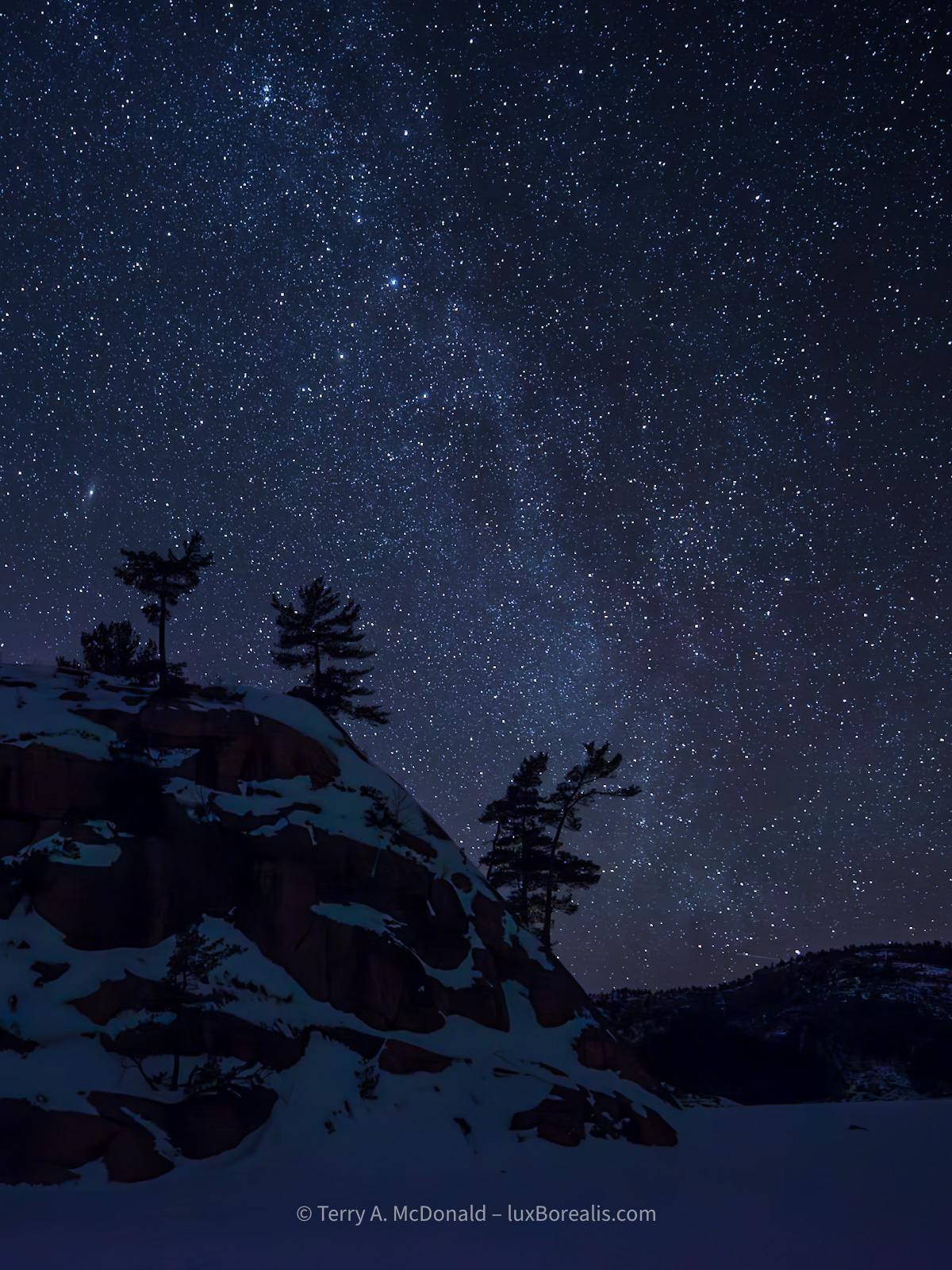
Nikon D800E w/ 18-35mm at 18mm; ƒ4 @ 15 seconds; ISO 3200.
Astrophotography Backgrounder
Last month I attended an excellent webinar sponsored by OM Systems (the YouTube is available HERE). While much of it dealt with winter photography, photographer Peter Baumgarten also discussed astrophotography. As it turns out, the Milky Way begins to be visible in the southern Ontario night sky in late February and stays around right through the summer.
I have a lot of respect for Peter. He is a dynamic and very creative photographer, recognized as an Olympus Visionary/Ambassador. OM System includes his instructions for astrophotography in an online article, Astrophotography 101. I plan on having it up on my phone as I venture into this new realm of seeing. For added inspiration, I recommend visiting Peter’s website at CreativeIslandPhoto.com. You should also check out Landsby’s Guide To Stargazing & Aurora Viewing In Ontario and the Ontario Parks Blog. Ontario has a few ‘Dark Sky’ areas that will provide the best viewing conditions. The RASC has a map showing dark sky preserves across Canada and there’s also DarkSiteFinder.com (who just reminded me of the Lunar Eclipse this month).
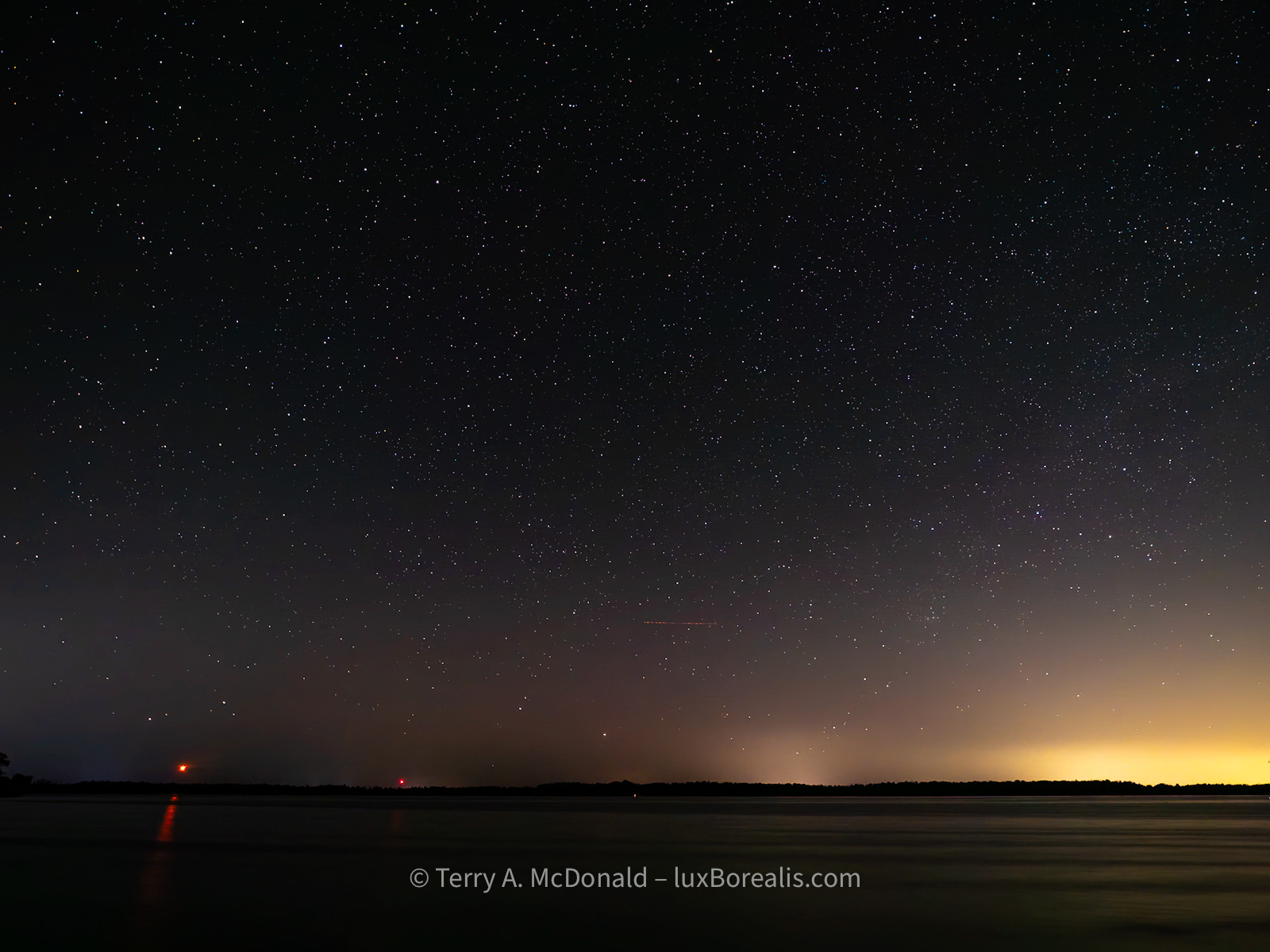
Olympus OM-1 w/ M.Zuiko 8-25mm PRO at 8mm (16mm efov); ƒ4 @ 20 seconds, ISO 400
How did I decide on the 9mm Summilux?
It was helpful that DPReview did some of the leg-work for me. In a 2023 article, they compared four top ultra-wide primes for M43 that fit the niche for astrophotography:
- Laowa 7.5mm F2;
- Meike 8mm F2.8;
- Panasonic Leica DG Summilux 9mm F1.7 ASPH; and the
- Samyang 10mm F2.8 ED AS NCS CS.
Although the P-L 9mm is the most expensive of the four, (tied with the Laowa), it is also head-and-shoulders above the rest in image quality AND it has autofocus. ‘So?’ you ask. ‘What’s the big deal about AF for stars? Do you need AF for astrophotography? Does it even work?’ Surprise! OM camera bodies have this wonderful feature called StarrySky AF!! Have you ever tried focussing on stars? With StarrySkyAF, there is no more guess-work or peering through magnified viewfinders to nail down focus. It’s a great feature!
Additional reading from Amateur Photographer and Photography Life as well as some M43 forum discussions helped to validate my decision, so I ordered the lens.
First Impressions of the P-L 9mm/1.7
I was thrilled that Camera Canada had the lens in stock and was able to ship it at no extra charge, with next day delivery. Talk about service! I have had nothing but excellent service from Camera Canada and can highly recommend them. They are based in London, Ontario, with their two ‘bricks-and-mortar’ locations operating as Forest City Image Centre. It’s the best of all worlds: Canadian-owned small business with online convenience, great pricing, and excellent service.
However, upon opening the box and holding the lens, I must admit to feeling a little underwhelmed, even disappointed, by the feel of the lens itself. Next to my OM System M.Zuiko lenses, the Panasonic-Leica seemed, umm, in a word, cheap—not inexpensive cheap but with a cheap feel to it. In all fairness, nothing rattled, and the focus ring is smooth; it also attached to the camera snugly—all good things. The lens is also a diminutive, which I appreciate, and the poly-carbonate lens body is certainly feather-light. But the lens does not exude the solid build quality, the ‘heft’ and feel of my OM System lenses. Even the plastic used in the lens hood doesn’t feel as robust as the lens hoods of my M.Zuikos. To look at it, and pick it up and feel it, the 9mm is clearly Leica in name only. But, perhaps I’m not being fair; it may well be Leica-quality in optics, which is the most important thing, but that remains to be tested.
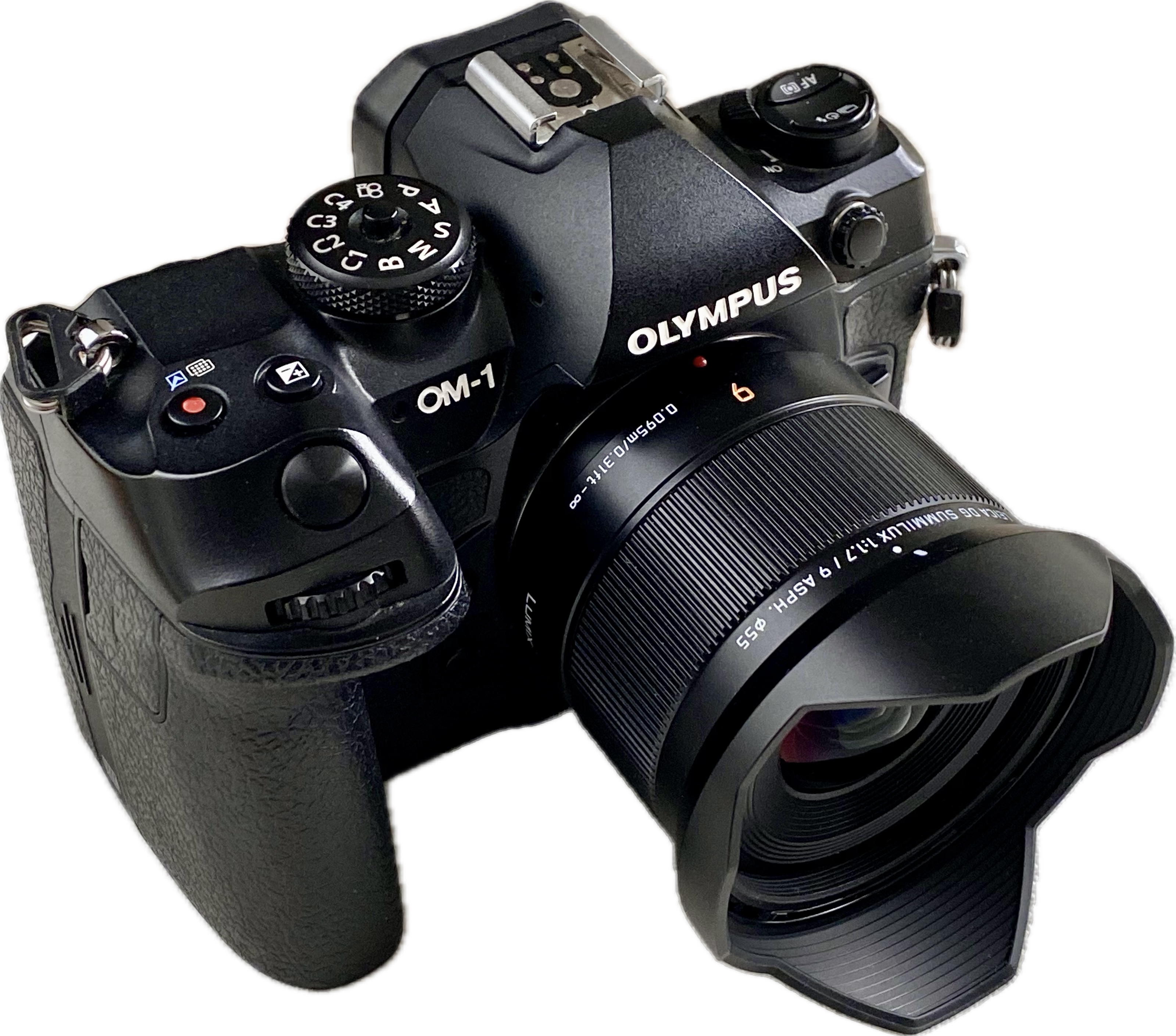
So why didn’t I purchase the OM System M.Zuiko equivalent? Simple. There isn’t one. And worse, it’s not on their Lens Road Map. Why? Why? Why? OM Systems makes superlative, industry-leading, sharp, fast primes—why not at 9mm or 10mm?? Both 18mm and 20mm are such common focal lengths amongst the serious FF crowd. I loved my Nikkor 20mm/2. But, M.Zuiko primes skip right over from the 8mm/1.8 PRO Fisheye to the 12mm/2. Both are excellent lenses, but I didn’t want a fish-eye and 12mm is too narrow for the kind of coverage I wanted for astrophotography. OM System does offer the excellent M.Zuiko 7-14mm/2.8 PRO zoom, but it is big, it’s bulky, and it overlaps my existing and more useful zoom range of 8-25mm. And, at $1550, the 7-14mm it is also beyond my means.
So, the 9mm it is and the proof, they say, is in the pudding. Bring on the clear nights! 3am alarm here I come!
Thanks for reading! If you have any questions, comments, or discussion about M.Zuiko lenses, the OM-1 or the Panasonic-Leica 9mm/1.7, be sure to add a comment.
This work is copyright ©2025 Terry A. McDonald
and may not be reproduced in whole or in part without the written consent of the author.
Please SHARE this with other photographers or with your camera club, and consider subscribing to receive an email notice of new blogs.
Have a look at my work by visiting www.luxBorealis.com and consider booking a presentation or workshop for your Nature or Photo Club or a personal Field & Screen workshop at Workshops.
Discover more from luxBorealis Blog
Subscribe to get the latest posts sent to your email.
 luxBorealis Blog
Trackbacks