Wildlife and Bird Photography—On Safari in Tanzania, Part 2 – Tarangire National Park
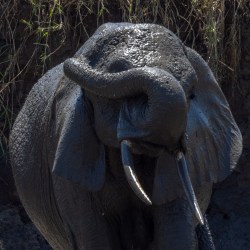
This is Part 2 of a series of posts on our Tanzania trip. Here are links to Part 1 in Arusha National Park (opens in a new tab).
While Arusha National Park is known for its views of Kili, Tarangire is nothing short of quintessential Africa.
It’s the Tarangire River that draws in the wildlife. This is especially true in these dry season months of September to November, when water becomes more and more scare. It’s a gently rolling patchwork of grasses, brown from lack of rain, and still-green acacias dotting the landscape. Baobabs, bare-branched with new flowers and leaves just opening contrast with the leafy-green sausage trees that line river banks, their wares hanging down like a traditional delicatessen.

Olympus/OM System OM-1 w/ M.Zuiko w/ M.Zuiko Digital ED 12-100mm IS PRO @ 12mm (24mm efov); ƒ8 @ 1/400, ISO 800, Hand-held High Res; processed in Lightroom
—❦—
Technical note about the photos: Unless otherwise noted, all photos were made with an Olympus/OM System OM-1 with an M.Zuiko Digital ED 100-400/5.0-6.3 IS zoom. Raw files were processed in Lightroom for iPad during the trip with subsequent processing afterwards, as well. Any alterations from this are stated in the captions.
Viewing photos: Click on a photo to view a larger version. Use the back button to return to the blog. The size of each photo is limited to 1500 pixels on the long size. If it appears full-screen, then your device may be up-sizing it, which can lead to blurriness.
—❦—
Strolling through the grasses and amongst the trees are a host of Africa’s finest wildlife: elephants, giraffes, Cape buffalo, waterbuck, impalas, antelope, zebras, wildebeest, dik-diks, and eland amongst others—always with lions, cheetah, leopards and jackals awaiting their opportunity partake of the buffet. Soaring overhead are kettles of vultures, auger buzzards, tawny eagles, fish eagles, martial eagles and snowy-white black-winged kites.

400mm (800mm efov); ƒ11 @ 1/400, ISO 1600
These ’cute little guys’ were all around the lodge area, drinking from the water dishes kept full by the lodge staff. Dik-diks are the smallest antelopes, only about 35cm at the shoulder or the size of a dog and are usually quite skitterish.
We stayed in the park at Tarangire Safari Lodge, a relaxed, casual tented camp with safari tents arranged along the top of a ridge overlooking the Tarangire River valley. We’ve been fortunate to travel to many truly beautiful locations around the world, but this is, above all, our favourite. It’s a chill place in the heart of wild Africa. The Simonsons have been running the lodge since the mid-1980s and Annette, her son Brendan and their staff are wonderful stewards of this quintessential corner of Africa, balancing the needs of their guests with the fact that wildlife regularly roams through the lodge grounds (and sometimes the lodge, itself—check out their Insta and FB pages!)
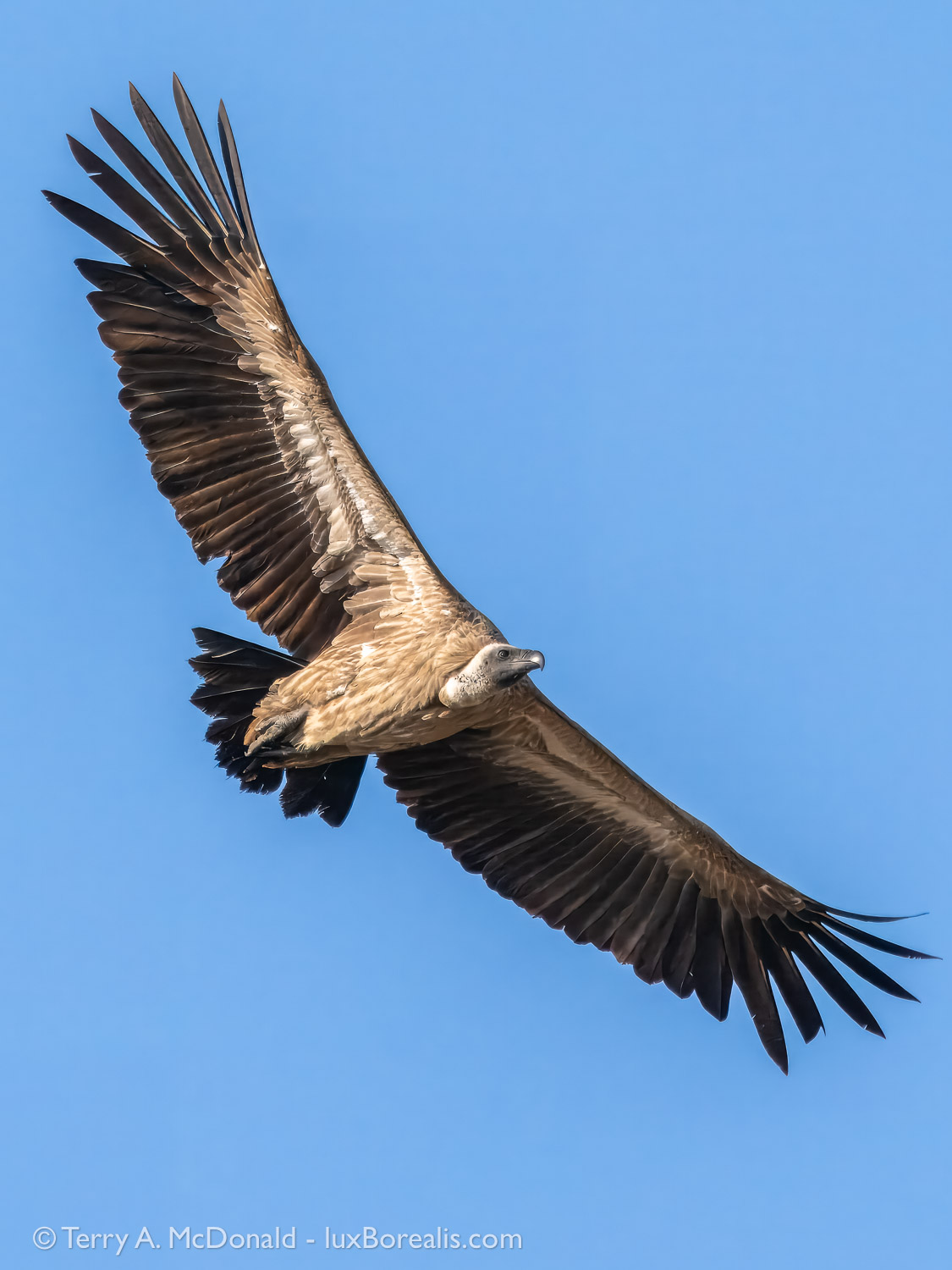
(Gryps africanus)
400mm (800mm efov);
ƒ8 @ 1/5000; ISO 1600; Lightroom + PhotoAI

(Xerus rutilus)
400mm (800mm efov);
ƒ8 @ 1/400; ISO 400

(Poicephalus rufiventris)
400mm (800 efov);
ƒ11 @ 1/800, ISO 1600
Why ‘red’ when it’s ‘orange’? The word ‘orange’ hadn’t been invented when this bird was named!!
But, it’s the captivating and engaging view that really makes TSL such a favourite place to stay. You could choose not to go on a wildlife drive and still see everything! We’ve sat for hours on the terrace or, during the heat of the day in the open-air lounge, enjoying the unobstructed 270° view—a living diorama of herds of elephants and zebras and waterbuck and giraffe and Cape buffalo and- and- and—casually and continuously moving down the valley slopes to the river, into and across the river, then up the other side.

100mm (200mm efov); ƒ8 @ 1/400; ISO 200
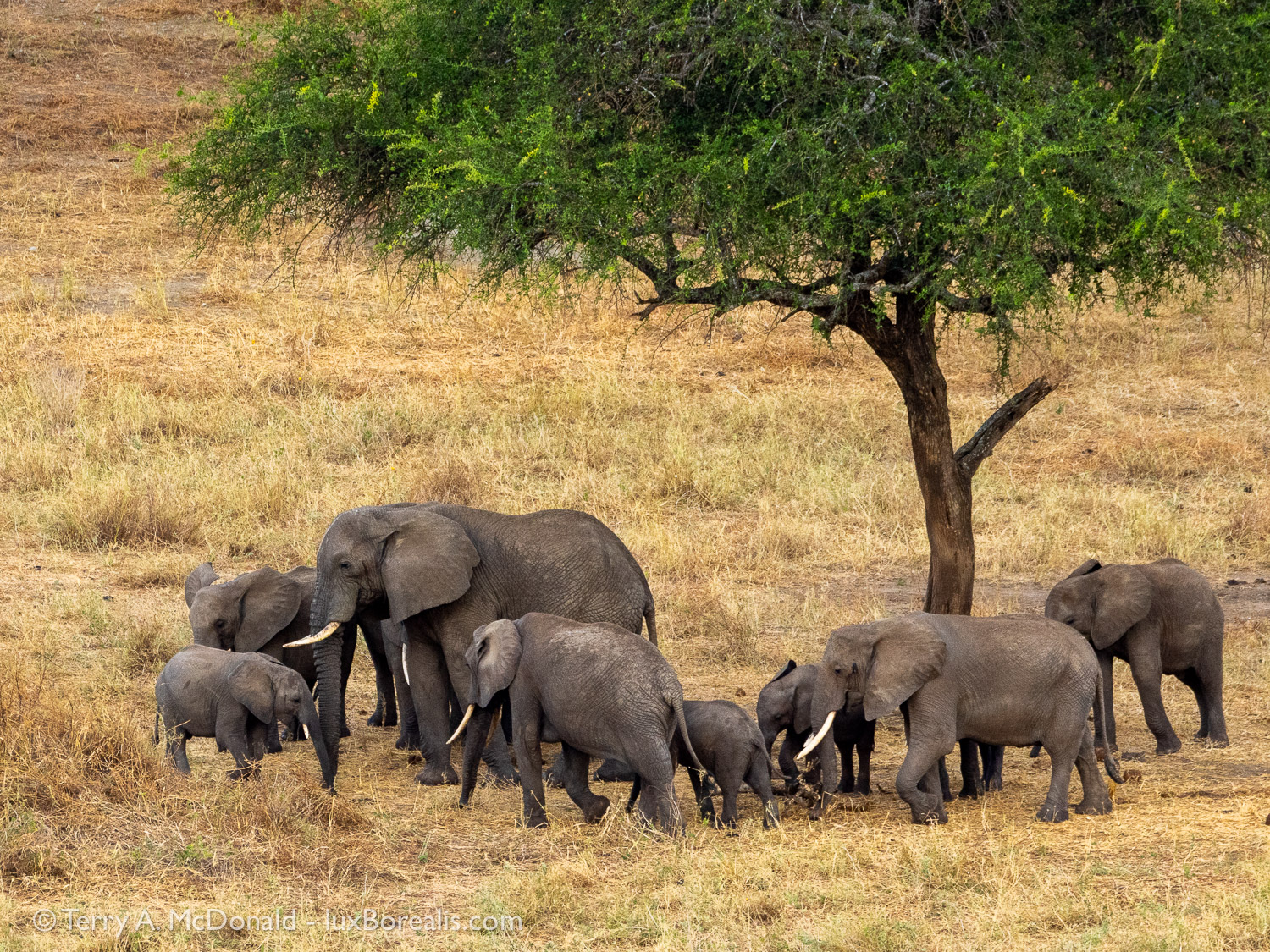
314mm (628mm efov); ƒ8 @ 1/320, ISO 800
While reading a book or editing images, a sudden movement down in the valley catches our eye: a young elephant is running, scampering in its trunk-flopping, comical way, towards the water and play time. Just as Arusha National Park is known for its giraffe (Giraffic Park), Tarangire is known for its elephants, though Pachyderm Park, doesn’t have quite the same cachet. The real excitement comes when someone announces that there are elephants on the lodge grounds.
Elephants regularly pass along the back of the tents, browsing on the acacias and sometimes trying to access the water. In fact, we watched as they turned on faucets with their trunks to access water. More on that in Part 3!
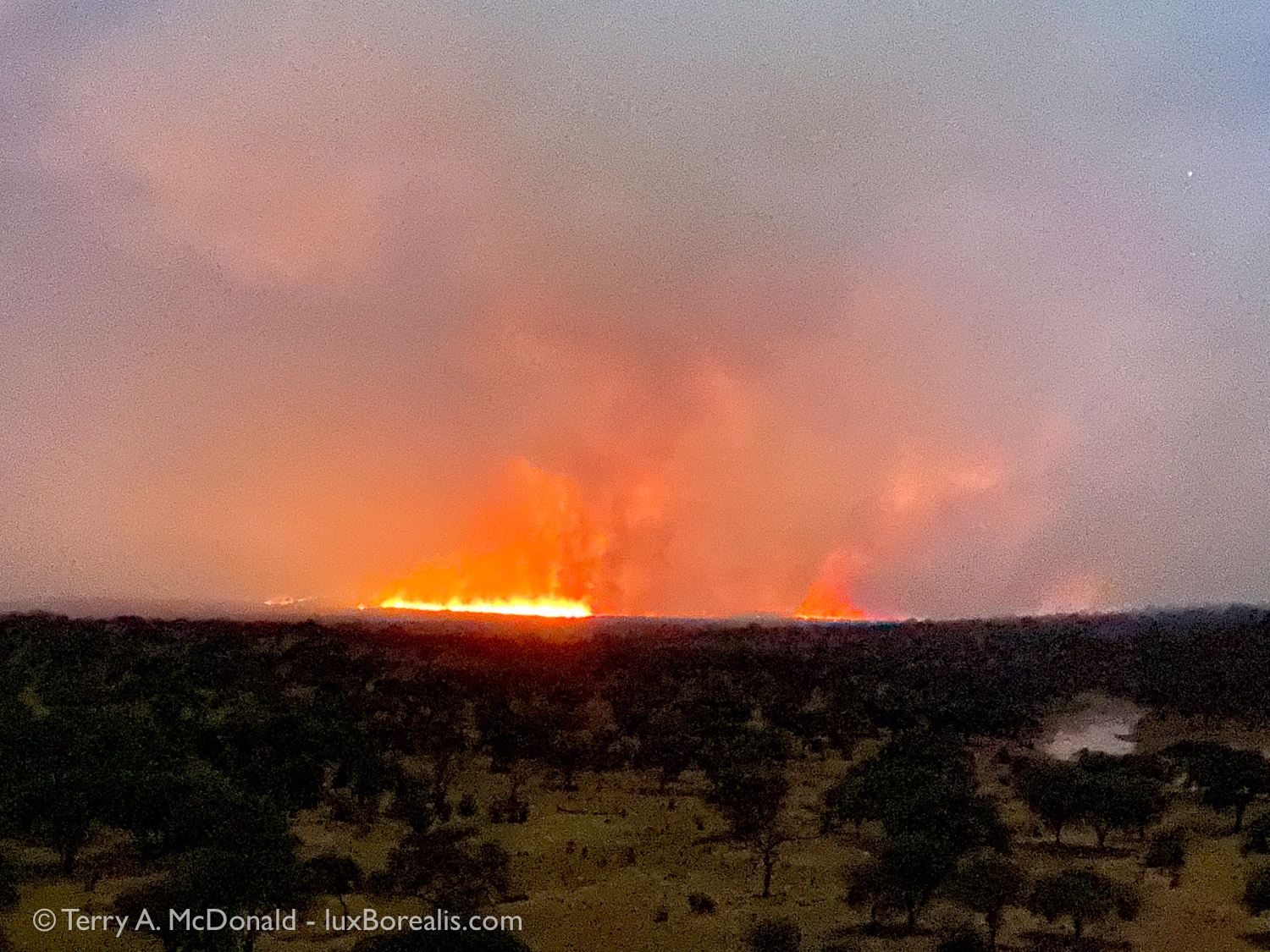
iPhone 11 Pro, 2x camera
One of the realities of Africa is that famers still use fire to burn crop residues to fertilise the next crop. This fire got out of control and entered the park, burning grasses but not trees, contributing significant air pollution and tiny black cinders of burnt grass that covered everything. The subsequent bonus was that it drove the antelopes, zebras and wildebeest northwards, followed by lions, of course.
One other advantage of being at the lodge is Brenden—the guy in charge. In his young thirties, he has literally grown up there. After his dad passed a few years ago, Brenden stepped in to keep things running with his mom, Annette. Brenden is a knowledgeable birder and accomplished photographer (see @brenden_simonson on Insta) and offers bird hikes from the lodge. Walking through the bush with an armed ranger is an adventure not to be missed. Because Brenden is there all the time, he knows exactly what birds can be found where.
Furthermore, Brenden has put a few large agricultural disks as bird baths out in various places around the lodge and has instructed the staff to keep them clean and filled with water. This alone is all the birds need to congregate around the site. The one outside the dining room provides endless entertainment with parrots and go-away birds competing for time at the bath. The one he’s placed down at the far end also attracts wildlife. We were woken up late on night by the loud sound of lapping, like a dog drinking from its dish. Under the light of the full moon, I kid you not, there was a full-grown leopard, 3-metres from our tent drinking its fill. The next night it returned. The night after that four water buck drank the disk dry. Phenomenal!! If only I could shoot through the mesh of the tent netting.

400mm (800mm efov); ƒ11 @ 1/60, ISO 3200
Despite its nondescript colouring, this bird is, hands down, the most interesting animal in Africa. Look at its scientific name. Now, look at its common name. This bird has formed a symbiotic relationship with humans—one of only a few animals to do so—classic mutualism. It finds nesting bees, uses a specific call to signal to traditional foragers like the Hadza people of Tanzania, then guides them to the bees where the Hadzabe enjoy the honey and the honeyguide enjoys the eggs, larvae and beeswax. This may also be the only example of co-evolution between an animal species and humans, that doesn’t involve domestication. Truly fascinating!! I was thrilled to see one and photograph it.

(Uraeginthus bengalus)
400mm (800mm efov):
ƒ8 @ 1/320; ISO 400
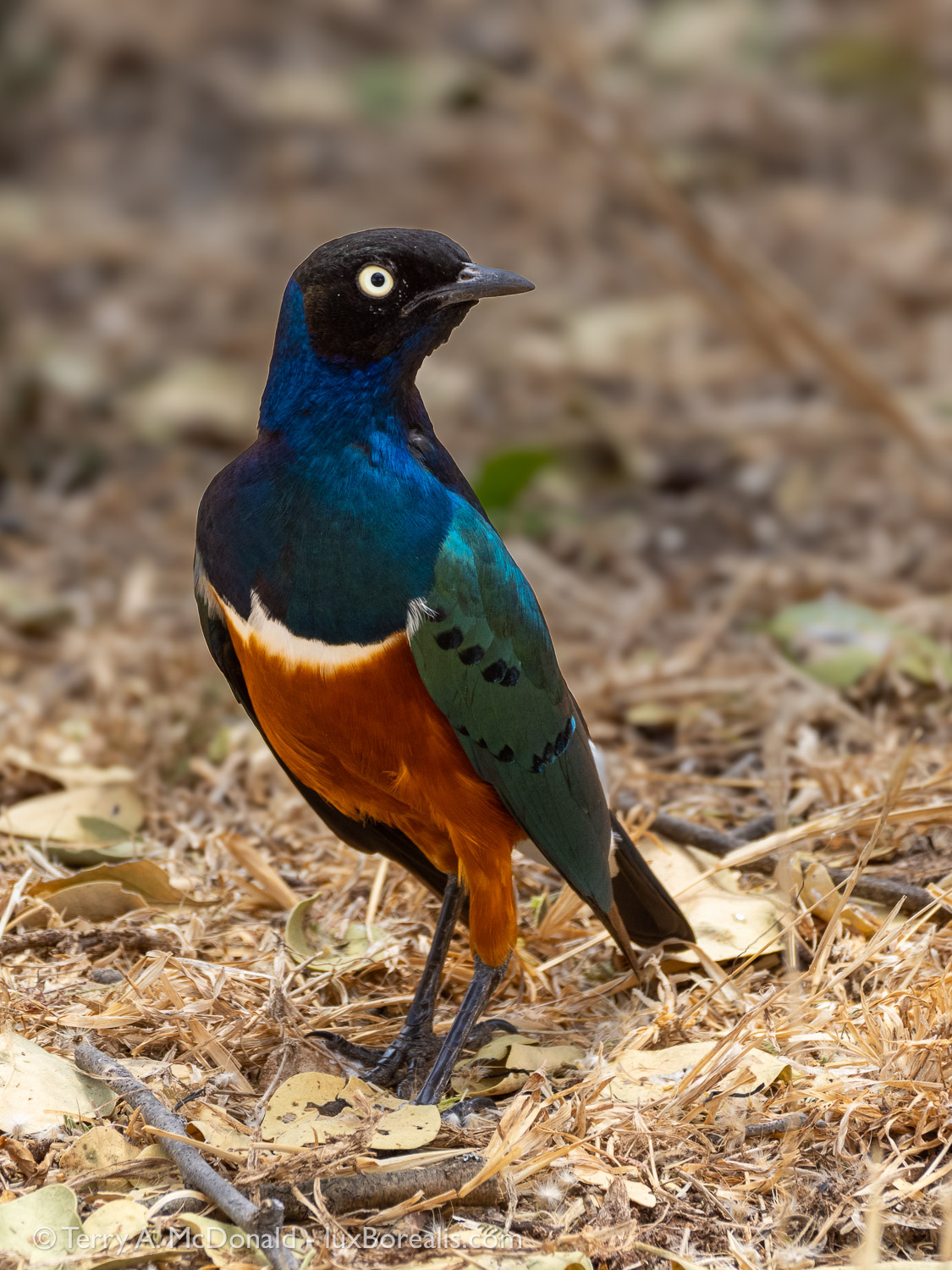
(Lamprotornis superbus)
276mm (552mm efov);
ƒ/8 @ 1/200, ISO 400

(Terpsiphone viridis)
400mm (800 efov);
ƒ8 @ 1/640, ISO 1600

(Glaucidium perlatum)
400mm (800mm efov);
ƒ8 @ 1/1000; ISO 1600

400mm (800mm efov); ƒ8 @ 1/800; ISO 1600
After this adult followed its yoiung into the nest—a hole in a baobab tree—I waited. Within a few minutes I could see it stirring near the entrance, then out it flew!
Okay—enough about the lodge, though I could wax on about it forever.
Just like Arusha National Park, Tarangire is full of surprises. However, once you get to know the park, you learn where to look, and the river is biggest draw. After crossing the bridge about 1km south of the lodge, we headed south taking each of the River Loops A, B and C. Where loop B meets the river there is an elephant mud hole. They’re not there everyday, but if the timing is right, like it was for us, you are treated to the happiest, most joyous hour of watching elephants of all ages flipping and flopping in the mud and splashing and spraying themselves with mud and water. Pictures and words don’t begin to describe the experience of pure fun and joy the elephants are having, trumpeting and calling to each other. Even my poor attempt at a 10-minute video doesn’t do it justice.
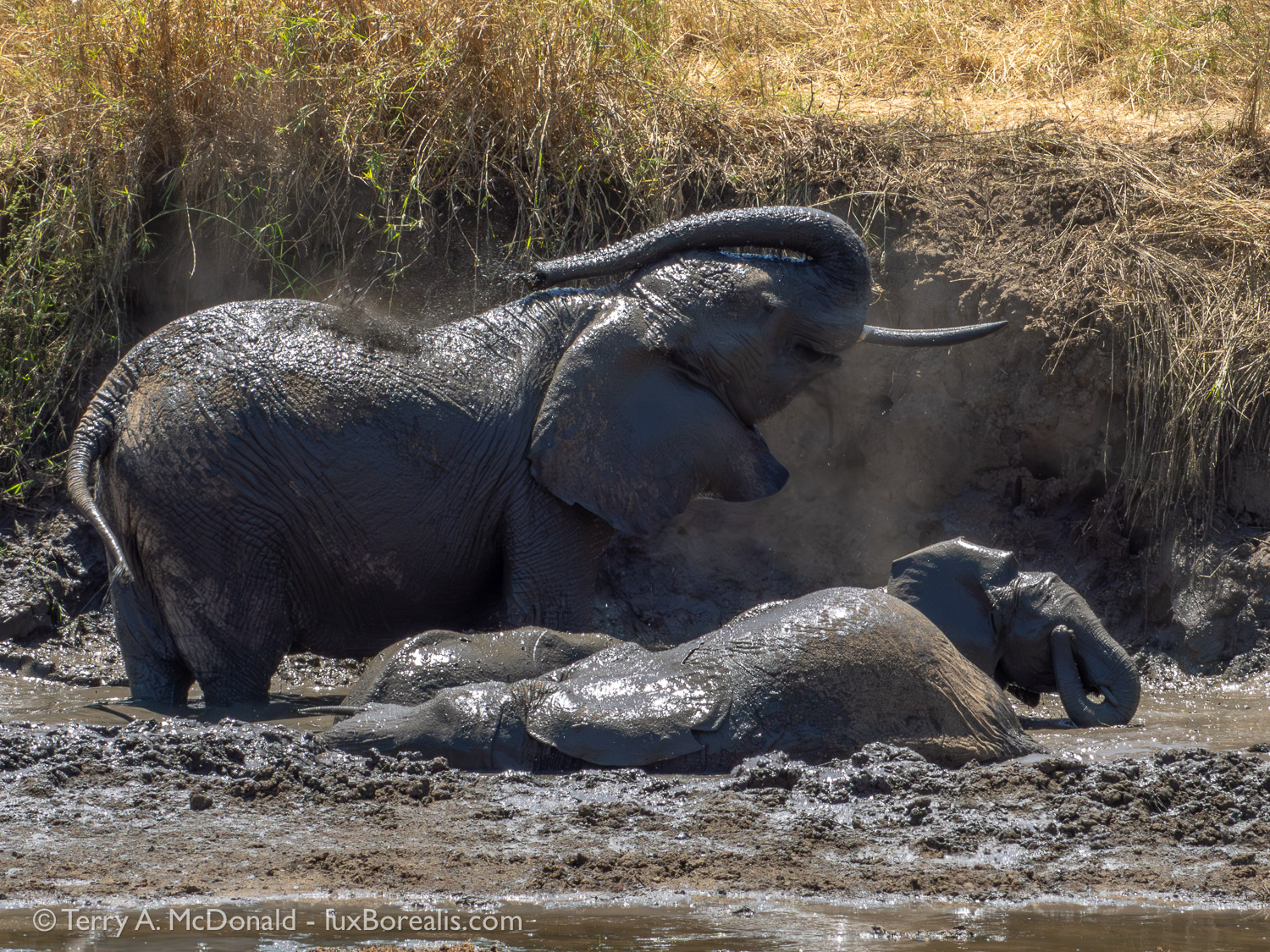
138mm (276mm efov); ƒ16 @ 1/400, ISO 800
First one family arrived—the youngest literally running towards the mud—then a second family followed. They waited patiently for at least half an hour while the first elephants wallowed and splashed and sprayed and dusted themselves and scratched their sides and bums against a very large boulder. After their time at the spa, the second family did the very same.


Further down, in Loop C, we forded the river, passable during the dry season as the water is only axle-deep. After crossing we could have gone further south, down to the Silale Swamp, but decided to wind our way back to the lodge, slowly meandering north along the east side of the river. Earlier, we had spotted a number of safari trucks stopped in one location—a good indication of something interesting. Sure enough, there were six lions resting and sleeping on the sand beside the river.

269mm (538mm efov); ƒ11 @ 1/2000; ISO 1600
Right: 560mm (1120mm efov) w/ MC-14 teleconverter; ƒ11 @ 1/1600, ISO 1600
Oh to have the life of a lion. Sleep all day, periodically keeping an eye out for dinner, then attack, eat and sleep. If only it were that easy, say the lions!

We carried on up to the Matete Picnic Site high above the river, where we found resident and habituated Vervet monkeys with young. Years ago, long before the picnic site was formally developed into what it is now, we encountered mating lions, who just continued on doing their thing as we pulled up near them and watched and listened. Unforgettable really, in so many ways! This time, it was the intimate portraits of these monkeys and their young that made the stop so captivating.

(Chlorocebus pygerythrus)
L to R: 150mm 400mm, 138mm
ƒ/8; ISO 1600 and 800


Sometimes we approach this same road by turning south just before the bridge, driving down the east side of the river. This is often where elephants are tracking down to the river along with zebras and wildebeest. Lions are also around, frequenting the ridges and humps in the ground, keeping a watchful eye on what’s happening below. We’ve seen zebra kill along here on a few occasions.

(Giraffa camelopardalis) and Yellow-billed Oxpecker
(Buphagus africanus)
314mm (628mm efov);
ƒ11 @ 1/200; ISO 1600

(Struthio camelus)
400mm (800mm efov);
ƒ16 @ 1/800; ISO 1600

(Procavia capensis) in Baobab
400mm (800mm efov);
ƒ11 @ 1/160; ISO 800
A third favourite location is along the river to the north and west of the lodge. Though we didn’t get there this time, it proved to be a most exciting place when our daughter joined us two weeks later for our second safari to Tarangire. Because she is less interested in birds, Laura and I tried to pack as many birding moments into this safari as we could.
On another drive, we drifted north and eastwards then south to the open country in the hope of seeing a cheetah. No go, but it was still a worthwhile exploration, turning up a black-winged kite, beautiful lilac-breasted rollers, huge ground hornbills, some antelope, zebras, wildebeest, and eland. We also came across large areas burned by the bush fires. At one point, the road was heading directly into a bush fire, but we joined up with the main road which allowed us to head north again, back to the lodge.

(Connochaetes taurinus)
400mm (800mm efov);
ƒ8 @ 1/400, ISO 200

(Elanus caeruleus)
400mm (800mm efov);
ƒ8 @ 1/1000, ISO 200

(Coracias caudatus)
400mm (800mm efov);
ƒ8 @ 1/1250, ISO 400

400mm (800mm efov); ƒ8 @ 1/320, ISO 200
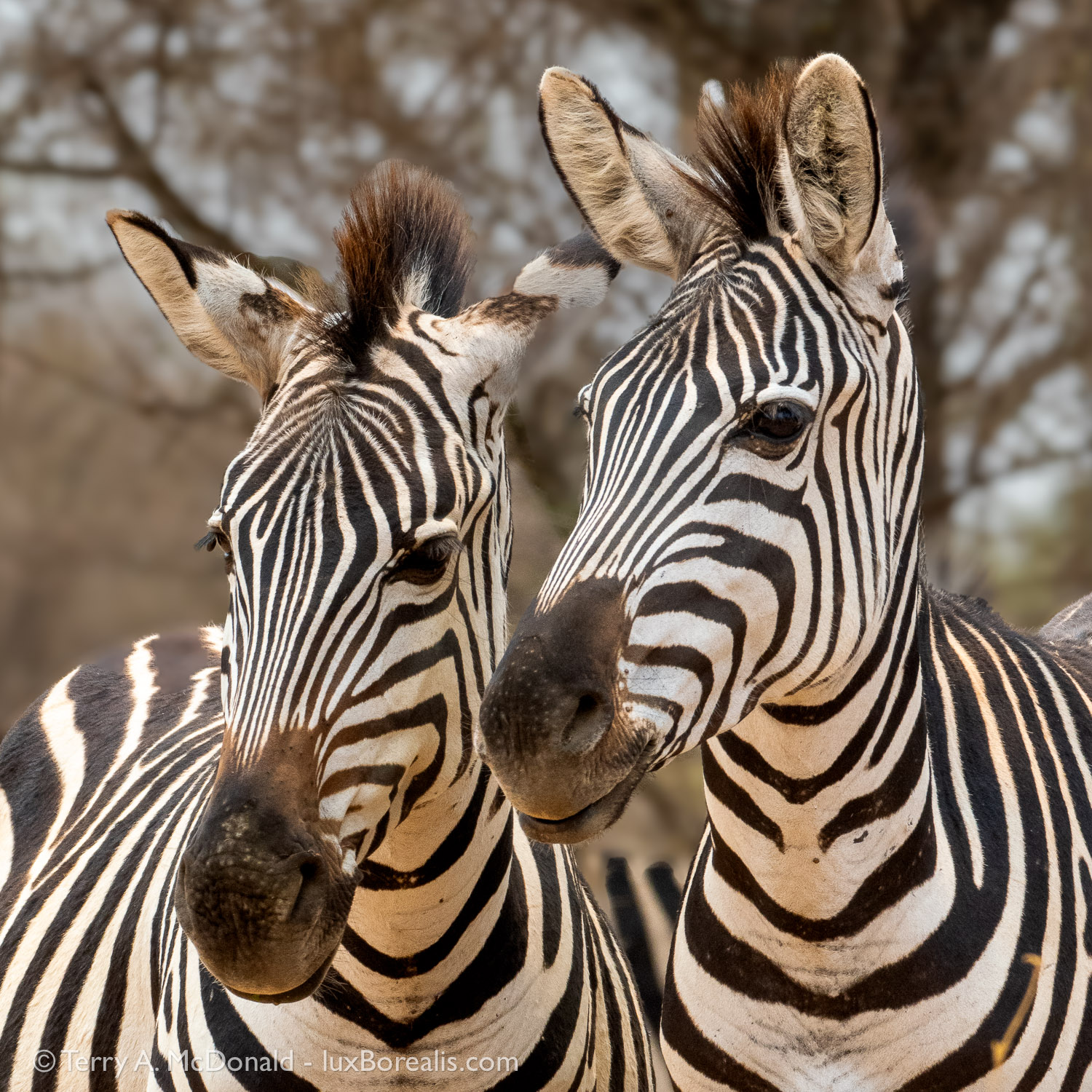
269mm (538mm efov); ƒ11 @ 1/500, ISO 1600
It is always with sad hearts that we leave Tarangire Safari Lodge and the National Park. There is nothing that can replace those few days of casual and exciting wildlife viewing combined with chilling on the terrace or in the lounge, never knowing what might suddenly appear, but always knowing there will be something amazing.
Stay tuned to Part 3: Close Encounters with Lions!
If you have any questions about safaris, gear, processing or the photos, add a comment below.
Please take a moment to share this post with other photographers or travellers, armchair or otherwise.
Also, consider signing up to receive an email notice of new blogs.
Subscribe below or scroll up to the top right.
Visit luxBorealis.com for more photos, to order fine art prints and ArtCards, book a Field & Screen workshop, or inquire about an evening PhotoTalk for your nature or camera club.

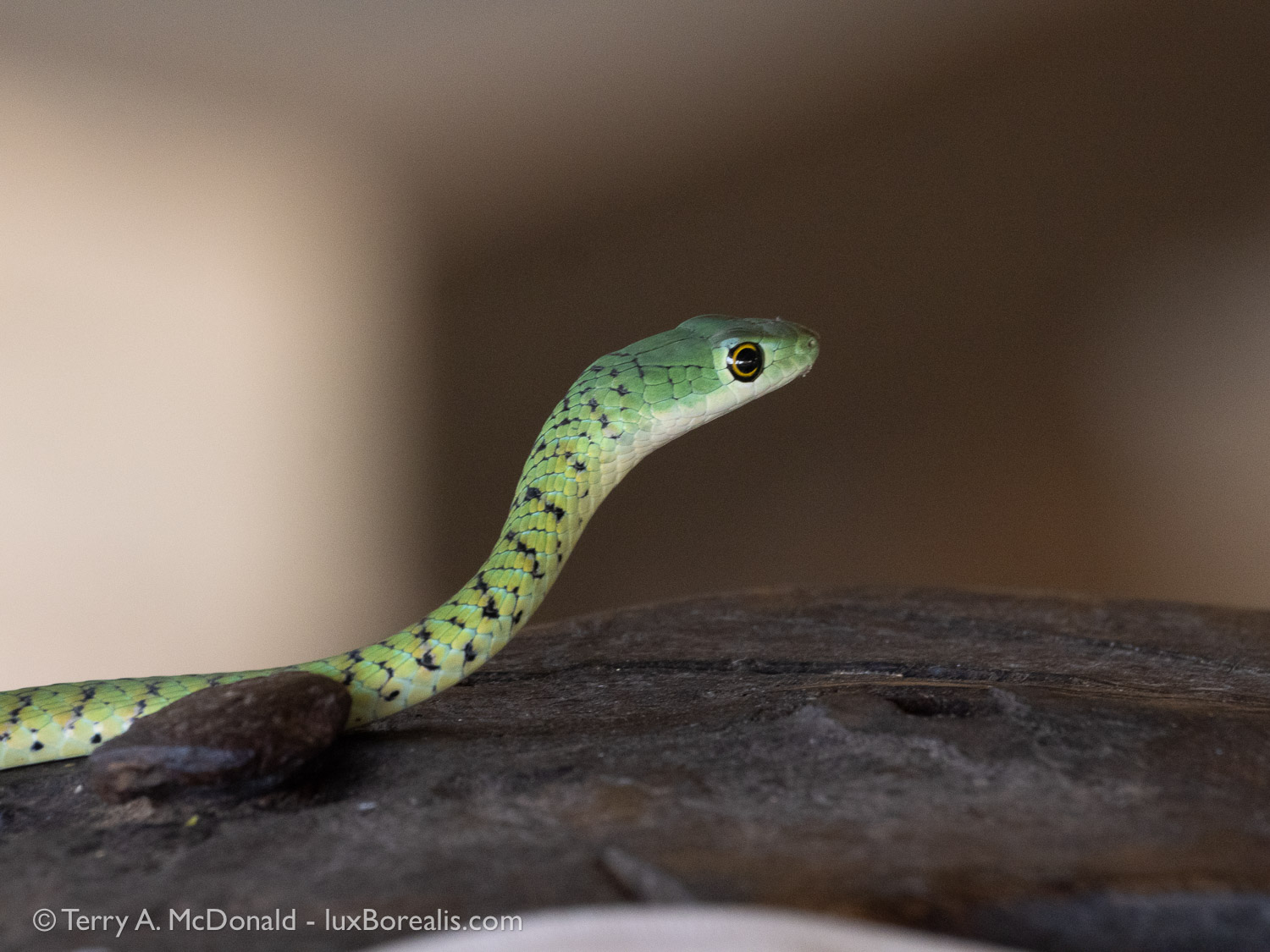
While casually working away writing and editing, this ‘fellow’ showed up with much hoopla amongst the staff. I wanted to watch and photograph the snake; they just wanted to shuffle it out of the lounge ASAP. But they were very accommodating, waiting until I had the shot I wanted before carefully scooping it up in a bucket and taking it outside.
Discover more from luxBorealis Blog
Subscribe to get the latest posts sent to your email.
 luxBorealis Blog
Trackbacks